

Can’t do a full press-up yet, or can only manage a few? This is the progression I use with clients to get there. There are four levels, each with a demo video from my exercise library, plus one strength exercise to help. You need two dumbbells, a sturdy bench and a mat.
Find your starting level
Try the levels in order. Your starting level is the hardest one where you can do 8 good reps, with your body in one straight line and your chest coming close to your hands. If your hips sag or your back arches, go down a level.
The four levels
Level 1: Elevated knee press-up
Cue: Knees to head in one line. Holding dumbbells as handles keeps your wrists straighter and lets you lower a little further.
Level 2: Bench push-up
Cue: One straight line from heels to head. As it gets easier, use a lower bench or step.
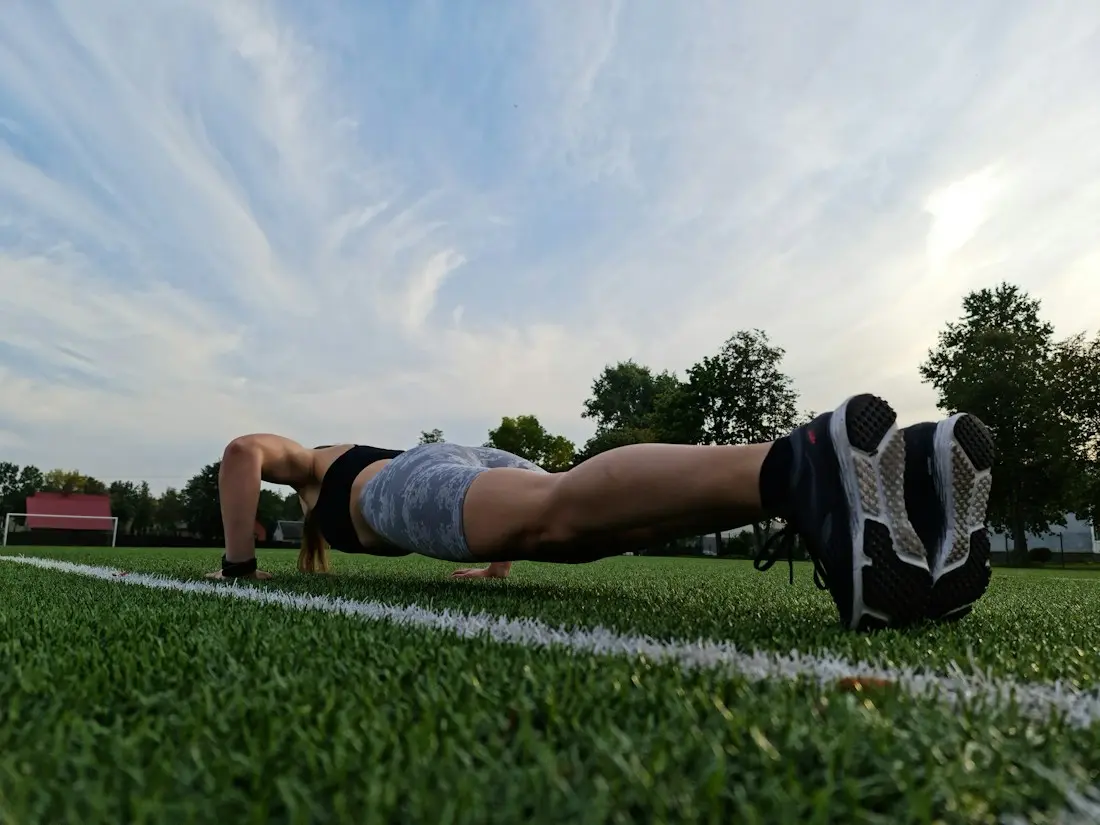
Level 3: Press-up
Cue: Screw your hands into the floor.
Level 4: Elevated press-up
Cue: Grip hard and stay rigid. With dumbbells as handles, your chest can go lower than your hands, so each rep covers more range.
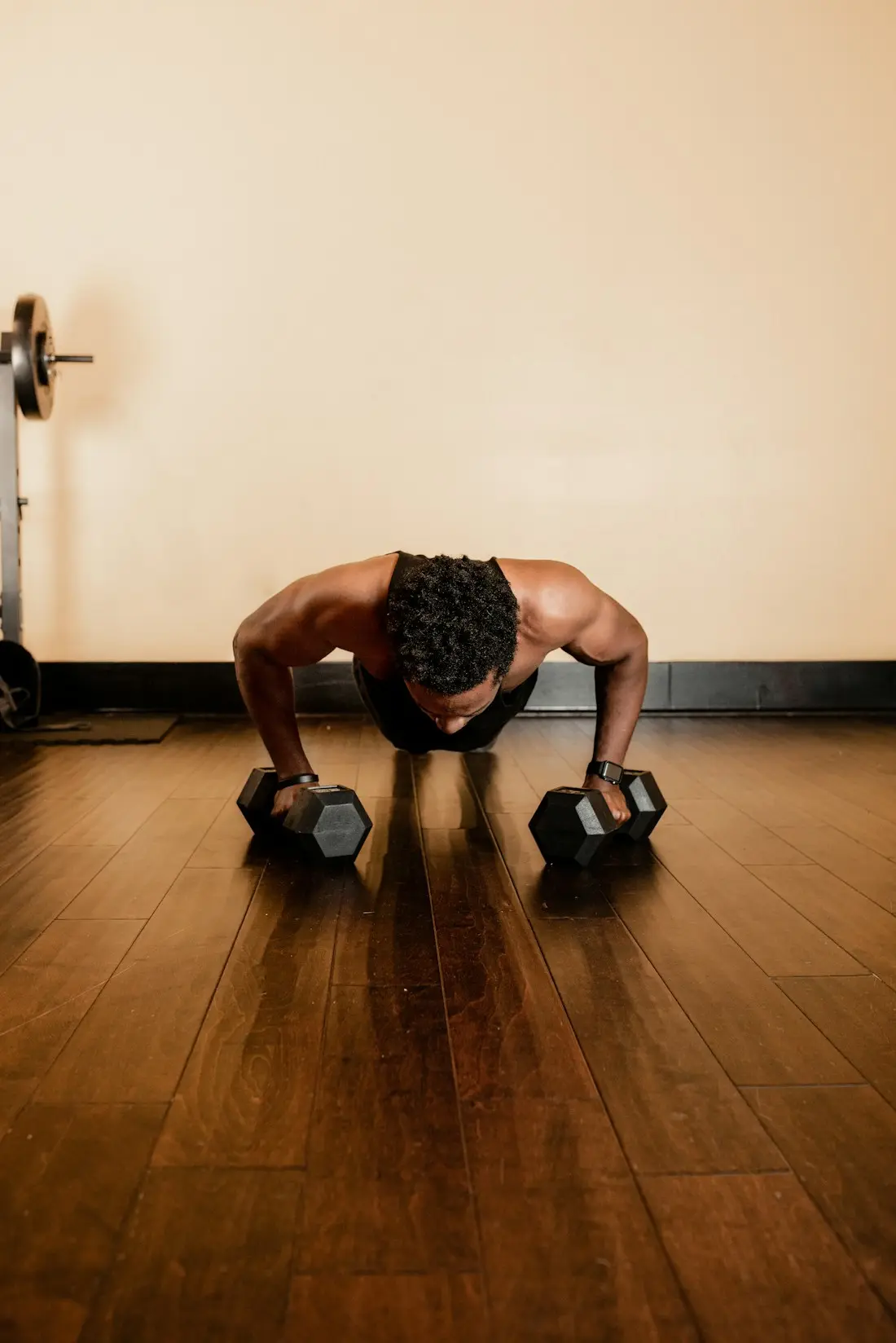
Helper: Close-grip dumbbell chest press
Cue: Elbows skim your ribs. It builds your chest and triceps without your bodyweight on top.
The plan
Practise press-ups two or three times a week, with a day between. Each time:
- Do 3 sets at your level, stopping each set a rep or two before your form slips.
- Rest 90 seconds between sets.
- Finish with 2 sets of 10 to 12 close-grip dumbbell presses.
When you can do 3 sets of 12 good reps, move up a level. Your reps will drop when you do. That’s normal.
Common mistakes
- Hips sagging. Brace your abs and squeeze your glutes before each rep.
- Elbows flaring out to the sides. Keep them at roughly 45 degrees to your body.
- Half reps. A full rep at an easier level beats a half rep at a harder one.
Where it fits in your week
Add your press-up sets to the start of an upper-body session, or do them at home on a day off. Once full press-ups feel solid, try my 20-minute no-equipment workout or my chest, shoulders and triceps workout. The UK Chief Medical Officers recommend strength activities on at least two days a week (UK CMO guidelines).
Train with me
I coach one-to-one at my private studio in Fitzrovia (W1T 3DN), at home across SW1 and online when you travel.
- 10 sessions: £1,900 (£190 per session)
- 50 sessions: £8,500 (£170 per session)
Sign up for a package and you also get a year’s free access to the 12REPS app, so you can log your workouts between sessions.
Book a free consultation and tell me how you train now.
Prefer to talk first? WhatsApp me using the WhatsApp icon in the bottom-right corner of the screen, or email connect@ptwill.com.
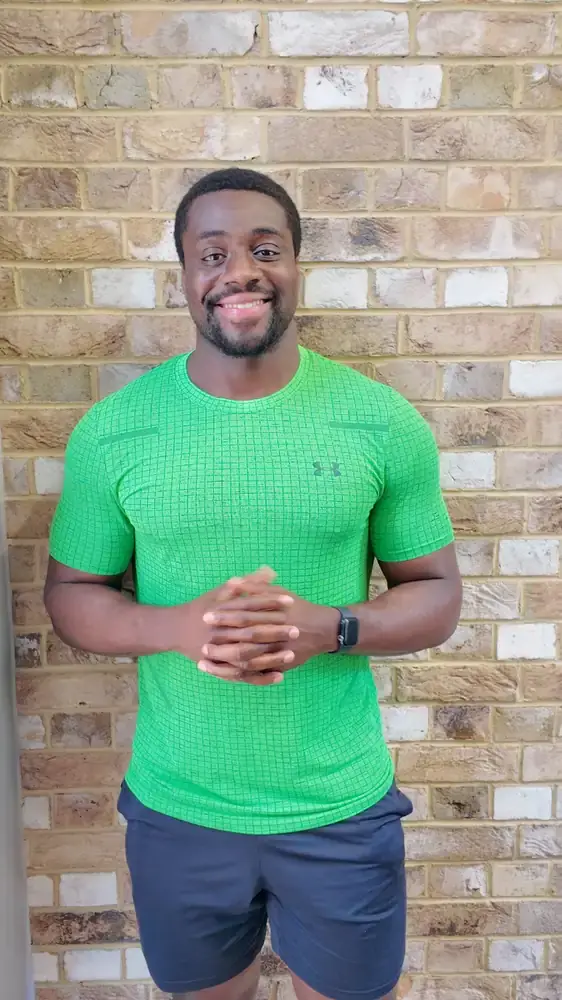
Will Duru, BSc (Hons) Sport and Exercise Science, personal trainer with over 12 years’ experience.

