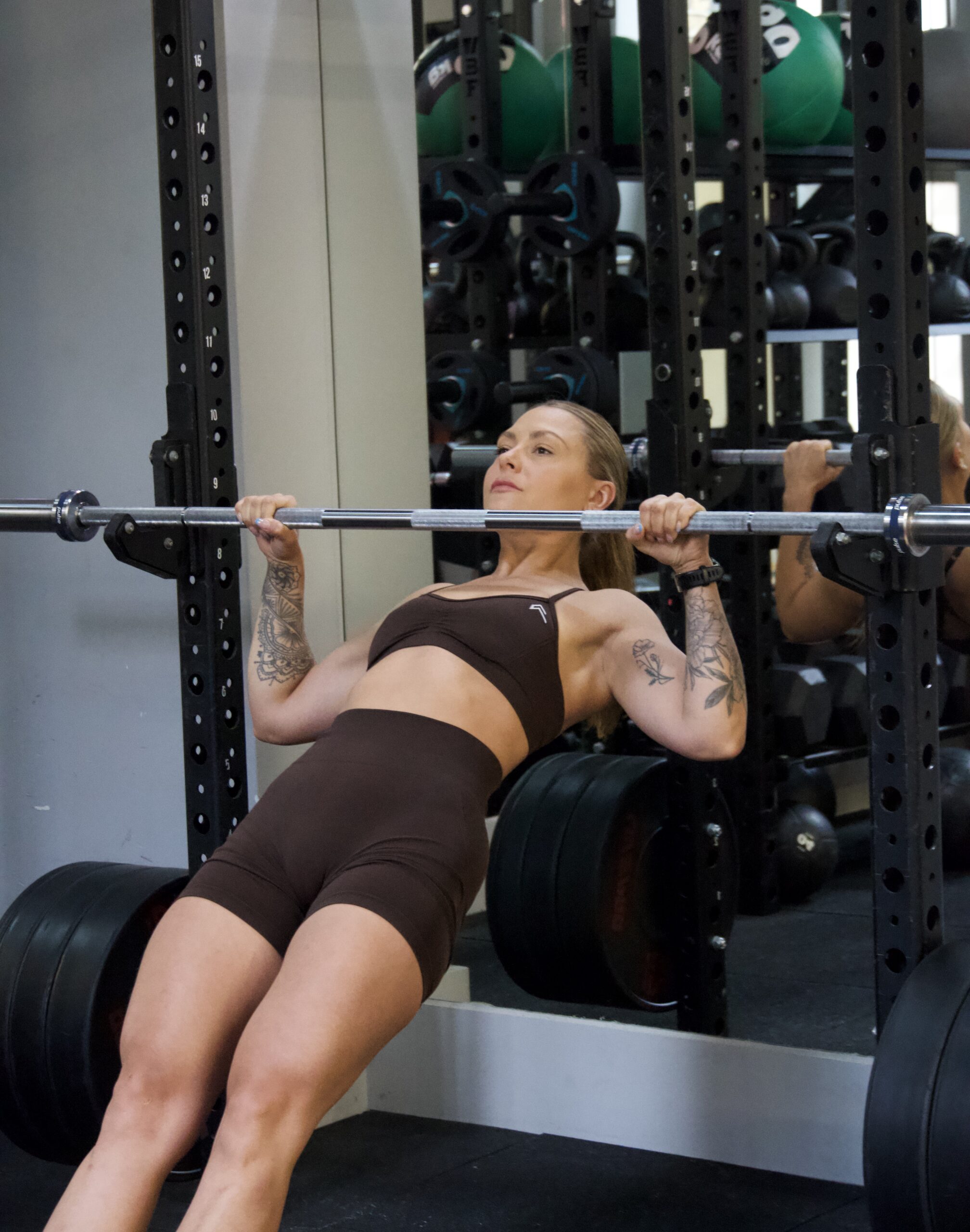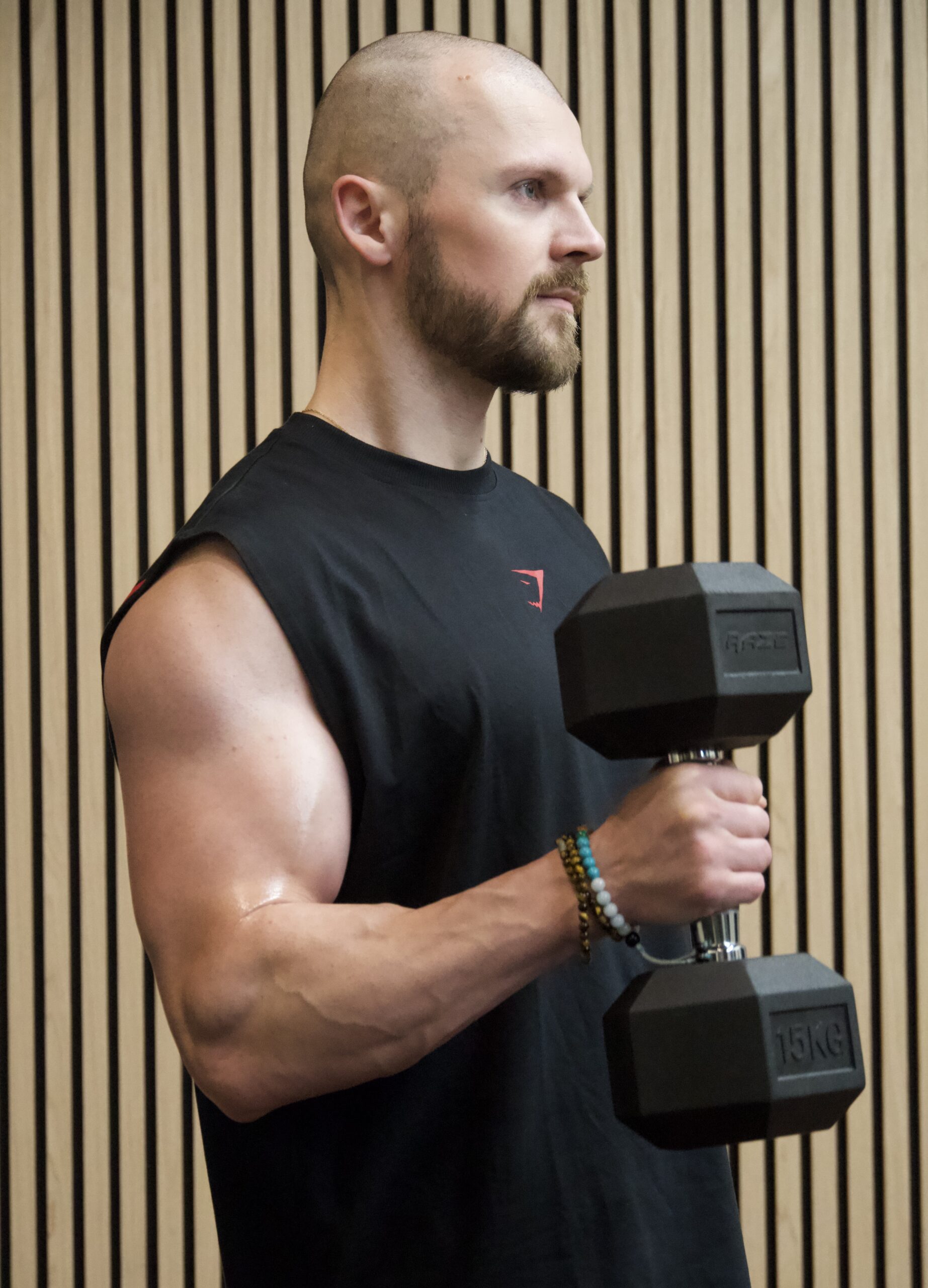
Why Men Should Embrace Strength Training

Why Men Should Embrace Strength Training

Strength training isn’t just about bulking up or lifting heavy things for bragging rights. As a 30-year-old fitness professional with over a decade of coaching experience, I can tell you firsthand that strength training is one of the best investments a man can make in his health and fitness. In this article, I’ll break down why lifting weights (or using your own body as resistance) is so beneficial for men and provide a comprehensive 6-month strength program (Push/Pull/Legs/Core split) to build muscle and lose body fat. Let’s dive in.

Benefits of Strength Training for Men

Build Muscle and Functional Strength: One obvious perk of strength training is increased muscle mass and strength. Having more lean muscle doesn’t just make you look fitter – it makes everyday tasks easier. From carrying groceries to playing sports, a stronger body performs better and is more resilient against injuries. After around age 30, men naturally begin to lose muscle mass (sarcopenia) at a rate of ~3-5% per decade . Strength training helps counteract this muscle loss, keeping you strong and functional well into old age. In fact, weight training is the best way to preserve and build muscle mass you might otherwise lose with aging . Maintaining muscle as you age also means improved stamina, balance, and mobility, which reduces the risk of falls and injuries.


Boost Metabolism and Burn Fat: If your goal is to lose body fat, strength training is your friend. Many men assume that hours of cardio are the only way to burn fat, but the research is clear: strength training is superior to cardio for fat loss, confidence building, and long-term health. Lifting weights revs up your metabolism in a way cardio doesn’t. How? Muscle tissue is metabolically active – it burns more calories at rest than fat tissue. By adding muscle through strength training, you increase your basal metabolic rate, turning your body into a round-the-clock calorie-burning machine. In simple terms, strength workouts even help with fat loss because they boost your metabolism – you continue burning calories even after the workout is over


This “afterburn” effect (exercise post-oxygen consumption) means you get more fat-burning bang for your buck from lifting. One Just12Reps blog article put it perfectly: building lean muscle helps you gain muscle while shedding excess fat, effectively transforming your body composition. Over time, consistent strength training will not only help you lose fat but also make you look leaner and more defined as muscle replaces fat. And don’t worry – moderate rep ranges (like 8-12 reps) will build muscle size and endurance without making you “muscle-bound” or immobile. In fact, 10-12 reps per set is a sweet spot for hypertrophy (muscle growth) that also develops strength useful in real life.


Better Body Composition and Health Markers: Beyond the Mirror, Lifting Improves Key Health Metrics. For example, resistance training helps regulate blood sugar levels by enabling muscles to absorb glucose from the bloodstream for energy. In one Harvard study of 32,000 men, just 60 minutes of weight training per week lowered the risk of type 2 diabetes by 12%, and up to 25% when they trained ~150 minutes per week. This is likely because strength workouts help maintain a healthy body weight and improve how your body uses insulin. Carrying more muscle also means your body burns more calories, helping to prevent weight gain that can lead to diabetes or heart disease. Strength training even has unique benefits for reducing belly fat – the visceral fat around organs that is particularly harmful. Men who performed 20 minutes of weight training daily gained less abdominal fat over the years compared to those who only did cardio. So if you’re looking to shrink the gut, lifting is a smart strategy. 

Stronger Bones and Injury Prevention: It’s not just muscles that get stronger – your bones do too. Weight-bearing exercises stimulate bones to lay down more density. That’s huge for men as we age, because it reduces the risk of osteoporosis and fractures later on. Research shows that strength training slows age-related bone loss and can even help build new bone, offsetting the 1% per year decline in bone density after age 40. Unlike regular aerobic exercise, lifting weights specifically targets the bones in the hips, spine, and wrists – the areas most prone to fractures. Heavier lifting also increases production of hormones like IGF-1 that support bone growth . The bottom line: a man who strength trains is fortifying his body’s infrastructure – stronger muscles, tendons, and bones all working together mean a more robust, injury-resistant body. You’ll feel it in daily life too: tasks like lifting a suitcase or getting up from the floor become much easier when you’re strength trained.


Long-Term Health and Longevity: Want to live a longer, healthier life? Pick up some weights. Even a modest amount of strength training yields remarkable benefits. A recent meta-analysis out of Harvard found that just 30-60 minutes of strength training per week was associated with a 10-20% lower risk of premature death from all causes (including heart disease and cancer) . That’s right – as little as one hour a week of lifting might help you live longer. Strength training improves key health factors like blood pressure, blood sugar, and cholesterol, which in turn lowers your risks of cardiovascular disease, certain cancers, and other chronic illnesses. Essentially, lifting weights sends a signal to your body to stay robust and biologically “young.” Men who maintain muscle have an easier time keeping a healthy weight and avoiding the typical middle-aged spread. And unlike the stereotype of weightlifters being less flexible or more prone to issues, a well-designed program will actually improve your joint stability and balance, keeping you active and independent well into old age.

The Power of Compound Lifts: Your Blueprint for Full-Body Strength and Muscle with 12Reps

Mental Health and Confidence: The benefits aren’t only physical – strength training can work wonders for mental well-being. I’ve seen many clients transform not just their bodies but also their mindset through lifting. Hitting new PRs (personal records) or simply seeing your progress over weeks builds confidence like nothing else. You prove to yourself that you can set goals and achieve them. There’s also a therapeutic aspect: exercise, including resistance training, triggers the release of endorphins and can reduce stress. Strength training doesn’t just build muscle; it also builds confidence, reduces anxiety, and improves overall mood. Many men find that consistent workouts help clear their head, provide an outlet for tension, and even alleviate symptoms of depression. Plus, let’s not forget the self-esteem boost that comes from getting stronger and seeing positive changes in your physique. It’s incredibly rewarding and motivating. All in all, a fitter body often leads to a happier mind.

The Power of Compound Lifts: Your Blueprint for Full-Body Strength and Muscle with 12Reps

The Push/Pull/Legs & Core Workout Split (4 Days a Week)

Now that you know why you should be strength training, let’s talk about how to do it effectively. One of my favorite training schedules for all-around development is a 4-day workout split targeting different muscle groups each session. This program is organized as:

  • Day 1: Push – Exercises that involve “pushing” motions (targeting chest, shoulders, and triceps).
  • Day 2: Pull – “Pulling” movements (targeting back and biceps).
  • Day 3: Legs – Lower body exercises (quads, hamstrings, glutes, and calves).
  • Day 4: Core & Cardio – Core strengthening exercises combined with cardio/conditioning drills for heart health and extra calorie burn.

This push/pull/legs/core split ensures you hit all major muscle groups while giving each muscle adequate rest between sessions. Training 4 days per week is a sweet spot for many men: it’s frequent enough to see great results, but also allows recovery days (e.g. you could lift Monday, Tuesday, Thursday, Friday and rest on other days). Remember, muscles grow during rest, so having those off days for recovery (and good sleep/nutrition) is crucial to optimize your results.

We’ll be utilising a variety of equipment – dumbbells, barbells, machines, TRX straps, kettlebells, and bodyweightexercises will all play a role. Don’t worry if you don’t have access to every item; you can often substitute (for example, if you don’t have a sled for pushing, you could do farmer’s carry or another conditioning move). Using multiple types of equipment keeps training fun and challenges your muscles in new ways. For instance, free weights (dumbbells, barbells) engage stabilizer muscles and allow natural movement paths, while machines provide a controlled motion and can be great for isolating specific muscles or lifting heavier safely . We’ll take advantage of each tool’s strengths: heavy compound lifts with barbells, unilateral moves with dumbbells, functional bodyweight exercises with TRX, explosive power moves like box jumps or battle ropes for athleticism, etc. This well-rounded approach will develop not only muscle size, but also strength, power, and endurance.

Workout Structure

Each workout will consist of 5 to 6 exercises. Generally, you’ll perform 4 sets of 10-12 reps for each exercise in Phase 1 (more on training phases shortly). As the program progresses through different phases, the sets and reps will be adjusted to keep you challenged and progressing. Rest periods between sets will typically be about 60-90 seconds for most exercises. For big, heavy compound lifts (like squats or deadlifts), you might rest ~2 minutes if needed, especially in later phases when lifting near your max. For smaller isolation moves or core exercises, you can stick to shorter rests (~45-60 seconds).

Use a weight that is challenging for the prescribed rep range while maintaining good form. By the last few reps of a set, you should feel the muscle working hard, but you should still be able to complete all reps with proper technique. If you could easily do many more than 12 reps, the weight is too light – bump it up. If you can’t hit the minimum reps with good form, the weight is too heavy – scale it down.

Because our goal is both muscle growth and fat loss, we will also incorporate some cardio/conditioning elementsespecially on the core & cardio day. High-intensity moves like sled pushes, battle rope slams, skipping rope, or box jumps will spike your heart rate and torch additional calories, aiding fat loss while we build muscle. They also add an athletic, explosive component to the routine. 

The Easy Guide to Supersets: Get More from Your Workouts with 12Reps

Exercise Selection


To give you an idea, here’s how each training day will look:


Day 1 – Push Day (Chest, Shoulders, Triceps): Focus on pressing movements and shoulder exercises.

Day 2 – Pull Day (Back, Biceps): Focus on rowing/pulling movements and arm curls.

Day 3 – Leg Day (Quads, Hamstrings, Glutes, Calves): Big lower-body moves like squats and deadlifts plus some plyometrics.

Day 4 – Core & Cardio Day: Abdominal and oblique exercises paired with functional cardio (sled pushes, ropes, etc.) to improve conditioning.


Below is a sample weekly workout table. This outlines the exercises, sets, reps, and rest for Phase 1 of the program (Weeks 1-6). In subsequent phases, we will tweak sets/reps (explained after the table), but the core exercises remain relatively consistent (with a few variations or additions for advanced techniques as you progress).


6-Month Strength Training Program – Sample Week (Phase 1)

Day

Exercises (Equipment)

Sets x Reps

Rest

Notes

Day 1 – Push(Chest/Shoulders/Triceps)

– Barbell Bench Press (Barbell)  – Dumbbell Shoulder Press (Dumbbells)  – Chest Fly (Machine or Cable)  – Triceps Dip (Bodyweight or Assisted/TRX)  – Lateral Raises (Dumbbells)  Optional:Triceps Pushdown (Cable)*

4 x 10-12 each

60-90 sec between sets

Emphasize form on presses; last set of each push exercise should be challenging.

Day 2 – Pull (Back/Biceps)

– Deadlift (Barbell)  – Lat Pulldown or Pull-Up (Machine or Bodyweight)  – Dumbbell Row (Dumbbell)  – Seated Cable Row (Machine)  – Biceps Curls (Dumbbell or Barbell)

4 x 10-12 each

60-90 sec between sets

Keep core tight during deadlifts. Squeeze shoulder blades on rows for full back engagement.

Day 3 – Legs(Quads/Hams/Glutes/Calves)

– Back Squat (Barbell)  – Romanian Deadlift (Dumbbells or Barbell)  – Leg Press (Machine)  – Walking Lunges (Dumbbells)  – Calf Raises (Machine or Dumbbell)  Optional: Box Jumps (Bodyweight)*

4 x 10-12 each (Box Jumps: 4 x 8-10)

60-90 sec (up to 2 min on squats/deadlifts)

Focus on full range of motion. For box jumps, land softly with bent knees.

Day 4 – Core & Cardio(Abs/Conditioning)

– Plank (Bodyweight)  – Hanging Leg Raise (Bodyweight)  – Russian Twist (Medicine Ball or Dumbbell)  – Battle Rope Slams (Rope)  – Sled Push (Sled/Prowler) or Farmer’s Carry  – Skipping Rope (Jump Rope)

4 sets (see reps/time*)

30-60 sec between rounds

Perform core exercises for 10-15 reps or 30s hold (plank), and conditioning drills for time (e.g. 20-30 sec burst). Can be done in circuit fashion for intensity.

Notes: For the Core & Cardio day, you can perform the exercises as a circuit: for example, do one set of each (plank 30s, 15 leg raises, 20s rope slams, 20m sled push, 1 minute jump rope) back-to-back, then rest 1-2 minutes and repeat the circuit 4 times. Also, feel free to swap in similar moves based on equipment availability (e.g., kettlebell swings instead of battle ropes, or a medicine ball slam instead of a sled push). The goal is to elevate your heart rate and engage your core.


This table represents the Phase 1 foundation: moderate weight and volume (4 sets of 10-12) to master form and build baseline strength. It’s a challenging but manageable start if you have some lifting experience. If you’re a complete beginner, you might begin with 3 sets instead of 4 for the first couple of weeks, to ease in and minimize soreness, then ramp up to 4 sets.

The Power of Compound Lifts: Your Blueprint for Full-Body Strength and Muscle with 12Reps


Progressive Training Phases (6-Month Plan)

To keep your muscles adapting (and avoid plateaus), we’ll increase the intensity across 4 phases (~6 weeks per phase) over the 6-month period. Each phase will feature different set/rep schemes and techniques to challenge you in new ways:

  • Phase 1 (Weeks 1-6): Base BuildingFocus: Learn proper form, establish mind-muscle connection, and build work capacity. Sets/Reps: 4 sets of 10-12 for most exercises (as outlined above). The relatively higher rep range allows you to practice lifts with a moderate load and stimulate muscle growth (hypertrophy). Intensity: Use a weight around ~70% of your one-rep max – heavy enough to be challenging, but not so heavy that your form breaks down. This phase will likely make you pretty sore as your muscles adapt, so pay attention to recovery (good nutrition, hydration, and sleep). By the end of Week 6, you should feel comfortable with the exercises and notice improvements in strength and muscle tone.
 
  • Phase 2 (Weeks 7-12): Progressive OverloadFocus: Increase strength and muscle by gradually lifting heavier. Sets/Reps: 4 sets of 8-10. In this phase, you’ll slightly increase the weight and drop the reps a bit. Pushing closer to the lower end of the hypertrophy range (around 8 reps) lets you handle more weight, bridging the gap toward pure strength training. Each week, aim to progress – either add a little weight or squeeze out an extra rep (with good form) on each exercise. Over 6 weeks, these small improvements add up to significant gains. Intensity: ~75-80% of your 1RM by the end of the phase. You should really feel yourself getting stronger now – maybe setting some personal bests for 8-10 reps. Continue to keep rest periods around 1-2 minutes as needed. By Week 12, you might have added, say, 10-20% more weight on major lifts compared to Week 1. That’s a big win!
 
  • Phase 3 (Weeks 13-18): Strength & PowerFocus: Maximising strength and introducing a bit of power/explosiveness. Sets/Reps: 5 sets of 5-8 reps for the big compound exercises; ~4 sets of 8-10 for accessory moves. Here, we take a turn into the lower rep ranges, thinking 5×5 style training for key lifts like the squat, deadlift, bench press, and overhead press. This classic method is fantastic for building raw strength. You’ll be using heavier weights – roughly 80-85% of your 1RM – so make sure to increase your rest to ~2 minutes for big lifts. For smaller exercises (like bicep curls or lateral raises), you can stay with 8-10 reps, but you should also bump the weight up accordingly from Phase 2. You might notice you can’t do as many isolation exercises in one session now due to the intensity – that’s okay. Quality over quantity. Also in Phase 3, we introduce some power moves: for example, you might add light box jumps before squats, or kettlebell swings to your leg day, to train your fast-twitch fibers. These explosive exercises help improve athleticism and recruit more muscle fibers, which can translate to greater strength. By the end of this phase, you will likely feel the strongest you’ve ever been. It’s incredibly motivating to see yourself maybe bench pressing a weight that once felt impossible.


  • Phase 4 (Weeks 19-24): Hypertrophy & Superset ChallengeFocus: Pushing muscle growth to the max and improving muscular endurance. Sets/Reps: Back to moderate/higher reps but with a twist. We’ll return to about 4-5 sets of 10-12 reps, but now incorporate supersets and advanced techniques to really fire up the intensity. A superset means doing two exercises back-to-back with no rest in between (working either the same muscle group or opposing groups). For example, on Push day in Phase 4, you might superset Bench Press + Push-Ups (do a set of heavy bench presses, then immediately do a set of push-ups to failure).
  • Your chest and triceps will be on fire – in a good way! Likewise, on Pull day, we could superset Lat Pulldowns + Dumbbell Bicep Curls, or on Leg day, Squats + Jumping Lunges. This technique increases time under tension and metabolic stress on the muscles, which are great for hypertrophy. Because you’ll be pre-fatiguing muscles with supersets, you might use slightly lighter weight than you did in Phase 2 for the 10-12 rep range, but the effort will feel even greater. Intensity: Think of this phase as the “finisher” – you’re taking the solid strength base you built and now pumping the muscles up, flushing them with blood and exhausting them to stimulate maximal growth. Rest periods in supersets are only after you complete both exercises, and then you might rest ~1-2 minutes before the next round. Additionally, Phase 4 is a good time to incorporate other intensity techniques like drop sets(immediately reducing weight when you hit failure and continuing the set) or rest-pause sets (taking a brief 10-second rest mid-set to squeeze out a couple more reps). Use these sparingly on your last sets for an extra challenge. By the end of the 6 months, Phase 4 will have you pushing your limits – but you’ll also see the payoff in terms of muscle size and endurance.


Throughout all phases, progressive overload is key. That means gradually increasing the stress on your muscles – via more weight, more reps, more sets, or shorter rest. Even when phases change and reps drop or rise, the underlying principle is to challenge yourself a bit more over time. Listen to your body, though: if you need an extra rest day here or there, take it. It’s better to slightly under-train than to overtrain and get injured or burned out. Also, maintain good exercise form above all. As the weight gets heavier in Phase 3, for instance, it’s tempting to cheat or use momentum – but that’s where discipline comes in. Tighten up your core, focus on the muscles working, and execute each lift safely. If uncertain, work with a coach or experienced lifter to check your form, especially on complex moves like deadlifts or squats.


Tracking Progress and Adjusting


Keep a workout log to track the weights you use and the reps achieved. This will help you see your progress (nothing more motivating than seeing your squat jump from 100 lbs to 150 lbs over a few months!). It also helps you know when to increase the weight – generally, if you hit the top of a rep range for all sets easily, you can move up in weight next session. Conversely, if you’re consistently falling short of the minimum reps, consider reducing weight or spending a bit longer in that phase to build strength.


After 6 months of this structured training, you’ll likely be a totally new man – stronger, leaner, more muscular, and brimming with confidence. Many of my clients not only lose significant body fat while gaining muscle, but they also report improved posture, better sleep, and higher energy levels throughout the day. Don’t be surprised if friends and family start asking “Wow, what have you been doing in the gym?!”


Final Thoughts


Strength training is a game-changer for men’s health. It’s not about ego or lifting the heaviest weight in the gym; it’s about building a body that’s capable, healthy, and resistant to the challenges of life. From the cellular level (better glucose metabolism and hormone balance) to the whole-body level (strong muscles and bones), the benefits are profound and backed by science. And perhaps most importantly, it can be downright fun – especially as you start to see progress and realise you’re stronger than you thought.


This 6-month push/pull/legs/core program is a road map to success, but remember that any program is only as good as your consistency and effort. Commit to those four workouts each week, fuel your body with quality nutrition (protein is your muscle’s best friend), and prioritise recovery. In my 10+ years as a trainer, I’ve seen astonishing transformations when men dedicate themselves to a structured strength routine. There’s no reason you can’t be the next success story.


So, whether you’re a beginner or getting back into it after a break, I encourage you to take that first step and start strength training. Your future self will thank you – when you’re stronger at 40, 50, 60 years old than many guys half your age, you’ll be grateful you started today. It’s never too late to build a stronger, fitter you.


Happy lifting, and enjoy the journey!


References:

  1. Harvard T.H. Chan School of Public Health – Evidence mounts on the benefits of strength training (2022) .
  2. Harvard Health Publishing – Lift weights to boost muscle (2017) .
  3. Harvard Health Publishing – Strength training builds more than muscles (2024) .
  4. Just12Reps Blog – Why the 12Reps App Will Elevate Your Strength Training Program. Just12Reps Blog – Push/Pull/Legs Program for Total Body Strength and Fat Loss .
  5. Just12Reps Blog – Strength Training for Men Over 50: Beginner’s Guide .
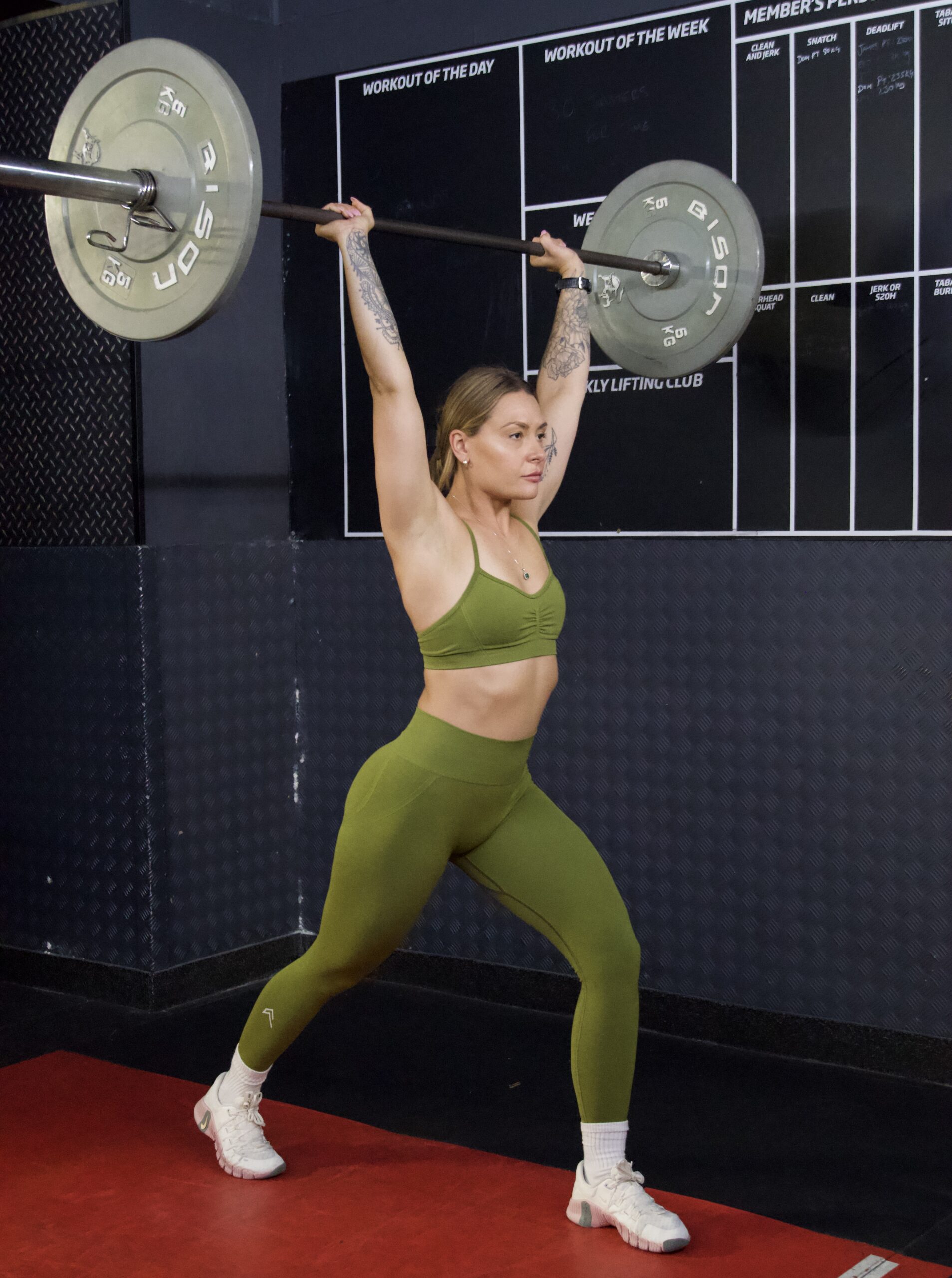
 

The Power of Compound Lifts: Your Blueprint for Full-Body Strength and Muscle with 12Reps app

The Power of Compound Lifts: Your Blueprint for Full-Body Strength and Muscle with 12Reps

Introduction

Alright, City professionals, let’s talk about getting truly strong. As a personal trainer with a Sport and Exercise Science Hons degree and a decade of experience guiding busy individuals like yourselves through the fitness landscape of London, I’ve seen countless trends come and go. But one truth remains constant: if you want to build serious strength, significant muscle, and improve your overall functional fitness, you need to embrace the power of compound lifts.

Forget endless bicep curls or isolated leg extensions for a moment. While those have their place, the real magic happens when you engage multiple muscle groups and joints simultaneously. These are your compound movements – the foundational exercises that give you the biggest bang for your buck in the gym. They’re efficient, effective, and frankly, they’re what separates the casual gym-goer from someone who’s truly building a robust, capable physique.

In this article, I’m going to break down exactly why compound lifts are superior, delve into their physiological advantages, and provide you with the essential form cues for mastering the big five. Crucially, I’ll also show you how the 12Reps app becomes your indispensable partner in this journey, providing comprehensive guidance and tracking to ensure you master these powerful movements and unlock your full potential. Get ready to train smarter, not just harder, and build a body that’s strong, resilient, and ready for anything life throws at you.

The Power of Compound Lifts: Your Blueprint for Full-Body Strength and Muscle with 12Reps

Section 1: What Are Compound Lifts? The Foundation of Functional Strength

Let’s start with the basics. What exactly do I mean by ‘compound lifts’? Simply put, these are exercises that involve movement at multiple joints and engage multiple muscle groups at the same time. Think of them as full-body movements, even if they primarily target a specific area.

To understand them better, it’s helpful to contrast them with their counterpart: isolation exercises.

  • Compound Lifts: Examples include squats (involving hip, knee, and ankle joints, and working quads, hamstrings, glutes, core), deadlifts (hips, knees, ankles, working nearly every muscle in the body), bench press (shoulder and elbow joints, working chest, shoulders, triceps), overhead press (shoulder and elbow joints, working shoulders, triceps, core), and rows (shoulder and elbow joints, working back, biceps).
  • Isolation Exercises: These involve movement at only one joint and primarily target a single muscle group. Think of a bicep curl (only the elbow joint, primarily targeting biceps), a leg extension (only the knee joint, primarily targeting quads), or a tricep pushdown (only the elbow joint, primarily targeting triceps).

While isolation exercises have their place for specific muscle development or rehabilitation, compound lifts are the foundation. They mimic natural human movements – think about picking something up off the floor (deadlift), sitting down and standing up (squat), or pushing something away from you (bench press). By training these movements, you’re not just building muscle; you’re building functional strength that translates directly to your daily life, making you more capable and resilient.

The Power of Compound Lifts: Your Blueprint for Full-Body Strength and Muscle with 12Reps

Now that you know what compound lifts are, let’s get into the nitty-gritty of why they should form the backbone of your training programme. From a sports science perspective, and from years of seeing real-world results with my clients, these movements offer unparalleled benefits:

1. Greater Muscle Activation and Growth Potential

This is perhaps the most significant advantage. Because compound lifts involve multiple joints and muscle groups working together, they recruit a far greater number of muscle fibres compared to isolation exercises. When you squat, you’re not just working your quads; your glutes, hamstrings, and core are all firing intensely. This massive muscle activation leads to a stronger stimulus for growth. More muscles working means more potential for muscle protein synthesis, which is the process by which your body builds new muscle tissue. It’s simply more efficient for building overall muscle mass.

2. Higher Calorie Expenditure (Fat Loss Benefit)

Want to burn more calories during your workout? Then focus on compound lifts. When you engage large muscle groups simultaneously, your body has to work much harder, demanding more energy. A set of heavy squats or deadlifts will leave you far more out of breath and sweating more than a set of bicep curls. This higher energy demand translates directly to a greater calorie burn during your session, which is a huge advantage if fat loss is one of your goals. More calories burned in the gym means you’re closer to that lean, strong physique.

3. Improved Functional Strength for Daily Life

Functional strength is about being strong in ways that help you in your everyday life. Think about picking up your kids, carrying heavy shopping bags, moving furniture, or even just maintaining good posture at your desk. Compound lifts directly mimic these real-world movements. By getting stronger at squats, deadlifts, and presses, you’re not just improving your gym numbers; you’re becoming more capable, resilient, and less prone to injury in your daily activities. This is especially important for City professionals who spend a lot of time sitting – these lifts help counteract the negative effects of a sedentary lifestyle.

4. Enhanced Hormonal Response

Heavy, compound movements trigger a more significant release of anabolic hormones like testosterone and growth hormone. These hormones are crucial for muscle growth and recovery. While the exact impact of exercise-induced hormonal spikes on long-term muscle growth is debated, it’s clear that training in a way that promotes a healthy hormonal environment is beneficial for overall adaptation and progress. Compound lifts are a powerful way to signal your body to build and repair.

5. Time Efficiency

For busy professionals, time is always a factor. Compound lifts are incredibly time-efficient. You can get a highly effective full-body workout with just a few well-chosen compound exercises, rather than spending hours doing endless isolation movements. This means you can achieve significant results in less time, allowing you to get back to your demanding schedule without compromising your fitness goals. It’s about maximising your return on investment in the gym.

Now that you’re convinced of the power of compound lifts, let’s get down to the movements themselves. These are the foundational exercises that every serious lifter should aim to master. Remember, perfect form is paramount – especially when you start adding significant weight. This is where the 12Reps app truly shines, providing detailed guidance to help you nail your technique.

1. The Squat: King of All Exercises

Often called the king of all exercises, the squat is a full-body movement that primarily targets your quads, hamstrings, and glutes, while also engaging your core and back for stability. It’s a fundamental human movement, essential for daily life and athletic performance.

  • Form Tips:
    • Start with your feet roughly shoulder-width apart, toes pointed slightly out.
    • Keep your chest up, shoulders back, and core tight throughout the movement.
    • Initiate the movement by pushing your hips back as if sitting in a chair, while simultaneously bending your knees.
    • Descend until your thighs are at least parallel to the floor, or as deep as your mobility allows while maintaining good form.
    • Drive through your heels and mid-foot to stand back up, squeezing your glutes at the top.
    • Keep your knees tracking in line with your toes, not caving inwards.
  • 12Reps Guidance: The 12Reps app provides clear, step-by-step video demonstrations for various squat variations (back squat, front squat, goblet squat). Its logging feature allows you to track your weight, reps, and sets, helping you see your progress and ensuring you’re consistently challenging yourself.

2. The Deadlift: The Ultimate Test of Strength

The deadlift is arguably the most powerful strength-building exercise, working nearly every muscle in your body, particularly your back, glutes, hamstrings, and forearms. It’s about lifting a heavy weight from the floor to a standing position.

  • Form Tips:
    • Approach the bar with your mid-foot directly under it. Your shins should be close to the bar.
    • Bend at your hips and knees to grasp the bar with an overhand or mixed grip, hands just outside your shins.
    • Keep your back straight and chest up. Your hips should be lower than your shoulders.
    • Take a deep breath, brace your core, and lift the weight by driving through your heels, extending your hips and knees simultaneously.
    • Keep the bar close to your body throughout the lift.
    • Lower the weight with control, reversing the direction of the movement.
  • 12Reps Guidance: The app offers detailed form cues and visual guides for conventional deadlifts, sumo deadlifts, and Romanian deadlifts. You can log your heaviest lifts and track your volume over time, ensuring you’re progressing safely and effectively in this demanding exercise.

3. The Bench Press: Upper Body Powerhouse

The bench press is the go-to exercise for building upper body pushing strength, primarily targeting your chest (pectorals), front shoulders (anterior deltoids), and triceps.

  • Form Tips:
    • Lie on a flat bench with your eyes directly under the bar. Your feet should be flat on the floor.
    • Grip the bar slightly wider than shoulder-width apart, with your wrists straight.
    • Arch your lower back slightly, pull your shoulder blades together and down, and drive your feet into the floor.
    • Unrack the bar, take a deep breath, and lower the bar with control to your mid-chest.
    • Press the bar back up explosively, keeping your elbows slightly tucked.
  • 12Reps Guidance: 12Reps provides comprehensive instructions for flat, incline, and decline bench presses, as well as dumbbell variations. Its tracking features allow you to monitor your one-rep max, track your progress across different rep ranges, and ensure you’re applying progressive overload to your upper body strength.

4. The Overhead Press: Building Shoulder Strength

The overhead press (or military press) is a fantastic exercise for building strong, well-rounded shoulders and triceps, while also engaging your core for stability. It’s a true test of upper-body strength.

  • Form Tips:
    • Stand tall with the bar resting on your front deltoids, hands slightly wider than shoulder-width apart, elbows slightly in front of the bar.
    • Brace your core and glutes tightly to create a stable base.
    • Press the bar directly overhead in a straight line, pushing your head slightly forward once the bar clears it.
    • Lock out your elbows at the top, with the bar directly over your mid-foot.
    • Lower the bar with control back to the starting position.
  • 12Reps Guidance: The app includes detailed guides for barbell and dumbbell overhead presses, both standing and seated. You can easily log your sets and reps, and the app’s analytics will help you visualise your shoulder strength progression over time.

5. Rows: For a Strong and Healthy Back

Rows are crucial for building a strong, thick back, which is essential for good posture, injury prevention, and overall strength. They primarily target your lats, rhomboids, and traps, as well as your biceps.

  • Form Tips (for Barbell Row):
    • Stand with your feet hip-width apart, bending at your hips so your torso is roughly parallel to the floor (or slightly higher, depending on your flexibility).
    • Grip the barbell with an overhand grip, slightly wider than shoulder-width.
    • Keep your back straight and core tight.
    • Pull the bar towards your lower chest/upper abdomen, squeezing your shoulder blades together at the top.
    • Lower the bar with control, extending your arms fully.
  • 12Reps Guidance: 12Reps features various rowing exercises, including barbell rows, dumbbell rows, and cable rows, with clear instructions and demonstrations. The app’s tracking capabilities allow you to monitor your back strength and ensure balanced development of your physique.

Now that you understand the importance and mechanics of the essential compound lifts, how do you actually put them into a workout? The beauty of compound movements is their efficiency; you can build incredibly effective routines with just a few well-chosen exercises. Here’s how I typically structure workouts for my City clients, keeping efficiency and maximum impact in mind:

Full-Body Approach: Maximum Efficiency

For most busy professionals, a full-body routine built around compound lifts, performed 2-3 times a week, is incredibly effective. This allows you to hit each major muscle group frequently, promoting consistent growth and strength gains without spending hours in the gym.

Sample Full-Body Workout (3 times a week, e.g., Mon/Wed/Fri):

  • Warm-up: 5-10 minutes light cardio, followed by specific warm-up sets for your first main lift (as discussed in our previous article).
  • Main Lifts:
    • Squat Variation: 3-4 sets of 5-8 reps (e.g., Barbell Back Squat)
    • Horizontal Press: 3-4 sets of 5-8 reps (e.g., Barbell Bench Press or Dumbbell Press)
    • Vertical Pull: 3-4 sets of 8-12 reps (e.g., Pull-ups or Lat Pulldowns)
    • Horizontal Pull: 3-4 sets of 8-12 reps (e.g., Barbell Rows or Dumbbell Rows)
    • Vertical Press: 3-4 sets of 5-8 reps (e.g., Overhead Press or Dumbbell Shoulder Press)
  • Accessory Work (Optional, 1-2 exercises): 2-3 sets of 10-15 reps (e.g., Bicep Curls, Tricep Extensions, Calf Raises, or Abdominal work). These are for targeting specific muscles or addressing weaknesses, but the core of the workout is the compound lifts.
  • Cool-down: 5-10 minutes of light stretching.

Programming Considerations: Order, Sets, and Reps

  • Order of Exercises: Always perform your most demanding compound lifts first when you are freshest. This ensures you can lift the heaviest weights and maintain the best form. So, typically, squats or deadlifts would come before bench press or rows.
  • Sets and Reps: The suggested rep ranges (5-8 for strength, 8-12 for hypertrophy) are general guidelines. You can adjust these based on your specific goals (as we discussed in the Strength vs. Hypertrophy article). Aim for challenging sets where you’re pushing close to muscle failure, but always prioritise good form.
  • Progressive Overload: The key to long-term progress is consistently challenging your body. This means gradually increasing the weight, reps, or sets over time. Don’t just lift the same weight for the same reps every session. Strive to do a little bit more than last time, even if it’s just one extra rep or a small increase in weight.
  • Rest Periods: For compound lifts, especially when lifting heavy, allow for adequate rest between sets (2-5 minutes) to ensure you’re recovered enough for your next effort. For accessory work, shorter rest periods (60-90 seconds) are often fine.

How 12Reps Supports Your Compound Lift Journey

The 12Reps app is perfectly designed to help you implement and master these compound-focused routines. Its smart filtering system can generate full-body or split routines centred around these powerful movements. It provides:
  • Detailed Exercise Demonstrations: Clear videos and instructions for each compound lift, ensuring you understand the correct form.
  • Intuitive Tracking: Easily log your sets, reps, and weights for every lift. The app automatically calculates your volume and tracks your progress over time.
  • Progress Visualisation: See your strength gains and volume trends for each compound lift, motivating you and helping you identify areas for improvement.
  • Customisable Workouts: Build your own routines or let the app suggest them, ensuring your programme is always aligned with your goals and equipment. This means you can focus on executing the lifts, knowing the programming is taken care of.
The Power of Compound Lifts: Your Blueprint for Full-Body Strength and Muscle with 12Reps

Conclusion: Embrace Compound Lifts, Unlock Your Strength with 12Reps

With over a decade of experience as a personal trainer and holding a Sport and Exercise Science Honours degree, I have consistently found that the principle of compound lifts is unmatched in building true strength, significant muscle mass, and robust functional fitness, particularly among City of London professionals with demanding schedules. These multi-joint movements are the most efficient and effective tools in your training arsenal, delivering maximum results in minimal time.

We’ve explored why these exercises reign supreme – from their ability to activate more muscle fibres and burn more calories, to their role in enhancing hormonal response and improving your strength for everyday life. We’ve also delved into the essential compound lifts – the squat, deadlift, bench press, overhead press, and rows – providing you with the foundational knowledge to master their form and integrate them into your routine.

But understanding is only half the battle. Implementing these powerful movements effectively, tracking your progress, and ensuring consistent progressive overload can be a challenge, especially with a busy lifestyle. This is precisely where the 12Reps app becomes your indispensable training partner. It provides the comprehensive guidance, detailed form cues, and intuitive tracking you need to master compound lifts and build a truly strong physique. With 12Reps, you can confidently structure your workouts around these foundational movements, knowing that your programming is optimised for success.

So, if you’re ready to stop wasting time on less effective exercises and start building a body that’s not only aesthetically impressive but also functionally powerful and resilient, it’s time to prioritise compound lifts. Embrace their challenge, commit to mastering their form, and let the 12Reps app guide you every step of the way. Download it today, and embark on the most effective path to unlocking your full strength and muscle-building potential. Your stronger, more capable self awaits.

12reps strength training app

Why Women Should Do Strength Training- best guide and program

Why Women Should Do Strength Training- build muscle and lose fat

Written from the perspective of Will Duru, BSc (Hons) Sport and Exercise Science, Award-Winning Personal Trainer (10+ years’ experience)

Most of us have heard the old myth: “Lifting weights will make women bulky.” As a fitness professional in my 30s with over a decade of experience, let me assure you – nothing could be further from the truth. Strength training isn’t about turning you into a bodybuilder; it’s about helping you become a stronger, healthier, and more confident version of yourself. In fact, women’s bodies naturally have much lower testosterone than men’s, so you won’t accidentally sprout huge muscles overnight. What you will gain are toned muscles, better curves, and a host of health benefits. My background in Sport and Exercise Science taught me early on that resistance training is one of the most effective ways to improve overall fitness and body composition, especially for women. So, let’s break down why strength training deserves a place in every woman’s life.

Why Women Should Do Strength Training- build muscle and lose fat

Benefits of Strength Training for Women

Strength training isn’t just for men pumping iron at the gym – it’s for all of us. From young adults to women 40+ and beyond, incorporating weights and resistance exercises can be a game-changer. Here are some key reasons why women should embrace strength training:

  • Stronger Bones (Prevent Osteoporosis): Starting in our 30s, women gradually lose bone density. This increases the risk of osteopenia and osteoporosis over time. The good news is that lifting weights helps combat this. Strong muscles lead to strong bones, strength training slows bone loss and can even help build new bone, thereby protecting against osteoporosis. This is crucial for long-term health, since about eight million women (just in the U.S.) suffer from osteoporosis . By challenging your bones through resistance (whether with dumbbells, kettlebells, or your own body weight), you stimulate bone cells to grow denser and stronger. In short, pumping iron now can keep your skeleton hardy and unbreakable later!
  • Lean Muscle, Higher Metabolism & Fat Loss: Ever wonder why cardio alone sometimes isn’t enough to change your shape? The secret is muscle. Strength training builds lean muscle mass, and muscle is metabolically active tissue. This means it raises your resting metabolism – essentially turning your body into a fat-burning engine even at rest. Research backs this up: resistance workouts improve your body’s insulin sensitivity and help you maintain a healthy body weight. Unlike crash diets or endless cardio sessions, lifting weights ensures you lose mostly fat (not muscle) while dieting, so you get that “toned” look. Many women find that after a few months of weight training, their clothes fit better and stubborn fat areas begin to shrink. You’ll burn more calories 24/7 thanks to those new muscles (muscle tissue burns more calories than fat, even when you’re just sitting) – making weight management much easier. In short, building muscle turns you into a calorie-burning machine!
  • Lower Risk of Chronic Diseases: Strength training isn’t just about aesthetics – it’s an investment in your long-term health. Regular resistance exercise has been linked to a significantly lower risk of many chronic diseases. For example, a major review in the British Journal of Sports Medicine found that adults who engaged in 30–60 minutes of strength training per week had a 10–20% lower risk of premature death, as well as markedly lower rates of heart disease, diabetes, and certain cancers. Lifting weights improves blood pressure and blood sugar control, reduces inflammation, and helps maintain a healthy heart. In fact, incorporating just two sessions of strength training per week (as recommended by U.S. exercise guidelines) is enough to start seeing these health benefits. By getting stronger, you’re not only improving your day-to-day fitness but also warding off diseases and potentially adding years of quality life.
  • Hormonal Balance & Wellness: One often overlooked benefit of strength training for women is its positive effect on hormonal health. Regular strength workouts provide unique hormonal benefits – they help improve insulin sensitivity and reduce cortisol levels (your body’s primary stress hormone) . In simpler terms, lifting weights can make your body respond better to blood sugar (which is great for energy levels and preventing diabetes) and lower your stress hormone levels. Many women with conditions like PCOS or thyroid imbalances find that strength training helps regulate some symptoms by balancing hormones. Additionally, resistance exercise stimulates the release of endorphins – those feel-good chemicals – which can reduce PMS symptoms and improve mood. Unlike extreme dieting (which can wreak havoc on hormones), a sensible weight training routine supports your endocrine system. You might notice better sleep, steadier moods, and less stress as a result of pumping iron. Your body chemistry truly shifts in a positive way when you challenge your muscles!
  • Confidence, Mood & Quality of Life: There’s something undeniably empowering about watching yourself get stronger. Week by week, as you progress from lifting 5 kg to 8 kg, or from knee push-ups to full push-ups, your confidence soars. Strength training often translates to improved mental health – studies even show it can reduce symptoms of anxiety and depression (commonly by boosting endorphins and self-esteem). Beyond the science, many of my female clients report feeling more capable and independent in daily life: carrying groceries in one trip, picking up their kids with ease, or hauling luggage without assistance. Resistance training also improves balance and coordination, making injuries and falls less likely. All of this adds up to a better quality of life. In fact, even women starting weight training in mid-life or later see dramatic improvements in functional strength and daily energy. Even at age 40 and beyond, strength training can increase muscle mass, improve bone density, enhance metabolic health, and dramatically improve quality of life . It’s not an exaggeration to say that getting stronger physically can make you feel stronger in every aspect of life – you carry yourself differently, with pride in what your body can do.

By now, it’s clear that strength training is one of the best investments you can make in your body and health. From sculpting a lean physique to safeguarding your bones and heart, the benefits for women are profound. And remember – lifting weights will not turn you into the Hulk. In reality, you’ll develop a fit, firm, and feminine shape. More importantly, you’ll gain strength that extends beyond the gym, positively impacting your overall well-being. As a trainer, I’ve seen clients in their 20s, 30s, 40s and up literally turn back the clock with strength workouts, improving posture, balance, and vitality. Strong is the new healthy, and it looks great on everyone! 

So, how do you get started? To help you reap all these benefits, I’ve designed a 6-month strength training program tailored for women aiming to build muscle and lose body fat. This program follows a classic “push/pull/legs + core” split – meaning each week you’ll do four workouts targeting different muscle groups and fitness components:

  • Push Day: Exercises for pushing muscles of the upper body (chest, shoulders, triceps).
  • Pull Day: Exercises for pulling muscles of the upper body (back, biceps).
  • Legs Day: Lower body exercises (quads, hamstrings, glutes, calves).
  • Core/Cardio Day: Core-strengthening exercises and cardio/conditioning drills (to improve endurance and aid fat loss).


You’ll train 4 days per week (for example, Monday, Tuesday, Thursday, Friday), leaving rest days in between for recovery. Each workout features about 5–6 exercises. The routine makes use of dumbbells, barbells, machines, TRX straps, kettlebells, and functional tools like the sled push, battle rope, and jump rope. Don’t worry if you don’t have one of these tools – alternatives are noted (you can always substitute similar movements). Each exercise is assigned a certain number of sets and reps, along with recommended rest periods and an example starting weight.


Program Structure: We’ll use a phased approach over the 6 months to keep you progressing. The 24 weeks are divided into 4 phases (roughly 6 weeks each). In each phase, the set and rep scheme will change slightly to introduce new stimulus and prevent plateaus. Here’s an overview of the phases:

  1. Phase 1 (Weeks 1–6) – Foundation Building: 4 sets of 12 reps for each exercise. Focus on learning proper form with a moderate weight. This higher rep range builds muscular endurance and prepares your joints and tendons for heavier loads later. Take your time to master technique now.
  2. Phase 2 (Weeks 7–12) – Increasing Intensity: 4 sets of 10 reps. Slightly increase the weight for each exercise (since you’re doing fewer reps, you can handle more resistance). This phase shifts toward muscle hypertrophy (growth) and strength gains. You should start feeling noticeably stronger by the end of this phase.
  3. Phase 3 (Weeks 13–18) – Strength & Volume: 5 sets of 8 reps. This is the most intense phase – low-ish reps and an extra set mean you’ll be lifting heavier weights and doing more total volume. You’re essentially pushing your strength limits now. Ensure you get sufficient rest between sets and adequate recovery between sessions (nutrition and sleep are key).
 
  1. Phase 4 (Weeks 19–24) – Muscle Maximiser: 5 sets of 10 reps. In the final phase, we bump the reps back up while keeping the weight relatively high. This high-volume approach will “shock” your muscles into new growth and also rev up calorie burn. By now, you should be comfortable with all the movements, so you can really challenge yourself. Expect to feel stronger and more athletic than ever by week 24!


Progressive Overload: Throughout each phase, try to gradually increase the weight you lift when things start to feel easier. Even if you start light, by the end of six months, you might be surprised how much more you can lift! Small increments (like 1–2 kg increases for dumbbells or 2.5–5 kg for barbell lifts) make a big difference over time. Always prioritise good form – only increase weight when you can perform all reps with correct technique. 


Before we dive into the day-by-day workouts, a few general tips: always begin each session with a 5-10 minute warm-up(e.g. brisk walk, light cycling, or dynamic stretches) to get your blood flowing and muscles warm. After workouts, do some gentle stretching, especially for the muscle groups you worked, to help with recovery. Pay attention to rest periods as listed – use a stopwatch or timer if needed. Rest is when your muscles replenish energy for the next set, so don’t rush it (but also try not to exceed the suggested rest time too much, to keep the workout effective). And remember to listen to your body: it’s normal for muscles to feel fatigued, but if something causes sharp pain, stop and check your form or skip that exercise for the day.

Now, let’s break down each workout day with exercises, sets, reps, rest, and example weights. Adjust the weights up or down based on your ability – the listed numbers are starting points for an average intermediate trainee. Choose a weight that challenges you on the last few reps of each set (you should feel it getting hard by rep 10-12, but you should still be able to complete all reps with good form). If in doubt, start lighter and gradually increase. You can also log the weights you use each week; tracking progress is a great motivator as you see the numbers go up! 

Why Women Should Do Strength Training- build muscle and lose fat

Day 1: Push (Chest, Shoulders & Triceps)


This workout targets the pressing muscles of your upper body. You’ll work your chest and shoulders from multiple angles, and finish with an isolation for your triceps (the back of your arms). Strong chest and shoulder muscles will improve your posture and upper-body tone, while triceps work helps banish the dreaded “arm jiggle.” Focus on controlled, full range of motion for each rep.

Exercise

Sets

Reps

Rest

Weight

Barbell Bench Press

4

10-12

90 sec

~30 kg barbell

Dumbbell Shoulder Press

4

10-12

90 sec

~8 kg each hand

Machine Chest Fly (Pec Deck)

4

10-12

60 sec

~25 kg machine

Dumbbell Lateral Raise

4

12

60 sec

~5 kg each hand

Triceps Pushdown (Cable)

4

12

60 sec

~15 kg cable

Notes: For the Barbell Bench Press, lie flat on a bench and press the barbell from chest level upward until arms are extended (keep a slight bend, don’t lock out completely). This compound move will be your primary chest strength builder, if you’re new, start even with just the bar (20 kg) until comfortable. On Dumbbell Shoulder Press, sit or stand with a dumbbell in each hand at shoulder height, then press overhead; keep your core tight to avoid arching your back. The Chest Fly machine isolates the chest muscles (pecs) – focus on squeezing your chest as you bring the handles together.


Dumbbell Lateral Raises target the side deltoids (shoulders) use light weights and lift with your elbows slightly bent until arms are parallel to the floor. Finally, Triceps Pushdowns (using a cable machine with a rope or bar attachment) will zero in on the triceps; keep your elbows pinned to your sides as you extend your arms down. Maintain 60–90 seconds rest between sets to recover strength, especially on the heavier compound exercises. By the last couple of reps of each set, you should be feeling the burn, that’s when the muscle is working hard and will adapt by getting stronger.


Day 2: Pull (Back & Biceps)


Today is all about pulling movements, which work your back (upper and lower) and biceps. Developing a strong back will improve your posture and help eliminate that “rounded shoulders” look from desk jobs or phone use. Plus, it gives you that lovely toned look in your back and arms. This session includes one of the most effective full-body exercises – the deadlift – to hit your back, glutes, and hamstrings together, followed by focused upper-back work and some arm toning.

Exercise

Sets

Reps

Rest

Weight

Barbell Deadlift

4

8-10

120 sec

~40 kg barbell

Lat Pulldown (Wide Grip)

4

10-12

90 sec

~30 kg machine

One-Arm Dumbbell Row (each arm)

4

10-12

90 sec

~12 kg dumbbell

Face Pull (Cable Rope)

4

12

60 sec

~10 kg cable

Dumbbell Biceps Curl

4

12

60 sec

~8 kg each hand

Notes: The Barbell Deadlift is a cornerstone exercise – it works your entire posterior chain (back, glutes, hamstrings) and core. Start with the barbell on the floor, feet hip-width apart. Bend at your hips and knees to grip the bar, keeping your back flat, then drive through your heels to lift the bar up, extending your hips to stand tall. Keep the bar close to your body. Deadlifts are heavy, so rest ~2 minutes between sets and focus on form (flat back, engage core) to avoid injury. For Lat Pulldowns, use a wide grip on the bar and pull it down to your upper chest, squeezing your shoulder blades together – this targets the lats (the big “V” muscles on your back).


One-Arm Dumbbell Rows will work the mid-back and lats one side at a time; kneel one knee on a bench, keep your back flat, and row the dumbbell up toward your hip. On Face Pulls, set a cable at face height with a rope attachment; pull the rope toward your face, leading with your elbows high – this strengthens the upper back and rear shoulders (great for posture!). Finally, Dumbbell Bicep Curls will tone those arms, keep your elbows by your sides and curl the weights up with control (avoid swinging). Aim for 60–90 sec rest on most of these, but take a full 2 minutes after each deadlift set to recharge. By the end of this workout, your back should feel worked in the best way, and you’ll probably notice a nice pump in your biceps as well!


Day 3: Legs (Quads, Hamstrings & Glutes)


Time to hit the lower body! This leg workout will strengthen and shape your thighs and glutes, while also improving core stability. Strong legs are fundamental – they not only look athletic but also make everyday activities (like climbing stairs or lifting heavy items) much easier. This session includes big compound moves for overall leg development, plus a couple of isolation exercises to zero in on specific muscles. We’ll also do an explosive move (box jumps) to build power and agility. Don’t be surprised if this becomes the workout that really gets your heart rate up – leg day is tough but so worth it.

Exercise

Sets

Reps

Rest

Weight

Barbell Back Squat

4

10-12

120 sec

~40 kg barbell

Dumbbell Walking Lunge

4

10 each leg

90 sec

~10 kg each hand

Leg Curl (Machine)

4

12

60 sec

~25 kg machine

Standing Calf Raise

4

15

60 sec

~30 kg (barbell or machine)

Glute Bridge (Hip Thrust)

4

12

90 sec

~20 kg (barbell/dumbbell)

Box Jumps (Plyometric)

4

10

60 sec

BW (bodyweight)

Notes: The Barbell Squat is the king of leg exercises. Place the barbell across your upper back (on your trapezius, not your neck), stand with feet shoulder-width, and sit back into a squat as if sitting into a chair, go until your thighs are at least parallel to the floor (or as low as comfortable), then drive through your heels to stand back up. Squats work your quads, glutes, and even core. They’re demanding, so use a weight you can handle with good form and take up to 2 minutes rest.


Next, Dumbbell Walking Lunges will further work quads and glutes (and improve balance): holding dumbbells at your sides, step forward into a lunge, lowering until your front thigh is parallel to ground, then push back up and step forward with the other leg. Alternate legs for the prescribed reps. Feel the burn in those thighs! Leg Curls on the machine target the hamstrings (back of thighs) – adjust the machine so the pad sits just above your ankles, and curl your heels toward your butt. Focus on squeezing your hamstrings at the top of the move.


For Calf Raises, you can use a machine or hold a weight; rise up on your tip-toes, pause, and lower, this will build strength and definition in your calves (higher reps here help since calves are endurance muscles). Glute Bridges (also known as hip thrusts if using a bench) hone in on the glutes: lie on your back (or upper back on a bench for a larger range) with knees bent, feet flat. Place a barbell or dumbbell across your hips, then drive through your heels to lift your hips up until your body forms a straight line from shoulders to knees, squeezing your glutes at the top. 

This move works wonders for glute strength and shape. Start with a light weight to nail the form. Lastly, Box Jumps add a fun explosive element: from standing, jump onto a sturdy box or platform (~30-50 cm height to start), then step back down. Do these with energy – they’ll get your heart rate up and build power in your legs. Land softly, bending your knees. Take about 1-2 minutes between heavy squat sets, and around 60-90 sec for other moves. Leg day will challenge you – expect to feel those muscles (and yes, maybe some soreness the next day). But over time, you’ll love the tone and strength you develop. Strong legs carry you through life, literally!

Why the 12Reps App Will Help You Build Muscle at the Gym or at Home


Day 4: Core & Cardio Conditioning


The final workout of the week is a hybrid session focusing on core strength and incorporating some cardio/conditioning. A strong core (abs, obliques, lower back) not only gives you a toned midsection but also supports all your other lifts and daily movements (preventing back pain, improving balance, etc.). We’ll target the core from multiple angles. We’ll also incorporate some high-intensity interval-style moves – using battle ropes, sled pushes, and jump rope – to burn extra calories and improve cardiovascular fitness. This day is lighter on heavy lifting and more about functional fitness and fat-burning. It’s a fun one, as we mix things up with non-traditional exercises. Feel free to perform these exercises in a circuit (one after the other) for a cardio blast, or do them one at a time with the listed rest periods if you prefer.

Exercise

Sets

Reps/Time

Rest

Weight

TRX Plank to Pike (Abs)

4

10-12 reps

60 sec

BW (bodyweight)

Russian Twist (Abs/Obliques)

4

15 per side

30 sec

~5 kg (medicine ball or kettlebell)

Battle Rope Slams (Conditioning)

4

~30 sec

60 sec

N/A (rope)

Sled Push (Legs/Cardio)

4

20 m push

90 sec

~40 kg on sled

Skipping Rope (Jump Rope)

4

60 sec

60 sec

N/A

Notes: For the TRX Plank to Pike, place your feet in the TRX strap handles and get into a plank position (hands on floor, body straight). Using your core, pike your hips up towards the ceiling, folding your body in half (like an upside-down V), then slowly lower back to a flat plank. This move is fantastic for the entire core, especially the lower abs. If it’s too advanced at first, you can hold a regular plank (either with feet in TRX or on the floor) for 30-45 seconds instead. Next, Russian Twists will target your obliques (side abs): sit on the floor with knees bent, lean back slightly (keeping your back straight), and rotate your torso side to side, touching a weight (like a kettlebell or medicine ball) to the floor on each side.


Aim for 10-15 touches per side. To make it harder, lift your feet off the floor. Keep the movement controlled – it’s about rotation, not speed. Now for the conditioning drills: Battle Rope Slams are an excellent high-intensity exercise to get your heart pumping and work your arms/shoulders. Grab the ends of a heavy battle rope anchored to the floor and perform powerful double-arm slams – raising and whipping the ropes down to create waves. Go hard for ~30 seconds each set (you can adjust the interval to your fitness level). You’ll definitely feel your heart rate spike! The Sled Push (also known as a prowler push) is another full-body conditioner – load some weight onto a sled and push it ~20 meters as fast as possible. It’ll light up your legs and lungs. If you don’t have a sled, you can substitute something like high knees running in place or do another set of rope slams – the idea is to engage similar muscles. Finally, finish with Skipping Rope (jump rope) for 1 minute rounds. This will improve your coordination and burn extra calories; plus it’s just fun and makes you feel like a kid again. Try to stay light on your feet as you jump. Rest about a minute between rounds of the cardio moves (you can take slightly longer after the sled pushes if needed, since they’re intense). This day’s workout should leave you sweaty and energized. Over time, you’ll notice your core getting tighter and your stamina improving – which will also help you go harder on your other weight training days.

Recovery & Progress: Training four days a week with this program will challenge your body in a good way. Make sure you take advantage of your rest days – those are the times when your muscles rebuild and get stronger. I highly recommend focusing on a balanced diet (plenty of protein, vegetables, and healthy carbohydrates and fats to fuel your workouts and support muscle recovery) and getting enough sleep (7-9 hours) to allow your body to recuperate.

 If you’re ever feeling excessively sore or fatigued, listen to your body – you can take an extra rest day or do very light active recovery (like walking or yoga). Also, don’t forget to celebrate your wins! Maybe you couldn’t do a push-up in Week 1 and now you can do 5, or your deadlift went from 30 kg to 50 kg – that’s amazing progress. These strength gains translate to real-life benefits, whether it’s carrying groceries in one trip or keeping up with your kids at the park.


By following this program, in six months you’ll not only look leaner and fitter, but you’ll also feel incredibly empowered by what your body can do. Remember, consistency is key: each workout might seem small on its own, but they compound over weeks and months to create dramatic improvements. Stay patient and trust the process.

Why Women Should Do Strength Training- build muscle and lose fat

Final Thoughts

Strength training truly is for every woman – whether you’re a 20-something looking to get toned, a 40-year-old aiming to stay strong and healthy, or beyond. The benefits go far beyond the mirror: you’re investing in your long-term health, confidence, and quality of life. I’ve seen firsthand how weight training transforms my clients – not just physically but mentally. There’s a certain glow that comes from hitting a new personal record or finally doing that pull-up you never thought you could. Empowerment is the word that comes to mind.

If you’ve been avoiding the weights section at the gym, consider this your friendly nudge to give it a try. Start light, focus on form, and gradually challenge yourself. This 6-month program is a roadmap – feel free to adapt it based on your individual needs, and don’t hesitate to ask a trainer (I’m always happy to help!) if you need guidance on technique. The journey might have its tough moments (hello, leg day DOMS!), but stick with it and you’ll be rewarded with a stronger, fitter body and a more confident mindset.

So ladies, don’t fear the weights – embrace them! Your future self will thank you for it. Here’s to getting stronger, one rep at a time. Now grab those dumbbells and show the world just how powerful you are. 

References:

  1. Harvard Health Publishing – “Strength training builds more than muscles” (Jan 2024) – Discusses how building muscle also strengthens bones, helping prevent osteoporosis in women.
  2. Harvard T.H. Chan School of Public Health – “Evidence mounts on the benefits of strength training” (Mar 2022) – Highlights research linking 30-60 min of weekly strength training to lower risk of heart disease, diabetes, cancer, and early death.
  3. Harvard Health Publishing – “Use strength training to help ward off chronic disease” (Jul 2025) – Notes that strength exercises improve glucose metabolism, assist in maintaining a healthy weight, and improve cardiovascular risk factors (blood pressure, etc.).
  4. 12 Reps (Just12Reps.com) – “Woman’s Weight Training Routine Guide (Beginners)” – Explains that women begin losing bone density in their 30s, increasing osteoporosis risk, underscoring the need for strength training to counteract this.
  5. 12 Reps (Just12Reps.com) – “Strength Training Schedule for Women: Science-Based Guide” – Describes unique hormonal benefits of strength training for women, including better insulin sensitivity and reduced cortisol (stress hormone) levels.

Transform Your Body: A 6-Month Journey to Muscle and Fat Loss with push/pull/leg program to build muscle

Transform Your Body: A 6-Month Journey to Muscle and Fat Loss with push/pull/leg program to build muscle

Hey there, fitness enthusiasts! Will Duru here, your award-winning Personal Trainer with over a decade of experience in the trenches of strength training and optimising recovery. I’ve seen countless transformations, and I’m here to tell you that building muscle and shedding unwanted body fat isn’t just a dream – it’s an achievable reality with the right strategy, dedication, and a bit of smart training. Today, I’m going to lay out a comprehensive 6-month push/pull/legs and core/cardio workout program that’s designed to do just that. This isn’t just theory; it is the same blueprint that helped my clients  and achieve incredible results, packing on lean muscle and shedding stubborn fat.

Why This Program Works: The Science-Backed Approach

Before we dive into the nitty-gritty of the workouts, let’s talk about why this program is so effective. It’s built on fundamental principles of exercise science, tailored for real-world application. We’re focusing on a Push/Pull/Legs (PPL) split, which is fantastic for hitting each major muscle group with adequate frequency while allowing for sufficient recovery. This split ensures you’re not overtraining any single muscle group, but rather providing enough stimulus for growth and adaptation. Adding a dedicated core and cardio day ensures we’re not just building a strong physique, but also enhancing overall athleticism, cardiovascular health, and accelerating fat loss.

We’ll be leveraging a variety of equipment – dumbbells, barbells, TRX, machines, kettlebells, sledge pushes, skipping ropes, box jumps, and battle ropes. This multifaceted approach ensures comprehensive muscle engagement, prevents plateaus, and keeps your workouts engaging and exciting. Each workout session will consist of 5-6 exercises, performed for 4-5 sets and 10-12 repetitions. This rep range is a sweet spot for hypertrophy (muscle growth) and muscular endurance, providing a significant metabolic demand that contributes to fat loss.

The Power of Progressive Overload

At the heart of any successful strength training program is the concept of progressive overload. Simply put, to get stronger and build more muscle, you need to continually challenge your body. This means gradually increasing the demands placed on your muscles over time. It could be lifting heavier weights, performing more repetitions with the same weight, doing more sets, reducing rest times, or improving your exercise form. Without progressive overload, your body has no reason to adapt and grow. It’s like trying to fill a bucket with a leaky hose – you’ll never make progress if you’re not consistently adding more water. This 6-month program is meticulously designed with progressive overload built into its very fabric, divided into four distinct phasestha each escalate the challenge to ensure continuous progress. We’ll be tracking your progress diligently, which brings me to an invaluable tool…

Transform Your Body: A 6-Month Journey to Muscle and Fat Loss with push/pull/leg program to build muscle

Your Training Partner: The 12Reps App

In today’s fitness landscape, having a reliable training partner is crucial, and for me, that’s the 12Reps app. This isn’t just another workout tracker; it’s a comprehensive strength training app designed to advance your training and help you achieve your goals with precision. Mustafa and King found it indispensable for their journey. Here’s how it revolutionises your training:

  • Advanced Training at Your Fingertips: The 12Reps app allows you to easily follow structured programs like the one I’m outlining today. It guides you through each exercise, ensuring you’re hitting the right sets, reps, and rest periods. No more guessing or scribbling notes on a damp piece of paper.
  • Built-in Timer: Ever found yourself losing track of rest periods between sets? It’s a common pitfall that can hinder your progress. The 12Reps app has a built-in timer that keeps you in check, ensuring you’re getting optimal recovery without wasting precious gym time. This seemingly small feature makes a massive difference in maintaining workout intensity and efficiency.
  • Track Your Progress Like a Pro: This is where the 12Reps app truly shines. It helps you record your sets, reps, and the weight lifted for every exercise. This data is gold! It allows you to track your volume lifted over time, giving you a clear picture of your progressive overload. Furthermore, it helps you track your 1RM (one-repetition maximum), a key metric for gauging your strength gains. Seeing your numbers go up is incredibly motivating and provides tangible proof of your hard work. It’s like having a personal coach meticulously logging every detail of your performance, allowing you to focus purely on execution.
  • Download the 12Reps App: Ready to take your training to the next level? You can download the 12Reps app from your app store. It’s an essential tool for anyone serious about building muscle, losing fat, and making consistent progress.

Fueling Your Transformation: The Role of Nutrition

Training is only half the battle; nutrition is the other, equally critical, half. You can train like a beast, but if your diet isn’t dialled in, you’ll be leaving significant gains on the table. Think of your body as a high-performance vehicle – you wouldn’t put low-grade fuel in a Ferrari, would you? The same applies to your body. We need to focus on the three macronutrients: protein, carbohydrates, and fats.

Protein: The Building Blocks of Muscle

Protein is paramount for muscle growth and repair. When you lift weights, you create microscopic tears in your muscle fibers. Protein provides the amino acids necessary to repair these tears, making your muscles stronger and larger. Aim for approximately 1.6-2.2 grams of protein per kilogram of body weight daily. Good sources include lean meats (chicken, turkey, beef), fish, eggs, dairy products (Greek yoghurt, cottage cheese), and plant-based options like lentils, beans, and tofu. Spreading your protein intake throughout the day, with a focus on post-workout consumption, is ideal for maximising muscle protein synthesis.

Carbohydrates: Your Energy Source

Carbohydrates are your body’s primary energy source, especially for high-intensity activities like strength training. They fuel your workouts and replenish glycogen stores in your muscles, aiding in recovery. Don’t fall into the trap of fearing carbs! The type and timing matter. Focus on complex carbohydrates like whole grains (oats, brown rice, quinoa), sweet potatoes, fruits, and vegetables. These provide sustained energy and essential micronutrients. Simple carbohydrates can be useful post-workout for rapid glycogen replenishment, but the bulk of your carb intake should come from complex sources.

Fats: Essential for Hormonal Health and More

Dietary fats are crucial for hormone production, nutrient absorption, and overall health. Healthy fats, such as those found in avocados, nuts, seeds, olive oil, and fatty fish (salmon, mackerel), should be a part of your daily intake. While fats are calorie-dense, they are vital for optimal bodily function and satiety. Aim for 0.8-1.2 grams of fat per kilogram of body weight daily, prioritising unsaturated fats.

The 6-Month Program: Your Blueprint for Success

Now, let’s get into the program itself. This is a 4-day-a-week program, with each workout consisting of 5-6 exercises. Each exercise will be performed for 4-5 sets and 10-12 repetitions, unless otherwise specified. Remember, the goal is progressive overload, so strive to increase the weight, reps, or sets over time while maintaining excellent form. Rest periods are crucial for recovery and performance, so adhere to them diligently. I’ve included supersets in later phases to increase intensity and efficiency. Let’s break it down by phase.

6-Month Push/Pull/Legs and Core/Cardio Workout Program

This program is designed to help you build muscle and lose body fat, incorporating dumbbells, barbells, TRX, machines, kettlebells, sledge push, skipping rope, box jump, and battle rope exercises. It’s a 4-day-a-week program, with each workout consisting of 5-6 exercises, 4-5 sets, and 10-12 reps. The program is divided into four phases, with progressively challenging sets and reps.

Program Structure

  • Workout Split: Push/Pull/Legs/Core & Cardio
  • Training Days: 4 days per week
  • Exercises per Workout: 5-6
  • Sets per Exercise: 4-5
  • Reps per Set: 10-12
  • Equipment: Dumbbells, Barbells, TRX, Machines, Kettlebells, Sledge Push, Skipping Rope, Box Jump, Battle Rope

Phase 1: Foundation Building (Months 1-1.5)

Focus: Mastering form, building a solid strength base, and introducing compound movements.

Workout A: Push (Chest, Shoulders, Triceps)

Exercise

Sets

Reps

Rest (seconds)

Weight (RPE 7-8)

Barbell Bench Press

4

10-12

60-90

Moderate

Incline Dumbbell Press

4

10-12

60-90

Moderate

Machine Shoulder Press

4

10-12

60-90

Moderate

Dumbbell Lateral Raises

4

12-15

45-60

Light

Triceps Rope Pushdown

4

10-12

45-60

Moderate

Workout B: Pull (Back, Biceps)

Exercise

Sets

Reps

Rest (seconds)

Weight (RPE 7-8)

Lat Pulldown (Machine)

4

10-12

60-90

Moderate

Seated Cable Row

4

10-12

60-90

Moderate

Dumbbell Bicep Curls

4

10-12

45-60

Moderate

Hammer Curls (Dumbbell)

4

10-12

45-60

Moderate

Face Pulls (Cable)

4

12-15

45-60

Light

Workout C: Legs (Quads, Hamstrings, Glutes, Calves)

Exercise

Sets

Reps

Rest (seconds)

Weight (RPE 7-8)

Barbell Squats

4

10-12

60-90

Moderate

Leg Press (Machine)

4

10-12

60-90

Moderate

Romanian Deadlifts (Dumbbell)

4

10-12

60-90

Moderate

Leg Extensions (Machine)

4

10-12

45-60

Moderate

Standing Calf Raises (Machine)

4

12-15

45-60

Moderate

Workout D: Core & Cardio

Exercise

Sets

Reps/Duration

Rest (seconds)

Notes

Plank

4

30-60 seconds

30

Focus on core engagement

Russian Twists (Kettlebell)

4

10-12 per side

45

Controlled movement

Hanging Leg Raises

4

10-12

45

Use a pull-up bar

Skipping Rope

15 minutes

Continuous

Warm-up/Cool-down

Battle Rope Slams

4

30 seconds

60

Explosive movement

Phase 2: Strength & Hypertrophy (Months 1.5-3)

Focus: Increasing intensity, progressive overload, and introducing supersets.

Workout A: Push (Chest, Shoulders, Triceps)

Exercise

Sets

Reps

Rest (seconds)

Weight (RPE 8-9)

Superset: Barbell Bench Press

4

8-10

90-120

Heavy

Superset: Dumbbell Flyes

4

12-15

90-120

Moderate

Overhead Press (Barbell)

4

8-10

60-90

Heavy

Cable Crossovers (High Pulley)

4

10-12

45-60

Moderate

Close-Grip Bench Press

4

8-10

60-90

Heavy

Workout B: Pull (Back, Biceps)

Exercise

Sets

Reps

Rest (seconds)

Weight (RPE 8-9)

Superset: Pull-ups (Assisted if needed)

4

6-8

90-120

Bodyweight/Heavy

Superset: Bent-Over Dumbbell Rows

4

10-12

90-120

Heavy

T-Bar Rows (Machine)

4

8-10

60-90

Heavy

Face Pulls (Cable)

4

12-15

45-60

Moderate

Preacher Curls (Machine)

4

8-10

45-60

Heavy

Workout C: Legs (Quads, Hamstrings, Glutes, Calves)

Exercise

Sets

Reps

Rest (seconds)

Weight (RPE 8-9)

Superset: Barbell Deadlifts

4

6-8

120-180

Heavy

Superset: Box Jumps

4

8-10

120-180

Explosive

Hack Squat (Machine)

4

8-10

60-90

Heavy

Glute Ham Raise (Machine/Bodyweight)

4

10-12

60-90

Moderate

Seated Calf Raises (Machine)

4

10-12

45-60

Heavy

Workout D: Core & Cardio

Exercise

Sets

Reps/Duration

Rest (seconds)

Notes

TRX Plank

4

30-60 seconds

30

Advanced plank

Cable Crunches

4

10-12

45

Focus on contraction

Sledge Push

4

20-30 meters

60

Heavy push

Skipping Rope

20 minutes

Continuous

Increased duration

Battle Rope Waves

4

45 seconds

60

Varied movements

Phase 3: Advanced Training & Conditioning (Months 3-4.5)

Focus: Increasing volume, incorporating more complex movements, and enhancing conditioning.

Workout A: Push (Chest, Shoulders, Triceps)

Exercise

Sets

Reps

Rest (seconds)

Weight (RPE 8-9)

Incline Barbell Press

5

8-10

90-120

Heavy

Flat Dumbbell Press

5

10-12

60-90

Moderate-Heavy

Seated Dumbbell Shoulder Press

5

8-10

60-90

Heavy

Cable Lateral Raises

5

12-15

45-60

Moderate

Overhead Dumbbell Extension

5

10-12

45-60

Moderate-Heavy

Workout B: Pull (Back, Biceps)

Exercise

Sets

Reps

Rest (seconds)

Weight (RPE 8-9)

Barbell Rows

5

8-10

90-120

Heavy

Single-Arm Dumbbell Rows

5

10-12 per arm

60-90

Moderate-Heavy

Lat Pulldown (Wide Grip)

5

10-12

60-90

Moderate-Heavy

Hammer Curls (Cable)

5

10-12

45-60

Moderate

Reverse Pec Deck Flyes

5

12-15

45-60

Light-Moderate

Workout C: Legs (Quads, Hamstrings, Glutes, Calves)

Exercise

Sets

Reps

Rest (seconds)

Weight (RPE 8-9)

Front Squats (Barbell)

5

8-10

90-120

Heavy

Leg Curls (Machine)

5

10-12

60-90

Moderate-Heavy

Walking Lunges (Dumbbell)

5

10-12 per leg

60-90

Moderate

Hip Thrusts (Barbell)

5

8-10

60-90

Heavy

Calf Press (Leg Press Machine)

5

12-15

45-60

Moderate-Heavy

Workout D: Core & Cardio

Exercise

Sets

Reps/Duration

Rest (seconds)

Notes

Ab Rollout (Wheel/Barbell)

5

10-12

45

Controlled movement

Side Planks

5

30-60 seconds per side

30

Focus on obliques

Kettlebell Swings

5

15-20

60

Explosive hip drive

Skipping Rope (Intervals)

25 minutes

1 min fast, 1 min moderate

High-intensity intervals

Box Jumps

5

8-10

60

Focus on landing softly

Phase 4: Peak Performance & Maintenance (Months 4.5-6)

Focus: Maximising strength and hypertrophy, maintaining conditioning, and refining technique.

Workout A: Push (Chest, Shoulders, Triceps)

Exercise

Sets

Reps

Rest (seconds)

Weight (RPE 9-10)

Superset: Decline Barbell Press

5

6-8

120-180

Very Heavy

Superset: Push-ups

5

Max Reps

120-180

Bodyweight

Military Press (Barbell)

5

6-8

90-120

Very Heavy

Dumbbell Front Raises

5

10-12

45-60

Moderate

Dips (Assisted if needed)

5

Max Reps

60-90

Bodyweight/Heavy

Workout B: Pull (Back, Biceps)

Exercise

Sets

Reps

Rest (seconds)

Weight (RPE 9-10)

Superset: Deadlifts (Conventional/Sumo)

5

4-6

180-240

Max Effort

Superset: Pull-ups (Weighted if possible)

5

Max Reps

180-240

Bodyweight/Heavy

Chest-Supported Rows (Machine)

5

8-10

90-120

Heavy

Concentration Curls (Dumbbell)

5

8-10

45-60

Moderate-Heavy

Straight-Arm Pulldowns (Cable)

5

12-15

45-60

Moderate

Workout C: Legs (Quads, Hamstrings, Glutes, Calves)

Exercise

Sets

Reps

Rest (seconds)

Weight (RPE 9-10)

Superset: Back Squats (Barbell)

5

6-8

120-180

Very Heavy

Superset: Jump Squats (Bodyweight)

5

10-12

120-180

Explosive

Leg Press (Heavy)

5

8-10

90-120

Very Heavy

Good Mornings (Barbell)

5

8-10

60-90

Moderate-Heavy

Single-Leg Calf Raises (Dumbbell)

5

10-12 per leg

45-60

Moderate-Heavy

Workout D: Core & Cardio

Exercise

Sets

Reps/Duration

Rest (seconds)

Notes

Dragon Flags

5

Max Reps

60

Advanced core

Wood Chops (Cable)

5

10-12 per side

45

Rotational strength

Sledge Push (Heavy)

5

15-20 meters

90

Max effort

Skipping Rope (Advanced Drills)

30 minutes

Varied

Complex patterns

Battle Rope Sprints

5

30 seconds

90

All-out effort

Final Thoughts from Will Duru

Building muscle and losing fat is a journey, not a destination. It requires patience, consistency, and a willingness to learn and adapt. This 6-month program provides a robust framework, but remember to listen to your body, prioritise recovery, and adjust as needed. Don’t be afraid to push yourself, but always prioritise proper form over lifting heavy. The 12Reps app will be your best friend throughout this process, helping you stay accountable, track your progress, and celebrate every milestone.

Remember, your body is capable of incredible things. Give it the right stimulus, fuel it with proper nutrition, and allow it to recover, and you’ll be amazed at what you can achieve. Now go forth, train hard, train smart, and transform your body!

References

  1. The Ultimate 12-Week Fat Loss Program: Lose 10kg with Push/Pull/Legs Training
  2. Building Muscle Food: Complete Nutrition for Muscle Growth
12reps strength training app

Push Pull Legs + Core/Cardio: 6‑Month Muscle Program (4 Days/Week)

Push Pull Legs + Core/Cardio: 6‑Month Muscle Program (4 Days/Week)

By Will Duru, BSc (Hons) Sport and Exercise Science | Award‑winning Personal Trainer

You want a simple plan that works. Four days a week. Clear structure. Real results.

This 6‑month program blends dumbbells, barbells, TRX, machines, kettlebells, sledge pushes, skipping rope, box jumps, and battle ropes. It follows a Push-Pull Legs split with a dedicated Core and Conditioning day. Every workout has 5 to 6 exercises. Each uses 4 to 5 sets and 10 to 12 reps. You will cycle through four phases to keep progress moving and fatigue in check.

I built this framework for clients like Mustafa King and Marika. Both wanted to build muscle and lose body fat. They also needed something they could follow without second‑guessing each session. This is the same structure I use in the 12REPS app.

Why the 12Reps App Will Help You Build Muscle at the Gym or at Home

Program Rules

  • Train 4 days per week: Push, Pull, Legs, Core and Conditioning.
    • Use 4 to 5 sets and 10 to 12 reps on most lifts unless stated.
    • Rest 60 to 90 seconds between sets unless stated.
    • Choose a load that reaches 1 to 2 reps in reserve by the final set.
    • Track your loads, reps, rest, and total volume each week.
    • Small weekly increases beat random maxing.

Progressive Overload

Progress comes from doing a little more over time. Add weight when you can hold form. Add reps within the target range before you add load. Shorten rest on accessories if volume is already high. Rotate variations across phases to keep joints fresh and the stimulus high. Aim to improve either load or reps on at least two lifts each week.

How the 12REPS App Helps

Use the 12REPS strength training app to advance faster:
• It builds your plan from your goal, schedule, and equipment.
• It acts as a workout tracker so you log sets, reps, load, and rest.
• It shows your progress, tracks volume lifted, and estimates your 1RM.
• It adjusts suggestions as you get stronger.
• It keeps your program simple so you stay consistent.

Download the 12REPS app on iOS or Android and set your goal to build muscle and lose fat.

Nutrition Basics: Protein, Carbs, Fat

Muscle gain and fat loss need the right intake.
• Protein: 1.6 to 2.2 g per kg body weight per day. Spread across 3 to 5 meals.
• Carbohydrate: Centre most carbs around training to fuel performance and recovery.
• Fat: 0.6 to 1.0 g per kg body weight per day for hormones and satiety.
• Calories: Small surplus for pure muscle gain. Small deficit for fat loss. If you want both, start near maintenance and push performance.
• Hydration: 30 to 40 ml per kg body weight per day.
• Fibre: 25 to 35 g per day from whole foods.

Phases and Structure

The program runs 24 weeks across four 6‑week phases.
• Phase 1 Weeks 1 to 6: Hypertrophy base. 10 to 12 reps. 60 to 90 s rest.
• Phase 2 Weeks 7 to 12: Hypertrophy plus strength. 8 to 12 reps. 60 to 120 s rest.
• Phase 3 Weeks 13 to 18: Strength bias with volume back‑off. 6 to 10 reps on primaries. 90 to 150 s rest.
• Phase 4 Weeks 19 to 24: High tension and metabolic finishers. 10 to 12 reps with intensifiers. 60 to 90 s rest.
Deload if needed in Week 7, 13, or 19 based on fatigue or if performance stalls.

Phase 1 • Weeks 1–6


Day 1 Push

Exercise

Sets

Reps

Rest

Load

Notes

Barbell Bench Press

4

10–12

90 s

65–72% 1RM


Seated DB Shoulder Press

4

10–12

90 s

RPE 7–8


Incline DB Flyes

4

12

60 s

RPE 7

Superset with Push‑ups

Push‑ups

4

AMRAP 8–15

60 s

Bodyweight

Superset

Cable Triceps Pressdown

4

12

60 s

RPE 8


Sled Push

4

20–30 m

90 s

Heavy

Conditioning finisher


Day 2 Pull

Exercise

Sets

Reps

Rest

Load

Notes

Lat Pulldown

4

10–12

90 s

RPE 8


One‑Arm DB Row

4

10–12

90 s

RPE 7–8


Seated Cable Row

4

10–12

75 s

RPE 8


Face Pull

4

12

60 s

RPE 7

Superset with DB Curl

DB Hammer Curl

4

10–12

60 s

RPE 8

Superset

Battle Rope

4

20–30 s

60 s

Conditioning finisher


Day 3 Legs

Exercise

Sets

Reps

Rest

Load

Notes

Back Squat

4

10

120 s

65–72% 1RM


DB Romanian Deadlift

4

10–12

90 s

RPE 7–8


Leg Press (Machine)

4

12

90 s

RPE 8


Walking Lunges DB

4

10–12 per leg

75 s

RPE 8


Standing Calf Raise

5

12

60 s

RPE 8


Box Jump

4

5

60 s

Bodyweight

Explosive warm‑up or finisher


Day 4 Core and Conditioning

Exercise

Sets

Reps

Rest

Load

Notes

TRX Fallout

4

10–12

60 s

Bodyweight


Hanging Knee Raise

4

10–12

60 s

Bodyweight

Superset with Cable Woodchop

Cable Woodchop

4

12 per side

60 s

RPE 7

Superset

Plank

4

45–60 s

45 s

Bodyweight


Skipping Rope

6

45 s work

30 s

Moderate pace

Phase 2 • Weeks 7–12


Day 1 Push

Exercise

Sets

Reps

Rest

Load

Notes

Incline Barbell Bench

5

8–10

120 s

70–77% 1RM


DB Flat Press

4

10–12

90 s

RPE 8


Arnold Press

4

10

90 s

RPE 8


Cable Chest Fly High to Low

4

12

60 s

RPE 8

Drop set last set

Overhead Cable Triceps Extension

4

10–12

60 s

RPE 8

Superset with Dips

Parallel Bar Dips

4

AMRAP 8–15

60 s

Bodyweight or assist

Superset


Day 2 Pull

Exercise

Sets

Reps

Rest

Load

Notes

Weighted Pull‑up or Assisted

5

6–8

120 s

RPE 8–9


T‑Bar Row or Chest‑Supported Row

4

8–10

120 s

RPE 8–9


Cable Pullover

4

12

75 s

RPE 8


Reverse Pec Deck

4

12

60 s

RPE 8

Superset with EZ‑Bar Curl

EZ‑Bar Curl

4

10–12

60 s

RPE 8

Superset

Battle Rope Alternating Waves

6

20 s

40 s

Power intervals


Day 3 Legs

Exercise

Sets

Reps

Rest

Load

Notes

Front Squat

5

6–8

150 s

72–80% 1RM


Romanian Deadlift Barbell

4

8–10

120 s

RPE 8


Leg Curl Machine

4

10–12

75 s

RPE 8


Bulgarian Split Squat DB

4

10 per leg

90 s

RPE 8


Seated Calf Raise

5

12

60 s

RPE 8


Box Jump

5

3

60 s

Bodyweight

Before squats as primer


Day 4 Core and Conditioning

Exercise

Sets

Reps

Rest

Load

Notes

TRX Body Saw

4

10–12

60 s

Bodyweight


Ab Wheel or Barbell Rollout

4

8–10

60–75 s

Bodyweight


Cable Pallof Press

4

12 per side

60 s

RPE 7

Superset with Farmer Carry

KB Farmer Carry

6

20–30 m

60 s

Heavy

Superset

Sled Push

6

20–40 m

90 s

Heavy

Power endurance

Skipping Rope

8

30 s work

30 s

Fast feet

Phase 3 • Weeks 13–18


Day 1 Push

Exercise

Sets

Reps

Rest

Load

Notes

Barbell Bench Press

5

5–8

150 s

75–85% 1RM


DB Incline Press

4

8–10

120 s

RPE 8–9


Machine Shoulder Press

4

10

90 s

RPE 8


Cable Fly Mid

4

12

60 s

RPE 8

Superset with Close‑Grip Push‑ups

Close‑Grip Push‑ups

4

AMRAP 8–15

60 s

Bodyweight

Superset

Overhead Rope Triceps

4

10–12

60 s

RPE 8


Day 2 Pull

Exercise

Sets

Reps

Rest

Load

Notes

Deadlift Conventional or Trap Bar

5

3–5

180 s

80–88% 1RM


Chest‑Supported DB Row

4

8–10

120 s

RPE 8–9


Wide‑Grip Lat Pulldown

4

10

90 s

RPE 8


Face Pull

4

12

60 s

RPE 7

Superset with Incline DB Curl

Incline DB Curl

4

10–12

60 s

RPE 8

Superset

Battle Rope Slams

6

15–20 s

45 s

High power


Day 3 Legs

Exercise

Sets

Reps

Rest

Load

Notes

Back Squat

5

5–6

180 s

78–85% 1RM


Hip Thrust Barbell

4

8–10

120 s

RPE 8


Leg Press

4

12

90 s

RPE 8

Drop set last set

Reverse Lunge DB

4

10 per leg

90 s

RPE 8


Standing Calf Raise

5

12

60 s

RPE 8


Box Jump

4

3–5

60 s

Bodyweight

Primer before squats


Day 4 Core and Conditioning

Exercise

Sets

Reps

Rest

Load

Notes

Copenhagen Plank

4

20–30 s per side

45 s

Bodyweight


Cable Crunch

4

10–12

60 s

RPE 8


Back Extension with Plate

4

10–12

60–75 s

RPE 8


Sled Push

6

20–40 m

90 s

Heavy


Skipping Rope

10

30 s work

30 s

Aerobic capacity

Phase 4 • Weeks 19–24


Day 1 Push

Exercise

Sets

Reps

Rest

Load

Notes

DB Bench Press

4

10–12

90 s

RPE 8

Rest‑pause final set

Landmine Press or Plate Press

4

10–12

75 s

RPE 8


Cable Fly Low to High

4

12

60 s

RPE 8

Superset with TRX Push‑up

TRX Push‑up

4

AMRAP 8–15

60 s

Bodyweight

Superset

Rope Pressdown

5

10–12

60 s

RPE 8

Double drop on last set

Battle Rope Finisher

6

20 s

40 s

Lactate finisher


Day 2 Pull

Exercise

Sets

Reps

Rest

Load

Notes

Chest‑Supported Machine Row

4

10–12

90 s

RPE 8–9

Rest‑pause last

Neutral‑Grip Pulldown

4

10–12

90 s

RPE 8


Straight‑Arm Pulldown

4

12

60 s

RPE 8

Superset with DB Lateral Raise

DB Lateral Raise

4

12–15

60 s

RPE 8

Superset

Incline DB Curl

5

10–12

60 s

RPE 8

Double drop last

Skipping Rope

8

45 s work

30 s

Coordination and conditioning


Day 3 Legs

Exercise

Sets

Reps

Rest

Load

Notes

Hack Squat or Smith Squat

4

10–12

120 s

RPE 8–9

Rest‑pause final set

KB Front‑Rack Squat

4

10–12

90 s

RPE 8


DB RDL

4

10–12

90 s

RPE 8

Superset with Walking Lunge

Walking Lunge

4

12 per leg

90 s

RPE 8

Superset

Seated Calf Raise

5

12–15

60 s

RPE 8


Sled Push

6

20–40 m

90 s

Heavy

Power endurance


Day 4 Core and Conditioning

Exercise

Sets

Reps

Rest

Load

Notes

Hollow Body Hold

4

30–45 s

45 s

Bodyweight


TRX Pike

4

8–12

60 s

Bodyweight


Russian Twist with DB

4

12 per side

60 s

RPE 8

Superset with Farmer Carry

KB Farmer Carry

6

30–40 m

60 s

Heavy

Superset

Box Jump

6

3

60 s

Bodyweight

Explosive power

Battle Rope or Air Bike

8

20–30 s

40–60 s

Finish strong

Push Pull Legs + Core/Cardio: 6‑Month Muscle Program (4 Days/Week)

Coaching Notes

  • Warm up with 5 to 8 minutes of easy cardio and dynamic mobility.
    • Do 2 to 3 ramp‑up sets before your first heavy movement.
    • Keep 1 to 2 reps in reserve on most sets. Push to 0 to 1 RIR on the final set of primary lifts.
    • Swap like‑for‑like if equipment is busy. Example: DB bench for barbell bench.
    • If recovery lags, remove one set from accessories before touching primaries.
    • Deload any week you feel beat down. Cut volume by 30 to 40 percent and keep intensity moderate.

Make It Simple With 12REPS

Set this plan inside the 12REPS muscle-building app. Use it as your workout tracker to log sets, reps, rest, and load. Track volume lifted and your estimated 1RM. Review weekly graphs. This makes progressive overload clear and keeps you focused on the next small win.

Client Results: Mustafa and Marika

Mustafa King used this split to add lean size across the chest, back, and legs while trimming body fat. He kept nutrition simple and hit every session. Marika followed the same structure with a few exercise swaps to suit her gym. Both logged every set in the app, raised loads slowly, and used deloads when needed. Consistency did the heavy lifting.

References

Building Muscle Food: Complete Nutrition for Muscle Growth – https://just12reps.com/building-muscle-food-complete-nutrition-for-muscle-growth/

The Ultimate Guide to Personalised Workout Plans with AI – https://just12reps.com/the-ultimate-guide-to-personalised-workout-plans-with-ai/

12reps strength training app

Why the 12Reps App Will Help You Build Muscle at the Gym or at Home

Why the 12Reps App Will Help You Build Muscle at the Gym or at Home

By Will Duru, BSc (Hons) Sport and Exercise Science – Award-Winning Personal Trainer (10+ years of strength training experience)

Building muscle and getting stronger doesn’t have to be a mysterious or overwhelming process. As a personal trainer with over a decade of experience, I’ve seen firsthand how the right tools and guidance can make all the difference in achieving fitness goals. The 12Reps app is a strength training app designed to be that game-changing tool, a workout tracker and muscle-building app that you can use anywhere, whether you’re crushing weights at the gym or doing bodyweight training at home. In this article, we’ll explore exactly why 12Reps can help you build muscle (and even lose fat) efficiently and safely, based on both scientific evidence and practical coaching experience.

Why the 12Reps App Will Help You Build Muscle at the Gym or at Home

The Importance of Strength Training for Muscle and Health


Strength training is the cornerstone of building muscle – but its benefits go far beyond just looking toned or buff. When you engage in regular resistance training, you increase lean muscle mass, which in turn boosts your metabolism and helps you burn more calories, even at rest. This means strength training isn’t just for athletes or bodybuilders; it’s one of the most effective ways to manage your weight and even lose body fat as part of a healthy lifestyle. In fact, research shows that strength training alone can reduce body fat by approximately 1.4%, which is comparable to the fat loss achieved through cardio workouts. In other words, building muscle helps you lose fat, making strength training a powerful “build muscle, lose fat” strategy.

Another great thing about strength training is that it can be done anywhere. You don’t need a fancy gym to get started – home workouts can be just as effective. You can use simple tools like dumbbells, resistance bands, or even just your own body weight to challenge your muscles. Push-ups, squats, lunges, and planks are examples of exercises that require little or no equipment yet yield great results. The key is consistency and gradually increasing the challenge on your muscles. We naturally lose muscle as we age (a process called sarcopenia), so maintaining and building muscle through strength training is crucial for everyone – men, women, young, and old. It improves not only your physique but also your bone density, joint health, and overall functional ability in daily life. In short, a strength training program is one of the best investments in your long-term health and fitness. 

Personalised Workouts – Anywhere, Anytime

One of the biggest hurdles in working out is knowing what to do, especially if you’re a beginner or working with limited equipment. This is where the 12Reps app truly shines. It’s not a one-size-fits-all plan generator; it’s a personalised strength training app that puts you in control of your workouts. From the moment you start using 12Reps, you can tailor your training to your specific situation. Only have a pair of dumbbells and a pull-up bar at home? No problem – the app will filter and show you effective exercises you can do with what you have. Want to target a particular muscle group in your session? Simply select the body part, and 12Reps will suggest the best exercises. This level of personalisation means you’re never left scratching your head or skipping a workout due to a lack of options. In a busy gym where the machine you wanted is occupied, you can instantly find an alternative exercise to work the same muscles. At home, if you don’t have a bench or barbell, 12Reps will present you with bodyweight or resistance band movements that still challenge those muscle groups.

Think of it like having a friendly personal trainer in your pocket, always ready with a plan B (or C, or D!). The app is essentially a fitness and home workout app in one, adapting to you, not the other way around. This flexibility keeps your training on track no matter what life throws at you. By making on-the-spot workout planning so easy, 12Reps helps you stay consistent – and consistency is the secret sauce to seeing results. Even short sessions can produce results when done consistently. (Studies have found you can gain muscle with just two 30-minute weightlifting sessions per week if you push yourself hard in those sessions .) With 12Reps, there’s no excuse to miss a workout; even if you only have 20 minutes at home, you can get a productive session in. Every workout counts, and the app makes sure you always have a productive workout to do.

Why the 12Reps App Will Help You Build Muscle at the Gym or at Home

Progressive Overload Made Simple

If there’s one principle that drives muscle growth, it’s progressive overload. In plain terms, that means gradually challenging your muscles more over time – by lifting heavier weights, doing more reps, or increasing training volume. Progressive overload is the key to achieving strength gains and preventing plateaus. However, many people struggle with knowing how and when to increase their workload. The 12Reps app helps take the guesswork out of this. It keeps track of what you did in previous workouts so you can aim to do a little more next time. For example, if you squatted 100 lbs for 8 reps last week, the app will remind you of that, motivating you to maybe go for 9 reps or a bit more weight this week.

By tracking your weights, reps, and sets, 12Reps lets you clearly see your progress over time. This is crucial because if you do the same weight and reps every week, your body will eventually adapt and stop improving. The app prevents you from getting too comfortable with a routine by encouraging that gradual increase, whether it’s an extra 5 pounds on the bar or an extra set when you’re ready. Research and experts universally agree that to continue building strength and muscle, you must continually challenge yourself as you adapt. With 12Reps, progressive overload isn’t some intimidating concept; it’s built into your program. You’ll receive gentle prompts or have the data at your fingertips to know it’s time to step it up.

Another powerful feature is the ability to track your 1RM (one-rep max) for key lifts. Your 1RM is the maximum weight you can lift for one repetition, and it’s a useful indicator of your overall strength. The app includes a 1RM calculator and tracker, so you can estimate and update your one-rep maxes as you get stronger. Regularly testing (or calculating) your 1RM and seeing it go up is an incredibly motivating measure of progress. It’s also practical: many strength programs base their recommended weights on percentages of your 1RM. By knowing yours, you can ensure you’re lifting at an intensity that will force new muscle growth. In fact, tracking your one-rep max and personal records is one of the most effective ways to gauge strength gains over time. The app keeps a log of your personal bests, so every time you break a record – say, a heavier deadlift or more push-ups than before – you’ll have it documented and be encouraged to keep going.

Track Your Workouts and Celebrate Progress


Humans are creatures of habit, and we thrive on feedback. One reason people often fall off the workout wagon is that they think they’re not making progress – when they are but just haven’t been tracking it. 12Reps serves as a comprehensive workout tracker, recording each session, including exercises, sets, reps, weights, and total volume lifted. Having this data is a game-changer for motivation. You can literally see yourself getting stronger week by week. Maybe last month you could only do 5 push-ups and now you can do 10, or your total weight lifted in a workout has gone from 2,000 lbs to 2,500 lbs. These are tangible signs of improvement that keep you fired up to continue. According to fitness experts, keeping a workout log and noting your improvements helps you recognise “small gains” that are easy to overlook, and seeing those improvements boosts your motivation to stick with the program.

The app’s progress tracking isn’t just about numbers for bragging rights (though, hey, you’ve earned the right to be proud!). It’s also an invaluable tool to ensure you’re on the right track toward your goals. If muscle building is the goal, the app can show you metrics like your total training volume over time (since increasing volume can spur muscle growth) and how your weights have gone up. It might highlight, for example, that you’ve increased your squat by 20% in the last 3 months, or that you’ve done 1,000 more pounds of total lifting this week compared to last month. By visualising these trends, 12Reps keeps you accountable and engaged. It’s like having a personal coach giving you a nod of approval each time you beat your previous self.

Additionally, 12Reps is planning to roll out features like monthly strength reports and analytics (as hinted by the development team). This means you’ll soon be able to get a summary of your accomplishments every month – a great way to review, adjust, and set new targets. Remember, fitness is a journey and seeing how far you’ve come is just as important as knowing where you want to go. With every personal record broken and every milestone reached, the app will be there to high-five you (digitally) and encourage you to push a little further.

Expert Guidance at Your Fingertips

One aspect of muscle building that can’t be ignored is exercise technique and variety. Performing exercises correctly not only helps prevent injuries but also ensures you’re effectively working the intended muscles. When you’re working out alone at home or even in the gym, you might not have a trainer next to you to coach your form. The 12Reps app fills that gap by providing expert guidance through its extensive exercise library. In fact, the app contains over 1,500 exercises, each with step-by-step instructions and demonstration videos. It’s like having a team of personal trainers on demand. If you’re not sure how to do a particular move – say a Romanian deadlift or a face pull – you can quickly look it up in the app and watch the proper form.

This is invaluable for both beginners learning the basics and experienced lifters looking to refine their technique or learn new exercises. It helps you avoid common pitfalls that could lead to injury, such as lifting with a rounded back or using momentum instead of muscle tension. Good form ensures that the muscle you’re trying to target is actually doing the work (for example, performing a squat with good form will really engage your glutes and quads, rather than your lower back). With 12Reps’s video demonstrations and tips, you can exercise with confidence, knowing that you’re doing things right. Over time, this builds a strong foundation – you not only gain muscle but also improve balance, coordination, and joint stability by doing exercises correctly.

Another advantage of the vast exercise selection is that you’ll never get bored with your routine. Workout appssometimes get stale if they offer only a limited catalogue of movements. But with 1,000+ exercises, 12Reps keeps things fresh. Variety is not just the spice of life; it’s also a key factor in fitness progress. Your body can adapt to the same exercises if repeated for too long without change. While the core compound lifts (like squats, presses, rows, etc.) will always be staples, swapping in new variations can spur new gains and keep you mentally engaged. The app might suggest a dumbbell Bulgarian split squat one week instead of your regular lunges, or a new type of push-up variation to try. These subtle changes can ignite new muscle fibers and break monotony. And if you ever feel like your workouts are getting too easy or hitting a plateau, you can browse the library for a tougher exercise variation – there’s always another challenge available.

12reps strength training app

Free Programs and Flexible Training Splits

Maybe you’re thinking, “All these features sound great, but I’m not a program designer. I still wouldn’t know how to structure my weekly workouts.” Not to worry – 12Reps has you covered with built-in programs and templates, including free strength training programs that cater to different goals and schedules. You can choose from proven workout splits like a full-body routine, an upper/lower split, or the popular push/pull/legs (PPL) split. In case you haven’t heard of it, a push/pull/legs split divides your workouts into three days: one day for pushing movements (chest, shoulders, triceps), one for pulling movements (back, biceps), and one for legs. It’s a time-tested routine for muscle gains, renowned for its efficiency and effectiveness. Many intermediate lifters swear by the push/pull/legs method because it trains related muscle groups together, allowing for optimal recovery and growth. With 12Reps, you can follow a PPL routine easily – the app will line up the exercises for each day and adjust to your level.

If you’re a beginner, the app might start you on a full-body program three days a week, which is ideal for newbies to practice key exercises frequently and gain overall strength. For more advanced users, there are options to train four, five, or even six days a week if desired, targeting specific muscle groups with greater focus. And the best part is, many of these programs come built into the app for free or with a basic membership – essentially giving you a free workout programdesigned by experienced coaches. This can save you a ton of time and money, as you won’t need to hire a personal trainer or buy an expensive program guide elsewhere. It’s all there in 12Reps, ready for you to activate your plan of choice.

The flexibility of 12Reps also means you can customise your program on the fly. Let’s say you start with a push/pull/legs routine but then your schedule gets hectic and you can only train 3 days some weeks and 4 days other weeks. The app lets you adapt. You could do full-body workouts on busier weeks, or alternate between full-body and PPL. It’s very beginner-friendly in that it won’t overload you with complexity – you can keep things simple – but it’s also robust enough for an experienced athlete to program something like a six-day upper/lower/PPL hybrid if they wanted. No matter your level, the app grows with you. Strength training for beginners should focus on mastering fundamentals and gradually increasing the load, while advanced training might include a greater variety of exercises and higher volume – 12Reps supports the entire spectrum. It’s rare to find a single app that can be the best workout app for beginners, intermediate, and advanced lifters alike, but 12Reps aims to be exactly that by being so adaptable.


Staying Motivated and Consistent


At the end of the day, the best workout routine is the one you actually stick with. Consistency beats perfection. The 12Reps app was built with this truth in mind. By making workouts convenient, personalised, and rewarding, it naturally boosts your adherence. You’re not forced to do workouts you hate – you have choices. You’re not left wondering if you’re doing things right – you have guidance. You’re not guessing if you’re improving – you have proof in the app’s log that you are. This combination is powerful for motivation. It’s like having a coach, a cheerleader, and a progress journal all in one.

The app also removes a lot of mental hurdles that might otherwise derail you. For instance, many people skip workouts because they feel they “don’t have time” for a full 1-hour session. 12Reps helps you make the most of whatever time you do have – even a quick 20-minute high-intensity strength circuit can be effective, and the app can craft that for you. And if you’re travelling or stuck at home, 12Reps acts as a home workout app by adjusting your routine to bodyweight or minimal equipment workouts. This means your routine can continue seamlessly, allowing you to maintain your momentum. No more starting from scratch because you took a week off during a vacation or busy period – the app keeps you in the game with scaled workouts.

Another motivator is seeing your progress visually. As mentioned, 12Reps plans to introduce monthly status reviews, which currently display your personal records and improvements. Many users find that once they start logging their workouts and seeing improvements, it becomes almost like a fun challenge against themselves. You’ll want to come back and beat your last workout. Fitness essentially becomes a game where you are levelling up. The app might show you that you’ve lifted a total of 10,000 pounds this month, for example, which could drive you to hit 12,000 pounds next month. These kinds of goals are engaging and keep you striving. You’ll also receive positive feedback when you achieve milestones (like a new max or completing a program cycle). Over time, these small wins add up, and you realise you’ve transformed not just your body, but your mindset. You become someone who enjoys training and takes pride in it, rather than seeing it as a chore.

Why the 12Reps App Will Help You Build Muscle at the Gym or at Home

Conclusion: Your Pocket Personal Trainer for Muscle and Strength

In summary, the 12Reps app is much more than just another fitness app – it’s a comprehensive strength training program in your pocket. It serves as a personal trainer, planner, and tracker all in one. By focusing on progressive overload, providing personalised workouts for both gym and home, and tracking your progress meticulously, you address all the major factors needed for successful muscle building. It doesn’t matter if your goal is to pack on serious muscle mass, get stronger for sports, or simply tone up and shed some fat – 12Reps provides the roadmap to get there, backed by science and professional coaching principles.

What sets 12Reps apart is how easy and intuitive it makes the whole process. You don’t need a sports science degree to use it (because, hey, we’ve done that part for you!). The app distils expert knowledge into simple actions: do this workout, add a little weight here, try this exercise instead, keep track of this number. As someone who’s spent years training clients, I can tell you that this kind of structured, yet adaptable approach is exactly what produces results. And now, it’s available to you without the hefty cost of a personal trainer or the confusion of piecing together advice from the internet.

So, if you’re ready to take your strength and muscle gains to the next level, whether you’re training in a fully equipped gym, a basic home setup, or anywhere in between, give 12Reps a try. It’s your free workout program guide, progress tracking tool, and motivator wrapped into one. Building muscle and losing fat is absolutely within your reach when you have the right plan and support. With 12Reps, you’ll have a clear plan, you’ll track your journey, and you’ll have an expert system cheering you on every step of the way. Time to unlock your strength and transform your workouts into real results

strength training app

Sources:

  1. Mayo Clinic – Strength training: Get stronger, leaner, healthier – Benefits of strength training for weight management, metabolism, and the fact that strength training can be done at home or in the gym with minimal equipment.
  2. UNSW News – Strength training can burn fat too, myth-busting study finds – Evidence from a meta-analysis that strength training alone can yield fat loss similar to cardio, underlining how building muscle helps in losing fat.
  3. Harvard Health – Guide to starting a strength training program – Emphasizes the importance of tracking your workouts and notes that recording progress can increase motivation by highlighting small improvements over time.
  4. Fitness Volt – Why Knowing Your 1RM is Important – Explains that knowing and tracking your one-rep max (1RM) helps in setting up effective strength programs with progressive overload, and that regularly testing 1RMs is a great way to track strength gains.
  5. Aston University (Sport Aston) – The Push/Pull/Legs Routine for Muscle Gains – Describes the push/pull/legs split and why it’s an efficient, effective training routine for building muscle, due to training related muscle groups together and allowing better recovery.
  6. Building muscle with just12reps.com

Combining 12-Rep Training with Cardio for Optimal Results

Combining 12-Rep Training with Cardio for Optimal Results

By Will Duru, BSc (Hons) Sport and Exercise Science, Award-winning Personal Trainer with over 10 years of experience in strength training and optimising recovery

Introduction

“Should I do cardio before or after weights?” “Will cardio kill my gains?” “Can I build muscle and improve my cardiovascular fitness at the same time?”

In my 10+ years as a personal trainer, these are the questions I hear most often. I’ve worked with hundreds of clients, from busy executives to competitive athletes, and I can tell you the answer isn’t as simple as choosing one or the other.

Early in my career, I made the same mistakes many trainers make. I kept strength and cardio completely separate, believing the old myth that combining them would compromise results. I was wrong. The clients who achieved the most impressive transformations weren’t those who focused exclusively on one training type, but those who strategically combined both.

I’ve spent years studying the science of concurrent training and applying it with real clients. What I’ve learned has completely changed how I approach fitness programming. The interference effect that once scared us away from combining training is largely manageable when you understand the science.

Through my work developing training programs, I’ve discovered that 12-rep training creates the perfect foundation for integrating cardiovascular work. The moderate intensity and metabolic demands naturally complement cardio training, allowing you to build muscle, improve strength, and enhance cardiovascular fitness simultaneously.

This is why I helped develop the just12reps app. After seeing countless clients struggle with complicated programs that didn’t fit their lives, I wanted to create something that optimised the combination of strength and cardio training based on real science, not gym myths.

Whether you’re an intermediate lifter looking to improve your conditioning or an advanced athlete seeking peak performance, I’ll show you exactly how to combine these training methods for maximum results.

Combining 12-Rep Training with Cardio for Optimal Results

Section 1: The Science of Concurrent Training

Understanding the Interference Effect

When I first learned about Robert Hickson’s research in the 1980s, I thought it meant combining cardio and strength training was a mistake. Hickson showed that combining endurance and strength training could compromise strength gains compared to strength training alone [1]. Like many trainers at the time, I interpreted this as “cardio kills gains.”

I was missing the bigger picture. Over the past decade, I’ve studied the latest research and worked with hundreds of clients to understand what really causes interference. It’s not inevitable, it’s manageable.

In my experience, interference effects are most pronounced when clients do high-volume, moderate-intensity, continuous cardio alongside their strength training. I’ve seen this repeatedly with clients who insist on hour-long treadmill sessions after their lifting. Their strength gains stall, recovery suffers, and motivation drops.

However, when I switched these same clients to shorter, higher-intensity cardiovascular work, everything changed. Their strength continued improving while their conditioning skyrocketed. This isn’t just my observation; it’s backed by solid research showing that the type and volume of cardio matter more than simply doing cardio.

This is exactly why I emphasise HIIT protocols and strategic timing in all my programs. The just12reps app uses this research to prioritise high-intensity interval protocols that minimise interference while maximising benefits.

Molecular Pathways: AMPK vs mTOR

Understanding the science behind interference has made me a better trainer. When you know why something happens, you can prevent it. The interference effect comes down to two competing cellular pathways in your muscles.

The mTOR pathway drives muscle protein synthesis and growth. When my clients perform 12-rep training, the mechanical tension and metabolic stress activate mTOR signalling, leading to increased protein synthesis and muscle growth. I’ve observed that this pathway responds particularly well to the moderate loads and metabolic stress of 12-rep protocols.

The AMPK pathway activates during endurance exercise, especially when cellular energy stores become depleted. AMPK promotes adaptations that improve the muscle’s ability to generate energy aerobically. This is great for endurance, but AMPK activation can inhibit mTOR signalling.

Here’s what I’ve learned from working with clients: this inhibition isn’t permanent or absolute. The degree of interference depends on how much and how long you activate AMPK. Brief, high-intensity cardio sessions create minimal AMPK activation compared to longer, moderate-intensity sessions.

I’ve tested this with clients countless times. Those who do 15-20 minute HIIT sessions after strength training continue making excellent strength gains. Those who do 45-60 minute steady-state sessions often see their progress stall. The science explains why, and my practical experience confirms it.

This understanding shaped how I designed programs for the just12reps app. Every cardio protocol is specifically chosen to complement rather than compete with strength adaptations.

Timing and Recovery Considerations

Through years of trial and error with clients, I’ve learned that timing makes all the difference. The molecular signalling from each training type persists for several hours, creating windows where one can influence the other.

I used to have clients do cardio first as a warm-up. Big mistake. When they arrived pre-fatigued from 20-30 minutes of cardio, their strength training suffered dramatically. They couldn’t handle the same loads, which meant less mechanical tension and reduced muscle-building stimulus.

Now I always have clients do strength training first when combining in the same session. Their performance stays high, they can handle appropriate loads, and the brief cardio afterwards actually enhances fat burning due to the elevated metabolic state from lifting.

I’ve also experimented with timing cardio immediately after strength training versus waiting several hours. Immediate post-workout cardio shows some potential for interference, but when kept brief and intense, the benefits outweigh the drawbacks. The key is matching cardio intensity and duration to the level of fatigue from strength training.

For my advanced clients who can handle higher volumes, I often separate strength and cardio by 6-8 hours or place them on different days entirely. This allows the molecular signalling from each session to proceed without interference.

The just12reps app handles all this timing automatically, ensuring your strength and cardio sessions are perfectly scheduled for optimal results.

Individual Variation in Response

One thing I’ve learned from training hundreds of people is that everyone responds differently to concurrent training. I’ve had to adapt my approach to suit each client’s unique background, genetics, and recovery capacity.

Beginners often show excellent responses to concurrent training because they’re far from their genetic potential. I can add almost any type of cardio to their strength program, and they’ll improve in both areas. The training stimulus is sufficient to drive adaptations without needing highly specialised programming.

My more experienced clients require much more careful planning. I’ve worked with powerlifters who couldn’t handle any steady-state cardio without their strength suffering, and endurance athletes who struggled to build muscle even with perfect programming. Training history matters enormously.

I’ve also noticed that some clients are naturally better at recovering from concurrent training than others. Some individuals can train six days a week, combining both modalities, while others require more rest between sessions. There’s no one-size-fits-all approach.

This is why I helped develop the personalisation features in the just12reps app. It accounts for your training history, goals, and individual response to create programs that work for your unique physiology.

Benefits of Combined Training Approaches

Despite the challenges, I’m convinced that properly designed concurrent training produces superior results to single-modality approaches. I’ve seen this with countless clients over the years.

The cardiovascular improvements from concurrent training often exceed what clients achieve from cardio alone. The strength component enhances muscular power and efficiency, which in turn improves cardio performance. I’ve had clients set personal bests in both strength and endurance within the same training block.

For body composition, concurrent training is unmatched. I’ve helped clients lose fat while building muscle simultaneously, something that’s nearly impossible with cardio or strength training alone. The combination of muscle-building stimulus and increased energy expenditure creates optimal conditions for body recomposition.

The metabolic health improvements I see with concurrent training are remarkable. Clients show better insulin sensitivity, improved glucose metabolism, and enhanced lipid profiles compared to single-modality training. These benefits are particularly pronounced with 12-rep training due to the significant metabolic stress.

From a practical standpoint, concurrent training helps keep clients engaged in the long term. The variety prevents boredom and maintains motivation better than repetitive single-modality programs. This improved adherence is often the difference between success and failure.

The just12reps app maximises these benefits by providing scientifically designed concurrent training programs that eliminate the guesswork while keeping workouts engaging and effective.

Section 2: Cardio Types and Their Integration with 12-Rep Training

HIIT vs Steady-State: What I’ve Learned

After years of experimenting with different cardio approaches, I can definitely say that HIIT integrates better with 12-rep strength training than steady-state cardio. The results I’ve seen with clients speak for themselves.

HIIT closely mirrors the metabolic demands of 12-rep training. Both rely heavily on the glycolytic energy system, creating similar adaptations in lactate buffering, glycolytic power, and metabolic stress tolerance. When clients improve in one area, they automatically improve in the other.

I’ve tracked this with heart rate monitors and lactate testing. Clients who follow 12-rep protocols show improved performance during HIIT sessions, and those who do regular HIIT handle 12-rep training with less fatigue. The crossover is remarkable.

Steady-state cardio, while valuable for developing an aerobic base, creates different metabolic demands that can compete with strength adaptations. I’ve seen clients who do excessive steady-state work struggle to maintain strength gains, particularly in their legs.

The key insight from my experience is the importance of duration and intensity. HIIT creates brief, intense metabolic disturbances that complement 12-rep training, while steady-state creates prolonged, moderate stress that may interfere. This doesn’t make steady-state inherently bad, but it requires more careful integration.

Research consistently supports what I’ve observed. HIIT protocols produce superior concurrent training outcomes when the goal is to maintain or build strength while improving cardiovascular fitness. For clients following 12-rep protocols, HIIT is almost always the better choice.

The just12reps app prioritises HIIT protocols for exactly this reason, ensuring your cardio enhances rather than hinders your strength training results.

LISS Integration: When and How I Use It

Low-intensity steady-state cardio has a place in concurrent training, but I use it very strategically. After years of experimentation, I’ve found that LISS works best for active recovery and building an aerobic base, without interfering with strength gains.

I typically prescribe LISS at 60-70% of maximum heart rate. At this intensity, AMPK activation is minimal, allowing the mTOR signalling from strength training to proceed unimpeded. I’ve verified this with clients using heart rate variability monitoring, which shows improved recovery when LISS is used appropriately.

The physiological benefits of LISS complement 12-rep training beautifully. The sustained, low-intensity work enhances capillary density and mitochondrial function, improving the muscle’s ability to recover between sets during strength training. I’ve had clients report feeling fresher during their lifting sessions after adding strategic LISS.

I often use LISS as active recovery between intense training sessions. A 20-30 minute walk or easy bike ride on rest days enhances recovery by promoting blood flow without creating additional stress. This allows clients to train more frequently while supporting rather than competing with strength adaptations.

The psychological benefits are significant too. LISS provides a mental break from the intensity of 12-rep training while maintaining training momentum. During high-stress periods, I’ll often replace HIIT sessions with LISS to support rather than add to my clients’ stress load.

The just12reps app incorporates LISS strategically within comprehensive programs, using it to enhance recovery and build aerobic capacity without interfering with strength gains.

HIIT Protocols That Work

Through extensive testing with clients, I’ve identified specific HIIT protocols that integrate perfectly with 12-rep strength training. The key is matching work-rest ratios to complement rather than compete with strength adaptations.

For short intervals (15-30 seconds), I focus on neuromuscular power and anaerobic capacity. These protocols improve the ability to generate high power outputs and recover quickly between sets. I’ve seen significant improvements in clients’ ability to maintain intensity throughout their 12-rep sessions.

Medium intervals (1-2 minutes) target the glycolytic energy system most directly. This duration closely matches the metabolic demands of 12-rep sets, creating direct transfer between cardio and strength training. Clients consistently report improved lactate tolerance and less fatigue during their lifting sessions.

Long intervals (3-4 minutes) develop aerobic power while maintaining the intermittent nature that minimises interference. These bridge the gap between anaerobic and aerobic training, providing comprehensive cardiovascular benefits without the prolonged AMPK activation of steady-state work.

The modality choice significantly impacts integration success. I’ve found cycling-based HIIT shows the least interference with strength adaptations, particularly for upper body gains. The seated position and lower eccentric stress minimise additional muscle damage while providing excellent cardiovascular stimulus.

Running-based HIIT can be highly effective but requires careful consideration with lower body strength training. The impact forces and eccentric stress can interfere with leg training recovery. I typically separate running HIIT from leg training by at least 24-48 hours.

Rowing-based HIIT provides full-body cardiovascular stimulus while reinforcing posterior chain strength patterns. This makes it particularly valuable for clients following comprehensive strength programs, as it supports rather than competes with their lifting.

Sport-Specific Applications

Working with athletes has taught me the value of sport-specific cardiovascular training that complements rather than competes with strength development. The key is matching metabolic demands and movement patterns to support overall performance goals.

For combat sports athletes, I incorporate heavy bag work, pad sessions, and grappling drills into their cardiovascular training. These activities provide sport-specific stimulus while naturally creating interval-style training that aligns with HIIT principles. The intermittent nature integrates perfectly with 12-rep strength training.

Team sport athletes benefit from small-sided games and position-specific drills for cardiovascular development. These activities develop the specific energy system demands required for competition while providing excellent cardiovascular stimulus. The varied intensity naturally creates interval training that complements strength work.

Endurance athletes present unique challenges due to the high volume requirements of their sport. I’ve learned to incorporate higher-intensity, shorter-duration sport-specific sessions that provide necessary skill practice while minimising interference with strength gains. The key is reducing volume while maintaining intensity and specificity.

The success factor is matching metabolic demands to complement strength training. Activities emphasising power, speed, and intermittent high-intensity efforts integrate better with 12-rep training than those requiring sustained moderate-intensity work.

Recovery-Focused Cardio

I’ve discovered that recovery-focused cardiovascular activities serve dual purposes in concurrent training programs. They provide active recovery to enhance adaptation while contributing to overall cardiovascular fitness without competing with strength gains.

Walking is my go-to recovery cardio recommendation. The low intensity and natural movement pattern make it ideal for promoting recovery while maintaining training momentum. I’ve tracked recovery metrics with clients and consistently see improved heart rate variability and subjective recovery scores when they include regular walking.

Swimming offers unique recovery benefits due to hydrostatic pressure and the non-weight-bearing environment. The water reduces inflammation and muscle soreness while providing gentle cardiovascular stimulus. I particularly recommend swimming for clients with joint issues or those recovering from intense training periods.

Recreational activities like hiking, cycling, or playing with children provide enjoyable recovery cardio while maintaining an active lifestyle. The key is keeping intensity low enough to promote rather than hinder recovery while contributing to overall activity levels.

The integration requires careful attention to intensity and duration. Heart rate should remain below 70% of maximum, and duration should be based on enjoyment and energy levels rather than specific training targets. The goal is enhancing recovery, not creating additional training stress.

The just12reps app includes recovery cardio options that support your training while fitting naturally into your lifestyle, ensuring every activity contributes to your overall fitness goals.

Section 3: Timing and Sequencing Strategies

Same-Day Training: Lessons from Experience

After years of experimenting with same-day concurrent training, I’ve developed clear guidelines for when and how to combine strength and cardio in single sessions. The results depend entirely on strategic planning and execution.

I always have clients perform strength training first when combining modalities. Early in my career, I tried cardio-first approaches and consistently saw compromised strength performance. Pre-fatigue from cardio reduces the loads clients can handle, which directly impacts the muscle-building stimulus.

The 12-rep methodology works particularly well for same-day training because the moderate intensity creates manageable fatigue levels. Unlike maximal strength training that can leave the nervous system severely depleted, 12-rep protocols allow for quality cardiovascular work afterwards.

I’ve found that performing cardio immediately after strength training can actually enhance certain adaptations. The elevated metabolic state from lifting creates favourable conditions for fat oxidation during subsequent cardio. Clients consistently report better fat loss results with this approach.

However, the type and duration of post-workout cardio must be carefully managed. High-intensity, short-duration protocols (10-20 minutes) work well after 12-rep sessions, while longer or very intense cardio can compromise recovery and subsequent sessions.

The metabolic demands require enhanced attention to nutrition and hydration. I ensure clients are properly fueled before training and have post-workout nutrition planned. Sessions exceeding 90 minutes total require strategic fueling during the workout.

Recovery monitoring becomes essential with same-day protocols. I track heart rate variability, sleep quality, and subjective energy levels to ensure the combined stress doesn’t exceed recovery capacity. The just12reps app includes these monitoring features to help optimise your training response.

Separate-Day Programming: When I Recommend It

For advanced clients who require higher training volumes and intensities, I often recommend separating strength and cardiovascular training across different days. This approach allows for optimal performance in each modality while providing adequate recovery.

The primary benefit is performing each training type when fresh and fully recovered. This typically results in higher training quality and greater adaptations from both strength and cardiovascular sessions. I’ve seen significant improvements in both areas when clients make this switch.

Separate-day programming works particularly well for competitive athletes who need to maximise adaptations in both areas. The increased recovery time allows for more aggressive programming while maintaining adaptation quality. I’ve used this approach successfully with powerlifters adding conditioning and endurance athletes building strength.

The challenge lies in managing total training volume and frequency. Spreading training across more days requires greater time commitment and scheduling flexibility. I work closely with clients to ensure the increased frequency fits their lifestyle and recovery capacity.

Strategic scheduling becomes crucial. I place high-intensity cardiovascular sessions at least 24-48 hours away from leg-focused strength training to allow optimal recovery and performance. Upper body strength training can be scheduled more independently with minimal interference concerns.

The just12reps app provides flexible programming options that accommodate both same-day and separate-day preferences, with intelligent scheduling that considers your available training days and recovery capacity.

Pre-Workout vs Post-Workout Cardio: What Works

The timing of cardiovascular exercise relative to strength training significantly impacts both immediate performance and long-term adaptations. My experience with hundreds of clients has taught me clear principles for optimal timing.

Pre-workout cardio serves primarily as extended warm-up when performed at low to moderate intensities for short durations (5-15 minutes). This approach enhances muscle temperature, increases blood flow, and improves movement preparation. I use this regularly with clients who need extra preparation time.

However, longer or higher-intensity pre-workout cardio significantly compromises strength training performance. I’ve tracked this with power meters and consistently see 10-20% reductions in strength performance when clients do extended cardio first. The glycogen depletion and neuromuscular fatigue are simply too significant.

Post-workout cardio offers several advantages for concurrent training goals. The elevated metabolic state from strength training enhances fat oxidation during subsequent cardio, potentially improving body composition outcomes. I’ve verified this with metabolic testing and consistently see higher fat oxidation rates.

The timing of post-workout cardio influences interference potential. Immediate post-workout cardio (within 15 minutes) shows greater interference potential compared to delayed cardio (2-6 hours later). However, brief, high-intensity protocols immediately post-workout can enhance certain adaptations without significant interference.

For clients following 12-rep protocols, post-workout cardio represents the optimal strategy in most cases. The moderate fatigue allows for quality cardiovascular work while the elevated metabolic state enhances cardio effectiveness.

Weekly Scheduling: Practical Applications

Effective weekly scheduling requires balancing training stress, recovery demands, and real-world lifestyle factors. After years of program design, I’ve developed templates that maximise adaptations while maintaining long-term sustainability.

I base scheduling on recovery timelines for different training types. High-intensity strength training typically requires 48-72 hours for full recovery of trained muscle groups, while cardiovascular recovery depends on intensity and duration. This knowledge allows strategic scheduling that maximises frequency while ensuring adequate recovery.

A common approach I use involves alternating strength and cardiovascular training days. Monday-Wednesday-Friday strength training complements Tuesday-Thursday cardiovascular sessions perfectly, providing daily training stimulus while allowing recovery for each modality.

Intensity distribution throughout the week significantly impacts overall adaptation and recovery. I follow the 80/20 principle, with approximately 80% of cardiovascular training at low to moderate intensities and 20% at high intensities. This allows frequent training while preventing excessive fatigue accumulation.

Weekend scheduling often requires special consideration due to lifestyle factors and increased available time. I strategically place longer sessions, outdoor activities, or recreational sports on weekends to complement weekday training while providing variety and enjoyment.

The just12reps app optimises weekly scheduling based on your available training days, lifestyle constraints, and recovery capacity, ensuring each session builds upon previous work while maintaining optimal recovery.

Periodisation: Long-Term Planning

Periodisation becomes more complex with concurrent training due to managing multiple training modalities simultaneously. My approach involves systematic planning that optimises adaptations while preventing overreaching and maintaining long-term progression.

I often use block periodisation with concurrent training, focusing on specific adaptations for concentrated time periods. This might involve 4-6 week blocks emphasising either strength or cardiovascular adaptations, with maintenance work for the non-emphasised modality. This approach works particularly well for advanced clients seeking specific outcomes.

The 12-rep methodology provides excellent foundation for periodised concurrent training because it develops multiple fitness qualities simultaneously. The moderate intensity allows consistent training throughout different phases while providing flexibility for emphasis adjustments.

Seasonal considerations often drive periodisation decisions. Athletes may emphasise cardiovascular fitness during off-season periods and strength during pre-season phases. Recreational clients might adjust emphasis based on seasonal activities or personal goals.

Recovery and deload weeks become even more important in periodised concurrent training. The combined stress requires strategic recovery periods to prevent overreaching and maintain adaptation quality. I typically reduce both volume and intensity during these periods.

The just12reps app includes periodisation features that automatically adjust your training emphasis based on your goals and timeline, ensuring optimal long-term progression while preventing overtraining.

Section 4: Sample Combined Training Programs

4-Day Strength + 2-Day Cardio Program

This is one of my most successful program designs for intermediate to advanced clients. It separates strength and cardio for optimal recovery while providing comprehensive fitness development.

Monday: Upper Body Strength

I start the week with upper body to allow weekend recovery for legs. The session includes:

– Pull-ups: 3 sets x 12 reps (builds back width and strength)

– Bench Press: 3 sets x 12 reps (primary chest developer)

– Bent-over Rows: 3 sets x 12 reps (balances pressing movements)

– Overhead Press: 3 sets x 12 reps (shoulder stability and strength)

– Bicep Curls: 2 sets x 12 reps (arm development)

– Tricep Extensions: 2 sets x 12 reps (completes arm training)

Tuesday: HIIT Cardio

I schedule cardio the day after upper body to allow leg recovery:

– 5-minute progressive warm-up

– 8 rounds: 30 seconds high intensity, 90 seconds recovery

– 5-minute cool-down and stretching

– Total time: 25 minutes

This protocol improves both anaerobic and aerobic capacity while minimising interference with strength training.

Wednesday: Lower Body Strength

Mid-week leg training allows optimal recovery before the weekend:

– Squats: 4 sets x 12 reps (primary leg developer)

– Deadlifts: 3 sets x 12 reps (posterior chain focus)

– Lunges: 3 sets x 12 per leg (unilateral strength)

– Calf Raises: 3 sets x 15 reps (often neglected muscle)

– Plank: 2 sets x 45 seconds (core stability)

Thursday: Upper Body Strength

Second upper session with different exercise emphasis:

– Chin-ups: 3 sets x 12 reps (bicep emphasis variation)

– Incline Press: 3 sets x 12 reps (upper chest focus)

– Cable Rows: 3 sets x 12 reps (different pulling angle)

– Lateral Raises: 3 sets x 12 reps (shoulder width)

– Face Pulls: 2 sets x 15 reps (rear delt and posture)

Friday: Lower Body Strength

Second leg session with posterior chain emphasis:

– Romanian Deadlifts: 3 sets x 12 reps (hamstring focus)

– Bulgarian Split Squats: 3 sets x 12 per leg (challenging unilateral work)

– Hip Thrusts: 3 sets x 12 reps (glute activation)

– Walking Lunges: 2 sets x 20 total (dynamic movement)

– Russian Twists: 2 sets x 20 total (rotational core)

Saturday: Steady-State Cardio

Weekend longer cardio session:

– 30-45 minutes at moderate intensity (65-75% max heart rate)

– Choose cycling, walking, swimming, or hiking

– Focus on enjoyment and active recovery

This program provides 12+ sets per muscle group weekly while maintaining clear separation between training types. The just12reps app automates this programming with personalised load progression and recovery monitoring.

Daily Combined Training Approach

For clients with limited training days but more time per session, I use this approach that combines strength and cardio in every workout.

Monday: Full Body + HIIT

– Squats: 3 sets x 12 reps

– Push-ups: 3 sets x 12 reps

– Bent-over Rows: 3 sets x 12 reps

– Plank: 2 sets x 30 seconds

– HIIT Finisher: 10 minutes (20 seconds work, 40 seconds rest)

The HIIT finisher uses bodyweight exercises like burpees, mountain climbers, and jumping jacks to maintain the training stimulus while providing cardiovascular benefits.

Tuesday: Upper Focus + Cardio

– Pull-ups: 3 sets x 12 reps

– Bench Press: 3 sets x 12 reps

– Overhead Press: 3 sets x 12 reps

– Bicep Curls: 2 sets x 12 reps

– Steady-state cardio: 15 minutes moderate intensity

The moderate cardio complements the upper body focus without interfering with leg recovery.

Wednesday: Lower Focus + HIIT

– Deadlifts: 3 sets x 12 reps

– Lunges: 3 sets x 12 per leg

– Calf Raises: 3 sets x 15 reps

– Glute Bridges: 2 sets x 15 reps

– HIIT Finisher: 8 minutes (30 seconds work, 90 seconds rest)

Lower body HIIT uses exercises like squat jumps and step-ups to complement the strength training.

Thursday: Full Body + Cardio

– Goblet Squats: 3 sets x 12 reps

– Incline Push-ups: 3 sets x 12 reps

– Single-arm Rows: 3 sets x 12 per arm

– Step-ups: 2 sets x 12 per leg

– Steady-state cardio: 20 minutes low intensity

Friday: Strength Circuit + HIIT

– Circuit: Squats, Push-ups, Rows, Lunges (3 rounds, 12 reps each)

– Rest 2 minutes between rounds

– HIIT Finisher: 12 minutes (15 seconds work, 45 seconds rest)

Each session takes 45-60 minutes total. This approach provides strength stimulus while improving cardiovascular fitness efficiently.

Periodisation Models I Use

Phase 1: Foundation Building (Weeks 1-8)

I focus on building aerobic base and strength foundation during this phase.

Strength Training approach:

– 3 days per week, full body focus

– 12-15 reps per set (higher rep range for adaptation)

– Moderate intensity, emphasis on perfect form

– Progressive loading based on technique mastery

Cardio Training approach:

– 3 days per week mixed modalities

– 70% steady-state, 30% intervals

– Gradual duration increases (start 15 minutes, build to 30)

– Heart rate zones 65-75% for steady-state

Phase 2: Intensity Development (Weeks 9-16)

I increase training intensity while maintaining volume.

Strength Training progression:

– 4 days per week, upper/lower split

– 10-12 reps per set (moderate rep range)

– Progressive load increases every 1-2 weeks

– Introduction of advanced exercise variations

Cardio Training progression:

– 3-4 days per week

– 50% steady-state, 50% intervals

– Shorter, more intense sessions (20-25 minutes)

– Heart rate zones 75-85% for intervals

Phase 3: Peak Performance (Weeks 17-20)

I maximise intensity while reducing volume for peak adaptations.

Strength Training peak:

– 4 days per week focused sessions

– 8-12 reps per set (strength-focused range)

– Emphasis on compound movements and personal records

– Reduced accessory work for recovery

Cardio Training peak:

– 3 days per week high-intensity focus

– 30% steady-state, 70% high-intensity intervals

– Short, powerful sessions (15-20 minutes)

– Heart rate zones 85-95% for intervals

Phase 4: Recovery (Weeks 21-24)

Active recovery to prepare for the next training cycle.

Strength Training recovery:

– 2-3 days per week maintenance

– 12-15 reps per set (back to higher reps)

– Reduced intensity and volume (60-70% of peak)

– Focus on movement quality and mobility

Cardio Training recovery:

– 2-3 days per week low-intensity

– Recreational activities and enjoyable movement

– Focus on active recovery and lifestyle integration

– Heart rate zones 60-70% maximum

Goal-Specific Variations

Fat Loss Focus Program

When clients want to lose fat while maintaining muscle, I emphasise higher training frequency with moderate intensity.

Training structure:

– Strength: 4 days per week, 12-15 reps (metabolic focus)

– Cardio: 5 days per week, mix of HIIT and steady-state

– Nutrition: Moderate calorie deficit with high protein

– Recovery: Extra attention to sleep and stress management

The higher frequency creates greater energy expenditure while the 12-15 rep range maintains muscle mass during the deficit.

Muscle Building Focus Program

For clients prioritising muscle growth, I emphasise strength training with supportive cardio.

Training structure:

– Strength: 4-5 days per week, 8-12 reps (hypertrophy focus)

– Cardio: 2-3 days per week, low-intensity only

– Nutrition: Slight calorie surplus with optimal protein timing

– Recovery: Extra rest days and sleep prioritisation

The reduced cardio volume minimises interference while maintaining cardiovascular health.

Athletic Performance Focus Program

For competitive athletes, I use sport-specific training with supporting fitness work.

Training structure:

– Strength: 3-4 days per week, 6-12 reps (power focus)

– Cardio: 3-4 days per week, sport-specific patterns

– Skills: Daily practice as appropriate for sport demands

– Recovery: Active recovery and mobility work emphasis

The programming matches the specific demands of their sport while building supporting fitness qualities.

General Fitness Focus Program

For clients wanting overall health and fitness, I use a balanced approach.

Training structure:

– Strength: 3 days per week, 10-15 reps (general fitness range)

– Cardio: 3 days per week, variety of intensities and modalities

– Activities: Include recreational sports and enjoyable activities

– Recovery: Flexible based on life demands and stress levels

This approach offers comprehensive fitness development that accommodates busy lifestyles.

12reps strength training app

Conclusion

After more than a decade of training clients and studying exercise science, I’m absolutely convinced that combining 12-rep training with cardio is not just possible, it’s optimal for most fitness goals. The science is clear, and my practical experience with hundreds of clients confirms it.

The interference effect that once scared trainers away from concurrent training is largely a myth when you apply evidence-based strategies. I’ve seen remarkable transformations in clients who properly combine strength and cardio training, often exceeding what they achieved with single-modality approaches.

The key principles I’ve shared aren’t theoretical, they’re battle-tested with real people achieving real results. Use HIIT protocols rather than excessive steady-state cardio. Time your sessions strategically. Allow adequate recovery. Focus on 12-rep protocols that naturally complement cardiovascular training.

Your body is designed to adapt to multiple training stimuli simultaneously. The 12-rep methodology I’ve developed provides the perfect foundation for this integration, creating metabolic adaptations that enhance both strength and cardiovascular performance.

I’ve spent years refining these approaches and testing them with clients from all backgrounds. Whether you’re a busy executive with limited time or a competitive athlete seeking peak performance, these principles will help you achieve better results than focusing on just one training type.

This is exactly why I helped create the just12reps app. After seeing too many people struggle with complicated programs that didn’t fit their lives, I wanted to provide something that optimised concurrent training based on real science, not gym myths.

The app takes everything I’ve learned from years of hands-on experience and makes it available to anyone. Every program is scientifically designed to optimise the combination of strength and cardio training. The intelligent scheduling ensures perfect timing between sessions. Progress tracking shows exactly how your fitness is improving.

Most importantly, the Just12Reps app adapts to your life. Whether you have 30 minutes or 90 minutes, whether you’re training at home or in a gym, it provides the optimal combination of strength and cardio training for your situation.

I’ve seen what’s possible when people stop choosing between strength and cardio and start combining them intelligently. The results speak for themselves: better body composition, improved performance, enhanced health markers, and sustainable long-term progress.

Ready to experience the power of properly integrated concurrent training? The just12reps app provides complete programs that optimise both strength and cardio for maximum results. Download today and start your transformation with methods that actually work.

Your strongest, fittest self is waiting. Let me help you get there faster than you ever thought possible.

The Ultimate 12-Week Strength Training and Running Plan for 10K Success with the 12Reps App

Why the 12Reps App Will Elevate Your Strength Training Program

12reps strength training app

By Will Duru, BSc (Hons) Sport and Exercise Science – Award-winning Personal Trainer (10+ years’ experience)


Introduction: From Confused to Confident in Workouts

Hi, I’m Will. I’ve spent over a decade helping people get stronger, and I know how confusing workouts can be. You walk into the gym or start a home workout and wonder, ‘What do I do today?’ Is this even working? It’s totally normal to feel lost or hit a plateau. But guess what – there’s a way to make strength training simple and super effective. It starts with using the right tool. In this case, that tool is the 12Reps app. This isn’t just another fitness app; it’s like having a friendly personal trainer in your pocket (without the hefty cost). Why 12Reps will help you level up your strength training program and reach your goals faster.

Personal Trainer in Your Pocket (No More Guesswork!)

One big reason people quit their strength training program is guesswork. Engaging in random exercises or following one-size-fits-all plans can leave you feeling frustrated. I’ve seen it happen – workouts stall, progress plateaus, and you feel stuck. 12Reps fixes this by giving you a personalised strength training program. From the moment you open the app, it’s all about you. You’ll answer a few quick questions about your goals (such as building muscle or getting stronger), the equipment you have (at home or at the gym), and your schedule. Then the app instantly creates a workout plan tailored just for you. It’s as if a coach sat down and wrote a custom plan for your body and lifestyle. No generic fluff. This means that every workout in your plan serves a purpose: to help you build muscle and strength. It adapts as you progress, allowing the program to grow with you. Pretty cool, right? It’s basically a strength training app that thinks like a trainer. You’ll always know what exercise to do, how many reps, and on which days. No more guessing or wandering around the gym unsure of what to tackle next. With 12Reps, you get structure, and structure = success in strength training.

Simple Workout Tracking for Serious Gains

Tracking your workouts might sound boring, but it’s actually game-changing. Let me put it simply: if you don’t track your workouts, you could be spinning your wheels without even knowing it. 12Reps shines here as a powerful workout tracker that makes logging effortless. Every set, rep, and weight you lift, you can record it in seconds. Why does this matter? Because seeing your numbers go up (even little by little) is motivating and ensures you’re making progress. In fact, experts say that keeping a workout log can be the difference between getting stuck and making real, measurable progress. With 12Reps, you can literally watch yourself get stronger over time. The app shows your progress stats, so you’ll know if your squat or bench press improved, or if you hit a new personal record. You can even track your one-rep max (1RM) for major lifts and see the total volume you’ve lifted each week. This kind of progress tracking helps you apply progressive overload (which is a fancy way to say “lifting a bit more over time”). It basically guarantees you keep improving and avoid plateaus. And seeing your own growth – like adding 5 pounds to a lift or doing 2 more reps than last week – feels awesome and keeps you pumped to work out. 12Reps makes tracking so easy that it becomes a habit, and that habit will seriously elevate your strength training results.

The Ultimate 12-Week Strength Training and Running Plan for 10K Success with the 12Reps App

1,500 + Exercises with Video Guidance (Never Get Bored)

Ever go to do a workout and realise you only know a few exercises? Or you keep doing the same boring routine every week? 12Reps solves that by giving you access to over 1,500 strength exercises. Yes, you read that right – 1,500+! It’s like the ultimate exercise library in your phone. Whether you need a new chest exercise or something to target your legs, the app offers a wide range of options. This is awesome for a few reasons: variety, fun, and better results. Your muscles won’t hit a plateau because you can always introduce new movements. Plus, you won’t get bored doing the same old thing.

The best part is that each exercise comes with guidance. The app has step-by-step instructions and even video demonstrations by certified trainers. It’s like a coach showing you exactly how to do a squat or push-up properly. Good form is super important in strength training (you don’t want injuries, trust me). With 12Reps’s trainer-led videos and tips, you’ll learn how to lift with proper form. It’s essentially like having a personal trainer right there with you, ensuring you squeeze the muscle and complete every rep correctly. This helps build your confidence, especially if you’re new to a particular exercise. So, not only do you have a muscle-building app filled with exercises, but you also have the know-how to do them right. That means more gains and fewer pains!

Perfect for Home or Gym Workouts

Not everyone has a full gym in their garage or a fancy fitness centre membership. And that’s okay! 12Reps is extremely flexible, as it serves both as a home workout app and a great resource for gym training. Remember those questions the app asks about equipment? If you say you only have two dumbbells and a pull-up bar at home, your personal program will utilise bodyweight exercises and whatever equipment you have. It becomes an awesome bodyweight training app, showing you exercises like push-ups, lunges, or creative uses of that single kettlebell you own. On the other hand, if you’re at a gym with barbells and machines, 12Reps will give you workouts using all that equipment to maximise your strength gains. In short, you’re covered wherever you train.

This is a huge plus because it removes excuses. It’s a rainy day and I can’t go out. 12Reps will give you an effective home strength workout. Travelling with no gym? There are workouts for that, too. The app’s plans also cater to all levels. If you’re a beginner, it starts you at the right intensity and teaches you the basics (with those handy videos). If you’re more advanced, it challenges you with tougher exercises and volume. As you improve, the app adapts – it will adjust your plan to keep it challenging, allowing you to steadily build muscle and lose fat. Strength training isn’t just about lifting heavy weights; it’s about consistent effort. 12Reps helps you stay consistent by being available anytime, anywhere. It’s like always having a gym buddy and coach with you, ensuring you never miss a workout or slack off.

Built by Experts, Backed by Science (Train Smart)

As an experienced trainer, I value programs that are based on real exercise science – not bro-science or random internet fads. One thing I love about 12Reps is that it’s built by certified professionals who genuinely know their stuff. The workouts and plans in the app aren’t random; they’re designed using proven strength training principles. That means the app balances things like sets, reps, and rest in a smart way to help you get stronger and fitter without overtraining. It even utilises some AI magic to provide you with smart workout recommendations as you progress (cool, right?). Essentially, 12Reps takes the science of getting strong – and puts it into a simple plan anyone can follow.

Also, let’s talk results. A strength training app like 12Reps isn’t just about lifting heavier – it’s also about feeling better and seeing changes in your body. When you follow a structured program and track your progress, you’ll likely notice you can do things you couldn’t do before. Maybe it’s doing more push-ups, squatting your bodyweight, or seeing your muscles become more defined. Strength training even helps with fat loss because it boosts your metabolism (you burn more calories even after the workout). Many users refer to 12Reps as a “build muscle, lose fat” app because it focuses on exactly that: helping you gain lean muscle while shedding excess fat. The app’s approach of combining the right exercises, allowing sufficient recovery, and gradually increasing the intensity means you’ll become stronger and can lean out in a healthy way. And since everything is tracked, you have proof of your progress, which feels incredibly rewarding.

Free to Try for 7 days – Download and Level Up


You might be thinking, “This sounds great, but I don’t want to pay a ton of money.” Good news: the 12Reps app is free to download, and it even offers a free trial of its strength training program for new users. In fact, you get full access to all the features for the first 7 days at no cost. That means you can set up your profile, get your personalised workout program, and start training for a whole week without paying a penny. It’s a risk-free way to see if you love it (and I believe you will!). Even after the trial, 12Reps is significantly cheaper than a personal trainer or many other premium programs – and it delivers substantial value.

Getting started is a breeze: Just download 12Reps from the App Store or Google Play, open it up, and answer those few setup questions. In minutes, you’ll have a workout program ready to go. Then it’s time to crush those workouts! Log each session in the app and watch your progress graph go up. The interface is clean and easy to use, so you won’t get lost in a bunch of menus. It’s designed to be beginner-friendly but also robust enough for experienced lifters. And remember, I’m always stressing to my clients the importance of consistency – having 12Reps on your phone makes it much easier to stay consistent because your plan and tracker are always with you. You’ll get friendly reminders and tips along the way, too, which is great for keeping on track.

Ready to take your strength training to the next level? If you’ve been wanting a stronger, fitter body, this is your chance. No more wondering if you’re doing the right exercises or if you’re progressing – 12Reps handles that. It’s like a motivational coach, a training log, and a workout encyclopedia all rolled into one best workout app. And it’s right there on your phone, ready whenever you are. So, stop second-guessing and start training smarter. Download the 12Reps app, give it a try for a week, and see the difference it makes in your workouts. I’m confident that with 12Reps guiding you, you’ll be lifting more, feeling stronger, and smashing your fitness goals in no time. Time to elevate your strength training program – you’ve got this! just12reps.com 

strength training app

The Easy and Best Guide to Superseting Your Workout: Get More from Your Workouts with 12Reps

The Easy Guide to Supersets: Get More from Your Workouts with 12Reps

Introduction

In the world of fitness, everyone wants to get the most out of their workouts. You want to save time and get better results. This is where ‘supersets’ come in. Supersets are a smart way to make your workouts more effective and efficient. They help you do more in less time, pushing your muscles harder and helping you get fit quicker. If you want to build muscle, lose fat, or just make your workouts more fun, supersets can really help.

This guide will explain what supersets are, how they help your body, and show you different kinds of supersets. We will also show you how the 12Reps app makes it easy to use and track supersets. This means anyone can use this powerful workout trick. Get ready to change your workouts and get stronger and fitter with supersets, all made easy by the 12Reps app.

The Easy Guide to Supersets: Get More from Your Workouts with 12Reps

Section 1: What Are Supersets? Work Out More in Less Time

A superset is simple: you do two exercises one after the other, with very little or no rest in between. This way, you get more done in a shorter time. Supersets are great because they make your workout faster. By resting less, your heart rate stays up, you burn more calories, and your muscles work harder for longer. This not only saves time but also makes your workout more challenging, which helps your muscles grow and become stronger.

Supersets help your body in many ways. When your muscles work for a longer time without a break, it helps them grow bigger and stronger. Moving from one exercise to the next keeps your muscles active, waking up more muscle fibres. Also, resting less means your body builds up certain chemicals, like lactic acid. This build-up helps your muscles grow even more. A higher heart rate and constant movement also mean you burn more calories, which is good for losing fat. Because you can do more exercises in the same amount of time, supersets also help you do more total work, which is key for building muscle and strength.

The Easy Guide to Supersets: Get More from Your Workouts with 12Reps

Section 2: Different Kinds of Supersets for Your Goals

Supersets are not all the same. They can be grouped by which muscles they work and what kind of exercises they use. Knowing these differences helps you pick the right supersets for your fitness goals, whether you want to build muscle, get fitter, or lose fat.

Opposite Muscle Supersets (Antagonistic Supersets)

These supersets combine two exercises that work muscles that do opposite jobs. For example, doing a bicep curl (front of the arm) right after a tricep extension (back of the arm). The good thing about this is that when one muscle works, the other relaxes a bit, which can help the second muscle work even better. This also helps blood flow and can make you feel less tired overall, as one muscle rests while the other is working. These supersets are great for making your muscles balanced and can help you get stronger and build muscle.

Big Movement Supersets (Compound Supersets)

Big movement supersets involve performing two exercises that utilise multiple joints and large muscle groups, one after the other. For example, squats followed by lunges. These supersets are very challenging and are used to exhaust a muscle group and make it work extremely hard. Even though they are tough, big movement supersets are very good for building raw strength and a lot of muscle, as they work many parts of your body at once. Because they are so intense, it’s very important to use good form and rest enough when you do them.

Single Muscle Supersets (Isolation Supersets)

Single muscle supersets pair two exercises that work only one muscle group. For example, a bicep curl followed by a hammer curl. The main idea here is to completely tire out a specific muscle, often after it has already been worked by a bigger exercise. This is useful for strengthening weaker muscles or adding more work to a specific area without overexerting your whole body. For example, doing a pec deck fly (for chest) followed by a dumbbell bench press (also for chest, but uses more muscles) can really work your chest.

Pre-Tire Supersets (Pre-Exhaust Supersets)

Pre-tire supersets mean you do an exercise that works only one muscle first, and then immediately do a bigger exercise that also uses that same muscle a lot. A common example is doing a pec deck fly (to tire out your chest) and then a bench press (which also works your chest, shoulders, and triceps). The goal is to make the target muscle tired first, so it’s the main muscle working in the second, bigger exercise. This helps make sure that muscle gets the most work, especially if you find it hard to ‘feel’ that muscle working during bigger exercises. This can be very good for muscle growth.

Post-Tire Supersets (Post-Exhaust Supersets)

In contrast, post-tire supersets involve performing a large exercise first and then immediately doing a single-muscle exercise for the same muscle group. For example, a bench press (big exercise) followed by a pec deck fly (single muscle exercise). With this method, the big exercise allows you to lift heavier weights and engage more muscle fibres at the start. The single-muscle exercise then completely tires out the muscle that is already fatigued, pushing it past its usual limits. This is great for doing more total work and ensuring all muscle fibres are used, which helps build muscle and improve fitness.

Section 3: How to Use Supersets Safely and Well

Supersets are very helpful, but because they are intense, you need to plan and do them carefully. If you don’t do them right, you could get hurt or train too much, which would stop your progress.

Picking Exercises Smartly

When you choose exercises for a superset, think about how fit you are, which muscles you want to work, and what your main fitness goals are. If you are new to working out, start with opposite muscle supersets (like chest press and seated row). This is a good way to try supersets without overexerting your body. As you get fitter, you can try harder ones like big movement supersets. Always make sure the exercises you pick work well together and let you move from one to the next easily. Try not to pick exercises that need you to change equipment a lot or move far across the gym, as this makes the superset less effective.

Always Use Good Form

Because you rest less and get tired faster, it’s even more important to use good form during supersets. As you go from one exercise to the next, your muscles will already be tired, so it’s easy to use bad form. Focus on slow, controlled movements and make sure you move your body fully for both exercises. If your form starts to get bad, it means you need to use less weight, do fewer reps, or rest longer. Don’t sacrifice good form just to be intense, as this can lead to injuries and stop you from getting the benefits of the superset.

Handling Tiredness and Getting Better

Supersets make your body work much harder, so you will get more tired. It’s important to listen to your body and change how much you train and how often you train. While you want to rest very little between exercises in a superset, make sure you rest enough between each superset to let your body recover a bit. Drinking enough water and eating well are also crucial in helping your body handle tough superset workouts. Think about having easier weeks or active rest days in your training plan to stop yourself from training too much and to help your body get stronger. Because supersets are so intense, you might need fewer sets to get the same results compared to normal workouts. It’s about quality, not just how much you do.

Getting Stronger Over Time

Just like any good training plan, supersets should follow the rule of getting stronger over time. This means you should gradually increase the intensity of your workouts to keep your muscles growing and adapting. For supersets, this could mean using more weight, doing more reps, resting less between supersets, or even adding another exercise to make a tri-set or giant set. Keeping track of your progress is crucial to ensuring you consistently challenge your body and achieve noticeable improvements. This is where a good workout tracking app is very useful. It allows you to see how you are doing and make informed adjustments to your plan.

12reps strength training app

Section 4: Supersets Made Easy: How 12Reps Helps You

Supersets are great, but planning and keeping track of them can be tricky. This is where the 12Reps app really shines. It turns a hard workout method into something easy and smooth for everyone. The app helps you use advanced workout tricks like supersets without any fuss, so you can focus on your workout instead of writing things down by hand.

Easy to Create and Track Supersets

One of the best features of the 12Reps app is how easy it is to create and record supersets. Unlike old ways of tracking workouts that make it hard to link exercises, 12Reps lets you easily put exercises together to make a superset in your plan. This means you can quickly and easily set up workouts with opposite muscles, big movements, or pre-/post-tire supersets. Once your supersets are ready, recording your workout is just as easy. As you go from one exercise to the next in a superset, the app smoothly moves with you. This allows you to record your sets, reps, and weights for each exercise without interruption. This smooth tracking helps you maintain your workout momentum, which is crucial for supersets to work effectively.

Full Tracking and What It Tells You

More than just writing things down, 12Reps gives you a full picture of how you do with supersets. Every set, rep, and weight you lift in a superset is carefully saved. This detailed information is super helpful for seeing how you improve over time. You can easily look back at your old workouts, see how your strength and fitness are changing, and understand how your body is getting used to the harder workouts. The app also features tools that display your progress with clear charts, motivating you to push harder and refine your workout plan even further. For example, you can see if you are always lifting more weight or doing more reps in your supersets, which shows you are getting stronger. This kind of insight helps you make smart choices about your workout plan, so you keep getting better.

Personal Workout Plans with Supersets

12Reps utilises its smart AI to provide you with personalised workout ideas, including supersets. The app can suggest superset pairs based on your goals, the equipment you have, and even your energy level for the day. This means you don’t have to guess how to make good superset routines. It makes advanced training easy, even if you’ve never done it before. The AI makes sure the supersets you do are not just random pairs, but are chosen carefully to match your fitness goals, whether you want to build muscle, get more stamina, or lose fat. This smart planning makes sure every superset helps you reach your goals, making your workouts more effective and efficient.

The 12Reps Benefit: Easy, Effective, and Empowering

To sum up, the 12Reps app makes it easy to add supersets to your workout, turning a sometimes hard task into a simple and very effective one. By making it easy to create, track, and plan supersets, 12Reps helps you use the full power of supersets. This means your workouts are more efficient, you reach your fitness goals faster, and you gain a deeper understanding of your body. With 12Reps, using supersets is not just for top athletes anymore; it’s a strong tool for anyone who wants to make their fitness journey better.

Conclusion

Supersets are a very strong tool for anyone who loves fitness. They help you make your workouts harder, do them faster, and reach your fitness goals quicker. Whether you want to build muscle, lose fat, or just make your gym time more exciting, using supersets smartly can help your body change in new ways. We have looked at different kinds of supersets – opposite muscle, big movement, single muscle, pre-tire, and post-tire. Each type helps you in different ways and can be used for various workout goals. Knowing how these work helps you train smarter, ensuring that every rep and set contributes to your improvement.

But to get the most out of supersets, you need to use them safely and well. This means selecting the right exercises, always using proper form, and being mindful of how you manage fatigue and recovery. Because supersets make your body work harder, you need a smart training plan that focuses on good quality workouts, not just doing a lot. You also need sufficient rest and a balanced diet. Getting stronger over time is a key principle for effective training; you must continually challenge your muscles to work harder and continue growing and adapting. This is why keeping track of your workouts is so important.

This is exactly where the 12Reps app becomes a super helpful friend for anyone looking to incorporate supersets into their fitness routine. By making it easy to create, carefully track, and smartly plan supersets, 12Reps makes this advanced workout method simple. It eliminates the tedious aspects of planning complex workouts, allowing you to focus entirely on your performance and how your muscles feel. The app saves every detail of your superset workout, and its smart tools help you make good choices about your training. This ensures that your efforts always align with your goals. Additionally, the personal workout ideas from the app, powered by AI, ensure that the supersets you do are not only effective but also tailored to your specific needs and capabilities.

In short, learning to use supersets, especially with the easy help of the 12Reps app, can make your workouts much better and help you reach your goals much faster. It’s about working out smarter, not just harder. By using the speed and power that supersets offer, and by using the smart features of 12Reps, you are ready to start a fitness journey that will change you. Download the 12Reps app today and see for yourself how this strong combination can help you become stronger, healthier, and more confident. Find your true strength and change what you thought was possible in your training. The future of fast and good workouts is here, and it’s all thanks to supersets and the 12Reps app.. Go to just12reps.com