12reps App: Complete Workout Planner & Tracker 2025 – Beat Hevy & Fitbod

About the 12reps App: Your Complete Workout Planner and Tracker 2025 and 2026

After spending over 10 years as a personal trainer, watching clients struggle with inconsistent workouts and poor progress tracking, I knew there had to be a better way. That’s why I created the 12reps app – not just another fitness tracker, but a complete transformation system that puts professional-level guidance in your pocket.

My name is Will Duru, BSc (Hons) Sport and Exercise Science, and as an award-winning personal trainer with over a decade of experience in strength training and recovery optimisation, I’ve seen what works and what doesn’t. The 12reps app is the result of everything I’ve learned about helping people achieve unbelievable transformations, lose weight, and build muscle – all while making the process simple, sustainable, and incredibly effective.

What sets the 12reps app apart from competitors like Hevy and Fitbod isn’t just its features – it’s the philosophy behind it. While other apps focus on logging workouts after the fact, the 12reps app is built around the concept of “Train For Longevity.” This means every feature, every algorithm, and every recommendation is designed to help you build lasting strength and muscle while preventing injury and burnout.

If you’re serious about transforming your physique and achieving results that last, the 12reps app isn’t just an option – it’s essential. Visit just12reps.com to discover why thousands of users are choosing the 12reps app over every other workout planner and tracker on the market.

About the 12reps App: Your Complete Workout Planner and Tracker 2025 and 2026

Features That Answer All Your Workout Questions

The biggest problem I see with most fitness apps is that they’re built by developers, not trainers. They might track your workouts, but they don’t actually help you get better results. The 12reps app is different because every feature was designed to solve real problems I’ve encountered with thousands of clients.

Personalised workout duration and frequency

One of the most common questions I get is “How long should my workouts be?” and “How often should I train?” The 12reps app eliminates this guesswork entirely. Using advanced algorithms based on exercise science research, the app analyses your fitness level, available time, and goals to create the perfect training schedule.

Unlike generic apps that give everyone the same cookie-cutter approach, the 12reps app understands that a beginner needs different workout durations than an advanced lifter. The app automatically adjusts your session length and weekly frequency based on your progress, ensuring you’re always training at the optimal level for maximum results without overtraining.

Exercise selection and progression

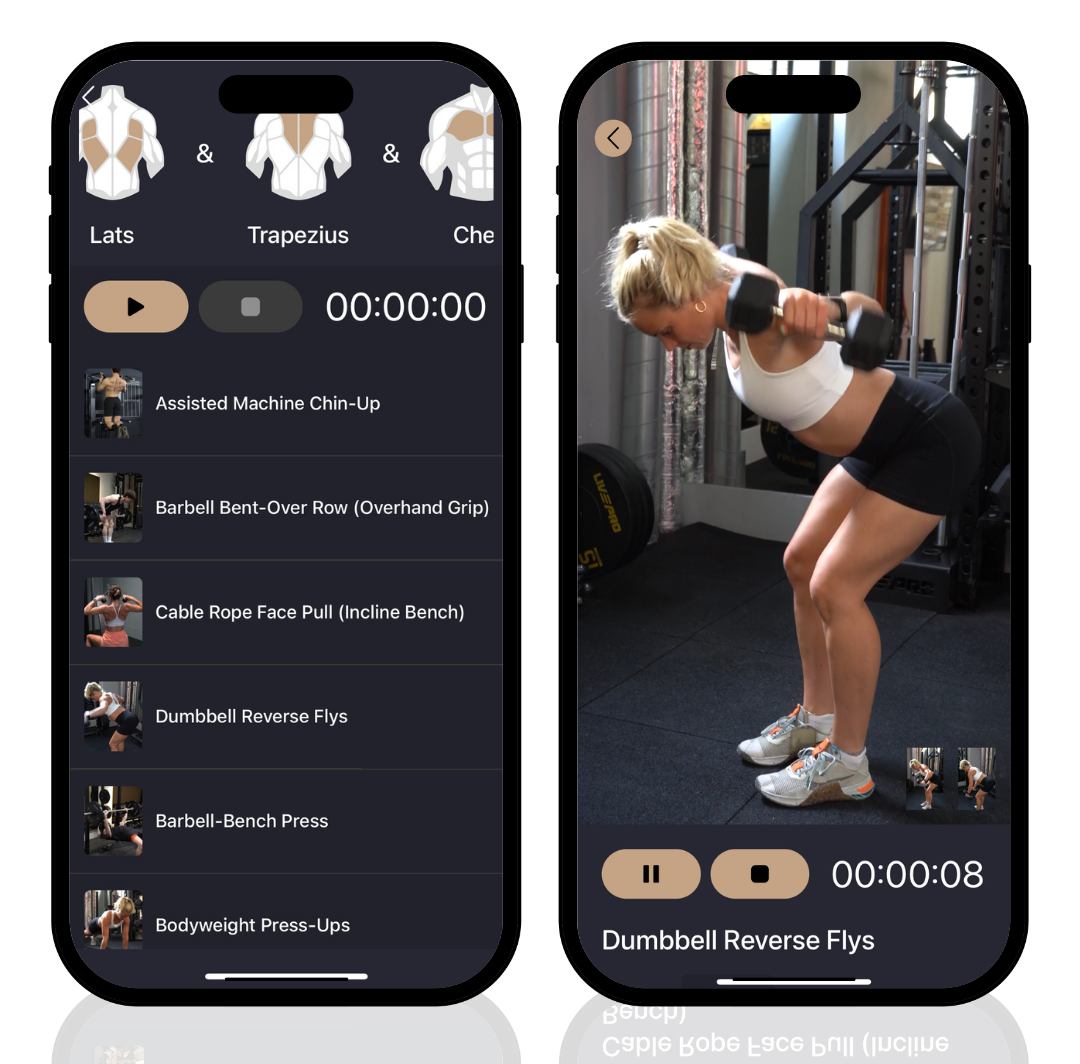
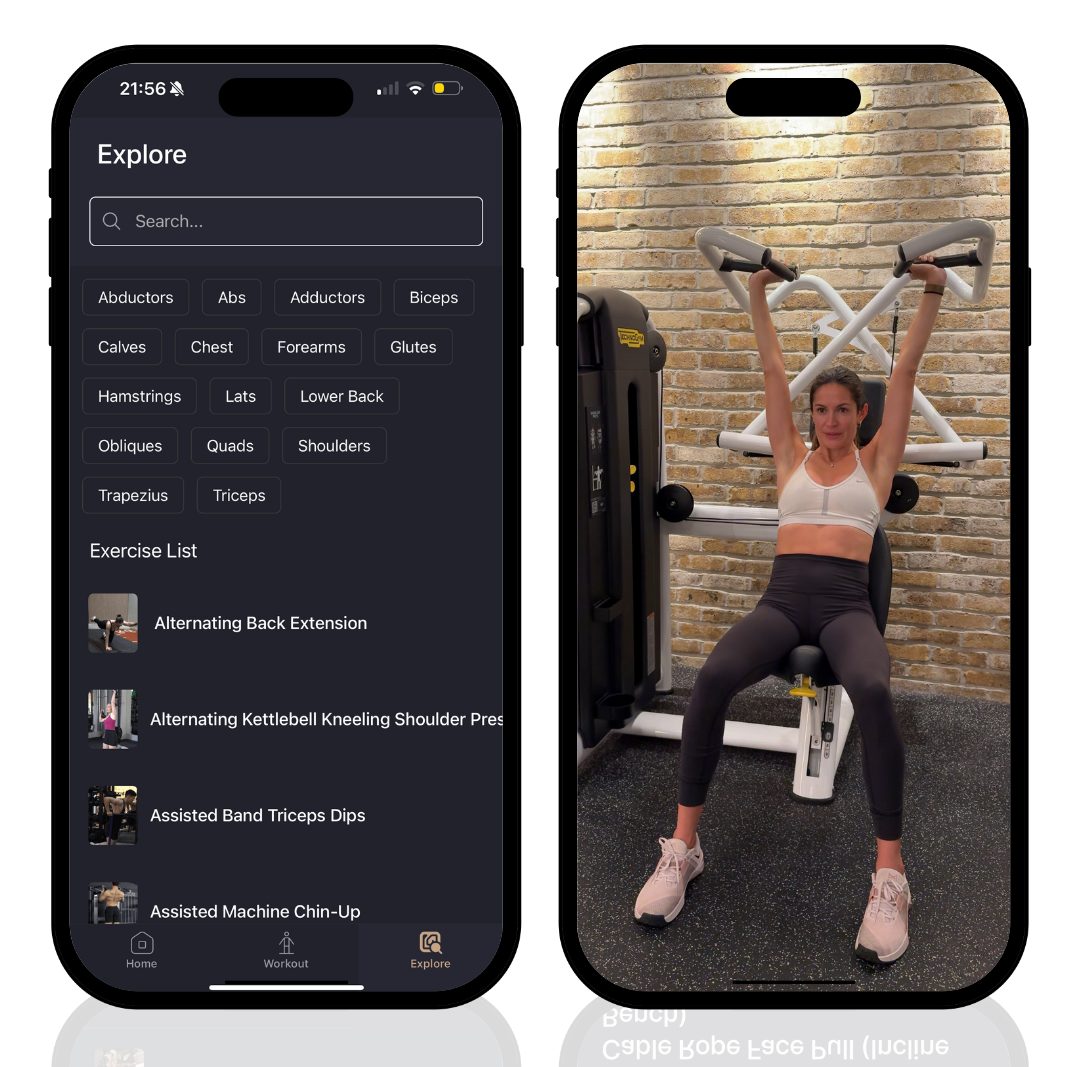
This is where the 12reps app truly shines compared to apps like Hevy or Fitbod. While those apps might suggest exercises, they don’t understand the science of progressive overload the way a certified trainer does. The 12reps app features over 1,500 expert-approved exercises, each with detailed video demonstrations performed by certified personal trainers.

But here’s what makes it revolutionary – the app doesn’t just show you exercises; it intelligently selects the right movements based on your equipment, experience level, and specific goals. Whether you’re training at home with just dumbbells or have access to a fully equipped gym, the 12reps app creates the perfect exercise selection for your situation.

The progression system is where my decade of training experience really shows. The app understands that progression isn’t just about adding weight – it’s about manipulating volume, intensity, and complexity at the right times. Research shows that varied exercise selection can significantly improve muscle hypertrophy and strength gains [1], and the 12-rep app applies this science automatically.

Performance tracking with the 12reps app

What gets measured gets managed, and the 12reps app takes performance tracking to a professional level. Every rep, every set, every weight increase is logged and analyzed to give you clear insights into your progress. But unlike basic tracking apps, the 12reps app provides intelligent feedback on your performance trends.

The app identifies when you’re ready to progress, when you need to deload, and when you might be pushing too hard. This kind of analysis typically requires expensive sessions with a personal trainer, but the 12reps app provides it automatically. You can literally watch your strength explode workout by workout, with clear data showing exactly how much stronger you’re getting.

About the 12reps App: Your Complete Workout Planner and Tracker 2025 and 2026

Strength Training Workout Planner and Tracker Features

As someone who specialises in strength training, I built the 12reps app to be the ultimate strength training workout planner and tracker. These features represent years of refinement based on what actually works in the real world.

Progressive overload tracking

Progressive overload is the foundation of all strength and muscle gains, yet most apps handle it poorly. The 12reps appdoesn’t just track your lifts – it intelligently manages your progression to ensure you’re always challenging your muscles optimally.

The app monitors your performance across multiple variables: weight lifted, reps completed, sets performed, and even rest periods. It then uses this data to suggest the perfect progression for your next workout. Sometimes that means adding weight, sometimes it means adding reps, and sometimes it means reducing rest periods. The 12reps app knows the difference and guides you accordingly.

Rep and set logging

Logging workouts should be effortless, not a chore that takes longer than the actual exercise. The 12reps app allows you to log your workouts in seconds with an intuitive interface that actually makes sense. No complicated menus or confusing navigation – just simple, fast logging that keeps you focused on your workout, not your phone.

The app remembers your previous performances and pre-fills suggested weights and reps, making each logging session faster than the last. You can even log multiple sets at once, saving precious time between exercises.

Weight progression charts

Visual progress tracking is incredibly motivating, and the 12reps app provides stunning charts that show your strength gains over time. These aren’t just basic line graphs – they’re comprehensive visualisations that show your progress across different exercises, muscle groups, and time periods.

You can see at a glance which lifts are progressing well and which might need attention. The charts also help identify patterns in your training, such as which days you perform best or how your strength varies throughout the week.

Rest timer functionality

Proper rest periods are crucial for strength development, yet most people either rest too long or not long enough. The 12reps app includes intelligent rest timers that adjust based on the exercise you’re performing and your training goals.

For heavy compound movements, the timer might suggest 3-4 minutes of rest. For isolation exercises, it might be recommended to hold for 60-90 seconds. The app learns your preferences and adjusts accordingly, ensuring you’re always resting optimally for your goals.

About the 12reps App: Your Complete Workout Planner and Tracker 2025 and 2026

Home and Gym Workout Integration

One of the biggest advantages of the 12reps app over competitors like Hevy and Fitbod is its seamless integration between home and gym workouts. Life is unpredictable, and your workout app should adapt to your circumstances, not the other way around.

Equipment-based workout filtering

Whether you’re training in a fully equipped gym or working out at home with minimal equipment, the 12reps appcreates effective workouts for your situation. The intelligent filtering system considers every piece of equipment you have access to and builds workouts that maximise your results with available tools.

This feature alone has saved my clients countless hours of frustration. No more wondering if you can get a good workout with just dumbbells – the 12reps app proves you absolutely can, with workouts that are just as effective as anything you’d do in a commercial gym.

Location-flexible planning

The 12reps app understands that your training location might change from day to day. Maybe you hit the gym on weekdays but train at home on weekends. The app seamlessly adapts your program to different locations while maintaining progression and consistency.

You can plan your entire week in advance, specifying which workouts will be at home and which will be at the gym. The app ensures that your program remains balanced and effective regardless of where you’re training.

Exercise substitution options with the 12reps app

Sometimes your planned exercise isn’t available – maybe the squat rack is occupied or you don’t have the right equipment. The 12reps app provides intelligent exercise substitutions that maintain the same training stimulus while working around limitations.

These aren’t random alternatives – they’re carefully selected substitutions that target the same muscle groups and movement patterns. The app understands exercise biomechanics and ensures that substitutions maintain the integrity of your program.

Personal Trainer-Level Guidance

This is where the 12reps app truly separates itself from every other workout planner and tracker on the market. While apps like Hevy focus on logging and Fitbod focus on variety, the 12reps app focuses on results through professional-level guidance.

Smart -powered workout recommendations

The artificial intelligence behind the 12reps app isn’t just about creating random workouts – it’s about applying the same decision-making process I use with my personal training clients. The AI considers your goals, experience level, available time, equipment, and recovery status to create workouts that are perfectly tailored to your needs.

But here’s what makes it special – the AI learns from your responses and results. If you consistently struggle with certain exercises or excel with others, the app adapts its recommendations accordingly. It’s like having a personal trainer who gets to know you better with every workout.

Form cues and technique tips

Proper form is non-negotiable for both safety and results, yet it’s where most people struggle without professional guidance. Every exercise in the 12reps app comes with detailed form cues and technique tips that I’ve developed over years of coaching.

These aren’t generic descriptions copied from textbooks – they’re the same cues I give my personal training clients to help them master each movement. The app even provides common mistake warnings and troubleshooting tips for when things don’t feel quite right.

Customised progression plans with the 12reps app

Generic progression schemes don’t work for everyone. Some people respond better to linear progression, others need undulating periodisation, and some require more complex programming. The 12-rep app creates customised progression plans based on your individual response to training.

The app monitors your progress patterns and adjusts your progression scheme accordingly. If you’re progressing quickly, it might accelerate your program. If you’re struggling, it might implement a more conservative approach. This level of individualisation is what you’d expect from high-end personal training, now available in the 12reps app.

About the 12reps App: Your Complete Workout Planner and Tracker 2025 and 2026

Why the 12reps App Outperforms the Competition

Having analysed every major fitness and exercise tracker on the market, I can confidently say that the 12reps appoffers something no competitor can match – the combination of professional expertise, intelligent programming, and user-friendly design.

Superior to Hevy App

While Hevy is popular for its simplicity, it’s essentially a digital workout log with basic tracking features. The 12reps app goes far beyond logging to provide intelligent programming, professional guidance, and adaptive progression. Where Hevy shows you what you did, the 12reps app tells you what you should do next and why.

Better than Fitbod App

Fitbod’s algorithm creates variety for the sake of variety, often at the expense of progressive overload and consistent skill development. The 12reps app understands that effective training requires both progression and periodisation, not just random exercise selection. While Fitbod might keep your workouts interesting, the 12reps app keeps them effective.

The Complete Solution

The 12reps app isn’t just a workout tracker – it’s a complete transformation system. From the moment you download it, you have access to the same level of guidance and programming that my personal training clients pay hundreds of pounds for. The app doesn’t just track your workouts; it actively helps you get better results.

Your Transformation Starts Today

The difference between people who achieve incredible transformations and those who struggle isn’t talent or genetics – it’s having the right system and sticking to it consistently. The 12reps app provides that system, with professional-level guidance that adapts to your needs and grows with your progress.

Whether your goal is to lose weight, build muscle, or develop functional strength, the 12reps app has everything you need to succeed. The ability to plan your workouts in advance keeps you motivated and accountable, while the intelligent progression system ensures you’re always moving toward your goals.

Don’t waste another day with inferior apps that treat you like just another user. Download the 12reps app today and experience what it’s like to have a world-class personal trainer in your pocket. Visit just12reps.com to start your 7-day free trial and discover why the 12reps app is the last workout planner and tracker you’ll ever need.

Your unbelievable transformation is waiting – it’s time to unlock it with the 12reps app.

References

[1] Kassiano, W., Costa, B., Kunevaliki, G., Soares, D., Zacarias, G., Manske, I., … & Cyrino, E. S. (2022). Does Varying Resistance Exercises Promote Superior Muscle Hypertrophy and Strength Gains? A Systematic Review. Journal of Strength and Conditioning Research. https://pubmed.ncbi.nlm.nih.gov/35438660/
How Many Days a Week Should I Work Out?

How Many Days a Week Should I Work Out?

My name is Will Duru, and with a BSc (Hons) in Sport and Exercise Science and over 10 years of experience as an award-winning personal trainer, I’ve dedicated my career to helping people optimise their training and recovery. The biggest mistake I see people make is thinking that more is always better. In reality, your body gets stronger during periods of rest, not during the workout itself. Finding the right balance between training and recovery is the true secret to long-term progress.

Following on from our discussion about workout duration, the next logical question I often hear as a personal trainer is, “How many days a week should I work out?” Just like workout length, the answer isn’t a one-size-fits-all solution. The optimal training frequency depends heavily on your experience level, your specific goals, the type of training you’re doing, and most importantly, your ability to recover.

In this article, we’ll dive into the science-backed guidelines for workout frequency, explore how to schedule your week based on your training type, and discuss how using a modern workout planner and tracker can help you create the perfect schedule to reach your goals without burning out. Whether you need a home workout planner and tracker or a comprehensive fitness and exercise tracker for the gym, understanding frequency is key.

How Many Days a Week Should I Work Out?

Beginner Workout Frequency Guidelines

When you’re starting your fitness journey, your enthusiasm can be a powerful motivator. However, it’s crucial to channel that energy wisely to avoid injury and burnout. Here’s how to approach your training frequency based on your experience level.

2-3 days per week for beginners

For someone new to structured exercise, training 2-3 days per week is the ideal starting point. This frequency provides enough stimulus to challenge your muscles and cardiovascular system to adapt and grow stronger, while also allowing ample time for recovery. Research consistently shows that beginners can make significant progress with this moderate approach, often seeing improvements in strength and muscle mass within the first few weeks.

A full-body workout routine is often best for beginners, as it trains all major muscle groups in each session. This approach ensures that you’re building a solid foundation of strength and coordination across your entire body. When you’re new to exercise, your nervous system needs time to learn movement patterns and coordinate muscle activation. Training the same movements multiple times per week helps accelerate this learning process.

The beauty of starting with 2-3 days per week is that it allows your body to adapt gradually. Your muscles, joints, tendons, and ligaments all need time to strengthen and adapt to the new demands being placed on them. Jumping into a high-frequency routine too quickly often leads to excessive soreness, fatigue, and potentially injury.

Remember, consistency is more important than intensity in the beginning. The goal is to build a sustainable habit that you can maintain long-term. Many beginners make the mistake of going all-out for a few weeks, only to burn out and quit. By starting conservatively, you’re much more likely to stick with your program and see lasting results.

4-5 days for intermediate

Once you have been training consistently for about six months to a year and your body has adapted, you can be considered an intermediate lifter. At this stage, you can increase your training frequency to 4-5 days per week to continue making progress. Your body has now adapted to the basic stress of exercise, and you need more volume and frequency to continue seeing improvements.

This is often the point where people switch from full-body workouts to a split routine, such as an upper/lower body split or a push/pull/legs routine. This allows you to increase the training volume for each muscle group while still allowing for adequate recovery. For example, you could train your upper body on Monday and Thursday, and your lower body on Tuesday and Friday. This gives each muscle group 72 hours of recovery time between sessions.

The transition to higher frequency training should be gradual. Don’t jump from 3 days to 5 days overnight. Instead, add one additional day for a few weeks, assess how you feel, and then consider adding another if needed. Your recovery capacity will continue to improve as you get more experienced, but it’s still important to listen to your body.

At the intermediate level, you might also start incorporating different types of training on different days. For instance, you could do strength-focused workouts on some days and higher-volume, muscle-building workouts on others. This variety helps prevent plateaus and keeps your training interesting.

6 days for advanced (with proper recovery)

Advanced individuals, who have been training seriously for several years, may benefit from training up to 6 days per week. This high frequency is only effective if recovery is meticulously managed. At this level, you’re operating near the upper limits of what your body can handle, so every aspect of recovery becomes critical.

This includes getting enough sleep (7-9 hours per night), eating a nutritious diet with adequate protein and calories, managing stress levels, and listening to your body’s signals. Advanced lifters often use highly specific split routines that target individual muscle groups on different days, allowing other parts of the body to recover. For example, a typical advanced split might look like: chest and triceps on Monday, back and biceps on Tuesday, legs on Wednesday, shoulders on Thursday, arms on Friday, and a lighter full-body session on Saturday.

The key to making high-frequency training work is periodization. This means systematically varying your training intensity, volume, and focus over time. You might have periods of higher intensity with lower volume, followed by periods of higher volume with moderate intensity. This prevents your body from adapting too completely to any one stimulus and helps prevent overtraining.

It is crucial to understand that this level of frequency is not necessary for most people and can easily lead to overtraining if not managed properly. Signs of overtraining include persistent fatigue, declining performance, mood changes, increased injury risk, and disrupted sleep patterns. If you experience any of these symptoms, it’s important to reduce your training frequency and focus on recovery.

How Many Days a Week Should I Work Out?

Workout Frequency by Training Type

Your training frequency will also depend on the type of exercise you are doing. Strength training and cardio have different demands on the body and require different recovery times.

Strength training: 2-4 times per week

For most people, strength training 2-4 times per week is the sweet spot for building muscle and strength. A comprehensive meta-analysis published in the journal Sports Medicine found that training a muscle group twice a week is superior to once a week for muscle growth [1]. This research analysed multiple studies and found that higher training frequencies led to greater muscle hypertrophy when total weekly volume was controlled.

This doesn’t necessarily mean you need to be in the gym more often. A well-designed full-body routine performed 2-3 times per week can be just as effective as a split routine performed 4 times per week, as long as the total training volume is similar. The advantage of higher frequency is that it allows you to distribute your training volume across more sessions, which can lead to better performance on each exercise and potentially greater muscle growth.

The key is to allow at least 48 hours of rest for a muscle group before training it again. This is the time it takes for your muscles to repair and grow stronger through a process called muscle protein synthesis. During this recovery period, your body repairs the microscopic damage caused by training and builds new muscle tissue. So, if you do a full-body workout on Monday, you should wait until at least Wednesday before doing another one.

However, recent research has challenged the traditional 48-72 hour recovery rule, suggesting that some muscle groups may recover faster than others. Smaller muscle groups like the biceps and triceps may recover within 24-48 hours, while larger muscle groups like the legs may need 72 hours or more. This is why many advanced lifters can train more frequently by carefully managing which muscle groups they work on different days.

Cardio: 3-5 times per week

For cardiovascular health, the American Heart Association recommends at least 150 minutes of moderate-intensity aerobic activity or 75 minutes of vigorous-intensity activity per week, spread throughout the week [2]. This typically translates to 3-5 cardio sessions per week, depending on the duration and intensity of each session.

The beauty of cardio is its flexibility. You can do cardio on your non-strength training days, or you can combine it with your strength workouts. For example, you could do a 20-minute cardio session after your weightlifting, or you could do a longer, 45-minute session on a separate day. Some people prefer to do their cardio first thing in the morning on an empty stomach, while others prefer to do it after their strength training when their glycogen stores are depleted.

The type of cardio you choose will also affect your frequency. High-intensity interval training (HIIT) is very demanding on your body and typically should be limited to 2-3 sessions per week. On the other hand, low-intensity steady-state cardio (like walking or easy cycling) can be done daily if desired, as it places minimal stress on your recovery systems.

It’s important to note that cardio and strength training can complement each other when programmed correctly. Moderate amounts of cardio can actually enhance recovery from strength training by increasing blood flow and nutrient delivery to your muscles. However, excessive cardio can interfere with strength and muscle gains, so finding the right balance is key.

Full body vs. split routines

Whether you choose a full-body routine or a split routine will also impact your training frequency. As mentioned earlier, full-body routines are great for beginners and are typically performed 2-3 times per week. Split routines, on the other hand, allow for a higher training frequency because you are training different muscle groups each day. A 2021 study in the journal Einstein (Sao Paulo) found that both full-body and split routines are equally effective for beginners in the first 8 weeks of training [3]. The best choice for you depends on your schedule, your goals, and your personal preference.

Here is a table summarising the recommended workout frequencies:

Experience Level

Strength Training Frequency

Cardio Frequency

Beginner

2-3 days/week (full body)

2-3 days/week

Intermediate

3-5 days/week (split)

3-4 days/week

Advanced

4-6 days/week (split)

3-5 days/week

How Many Days a Week Should I Work Out?

Using a Workout Planner and Tracker for Optimal Scheduling

Juggling your workout schedule with the demands of daily life can be challenging. This is where a workout planner and tracker become an invaluable tool. As a personal trainer, I’ve seen how a good fitness and exercise tracker can make the difference between sticking to a program and falling off the wagon. It’s particularly useful for those who need a flexible home workout planner and tracker.

How the 12reps app schedules your workouts

The 12reps app is designed to take the guesswork out of scheduling. Based on your goals, experience level, and available days, it creates a personalised training schedule for you. For example, if you tell the app you want to build muscle and can only train 3 days a week, it will likely generate a full-body routine for you. If you can train 5 days a week, it might create a push/pull/legs split.

This intelligent scheduling ensures that you train at the optimal frequency for your goals, while also allowing for adequate recovery. The app will also remind you when it’s time to work out, helping you stay consistent.

Recovery tracking features

One of the most advanced features of the 12reps app is its ability to track your recovery. The app can monitor your sleep, your heart rate variability, and your subjective feelings of soreness and fatigue. Based on this data, it can advise you on whether you should push hard in your next workout, take it easy, or even take an extra rest day.

This is a game-changer for preventing overtraining. Overtraining is a state of chronic fatigue and underperformance that occurs when you don’t get enough rest. It can set your progress back by weeks or even months. By using a workout planner and tracker that monitors your recovery, you can ensure that you are always training in the optimal state.

Preventing overtraining with smart planning

The 12reps app also helps prevent overtraining by intelligently managing your training volume. It tracks the number of sets and reps you do for each muscle group and ensures that you are not doing too much, too soon. It also incorporates deload weeks into your schedule, which are planned periods of lower-intensity training that allow your body to fully recover and adapt.

By using a smart fitness and exercise tracker like 12reps, you can take a proactive approach to your training and recovery. This not only leads to better results, but it also helps you build a sustainable, long-term fitness habit.

The Ultimate 5-Day Muscle-Building Split: My Proven Path to 8kg of Muscle

Conclusion

So, how many days a week should you work out? The answer, as we’ve seen, is that it depends. For most people, 2-4 days of strength training and 3-5 days of cardio per week is a great goal. However, the most important thing is to listen to your body and to find a schedule that you can stick to consistently.

Remember that rest and recovery are just as important as the training itself. And by using a workout planner and tracker like the 12reps app, you can ensure that you are getting the perfect balance of both.

12reps strength training, rugby strength and conditioning app

References

[1] Schoenfeld, B. J., Ogborn, D., & Krieger, J. W. (2016). Effects of Resistance Training Frequency on Measures of Muscle Hypertrophy: A Systematic Review and Meta-Analysis. Sports Medicine, 46(11), 1689–1697. https://doi.org/10.1007/s40279-016-0543-8

[2] American Heart Association. (2024). AHA Recommendations for Physical Activity in Adults and Kids. https://www.heart.org/en/healthy-living/fitness/fitness-basics/aha-recs-for-physical-activity-in-adults

[3] Evangelista, A. L., Braz, T. V., Teixeira, C. V. L. S., Rica, R. L., Alonso, A. C., Barbosa, W. A., Reis, V. M., Baker, J. S., Schoenfeld, B. J., Bocalini, D. S., & Greve, J. M. D. (2021). Split or full-body workout routine: which is best to increase muscle strength and hypertrophy?. Einstein (Sao Paulo, Brazil), 19, eAO5781. https://doi.org/10.31744/einstein_journal/2021AO5781