

Your 30s Are Not the Problem. Training Without a Plan Is.
Many women reach their 30s feeling as though fitness has become harder. Work is busier. Recovery may feel slower. You may have less time to spend trying random workouts and waiting for results.
The answer is not training every day. It uses three focused strength sessions that cover the whole body, allow enough recovery, and make progress easy to measure.
This 12-week programme is built for beginner women who want to build lean muscle, improve strength and feel more confident in the gym. You will repeat useful exercises, learn how different rep ranges work and track your progress rather than relying on guesswork.
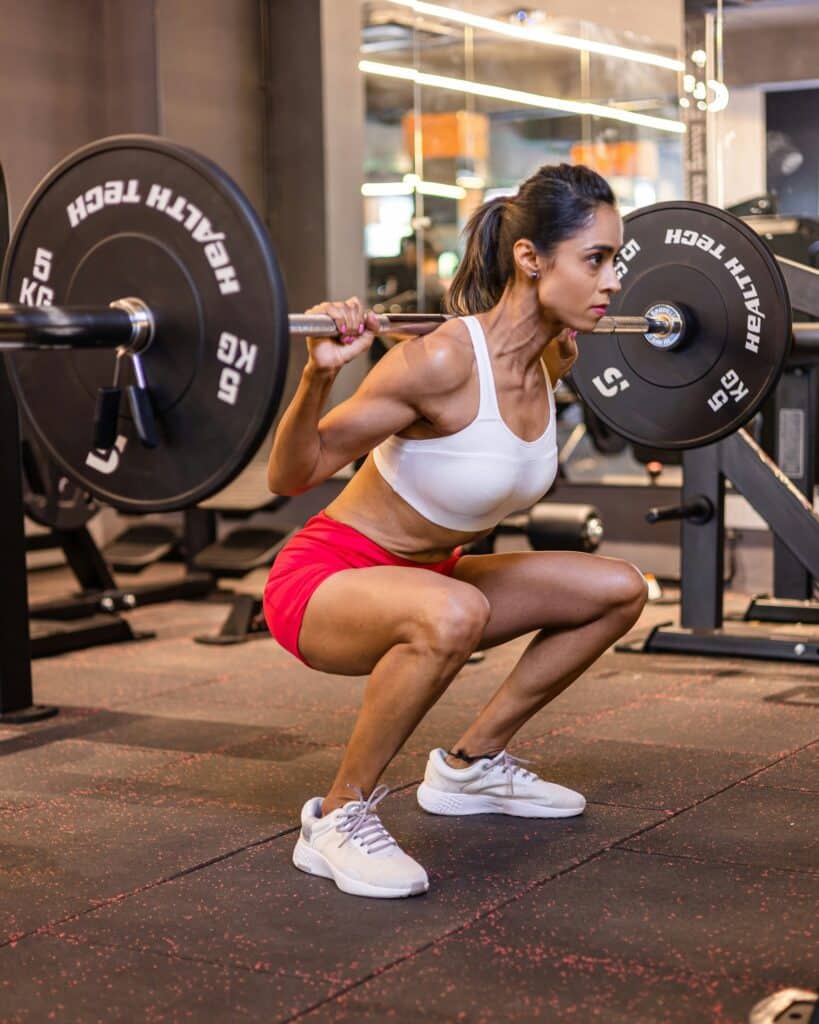
Why Strength Training Matters in Your 30s
- It helps you build and maintain muscle.
- It supports stronger bones and joints.
- It can improve body composition when nutrition supports your goal.
- It makes daily tasks feel easier.
- It gives you measurable progress through sets, repetitions and weight.
- It builds confidence because you can see what your body is capable of.
Why Three Days Per Week Works
Three weekly sessions give you enough training volume to improve without making your week revolve around the gym. You can train on Monday, Wednesday and Friday, or choose any three non-consecutive days.
Each workout trains the full body. This means every major muscle group receives regular practice, even if you miss one session.

How Rep Ranges Actually Work
There is no single perfect rep range. Different ranges can build muscle when the sets are challenging and your technique stays controlled.
Rep Range Guide
Rep range | Best use | Typical load | Rest |
3-5 | Maximum strength practice | Heavy | 2-4 minutes |
6-8 | Strength and muscle | Moderately heavy | 2-3 minutes |
8-12 | Muscle growth and general strength | Moderate | 60-120 seconds |
12-20 | Accessories and muscular endurance | Light to moderate | 45-90 seconds |
Twelve repetitions is a useful default for beginners because it gives you enough practice without requiring very heavy loads. It is not a rule for every exercise. Larger compound movements may work well in the 6-10 range, while smaller exercises often suit 12-15 repetitions.
Your 12-Week Progression
Training Phases
Weeks | Main focus | Sets | Rep target |
1-4 | Learn technique and build routine | 3 | 10-12 |
5-8 | Increase training volume | 3-4 | 8-12 |
9-12 | Build strength and confidence | 4 | 6-10 main lifts, 10-15 accessories |
The Three-Day Program
Day One: Full Body A
Exercise | Sets | Reps | Rest |
3-4 | 8-12 | 90 sec | |
3-4 | 8-12 | 90 sec | |
3-4 | 8-12 | 90 sec | |
3 | 8-12 | 90 sec | |
3 | 10 each leg | 60 sec | |
3 | 30-45 sec | 45 sec |
Day Two: Full Body B
Exercise | Sets | Reps | Rest |
3-4 | 8-12 each leg | 90 sec | |
3-4 | 8-12 | 90 sec | |
3 | 8-12 | 75 sec | |
3-4 | 10-15 | 60 sec | |
3 | 10-15 | 60 sec | |
3 | 8-12 each side | 45 sec |
Day Three: Full Body C
Exercise | Sets | Reps | Rest |
3 | 8-10 each leg | 90 sec | |
3-4 | 8-12 | 90 sec | |
3 | 12-15 | 60 sec | |
3 | 12-15 each leg | 60 sec | |
3 | 10-15 | 60 sec | |
4 | 20-30 metres | 60 sec |
How to Choose Your Starting Weight
Choose a weight that lets you complete the bottom of the rep range with two or three good repetitions left. Your final repetitions should feel challenging, but they should not look completely different from the first.
When you reach the top of the rep range for each set, increase the weight by the smallest available increment.
What Muscle Growth Actually Requires
- Progressive overload: more weight, more repetitions or better control over time.
- Enough weekly training volume.
- Protein spread across your meals.
- Enough total food to support your goal.
- Consistent sleep and recovery.
- Repeating a programme long enough to improve it.
20 Exercises From the 12REPS Library
Use these linked exercises to build or adapt your own programme. The sets and reps are starting recommendations, not fixed rules.
Exercise Library Table
Exercise | Focus | Sets | Reps |
Quads and glutes | 3-4 | 8-15 | |
Hamstrings and glutes | 3-4 | 8-12 | |
Legs and glutes | 3 | 8-12 each leg | |
Quads and glutes | 3 | 8-12 each leg | |
Legs and balance | 3 | 10 each leg | |
Glutes | 3-4 | 10-20 | |
Glutes | 3 | 12-20 each leg | |
Chest and triceps | 3-4 | 8-12 | |
Upper chest and shoulders | 3-4 | 8-12 | |
Chest, shoulders and triceps | 3 | 8-15 | |
Back and biceps | 3-4 | 8-12 | |
Mid-back | 3-4 | 8-12 | |
Rear shoulders and upper back | 3 | 12-20 | |
Shoulders and triceps | 3 | 8-12 | |
Side shoulders | 3 | 12-15 | |
Biceps | 3 | 10-15 | |
Triceps | 3 | 10-15 | |
Mid-section | 3 | 30-60 sec | |
Core and stability | 3 | 8-12 each side | |
Grip, core and full body | 4 | 20-40 metres |
Why 12REPS Is the Best Next Step
A programme on a webpage can tell you what to do. The challenge is following it for 12 weeks and remembering what you lifted.
- Save all three workouts in one place.
- Watch the exercise demonstration before each movement.
- Record your sets, repetitions and weights.
- Use the library to replace unavailable equipment.
- Track whether the same weight becomes easier.
- Follow trainer-built programmes when you do not want to plan alone.
Start With One Week, Not a Perfect Transformation
You do not need to feel ready for the full 12 weeks. You need to complete the first three sessions.
Choose manageable weights, write down what you do and return the following week with a clear target. That is how confidence grows. It is also how muscle and strength grow.
Follow the plan. Track every rep. Build strength that lasts.
Explore the 12REPS strength training exercise library before your next workout.
About PT Will Duru
Will Duru is a personal trainer with more than a decade of experience and a Sport and Exercise Science BSc (Hons). Learn more at PTWill.com.

No comment yet, add your voice below!