

PTWill.com | 12REPS Strength Training Guide
You want to feel stronger, improve your body composition and become more confident in the gym. But walking between machines without a plan makes it difficult to know whether your training is working.
You might copy short social media workouts, repeat the same lower-body exercises or avoid the weight area because the equipment feels unfamiliar. Perhaps you use the same light weights for months but never record your repetitions.
The issue is rarely a lack of effort. It is usually a lack of structure, suitable exercise selection and measurable progression. The best strength exercises for women are movements that train the whole body, suit your current ability and can be progressed over time.
Use a Clear Exercise Library Instead of Guessing
The 12REPS Strength Training Exercise Library gives you one place to explore movements by body part, equipment and training level. You can review setup, watch demonstrations and find alternatives when equipment is unavailable.
- Plan your workout before arriving
- Understand unfamiliar equipment
- Compare exercise variations
- Find movements for each muscle group
- Reduce time spent searching different websites
- Train with more confidence
You do not need to perform all 50 exercises in one week. Use this list as a collection of movements from which you can build a balanced programme.
Why Strength Training Matters for Women
Strength training can help you build or maintain muscle, improve physical strength and create measurable fitness goals. Becoming stronger may make carrying shopping, lifting luggage, climbing stairs and completing other daily tasks feel easier.
Resistance training can support bone health and help you retain muscle while following a calorie-controlled diet. Women aged 30, 40, 50 and beyond remain capable of challenging and progressive resistance training.

Can Women Build Muscle Without Becoming Bulky?
Building a large amount of muscle usually requires consistent training over a long period, progressive overload, enough food and protein, substantial training volume and suitable genetics. Lifting challenging weights will not suddenly create excessive muscle size.
Can Strength Training Help Women Lose Fat?
Strength training can support fat loss, but it does not replace nutrition. Fat loss requires a sustainable calorie deficit. Resistance training may help you maintain muscle during that process and gives you performance goals beyond the scale. Daily movement, sleep and consistency also matter. You cannot target fat loss from one body area.
Best Leg Exercises for Women
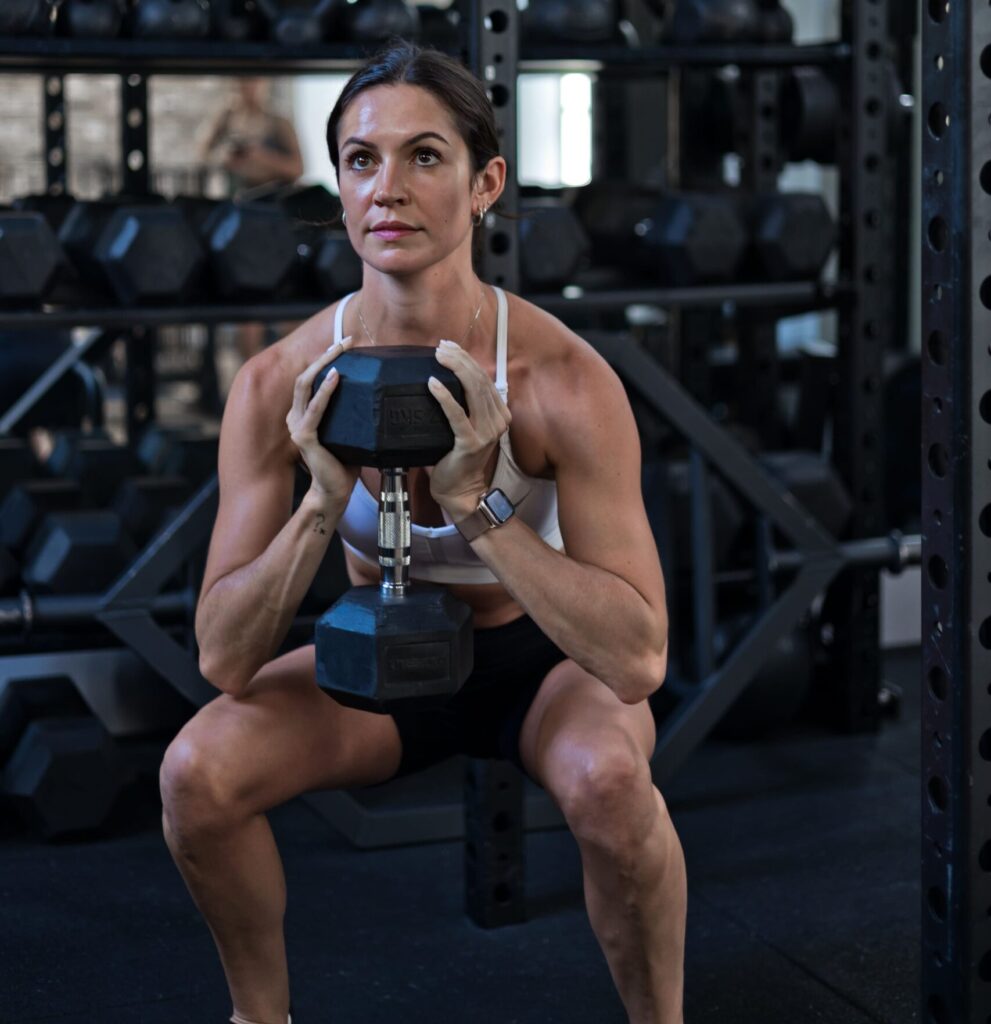
1. Kettlebell Box Front Squat
Main muscles: Quadriceps, glutes and core
Why it is useful: The box gives you a repeatable depth target while the front load encourages an upright torso.
How to perform it: Sit towards the box, keep tension through your feet and stand without rocking forwards.
Common mistake: Relaxing completely on the box. Touch it lightly and keep your trunk braced.
Starting point: 3 sets of 8-12 repetitions
12REPS video guide: The linked guide contains an exercise demonstration.
2. Cable Straight-Bar Front Squat
Main muscles: Quadriceps, glutes and core
Why it is useful: Cable resistance provides a controlled squat option without placing a bar across your shoulders.
How to perform it: Hold the bar securely, sit between your hips and drive through your full foot.
Common mistake: Allowing the heels to lift. Reduce the depth or load until they stay planted.
Starting point: 3 sets of 10-12 repetitions
12REPS video guide: The linked guide contains an exercise demonstration.
3. Single-Leg Box Squat
Main muscles: Quadriceps, glutes and core
Why it is useful: This develops single-leg strength and control with a clear depth target.
How to perform it: Lower slowly towards the box while keeping your knee in line with your toes.
Common mistake: Dropping onto the box. Control the final part of the descent.
Starting point: 2 sets of 6-10 repetitions per leg
12REPS video guide: The linked guide contains an exercise demonstration.
4. Bodyweight Bulgarian Split Squat
Main muscles: Quadriceps, glutes and hamstrings
Why it is useful: It builds unilateral strength before you add external weight.
How to perform it: Place the rear foot on a bench, keep the front foot stable and lower the back knee.
Common mistake: Using a stance that is too narrow. Widen your base until you feel balanced.
Starting point: 3 sets of 8 repetitions per side
12REPS video guide: The linked guide contains an exercise demonstration.
5. Kettlebell Walking Lunge
Main muscles: Quadriceps, glutes, hamstrings and calves
Why it is useful: Walking lunges develop lower-body strength and coordination one leg at a time.
How to perform it: Step forwards, lower both knees under control and drive into the next step.
Common mistake: Taking tiny steps that crowd the front knee. Use a comfortable stride.
Starting point: 3 sets of 8 repetitions per leg
12REPS video guide: The linked guide contains an exercise demonstration.
6. TRX Kettlebell Split Lunge
Main muscles: Quadriceps, glutes and hamstrings
Why it is useful: The TRX provides support while the kettlebell adds measurable resistance.
How to perform it: Use the straps lightly and lower the rear knee while keeping the front foot planted.
Common mistake: Pulling your body up with the straps. Let the legs do the work.
Starting point: 3 sets of 8-10 repetitions per leg
12REPS video guide: The linked guide contains an exercise demonstration.
7. Bodyweight Step-Up
Main muscles: Quadriceps, glutes and calves
Why it is useful: Step-ups are easy to scale and help you practise single-leg control.
How to perform it: Place your whole foot on the platform and drive through the working leg.
Common mistake: Pushing hard from the rear foot. Use it only for balance.
Starting point: 3 sets of 10 repetitions per leg
12REPS video guide: The linked guide contains an exercise demonstration.
8. Cable Step-Up
Main muscles: Quadriceps, glutes and core
Why it is useful: The cable adds progressive resistance to a familiar movement.
How to perform it: Keep the working foot planted and stand smoothly without bouncing.
Common mistake: Choosing a platform that is too high. Start with a manageable step.
Starting point: 3 sets of 8-12 repetitions per leg
12REPS video guide: The linked guide contains an exercise demonstration.
9. Curtsy Lunge
Main muscles: Glutes, quadriceps and hip stabilisers
Why it is useful: This variation challenges hip control in a different direction.
How to perform it: Step diagonally behind and lower only as far as you can control.
Common mistake: Twisting the front knee. Keep it tracking over the foot.
Starting point: 2 sets of 8 repetitions per side
12REPS video guide: The linked guide contains an exercise demonstration.
10. BOSU Ball Ankle Stability Stand
Main muscles: Calves, foot muscles, hips and core
Why it is useful: This drill develops balance and lower-leg control.
How to perform it: Stand tall on one foot and use support until you can hold the position steadily.
Common mistake: Progressing too quickly. Master a stable hold before removing support.
Starting point: 2 sets of 20-30 seconds per side
12REPS video guide: The linked guide contains an exercise demonstration.
Best Glute and Hamstring Exercises
Glute development comes from progressive resistance and suitable weekly training volume, not endless unweighted repetitions.
11. Cable Romanian Deadlift
Main muscles: Hamstrings, glutes and back stabilisers
Why it is useful: It teaches the hip-hinge pattern with smooth cable resistance.
How to perform it: Push your hips backwards while keeping the bar close and your spine controlled.
Common mistake: Turning the movement into a squat. Keep the knees softly bent and hips moving back.
Starting point: 3 sets of 8-12 repetitions
12REPS video guide: The linked guide contains an exercise demonstration.
12. BOSU Ball Glute Bridge
Main muscles: Glutes, hamstrings and core
Why it is useful: The unstable surface encourages controlled hip extension with a light load.
How to perform it: Brace your abdomen and lift your hips without arching your lower back.
Common mistake: Driving through the spine. Finish the movement by squeezing the glutes.
Starting point: 3 sets of 12-15 repetitions
12REPS video guide: The linked guide contains an exercise demonstration.
13. BOSU Ball Single-Leg Glute Bridge
Main muscles: Glutes, hamstrings and core
Why it is useful: The single-leg position challenges pelvic control and side-to-side strength.
How to perform it: Keep your hips level and lift through the heel of the working leg.
Common mistake: Rotating towards the supporting side. Reduce the range if needed.
Starting point: 2 sets of 8-12 repetitions per side
12REPS video guide: The linked guide contains an exercise demonstration.
14. Frog Pumps
Main muscles: Glutes
Why it is useful: Frog pumps work well as a warm-up or higher-repetition glute accessory.
How to perform it: Bring the soles of your feet together and lift the hips with control.
Common mistake: Rushing short repetitions. Pause briefly at the top.
Starting point: 2-3 sets of 15-20 repetitions
12REPS video guide: The linked guide contains an exercise demonstration.
15. Cable Glute Kickback
Main muscles: Glutes and hamstrings
Why it is useful: The cable lets you train hip extension with an adjustable load.
How to perform it: Extend the leg behind you while keeping your pelvis square.
Common mistake: Arching the lower back to create extra range. Keep the ribs controlled.
Starting point: 3 sets of 10-15 repetitions per leg
12REPS video guide: The linked guide contains an exercise demonstration.
16. Cable Lateral Kick
Main muscles: Side glutes and hip abductors
Why it is useful: This trains the muscles that help control the pelvis during single-leg tasks.
How to perform it: Move the leg sideways while keeping your torso upright.
Common mistake: Leaning away from the cable. Use a lighter weight and stay tall.
Starting point: 2 sets of 12-15 repetitions per leg
12REPS video guide: The linked guide contains an exercise demonstration.
17. Kettlebell Box Single-Leg Squat
Main muscles: Glutes, quadriceps and hamstrings
Why it is useful: Adding a kettlebell progresses the single-leg box squat without changing the pattern.
How to perform it: Lower towards the box slowly and stand through the working leg.
Common mistake: Using momentum from the free leg. Keep it quiet and controlled.
Starting point: 3 sets of 6-8 repetitions per side
12REPS video guide: The linked guide contains an exercise demonstration.
18. Swiss Ball Back Extension
Main muscles: Hamstrings, glutes and spinal erectors
Why it is useful: This develops controlled hip and trunk extension in a supported position.
How to perform it: Raise your torso until your body forms a straight line.
Common mistake: Hyperextending at the top. Stop when the trunk is neutral.
Starting point: 2 sets of 10-15 repetitions
12REPS video guide: The linked guide contains an exercise demonstration.
Best Back Exercises for Women
A stronger back supports pulling capacity and helps balance pressing work. One exercise cannot correct every posture concern.
19. Cable Machine Lat Pulldown
Main muscles: Lats, biceps and upper back
Why it is useful: The pulldown develops vertical-pulling strength with an adjustable load.
How to perform it: Pull the bar towards your upper chest while keeping your torso steady.
Common mistake: Leaning far backwards. Lower the weight and stay more upright.
Starting point: 3 sets of 8-12 repetitions
12REPS video guide: The linked guide contains an exercise demonstration.
20. Cable Rope Pulldown
Main muscles: Lats, upper back and rear shoulders
Why it is useful: The rope gives you a flexible hand position and smooth resistance.
How to perform it: Pull the rope towards your hips while controlling your ribs.
Common mistake: Using momentum from the lower back. Move only at the shoulders.
Starting point: 3 sets of 10-15 repetitions
12REPS video guide: The linked guide contains an exercise demonstration.
21. Cable Straight-Bar Pulldown
Main muscles: Lats and upper back
Why it is useful: This trains shoulder extension while reducing help from the biceps.
How to perform it: Keep your arms nearly straight and pull the bar towards your thighs.
Common mistake: Turning it into a triceps pushdown. Keep the elbow angle almost fixed.
Starting point: 3 sets of 10-15 repetitions
12REPS video guide: The linked guide contains an exercise demonstration.
22. Cable V-Bar Row
Main muscles: Lats, rhomboids, trapezius and biceps
Why it is useful: The stable cable position makes horizontal pulling easier to learn and track.
How to perform it: Pull the handle towards your lower ribs and pause briefly.
Common mistake: Rocking backwards with each repetition. Keep your torso still.
Starting point: 3 sets of 8-12 repetitions
12REPS video guide: The linked guide contains an exercise demonstration.
23. Cable Single-Arm Row
Main muscles: Lats, upper back, biceps and core
Why it is useful: Single-arm rowing helps you focus on one shoulder blade at a time.
How to perform it: Row towards your side without rotating your torso.
Common mistake: Twisting to move more weight. Square your shoulders to the cable.
Starting point: 3 sets of 10 repetitions per arm
12REPS video guide: The linked guide contains an exercise demonstration.
24. Cable Kneeling Single-Arm Row
Main muscles: Lats, upper back and biceps
Why it is useful: Kneeling reduces lower-body movement and encourages trunk control.
How to perform it: Stay tall and pull the elbow towards your hip.
Common mistake: Leaning away from the pulley. Use a load you can resist.
Starting point: 3 sets of 10-12 repetitions per arm
12REPS video guide: The linked guide contains an exercise demonstration.
25. Cable Incline Seated Row
Main muscles: Upper back, lats and rear shoulders
Why it is useful: Chest support reduces the temptation to create momentum.
How to perform it: Keep your chest against the bench and row towards your ribs.
Common mistake: Shrugging towards your ears. Keep the shoulders down.
Starting point: 3 sets of 8-12 repetitions
12REPS video guide: The linked guide contains an exercise demonstration.
26. Kettlebell Bent-Over Row
Main muscles: Lats, upper back, biceps and trunk stabilisers
Why it is useful: It combines rowing strength with holding a hip-hinge position.
How to perform it: Brace your torso and row the kettlebells towards your ribs.
Common mistake: Rounding the lower back. Reduce the load and reset your hinge.
Starting point: 3 sets of 8-12 repetitions
12REPS video guide: The linked guide contains an exercise demonstration.
Best Chest Exercises for Women
Chest training develops upper-body pressing strength. Women do not need to avoid it or use a different category of exercise.
27. Barbell Bench Press
Main muscles: Chest, triceps and front shoulders
Why it is useful: The bench press offers a stable movement that is simple to track.
How to perform it: Plant your feet and lower the bar towards your mid-chest.
Common mistake: Bouncing the bar. Lower it under control and pause lightly.
Starting point: 3 sets of 6-10 repetitions
12REPS video guide: The linked guide contains an exercise demonstration.
28. Barbell Incline Press
Main muscles: Upper chest, triceps and shoulders
Why it is useful: The incline changes the pressing angle and adds upper-chest emphasis.
How to perform it: Lower the bar towards your upper chest while keeping the upper back supported.
Common mistake: Setting the bench too upright. Use a moderate incline.
Starting point: 3 sets of 8-10 repetitions
12REPS video guide: The linked guide contains an exercise demonstration.
29. Incline Dumbbell Chest Press
Main muscles: Upper chest, triceps and shoulders
Why it is useful: Dumbbells let both arms work independently and allow a flexible path.
How to perform it: Press upwards with your wrists stacked over your elbows.
Common mistake: Lowering beyond a range you can control. Stop before the shoulders roll forwards.
Starting point: 3 sets of 8-12 repetitions
12REPS video guide: The linked guide contains an exercise demonstration.
30. Seated Cable Chest Press
Main muscles: Chest, triceps and shoulders
Why it is useful: Cables keep resistance on the chest throughout the press.
How to perform it: Sit tall and press the handles forwards without shrugging.
Common mistake: Letting the shoulders roll forwards. Keep your chest stable.
Starting point: 3 sets of 10-15 repetitions
31. Kettlebell Floor Chest Press
Main muscles: Chest, triceps and shoulders
Why it is useful: The floor creates a clear stopping point and limits the bottom range.
How to perform it: Press the kettlebells above your chest while keeping your feet planted.
Common mistake: Striking the floor with your elbows. Lower gently.
Starting point: 3 sets of 8-12 repetitions
12REPS video guide: The linked guide contains an exercise demonstration.
32. Cable Chest Fly
Main muscles: Chest and front shoulders
Why it is useful: The fly adds chest volume without another heavy pressing exercise.
How to perform it: Bring your hands together in a wide arc with softly bent elbows.
Common mistake: Bending the elbows until it becomes a press. Keep the angle steady.
Starting point: 2 sets of 12-15 repetitions
12REPS video guide: The linked guide contains an exercise demonstration.
33. Bodyweight Press-Up
Main muscles: Chest, triceps, shoulders and core
Why it is useful: Press-ups require little equipment and can be progressed in several ways.
How to perform it: Keep your body straight and lower your chest between your hands.
Common mistake: Allowing the hips to drop. Brace your glutes and abdomen.
Starting point: 3 controlled sets, stopping 2 reps before form fails
12REPS video guide: The linked guide contains an exercise demonstration.
Best Shoulder Exercises for Women
34. Barbell Military Press
Main muscles: Shoulders, triceps and upper chest
Why it is useful: This develops overhead strength and trunk control.
How to perform it: Brace your body and press overhead without leaning backwards.
Common mistake: Overextending the lower back. Keep your ribs down.
Starting point: 3 sets of 6-10 repetitions
12REPS video guide: The linked guide contains an exercise demonstration.
35. Swiss Ball Seated Shoulder Press
Main muscles: Shoulders, triceps and core
Why it is useful: The unstable seat encourages controlled loading and body awareness.
How to perform it: Sit tall with both feet planted and press the weights overhead.
Common mistake: Choosing weights that make the ball difficult to control.
Starting point: 2 sets of 10 repetitions
12REPS video guide: The linked guide contains an exercise demonstration.
36. Kettlebell Kneeling Shoulder Press
Main muscles: Shoulders, triceps and core
Why it is useful: Kneeling reduces help from the legs and encourages trunk control.
How to perform it: Stay upright and press without rotating.
Common mistake: Leaning sideways. Use a lighter kettlebell and brace.
Starting point: 3 sets of 8-10 repetitions per arm
12REPS video guide: The linked guide contains an exercise demonstration.
37. Kettlebell Split-Stance Shoulder Press
Main muscles: Shoulders, triceps and core
Why it is useful: The staggered stance adds a stability challenge to overhead pressing.
How to perform it: Brace your trunk and press without shifting forwards.
Common mistake: Losing rib position. Keep your abdomen engaged.
Starting point: 3 sets of 8 repetitions per side
12REPS video guide: The linked guide contains an exercise demonstration.
38. Cable Straight-Bar Front Raise
Main muscles: Front shoulders and upper chest
Why it is useful: Cable resistance keeps tension on the shoulders throughout the raise.
How to perform it: Lift to shoulder height with controlled elbows.
Common mistake: Swinging backwards. Reduce the load and slow down.
Starting point: 2 sets of 12-15 repetitions
12REPS video guide: The linked guide contains an exercise demonstration.
39. Cable Reverse Fly
Main muscles: Rear shoulders and upper back
Why it is useful: It balances pressing work and adds direct rear-shoulder training.
How to perform it: Open your arms while keeping your torso still.
Common mistake: Turning the movement into a row. Keep only a soft elbow bend.
Starting point: 3 sets of 12-15 repetitions
12REPS video guide: The linked guide contains an exercise demonstration.
40. Cable Seated Face Pull
Main muscles: Rear shoulders, upper back and external rotators
Why it is useful: Face pulls train upper-back strength and shoulder-blade control.
How to perform it: Pull towards your face and separate the rope ends.
Common mistake: Shrugging the shoulders. Keep them away from your ears.
Starting point: 3 sets of 12-15 repetitions
12REPS video guide: The linked guide contains an exercise demonstration.
Best Arm Exercises for Women Over 30
Arm isolation exercises work best alongside compound pressing and pulling movements.
41. Cable Straight-Bar Biceps Curl
Main muscles: Biceps and forearms
Why it is useful: Cable resistance is simple to adjust and progress.
How to perform it: Keep your elbows near your sides and curl without moving the shoulders.
Common mistake: Leaning backwards. Stand tall and lower the weight.
Starting point: 3 sets of 10-15 repetitions
12REPS video guide: The linked guide contains an exercise demonstration.
42. Kettlebell Biceps Curl
Main muscles: Biceps, brachialis and forearms
Why it is useful: Kettlebells give you another hand position and loading feel.
How to perform it: Stand tall and keep your upper arms still.
Common mistake: Swinging the weights. Pause before every repetition.
Starting point: 2 sets of 8-12 repetitions
12REPS video guide: The linked guide contains an exercise demonstration.
43. Rope Overhead Triceps Extension
Main muscles: Triceps
Why it is useful: The overhead position trains the triceps through a lengthened range.
How to perform it: Keep your elbows forwards and extend your arms fully.
Common mistake: Flaring the ribs. Brace your abdomen and use less load.
Starting point: 3 sets of 10-15 repetitions
12REPS video guide: The linked guide contains an exercise demonstration.
44. EZ-Bar Skull Crusher
Main muscles: Triceps
Why it is useful: This gives direct triceps work from a stable bench position.
How to perform it: Lower the bar by bending the elbows, then extend without moving the shoulders.
Common mistake: Letting the elbows drift widely. Keep them controlled.
Starting point: 2 sets of 8-12 repetitions
12REPS video guide: The linked guide contains an exercise demonstration.
45. Triceps Dip
Main muscles: Triceps, chest and shoulders
Why it is useful: Dips provide a challenging bodyweight press when the movement feels comfortable.
How to perform it: Lower under control and press through the handles.
Common mistake: Dropping into an uncontrolled depth. Use assistance and shorten the range.
Starting point: 2 sets of 6-10 assisted repetitions
12REPS video guide: The linked guide contains an exercise demonstration.
Best Core and Stability Exercises
Core training involves controlling and resisting movement, not only performing crunches.
46. Hanging Knee Tuck
Main muscles: Abdominals, hip flexors and grip
Why it is useful: The bent-knee position is an accessible hanging core exercise.
How to perform it: Bring your knees towards your torso without swinging.
Common mistake: Dropping quickly between repetitions. Lower slowly.
Starting point: 3 sets of 8-12 repetitions
12REPS video guide: The linked guide contains an exercise demonstration.
47. Hanging Leg Raise
Main muscles: Abdominals, hip flexors and grip
Why it is useful: This progresses the knee tuck by increasing the lever length.
How to perform it: Raise your legs while keeping your body controlled.
Common mistake: Using momentum. Start each repetition from a still position.
Starting point: 2 sets of 6-10 repetitions
12REPS video guide: The linked guide contains an exercise demonstration.
48. Ring Row
Main muscles: Upper back, arms and core
Why it is useful: Your trunk must remain rigid while you pull your body towards the rings.
How to perform it: Keep a straight line from your head to your heels.
Common mistake: Allowing the hips to sag. Tighten your glutes and core.
Starting point: 3 sets of 8-15 repetitions
12REPS video guide: The linked guide contains an exercise demonstration.
49. Cable Rope Bent-Over Row
Main muscles: Back, arms, glutes and trunk stabilisers
Why it is useful: Holding the hinge position adds a stability demand to cable rowing.
How to perform it: Keep your back controlled and pull the rope towards your ribs.
Common mistake: Standing up during each repetition. Hold the hinge throughout.
Starting point: 3 sets of 10-12 repetitions
12REPS video guide: The linked guide contains an exercise demonstration.
How to Choose Exercises From the List
Do not try to fit all 50 exercises into one programme. For a full-body workout, choose one squat or lunge, one hip hinge, one glute-focused movement, one press, one row or pulldown, one shoulder or arm movement and one core exercise.
For an upper-body session, choose one chest press, one vertical pull, one horizontal row, one shoulder press, one rear-shoulder movement, one biceps exercise and one triceps exercise.
For a lower-body session, choose one squat, one hinge, one single-leg movement, one glute exercise, one hamstring exercise and one calf or core movement.
Three-Day Gym Programme for Women
Day One: Full Body Strength
Exercise | Sets and reps | Rest | Coaching focus |
3 x 8-12 | 90 sec | Stay braced | |
3 x 6-10 | 120 sec | Control the lowering | |
3 x 8-12 | 90 sec | Pause at the ribs | |
3 x 8-12 | 120 sec | Push hips back | |
2 x 12-15 | 60 sec | Avoid shrugging | |
2 x 8-12 | 60 sec | Control the swing |
Day Two: Glutes, Back and Upper Body
Exercise | Sets and reps | Rest | Coaching focus |
3 x 12-15 | 75 sec | Finish with the glutes | |
3 x 8-12 | 90 sec | Avoid leaning back | |
3 x 8 each | 90 sec | Use controlled steps | |
3 x 8-10 | 90 sec | Keep the torso still | |
2 x 10-15 | 60 sec | Keep elbows still | |
2 x 30 sec | 45 sec | Maintain balance |
Day Three: Full Body Progression
Exercise | Sets and reps | Rest | Coaching focus |
3 x 10-12 | 90 sec | Keep heels planted | |
3 x 8-12 | 90 sec | Stack wrists and elbows | |
3 x 8-12 | 90 sec | Keep chest supported | |
2 x 10-15 | 60 sec | Stop at neutral | |
2 x 12-15 | 60 sec | Separate the rope | |
2 x 6-10 | 60 sec | Avoid momentum |
How Much Weight Should Women Lift?
The correct weight depends on performance, not sex. Choose a load that allows you to complete the target repetitions with controlled technique while leaving around two or three repetitions in reserve. The final repetitions should feel challenging. If form breaks down early, reduce the load.
How to Apply Progressive Overload
Progress can come from more repetitions, a small increase in weight, improved control, a greater range of motion, a slower tempo, reduced assistance or an extra set when appropriate.
- Start near the lower end of the repetition range.
- Add repetitions over future sessions.
- Reach the top of the range with good form.
- Increase the resistance slightly.
- Return to the lower end of the range.
Example: 10 kg for 8, 8 and 7 repetitions may become 9, 8 and 8, then 10, 9 and 8. Once you reach 12, 12 and 12, increase the weight and return to the lower end of the range.
How Long Should a Gym Workout Last?
A focused strength workout may take around 45 to 75 minutes. The time depends on exercise number, rest periods, warm-up sets, training experience and equipment availability. Longer is not automatically better. A clear 50-minute session completed consistently can be more useful than an unplanned two-hour workout.
Use the 12REPS Exercise Library Before Training
Use the 12REPS Strength Training Exercise Library to search by body part, equipment and training level. Review demonstrations, learn setup cues and find replacements before entering the gym.
Build your next workout before entering the gym |
Track Your Training With the 12REPS App
The 12REPS strength training app helps you build and save workouts, record weights, sets and repetitions, review previous sessions, find substitutes and monitor progressive overload. 12REPS uses exercise filters and structured workout tools rather than random exercise selection.
Why Exercise Videos Matter
Exercise videos can show equipment setup, starting position, hand and foot placement, movement direction, range of motion, tempo and control. Watching a video does not guarantee perfect technique. Begin with a load you can control and ask a qualified trainer for help when needed.
Expert Guidance From PT Will
PT Will is Will Duru, a personal trainer who holds a Sport and Exercise Science BSc (Hons). Effective programming balances exercise selection, training volume, progressive overload, recovery, nutrition and consistency.
Common Gym Mistakes Women Over 30 Should Avoid
Only performing glute exercises: Train your legs, back, chest, shoulders, arms and core as well.
Avoiding upper-body training: Include pressing and pulling to build balanced strength.
Never increasing the challenge: Add repetitions, improve control or raise the load gradually.
Changing programmes every week: Keep your main exercises long enough to measure progress.
Taking every set to failure: Leave two or three repetitions in reserve during most sets.
Using poor technique for more reps: End the set when you can no longer control the movement.
Believing sweating equals fat loss: Sweat reflects temperature control, not the amount of fat lost.
Relying only on cardio: Combine cardiovascular exercise with resistance training.
Ignoring recovery: Plan rest days and maintain a regular sleep routine.
Failing to record workouts: Log weights, sets and repetitions after each exercise.
Comparing yourself with others: Compare current performance with your own training history.
Expecting fat loss from one area: Your body determines where fat is lost.
Choosing exercises because they are popular: Select movements that fit your programme and ability.
Skipping meals to compensate: Use a sustainable eating pattern rather than punishment.
Measuring progress only by body weight: Track strength, repetitions, consistency and measurements too.
No comment yet, add your voice below!