

To brace for a lift, take a big breath into your belly and the sides of your waist, then tighten your midsection as if someone is about to poke you in the stomach. For heavy squats, deadlifts and presses, hold that breath through the hardest part of the rep and breathe out once you’re past it. For lighter work, keep breathing steadily and keep a light brace.
I’m Will Duru. I’ve coached for over 12 years and hold a BSc (Hons) in Sport and Exercise Science. I teach bracing in almost every first session, because most people have never been shown it. Here’s how I coach it, when to hold your breath, and when you shouldn’t.
What bracing actually means
Bracing isn’t sucking your stomach in. It’s closer to the opposite. You breathe in, then tighten the muscles all the way around your middle (front, sides and lower back) against that breath.
This raises the pressure inside your abdomen. A 2013 review found that holding your breath this way does increase intra-abdominal pressure, which may help keep your trunk stiff and your spine supported under load (Hackett and Chow, 2013).
The same review notes that a brief breath hold is hard to avoid when the weight is heavy or you take a set close to failure. So the aim isn’t to never hold your breath. It’s to do it on purpose, briefly, and only when the lift needs it.
How to brace in 4 steps
- Set up first. Get your feet and grip in place before you breathe. The brace comes last, just before you move.
- Breathe in low and wide. Send the breath into your belly and the sides of your waist, not up into your chest. If your shoulders rise, the breath is too high.
- Tighten around the breath. Firm up your midsection as if you’re about to take a light punch. Don’t pull your belly button in. Your waist should feel slightly wider, not narrower.
- Lift, then breathe out. Hold the brace through the hardest part of the rep. Breathe out once you’re past it, take a fresh breath and brace again before the next rep.
Each hold should last a few seconds, roughly one rep. Not the whole set.
When to hold your breath and when to keep breathing
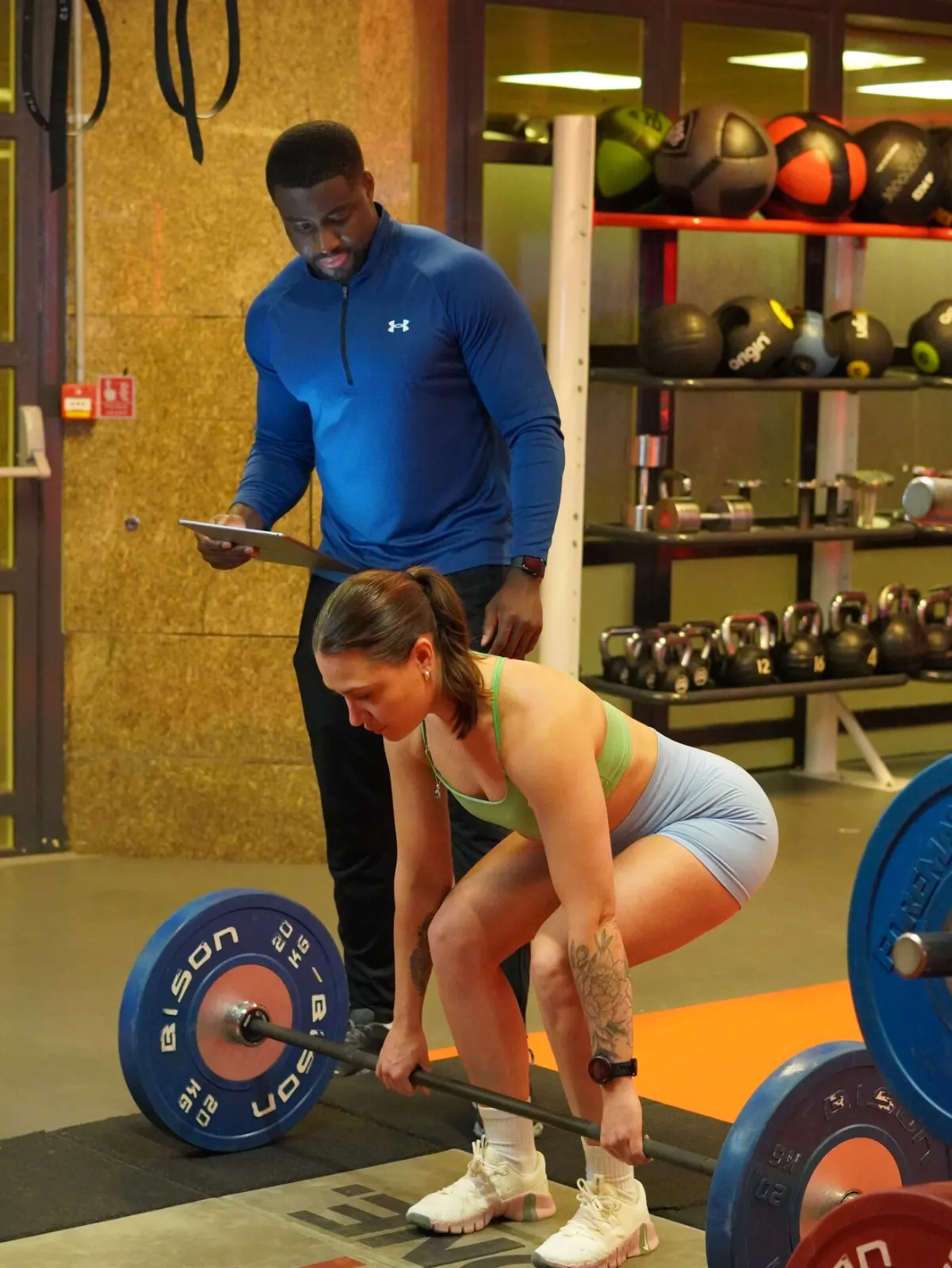
- Heavy compound lifts, such as the barbell squat, Romanian deadlift and overhead press on low-rep sets: brace and hold through the hard part of each rep, then breathe between reps.
- Moderate or lighter work, such as machines, a single-arm row or higher-rep sets: keep breathing. Breathe out as you lift or push, breathe in as you lower, and keep a light brace without holding your breath.
- Planks and other holds: keep your middle firm and take short, steady breaths. If you can’t breathe at all, you’re bracing harder than the exercise needs.
Common mistakes I see
- Sucking the stomach in. It makes your middle narrower and softer, not stiffer.
- Breathing into the chest. Your shoulders rise, your neck tenses, and the brace leaks as soon as you move.
- Holding your breath for the whole set. You get light-headed and the set ends early. Breathe between reps.
- Bracing hard for everything. A bicep curl doesn’t need the same brace as a heavy deadlift.
- Letting go at the bottom. Many people lose the brace at the hardest point of the rep. Keep it until you’re through it.
A 2-minute drill to practise bracing
- Lie on your back with your knees bent. Put one hand on your belly and the other on the side of your waist.
- Breathe in so both hands move outwards. Your chest should stay fairly still.
- Tighten your middle against your hands, then take short breaths while you keep that tension. Do 5 breaths, rest, and repeat 3 times.
- Stand up and do the same. Then try it with a light goblet squat.
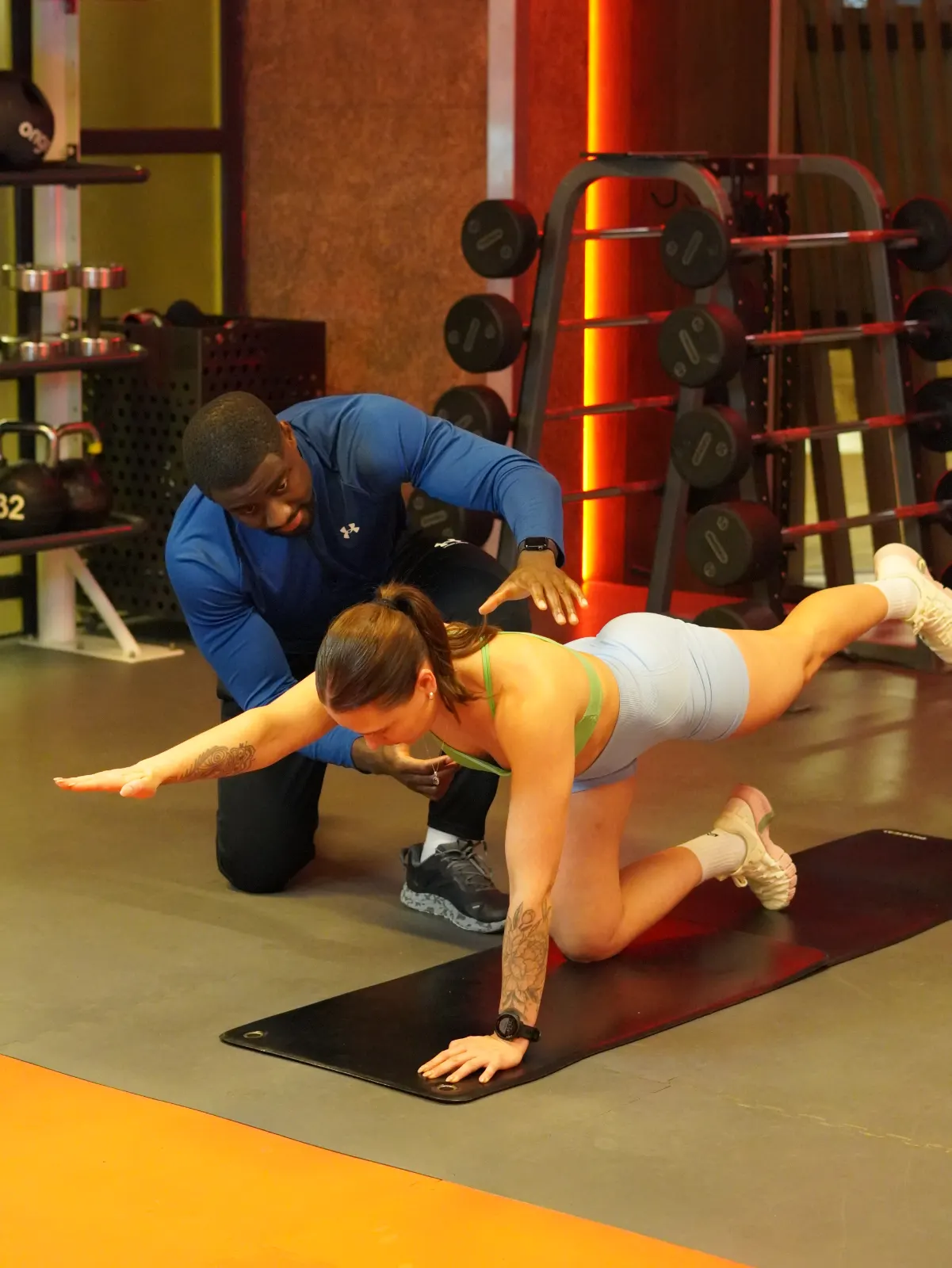
The build-up sets in your warm-up are the best place to practise. The weight is light, so you can focus on the breath and the brace before your heavier sets.
When to be careful
Holding your breath while you strain raises your blood pressure for a few seconds. Some people should avoid holding their breath and breathe steadily through every rep instead:
- If you have high blood pressure or a heart condition. The American College of Sports Medicine advises people with high blood pressure to avoid straining or holding their breath when lifting weights (ACSM).
- If you’re pregnant or have recently given birth. Follow advice from your midwife, GP or a pelvic health physio. My postnatal training guide explains how I approach this.
- If you have a hernia, have had recent abdominal surgery, or a doctor has told you to avoid straining.
If you’re not sure, speak to your GP before you start lifting heavy. Stop and get medical help if you feel chest pain, a sudden severe headache or faintness during a lift.
If you’re new to lifting, you don’t need to start with big breath holds. A 2019 systematic review suggests untrained people build up gradually before heavy squats and deadlifts, which create high pressure in the trunk (Blazek et al., 2019). Learn the brace with light weights first.
How I coach breathing with clients
In a first session, I teach the brace lying down, then standing, then with a light weight. I watch where the breath goes and fix it before we add load.
As the weights go up through progressive overload, I check the brace again. What works at 40kg often slips at 80kg, and that’s usually where form starts to break down.
Train with me
I coach one-to-one at my private studio in Fitzrovia (W1T 3DN) and at home across SW1. If you want someone to watch your breathing and bracing on your own lifts, that’s what these sessions are for.
- 10 sessions: £1,900 (£190 per session)
- 50 sessions: £8,500 (£170 per session)
Sign up for a package and you also get a year’s free access to the 12REPS app, so you can log your workouts between sessions.
Book a free consultation and tell me about your training and any health history. We’ll start from there.
Prefer to talk first? WhatsApp me using the WhatsApp icon in the bottom-right corner of the screen, or email connect@ptwill.com.
Will Duru, BSc (Hons) Sport and Exercise Science, personal trainer with over 12 years’ experience.

