

“I’m 32 and feel like my body just… changed.”
I’ve heard this from dozens of women. Usually around age 30-35, something shifts.
Weight that used to come off easily now sticks around. Energy levels aren’t what they were. Recovery from workouts takes longer. Clothes fit differently even at the same weight.
This isn’t in your head. This is physiology.
After training hundreds of women through their 30s, 40s, and 50s, I can tell you exactly what’s happening—and more importantly, what you need to do about it.
The answer isn’t more cardio. It’s not crash dieting. It’s not accepting decline as inevitable.
It’s strength training. And here’s why this becomes absolutely critical from age 30 onwards.

What Actually Changes in Your Body From Age 30
Let’s be honest about the physiology before discussing solutions.
Muscle Mass Naturally Declines (Sarcopenia)
From age 30, women lose approximately 3-8% of muscle mass per decade if they don’t actively prevent it.
This accelerates after 50. By 60, many women have lost 30-40% of the muscle they had at 25.
This isn’t cosmetic. Muscle mass directly influences:
- Metabolic rate (muscle burns calories at rest)
- Insulin sensitivity (muscle helps regulate blood sugar)
- Bone density (muscle stress strengthens bones)
- Functional capacity (strength for daily activities)
- Falls risk (weak muscles increase injury risk)
The decline isn’t inevitable—it’s preventable with resistance training. But you have to actually do it.
Metabolic Rate Drops Significantly
Your resting metabolic rate decreases roughly 2-3% per decade after age 30.
Why? Primarily because you’re losing metabolically active muscle tissue.
This is why you can eat exactly what you ate at 25 and gain weight at 35. Your body now requires fewer calories for the same activities.
Client example: Emma, 34, ate approximately 2,200 calories daily at age 25 and maintained weight easily. Same diet at 34? Gained 8kg over three years.
Not because she was eating more. Because her body now required 200-300 fewer calories daily due to decreased muscle mass and metabolic rate.
Bone Density Begins Declining
Women reach peak bone mass around age 30. After that, bone density declines roughly 1% annually.
This accelerates dramatically during perimenopause and menopause when oestrogen drops. Some women lose 20% of bone density in the 5-7 years following menopause.
Osteoporosis affects 1 in 3 women over 50. Hip fractures, spinal fractures, wrist fractures—all become increasingly common.
Cardiovascular exercise doesn’t build bone density. Weight-bearing resistance training does.

Hormonal Shifts Begin Earlier Than You Think
Most women think hormonal changes start at menopause (average age 51).
Actually, perimenopause—the transitional phase—often begins in the late 30s or early 40s. Sometimes earlier.
Oestrogen and progesterone start fluctuating. This affects:
- Fat distribution (more abdominal fat)
- Muscle maintenance (harder to preserve)
- Bone density (accelerated loss)
- Energy levels (more variable)
- Recovery capacity (takes longer)
- Insulin sensitivity (decreases)
These changes make fat loss harder and muscle loss easier. Unless you actively counteract them with strength training.
Recovery Capacity Decreases
At 25, you can train hard, sleep poorly, eat mediocrely, and still recover for the next session.
At 35, that doesn’t work anymore. Recovery takes longer. Sleep matters more. Nutrition becomes more critical.
This doesn’t mean you can’t train intensely. It means you need smarter programming that accounts for decreased recovery capacity.
Why Strength Training is the Solution (Not Cardio)
I’ve trained women who do cardio 5 days weekly for years. They’re cardiovascularly fit but weak, with poor muscle mass and ongoing struggles with weight management.
Then I’ve trained women who prioritise strength training 3-4 days weekly. They’re strong, lean, metabolically healthy, and aging far better.
The difference isn’t small. It’s dramatic.
Strength Training Prevents Muscle Loss
Resistance training is the only exercise modality that significantly builds and maintains muscle mass.
Regular strength training programmes can prevent age-related muscle loss entirely. Not slow it down—prevent it.
Women in their 60s who’ve been strength training consistently often have more muscle mass than sedentary 30-year-olds.
Strength Training Maintains (Even Increases) Metabolic Rate
Building and maintaining muscle keeps your metabolic rate higher.
Client example: Sarah, 38, began strength training after years of cardio-only exercise. Over 12 months, she built 4kg of muscle.
This increased her resting metabolic rate by approximately 80-100 calories daily. That’s 700 weekly, 2,800 monthly, 36,500 calories annually.
Equivalent to losing 5kg of fat without changing diet at all. Just from having more metabolically active tissue.
Strength Training is THE Solution for Bone Density
Weight-bearing resistance training is the most effective intervention for building and maintaining bone density.
The mechanical stress of lifting weights signals your body to strengthen bones. This is how you prevent osteoporosis, not with calcium supplements alone.
Women in their 50s who strength train regularly maintain bone density comparable to women 20 years younger.
Strength Training Manages Hormonal Changes
Resistance training positively affects insulin sensitivity, cortisol management, and helps mitigate symptoms of perimenopause and menopause.
Women who strength train report:
- Better energy stability
- Improved sleep quality
- Reduced hot flashes
- Better mood regulation
- Easier weight management
Not magic. Just physiology responding to appropriate stimulus
Strength Training Improves Body Composition
Most women from 30 onwards don’t just want to lose weight. They want to look “toned”—defined muscles, lean appearance, athletic physique.
That’s muscle definition. Which requires having actual muscle underneath the fat.
Cardio burns calories during the session. Strength training builds tissue that burns calories 24/7 whilst creating the defined appearance women actually want.
The Problem: Most Women Don’t Know How to Start
“I know I should lift weights, but I don’t know what to do.”
This is what I hear constantly from women in their 30s and 40s.
They’re intimidated by the gym. They don’t know which exercises to do. They’re unsure about weights and sets and reps. They’re worried about getting “bulky” (physiologically nearly impossible without years of dedicated effort).
So they either:
- Don’t start at all
- Hire a personal trainer (expensive: £50-100+ per session)
- Ask ChatGPT for workout advice (terrible idea—I’ll explain why)
- Follow random Instagram workouts (inconsistent, no progression)
None of these are optimal solutions.
Why Asking ChatGPT for Workout Advice is a Bad Idea
I’ve reviewed workout programmes that clients showed me from ChatGPT. They’re consistently problematic.
Problem 1: No Real Understanding of Your Context
ChatGPT doesn’t know:
- Your actual training experience level
- Your genuine equipment access
- Your injury history or limitations
- Your previous workout performance
- Your actual recovery capacity
It generates generic content based on keywords you provide. It can’t adapt based on how you respond to training.
Problem 2: No Progressive Overload Structure
ChatGPT might give you “Week 1” of a programme. But it has no system for tracking your performance and adjusting Week 2, Week 3, Week 12 based on actual results.
Progressive overload—the fundamental principle of improvement—requires tracking and intelligent adaptation. ChatGPT can’t do this.
Problem 3: No Form Guidance or Safety Checks
ChatGPT can describe an exercise. It can’t show you proper execution or warn you when your form is breaking down.
Exercise descriptions without visual demonstration lead to poor technique, which leads to injury.
Problem 4: No Accountability or Tracking
ChatGPT isn’t tracking whether you actually did the workout. It isn’t recording your weights, reps, performance. It can’t tell you “based on last session, here’s what you should do today.”
It’s a one-time information generator, not a training system.
Problem 5: Generic Advice Without Expertise
ChatGPT synthesises information from across the internet—good sources and terrible sources combined.
It has no actual training experience. It hasn’t worked with hundreds of real people. It doesn’t know what actually works in practice versus theory.
Would you trust medical advice from an AI that’s never treated a patient? Training advice works the same way.

Why Asking ChatGPT for Workout Advice is a Bad Idea
I’ve reviewed workout programmes that clients showed me from ChatGPT. They’re consistently problematic.
Problem 1: No Real Understanding of Your Context
ChatGPT doesn’t know:
- Your actual training experience level
- Your genuine equipment access
- Your injury history or limitations
- Your previous workout performance
- Your actual recovery capacity
It generates generic content based on keywords you provide. It can’t adapt based on how you respond to training.
Problem 2: No Progressive Overload Structure
ChatGPT might give you “Week 1” of a programme. But it has no system for tracking your performance and adjusting Week 2, Week 3, Week 12 based on actual results.
Progressive overload—the fundamental principle of improvement—requires tracking and intelligent adaptation. ChatGPT can’t do this.
Problem 3: No Form Guidance or Safety Checks
ChatGPT can describe an exercise. It can’t show you proper execution or warn you when your form is breaking down.
Exercise descriptions without visual demonstration lead to poor technique, which leads to injury.
Problem 4: No Accountability or Tracking
ChatGPT isn’t tracking whether you actually did the workout. It isn’t recording your weights, reps, performance. It can’t tell you “based on last session, here’s what you should do today.”
It’s a one-time information generator, not a training system.
Problem 5: Generic Advice Without Expertise
ChatGPT synthesises information from across the internet—good sources and terrible sources combined.
It has no actual training experience. It hasn’t worked with hundreds of real people. It doesn’t know what actually works in practice versus theory.
Would you trust medical advice from an AI that’s never treated a patient? Training advice works the same way.

The 12REPS Solution: Bridging the Gap Between DIY and Personal Training
This is exactly why I built 12REPS.
I wanted to give women (and men) the benefits of professional personal training without the £3,000-5,000 annual cost.
What 12REPS Provides That ChatGPT Can’t
Intelligent Programming Based on Your Actual Circumstances
12REPS asks the right questions:
- What equipment do you have today?
- How much time do you have?
- What’s your training experience?
- What did you lift last session?
Then it builds programming that fits your reality, not fantasy scenarios.
Progressive Overload Automatically Tracked and Suggested
The app tracks every set, every rep, every weight. When you hit target performance, it tells you exactly how to progress:
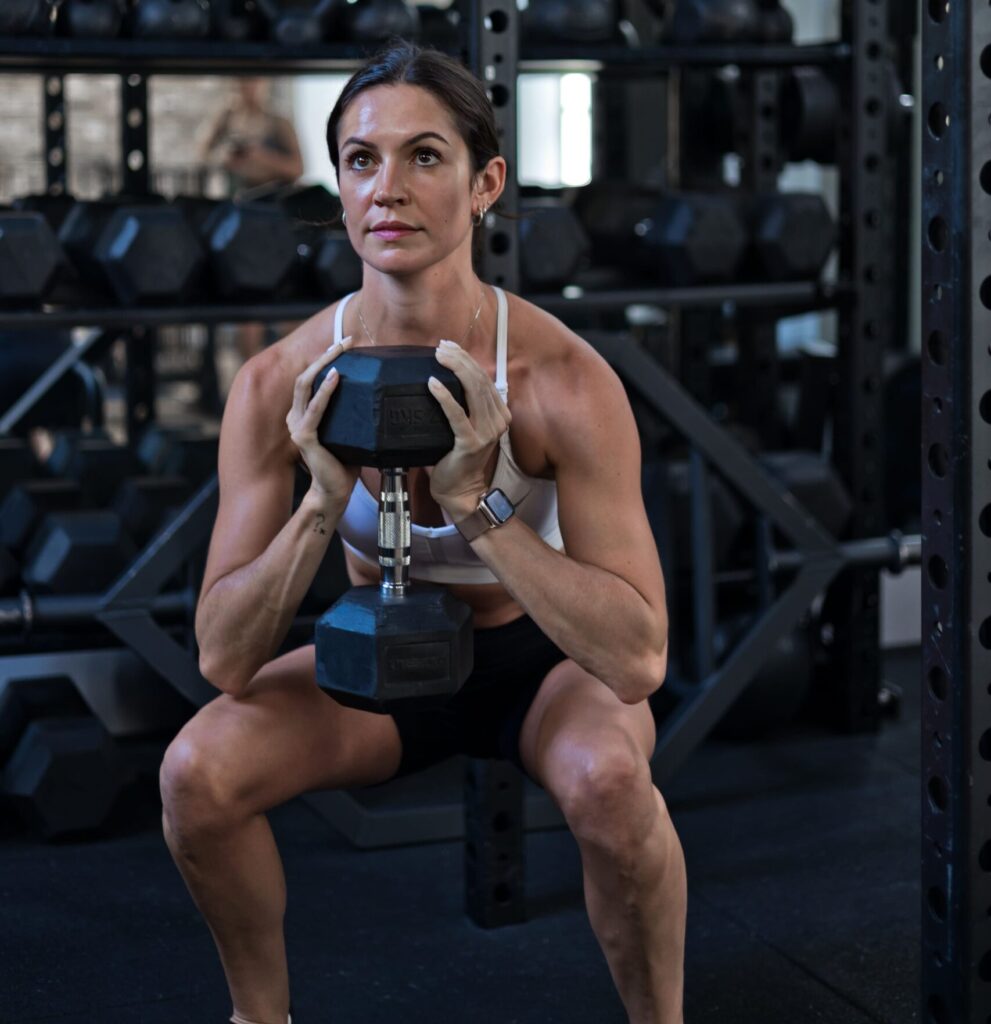
“You completed 3×10 at 30kg goblet squats. Next session, try 32.5kg for 3×8”
This is how you get stronger consistently. Not by guessing.
1,500+ Exercise Demonstrations from Certified Trainers
Every exercise includes professional video demonstrations filmed with real trainers:
- Proper setup
- Execution through full range
- Common mistakes to avoid
- Breathing patterns
- Alternative variations
You can watch anytime you need form reference. This prevents injuries and optimizes results.
Programmes Designed by Actual Personal Trainers
I’m Will Duru, BSc Sport and Exercise Science, 10+ years training real clients.
Every programme in 12REPS is built on evidence-based training science and refined through hundreds of real-world client experiences.
This isn’t AI-generated content. This is professional programming accessible affordably.
Adaptation Based on Your Performance
The app learns from your training:
- Progressing too fast? Suggests deload
- Struggling with certain movements? Offers alternatives
- Recovering well? Can increase volume
- Missing sessions? Adjusts to get you back on track
This intelligent adaptation is what separates proper training systems from generic workout lists.
What 12REPS Provides That Personal Training Can’t (At This Price)
Accessibility: £8-13/month versus £50-100+ per session Availability: Train whenever suits your schedule, not appointment times Consistency: Structure for every session, not just once weekly with trainer Flexibility: Adapts to gym, home, travel, whatever equipment you’ve got Privacy: No intimidation factor of training with someone watching initially
How 12REPS Complements Personal Training
If you do work with a personal trainer, 12REPS enhances that relationship:
Your PT sessions focus on:
- Technique refinement
- Addressing specific weaknesses
- Advanced coaching
- Accountability and motivation
Between sessions, 12REPS provides:
- Structured programming
- Form reference via videos
- Progressive overload tracking
- Consistency in your independent training
Many personal trainers actually recommend 12REPS to their clients for exactly this reason.

Add Your Heading Text Here
What Proper Strength Training Looks Like for Women 30+
Let’s be practical about implementation.
Training Frequency: 3-4 Sessions Weekly
You don’t need to live in the gym. 3-4 well-structured sessions weekly produce excellent results.
This is sustainable long-term, which matters more than intensity you can only maintain for weeks.
Focus on Compound Movements
The foundation should be movements that work multiple muscle groups:
- Squats (variations)
- Hip hinges (deadlifts, RDLs)
- Pushing (bench press, overhead press, push-ups)
- Pulling (rows, pull-ups, lat pulldowns)
These provide maximum return on training time investment.
Progressive Overload is Non-Negotiable
You must systematically increase difficulty over time:
- Adding weight when possible
- Adding reps before weight jumps
- Improving form and range of motion
- Managing volume intelligently
12REPS tracks this automatically. You’re never guessing what to do next.
Don’t Neglect Upper Body
Most women focus heavily on lower body and neglect upper body training.
This creates imbalances and prevents the defined, athletic look most women want.
Strong shoulders, defined arms, capable upper body—these come from actually training them properly.
Nutrition Matters More as You Age
Protein requirements increase with age: 1.6-2.2g per kg bodyweight daily.
Your body becomes less efficient at utilizing protein, so you need more to achieve the same muscle protein synthesis response.
Real Transformations: Women Who Started After 30
Lisa, started at 33: Had never lifted weights. Followed structured 12REPS programming for 18 months. Built visible muscle definition, lost 6kg fat, completely transformed body composition. Now stronger at 35 than she was at 25.
Patricia, started at 42: Years of cardio-only exercise, struggling with weight gain. Switched to strength-focused programming. 12 months later: 5kg muscle gained, 8kg fat lost, metabolic rate significantly higher, looks 10 years younger.
Margaret, started at 51: Concerned about bone density and strength loss. Began age-appropriate strength training. Two years later: bone density scans show improvement (not just maintenance), functional strength dramatically better, maintaining independent active lifestyle.
These aren’t genetic outliers. These are regular women who followed structured programming consistently.

The Bottom Line: Start Now, Not "When You're Ready"
You won’t be more ready next month. Or next year.
Your bone density isn’t improving whilst you wait. Your muscle mass isn’t maintaining itself. Your metabolic rate isn’t reversing its decline.
Every year you delay is a year of preventable decline.
Starting at 30 is better than starting at 40. Starting at 40 is better than starting at 50. Starting at 50 is better than never starting.
What you need:
✅ Structured programming (not random workouts)
✅ Progressive overload (systematic improvement)
✅ Proper form guidance (injury prevention)
✅ Consistency (months and years, not weeks)
What you don’t need:
❌ Expensive personal training every session (though occasional PT sessions help)
❌ ChatGPT workout advice (lacks context, progression, accountability)
❌ Instagram workout inspiration (inconsistent, no structure)
❌ Complicated programmes (simple works if you actually do it)
12REPS provides everything you actually need for £8-13 monthly. Professional programming, video demonstrations, progressive overload tracking, intelligent adaptation.
Less than two coffees monthly. For programming that prevents decades of preventable decline.
Your 40-year-old, 50-year-old, 60-year-old self will thank you for starting today.
Download 12REPS. Start the 7-day trial. Follow a programme for 12 weeks.
You’ll be shocked by what proper strength training achieves.
About Will Duru: BSc Sport and Exercise Science, award-winning personal trainer with over 10 years of experience specialising in women’s strength training across London. Founder of 12REPS, helping thousands of women build strength, prevent decline, and transform their bodies from age 30 onwards.
Start Today: Download 12REPS – Your personal training at a fraction of the cost.
Related Articles:
- Why Every Woman Should Be Strength Training
- Nutrition for Building Muscle and Losing Fat
- 12REPS: Your Pocket Personal Trainer for 2026
No comment yet, add your voice below!