

If you lifted weights before pregnancy, you can usually get back to it. The sensible route is to wait for your 6 to 8 week postnatal check, ideally see a pelvic health physio, then rebuild your lifts in stages. Start lighter than before and let your body’s signals set the pace, not the calendar.
I’m Will Duru, a personal trainer in SW1 with over 12 years’ experience and a BSc (Hons) in Sport and Exercise Science. This guide is for mums who already know their way around a barbell. If you’re in the first weeks after birth, or new to lifting, start with my postnatal strength training guide instead.
Before you lift: get checked
The UK Chief Medical Officers say it’s safe to be active after childbirth, and that you should build back up to muscle-strengthening activities twice a week (UK CMO guidance). After the 6 to 8 week check, harder exercise can come back gradually, building from moderate to vigorous over at least three months (NCSEM summary of the guidelines).
If you can, book a pelvic health physio assessment as well. It tells you how your pelvic floor and tummy muscles are coping before the weights get heavy. If you had a caesarean or a difficult birth, let your midwife, GP or physio guide when you start.
I’m not a physio and I don’t diagnose. I work alongside yours and follow any limits they set.
Why your old numbers aren’t your starting point
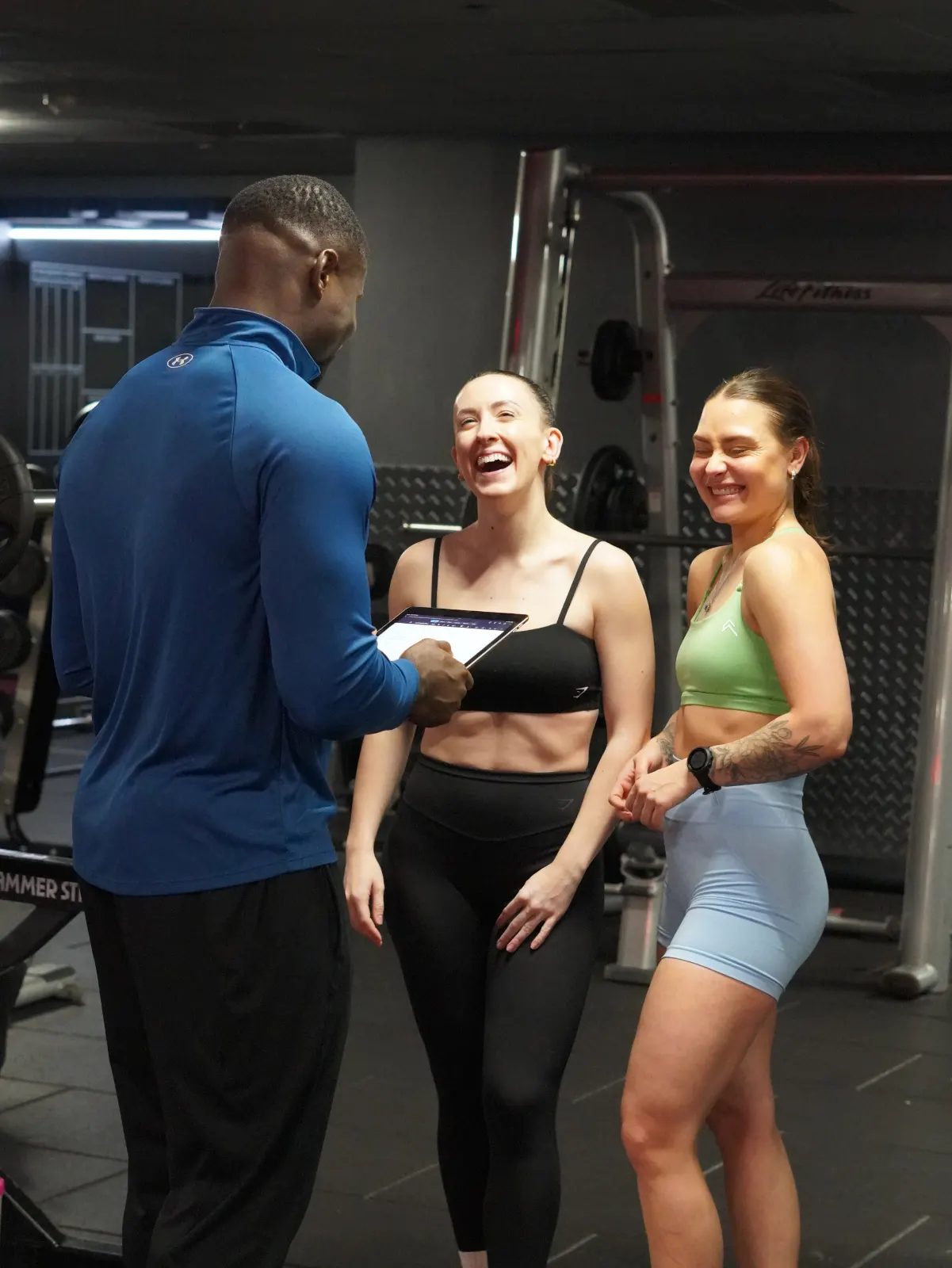
The weights you lifted before pregnancy are still in your head. They aren’t where we start. After months of change and very little sleep, the first few weeks are about owning the movements again, not testing what you can lift.
I start most lifts well below your old working weights and build up from there. That isn’t a lack of ambition. It lets us see how your body responds before the load gets heavy.
Breathing and bracing come first
Heavy lifting raises the pressure inside your abdomen, and your pelvic floor sits at the base of it. A 2024 clinical commentary in the UK’s pelvic health physiotherapy journal notes there’s a lot of confusion about breath holding and the pelvic floor during weight training, and that pelvic floor symptoms are common in women who lift (Prevett and Moore, 2024). So the brace you used before pregnancy needs re-learning, not just repeating.
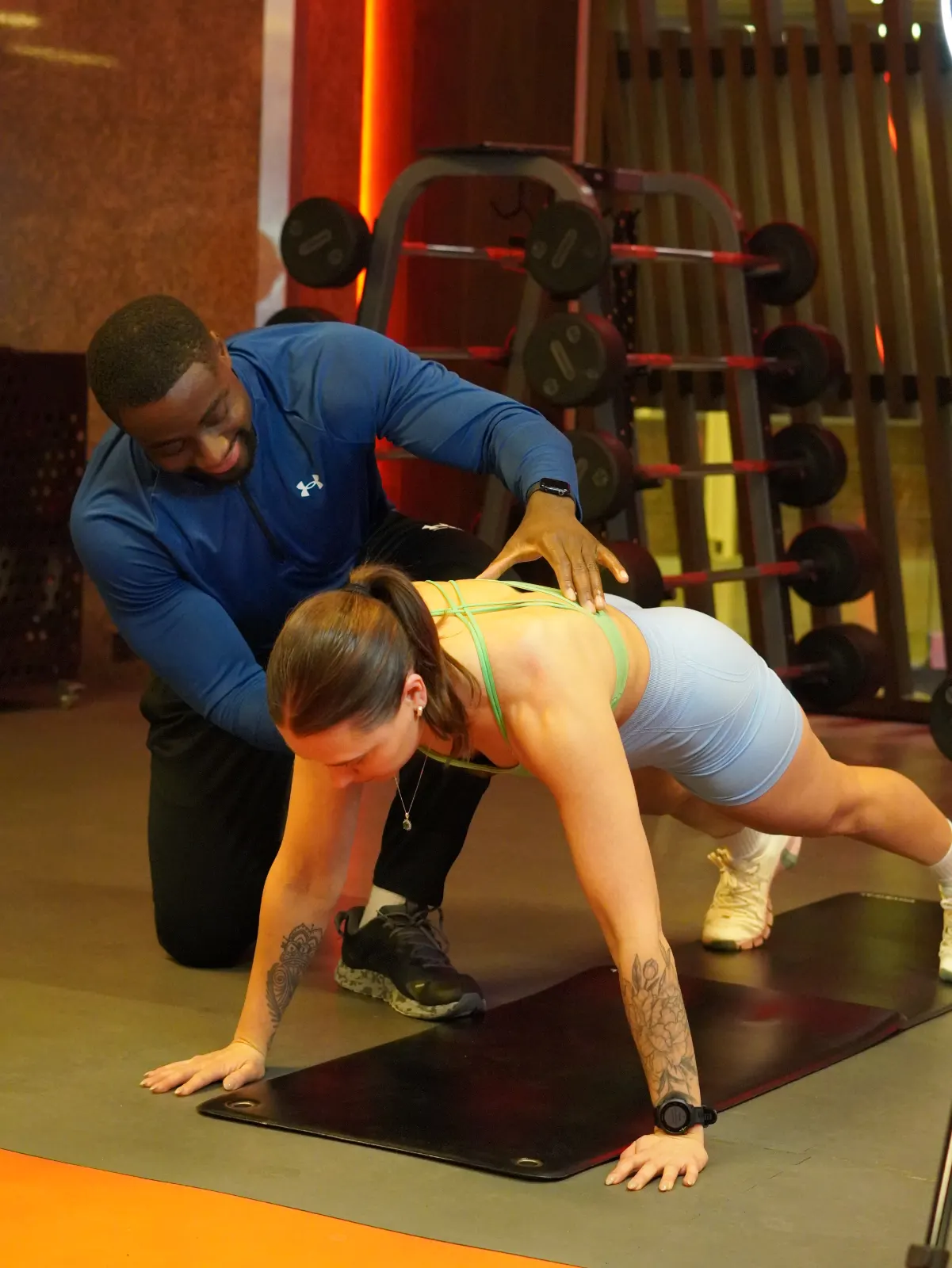
We start by breathing out on the effort with a light brace, then build back up to a fuller brace as the weight climbs. You should feel your middle firm up around the breath, not a push down into your pelvis. My guide to breathing and bracing covers the basics.
How I’d rebuild your main lifts
- Squat: start with a goblet squat to a comfortable depth. Move back to the barbell squat once that feels solid and symptom-free.
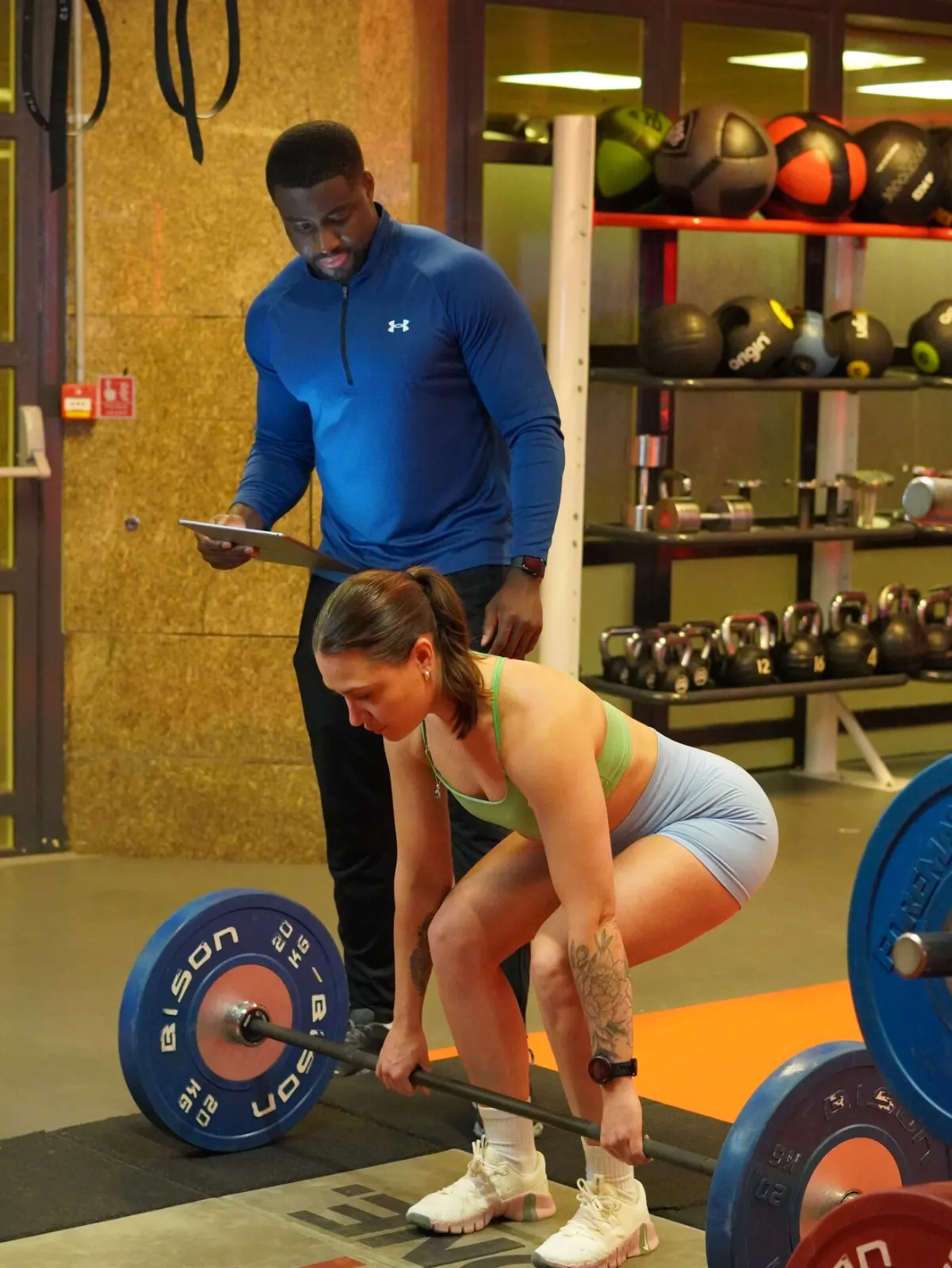
- Hinge: a kettlebell Romanian deadlift rebuilds the hip hinge with a light load. Heavier deadlift variations come later.
- Press: the incline dumbbell press first, then the barbell bench press. In my programmes, overhead work such as the barbell military press often comes back later, because it’s harder to hold a steady brace with the bar overhead.
- Row: the single-arm dumbbell row and cable rows. Feeding, carrying and lifting a baby all load your upper back, so it gets plenty of attention.
- Carry: holding weights and walking. It’s close to everyday life with a car seat or a changing bag.
We add load in small steps, using progressive overload. Jumping and running follow their own return-to-impact guidance, and I’d want your physio’s go-ahead first.
Let your body set the pace
Your symptoms tell us more than the date does, so I’ll ask about them every session. If any of these show up during or after training, we drop the load or change the exercise, and you check in with your GP or physio:
- Leaking urine when you lift, cough or jump.
- A heavy or dragging feeling in your pelvis.
- Your tummy bulging or doming along the middle when you strain.
- Pain at a caesarean scar or tear, or ongoing back or pelvic pain.
- Bleeding that gets heavier or turns red after activity.
Spotting these early means we can adjust the plan with your physio’s help, rather than pushing through.
Training around feeds and broken sleep
The same Chief Medical Officers’ guidance says you can be active while breastfeeding. Some mums prefer to feed before a session, so we plan the timing around you.
Short, focused sessions work well at this stage. After a night with almost no sleep, we keep the session lighter or move it. Either is fine.
What a session with me looks like
- A quick check-in: sleep, feeding and any symptoms since last time.
- A breathing and bracing drill, then a short warm-up.
- A squat or hinge, then a press and a row.
- A carry or a core exercise to finish.
- A note on what we’ll progress next time.
Sessions are one-to-one, at your home in SW1 or at my private studio in Fitzrovia (W1T 3DN). You train in private and at your own pace.
Train with me
If you lifted before your baby and want to get back to it with someone watching every rep, this is what I do.

- 10 sessions: £1,900 (£190 per session)
- 50 sessions: £8,500 (£170 per session)
Sign up for a package and you also get a year’s free access to the 12REPS app, so you can log your workouts between sessions.
Book a free consultation and tell me about your birth, your recovery and the lifts you want back.
Prefer to talk first? WhatsApp me using the WhatsApp icon in the bottom-right corner of the screen, or email connect@ptwill.com.
Will Duru, BSc (Hons) Sport and Exercise Science, personal trainer with over 12 years’ experience.

