Why Strength Training Helps with Weight Loss and Building Muscle

Woman tying back her hair before a workout

Strength training helps with weight loss because it helps you keep, or even build, muscle while you lose fat. Combined with eating a little less than you burn, it means you end up leaner, not just lighter.

By Will Duru, personal trainer (BSc (Hons) Sport and Exercise Science, over 12 years in fitness) and founder of 12REPS.

Weight loss vs fat loss

The scale can’t tell muscle from fat. When people diet without training, some of the weight they lose can be muscle. Strength training gives your body a reason to keep it.

What actually drives fat loss

  • A modest calorie deficit. Eating a little less than you burn, consistently.
  • Enough protein. It helps you keep muscle and feel full.
  • Strength training two to three times a week.
  • Daily movement. Walking adds up.
  • Sleep. Poor sleep makes appetite and training harder.

Why lifting helps you stick with it

  • Progress is visible: more weight, more reps, even when the scale is slow.
  • Sessions can be short and still effective.
  • Feeling stronger is motivating.

A simple weekly plan

  • 2 to 3 full-body strength sessions.
  • A daily walk.
  • One or two optional cardio sessions you enjoy.

For the full approach, read my body recomposition guide.

How 12REPS helps

  • Trainer-written programmes. Plans I’ve written as a certified personal trainer.
  • Quick Workout. Pick your time, level and equipment, and the app builds a session from the exercise library. Swap any exercise you don’t want.
  • Build your own. Tap the muscles you want on the body map, filter by equipment and choose from 1,500+ exercises. Save the routine to repeat it.
  • Two videos per exercise. A demo of the movement, and a coach tutorial on setup and technique.
  • Simple tracking. Log every set, rep and weight, see what you lifted last time, and keep your history, personal bests and weekly consistency in one place.

If you have a medical condition, speak to your GP before changing your diet or starting a new programme.

12REPS is on iOS and Android, with a 7-day free trial. Check the app for current prices.

Prefer a coach in person?

The app is built from how I coach, but nothing replaces having someone watch your technique. If you live or work in Central London, I train clients one-to-one at my private studio in Fitzrovia (W1T 3DN) or at home. Read what happens at a first session, or book a free consultation.

Why Strength Training Is the King of Longevity | The Benefits of Lifting Weights at 29

Woman tying back her hair before a workout

By Will Duru, BSc (Hons) Sport & Exercise Science Award-winning Personal Trainer with 12+ years in strength training & recovery

If you’re 29 (man or woman), now is one of the best times to start strength training seriously. Below I explain in simple terms why strength training is the “king” for longevity, how it builds muscle, and how it transforms your body, mind, confidence and productivity as you go through adulthood.

Strength training is the king of longevity

  • Observational research shows people who do strength (resistance) training have a lower risk of death, even after adjusting for cardio and other habits. 
  •  
  • One meta-analysis showed resistance exercise is tied to about a 21% reduction in all-cause mortality; when combined with aerobic activity, the benefit may go up. 
  •  
  • Another study found that just 90 minutes per week of strength training was linked to slower biological ageing by nearly 4 years. 
  •  
  • Harvard published findings that weightlifting alone was linked to a 9–22% lower risk of dying during follow-up periods. 
  • So strength work isn’t just about muscles or looks. It gives you years, better health, and resistance to disease.

    Personal trainer talking with two women in a gym
    personal trainer showing clients exercises

    Why at age 29 you should care (men or women)

    • Muscle mass and strength begin to slowly decline from around age 30 onward (if you don’t fight it).
     
    • Early intervention helps you build a higher “reserve.” When later life challenges (injury, illness, hormonal change) come, you have a buffer.
     
    • At 29, your joints, recovery ability, hormones, and metabolic systems are still in good condition. If you start now, gains come faster and adaptation is easier.
     
    • It prevents future loss of bone density, muscle, insulin sensitivity, and mobility problems.
     
    • For women, strength training helps offset hormonal changes and osteoporosis risks. 


    So the younger you begin (with good coaching/form), the more compounded benefits you’ll see over decades.

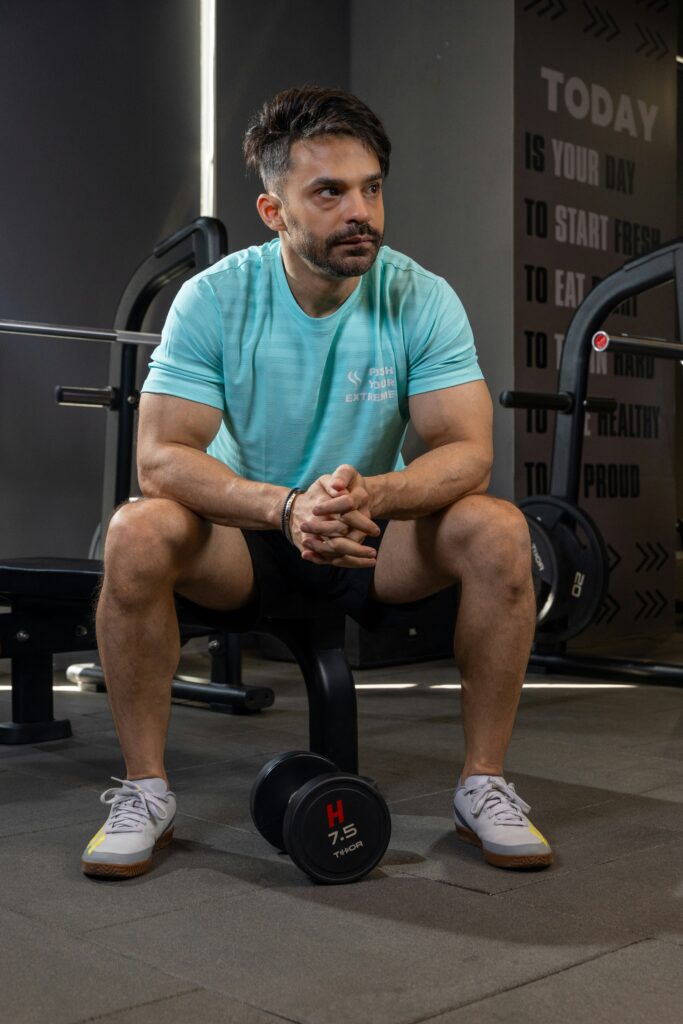
    Man sitting on a gym bench holding a dumbbell

    Strength training = building muscle (in the right way)

    • Muscle grows when you place it under stress (load or resistance) and then allow recovery.
     
    • You force adaptation: muscle fibers get micro damage, then rebuild stronger.
     
    • Proper volume, intensity, rest, nutrition matter.
     
    • Strength training also improves hormonal environment (testosterone, IGF-1 etc.), which supports growth.
     
    • Muscle is metabolically active. More muscle helps your metabolism, glucose handling, body composition.
     
    • As you gain muscle, you become more capable in daily life and sport.


    Without strength training, most adults over time lose lean mass and gain fat. The worst combo.

    Mental, confidence, productivity — the hidden gains

    Mental & mood

    • Resistance training produces endorphins and positive mood effects. 
    • Reviews show that strength training reduces anxiety and depression, boosts cognition and self-esteem.
    • Regular physical training improves sleep, lowers stress, and clears mental fog.
    • Also, the act of overcoming weights teaches grit, mental resilience.


    Confidence & self-belief

    • Each gain (lift more, progress) reinforces that “I can improve.” That mindset spills into other life areas.
    • You see changes in posture, physique, strength — that feeds confidence.
    • You carry yourself differently: you feel more capable, less fragile.


    Productivity & adulthood

    • Energy improves. You feel stronger, more energetic in daily tasks and work.
    • Better physical health means fewer sick days, fewer aches.
    • Mental clarity, discipline from training transfer into work, time management, and stress handling.
    • You become someone who executes goals, pushes limits. That attitude helps in business, relationships, and life.

    How strength training changes your life going into adulthood

    • You age more slowly. You fight disease.
    • You preserve mobility and independence in later years.
    • Your body composition stays healthier: less fat gain, more lean muscle.
    • If your mental health baseline is higher, you resist mood swings or burnout better.
    • You walk into your 30s, 40s, and 50s with strength, not decay.

    Summary & call to action

    Strength training is more than muscle. It is your insurance policy for a longer, healthier, sharper life.

    At 29, your body is primed — don’t leave gains to chance. Start a program that is smart, sustainable, and progressive.

    Physically: you build muscle, boost metabolism, and prevent decline.

    Mentally: you manage stress, mood, and resilience.

    Confidence & productivity: the mindset of strength spills into every part of your life.

    If you like, I can send you a sample beginner program (4–8 weeks) to start strength training safely. Do you want me to send it?

    Harvard Health Publishing (2022) – Strength training might lengthen life

    https://www.health.harvard.edu/staying-healthy/strength-training-might-lengthen-life

    National Library of Medicine (2023) – Resistance training and mortality risk: A systematic review and meta-analysis

    https://pmc.ncbi.nlm.nih.gov/articles/PMC10199130/

    Prevention (2024) – Strength training adds years to your life, study finds

    https://www.prevention.com/fitness/a63238499/strength-training-adds-years-to-your-life-study/

    University Hospitals (2024) – The unique benefits of strength training for women

    https://www.uhhospitals.org/blog/articles/2024/04/the-unique-benefits-of-strength-training-for-women

    Vail Health (2023) – Empowering the mind and body: The role of strength training in mental health and aging

    https://www.vailhealth.org/news/empowering-the-mind-and-body-the-role-of-strength-training-in-mental-health-aging

    National Library of Medicine (2014) – Resistance exercise training and mental health: A meta-analysis

    https://pmc.ncbi.nlm.nih.gov/articles/PMC4090891/

    Want a structured plan to follow between sessions? The 12REPS app has programmes I’ve written, with exercise demos and set-by-set tracking.