Home Workouts vs Gym Training: A Personal Trainer’s Honest Comparison

Man holding a kettlebell at his chest in a goblet squat

“Can I get the same results training at home as I would at the gym?”

I get asked this at least twice weekly.

The honest answer nobody wants to hear: it depends entirely on what you’re trying to achieve, what equipment you’ve got access to, and how self-directed you are.

I’ve trained clients who built impressive physiques almost entirely at home. I’ve also trained clients who wasted two years doing home workouts that produced virtually nothing because they were following terrible programmes with inadequate equipment.

bodyweight reverse lunges

When Home Workouts Actually Work

Let me start with the uncomfortable truth: home workouts can be genuinely effective. You don’t need a gym membership to get fit, build muscle, or improve strength.

But there are conditions.

You’ve Got Basic Equipment

“Bodyweight only” sounds appealing until you realise you can’t progressively overload press-ups forever. Eventually you’ll need resistance.

Minimum viable home setup for serious progress:

  • Adjustable dumbbells (ideally up to 30kg+ per hand)
  • Resistance bands (for assistance and extra resistance)
  • Pull-up bar or door frame attachment
  • Something to elevate for step-ups and split squats

This costs £150-300 total. Less than six months of mid-range gym membership.

With this setup, I can programme effective training for muscle building, strength development, and general fitness. Not optimal for everything, but genuinely effective.

You’re Self-Motivated and Structured

No trainer watching. No other people around creating accountability. Just you and the workout.

Some people thrive in this environment. They’re self-directed, they follow the programme, they push themselves appropriately without external pressure.

Most people don’t. They skip the difficult exercises, cut sessions short when tired, or just “forget” to train when motivation dips.

I’ve had clients who were absolutely consistent at the gym—never missed a session—completely fall apart training at home. The external structure mattered more than they realised.

Be honest about which category you’re in. Your money and results depend on it.

Your Goals Suit Home Training

Home workouts excel for:

  • General fitness and health maintenance
  • Fat loss with appropriate nutrition
  • Muscle building (with adequate equipment and programming)
  • Movement quality and mobility work
  • Conditioning and cardiovascular fitness

Home workouts struggle with:

  • Heavy strength development (hard to replicate heavy squats and deadlifts safely)
  • Specialised training requiring specific machines
  • Maximal muscle growth (limited by equipment constraints)

Client example: Rachel wanted to lose body fat and build moderate muscle definition. Had dumbbells up to 20kg, resistance bands, and a pull-up bar at home. We programmed three sessions weekly focusing on compound movements, progressive overload within her equipment constraints, and conditioning circuits.

Twelve months later: dropped 15kg, visible muscle definition, strength improved substantially. Never stepped in a gym.

Could she have built more muscle in a gym? Probably. Did she achieve her actual goals at home? Absolutely.

personal trainer in lodnon

When You Genuinely Need a Gym

Now for the other side. There are legitimate reasons to train in a gym that aren’t just about “gym culture” or motivation.

You Want to Build Serious Strength

If your goal involves lifting heavy weights—powerlifting, strength sports, or just getting genuinely strong on major compound lifts—you need gym equipment.

You can’t safely progressive overload squats to 100kg+ at home without a proper rack, barbell, plates, and safety systems. You can’t deadlift 140kg with dumbbells.

Home equipment has limitations. Heavy barbells require infrastructure most homes don’t have.

I’ve programmed home workouts for clients that built impressive strength relative to their equipment. But if you want absolute strength—the ability to move serious external loads—you need access to serious equipment.

You Need Exercise Variety

Commercial gyms offer: cable machines, various barbells and dumbbells, leg press, hack squat, chest press machines, lat pulldowns, leg curl machines, calf raise machines, and dozens more options.

At home, even with good equipment, you’ve got maybe 10-15 exercise variations that work effectively.

For some people, that’s fine. For others, the repetition becomes mentally draining. They need variety to stay engaged.

If exercise boredom kills your consistency, a gym’s variety might be worth the cost.

You Respond to Environment and Social Accountability

Some people train better around others. The gym environment creates motivation. Seeing other people working hard pushes them harder. The social aspect—even if they’re not directly interacting—matters.

I’ve had clients specifically say: “I pay for gym membership because if I’ve paid for it, I’ll go. At home, there’s no financial loss from skipping.”

That’s not weakness. That’s knowing yourself and creating systems that support your consistency.

You Want Professional Guidance In-Person

Virtual coaching works. I’ve done it successfully for years. But there’s undeniable value in having someone physically present to watch your movement, adjust your position in real-time, and provide immediate feedback.

If you’re learning compound movements, recovering from injury, or working around limitations, in-person coaching at a gym might be essential for your specific situation.

The Hybrid Approach That Actually Makes Sense

The Hybrid Approach That Actually Makes Sense

Here’s what I’ve found works best for most people: hybrid training.

Not “sometimes gym, sometimes home” based on how you feel. Structured hybrid programming that uses each environment for its strengths.

Gym sessions (2x weekly):

  • Heavy compound lifts requiring barbells (squats, deadlifts, bench press)
  • Exercises requiring specific machines (leg press, cable work)
  • Technical movements benefiting from coaching or gym environment
  • Home sessions (2-3x weekly):

  • Dumbbell and bodyweight work for accessory movements
  • Conditioning and metabolic work
  • Mobility and recovery sessions
  • Shorter maintenance sessions when time-constrained
  • This model gives you:

  • Access to heavy equipment when you need it
  • Flexibility to train at home when gym isn’t feasible
  • Lower gym membership costs (many gyms offer 2-3 day weekly memberships cheaper than unlimited)
  • Consistency regardless of schedule constraints
  • I’ve run this model with dozens of clients. It’s more sustainable than gym-only training (which falls apart when life gets busy) and more effective than home-only training (which hits equipment limitations).
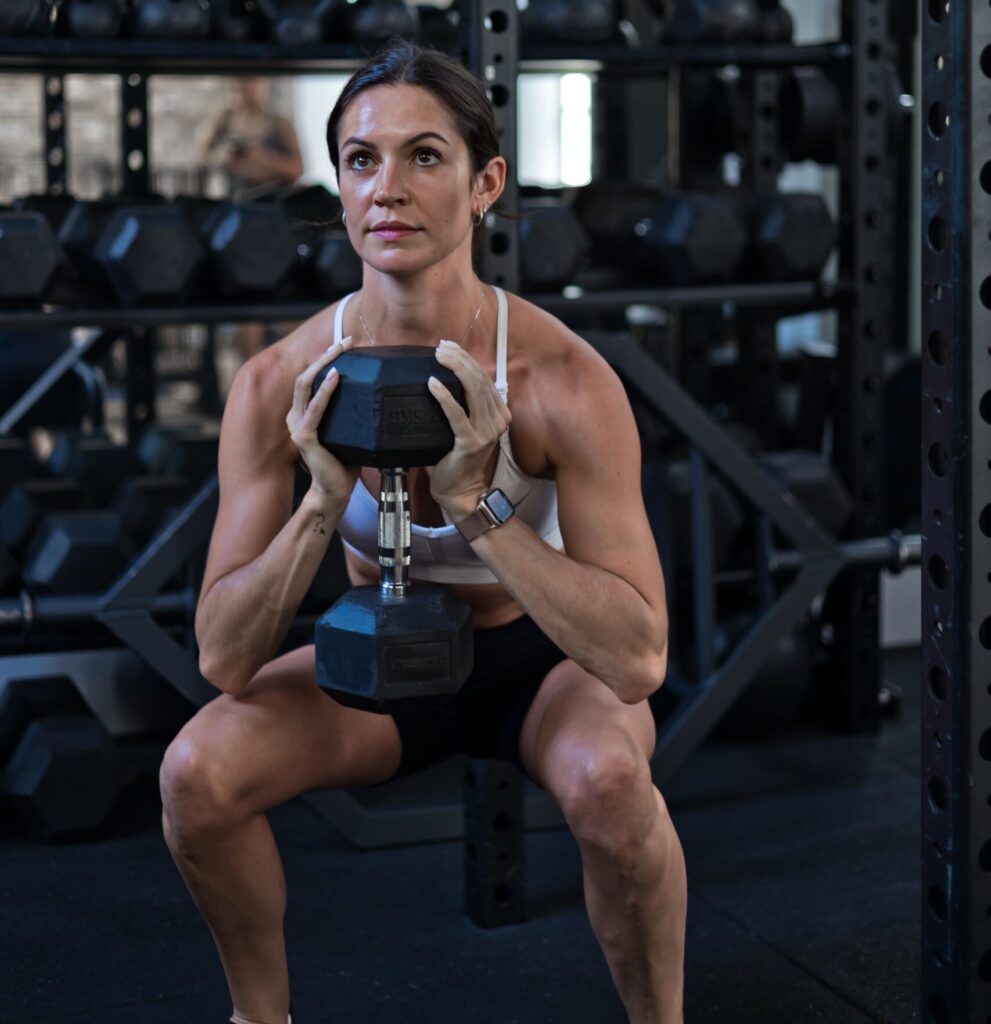
    Man holding a kettlebell at his chest in a goblet squat

    Cost Comparison: What You're Actually Paying

    Let’s talk numbers honestly.

    Budget Gym Membership (PureGym, The Gym Group):

    • £20-35 monthly
    • Annual cost: £240-420
    • Access to full equipment range
    • Often 24/7 availability

    Mid-Range Gym:

    • £50-80 monthly
    • Annual cost: £600-960
    • Better equipment, less crowded
    • Usually includes classes

    Premium Gym (Central London, boutique):

    • £100-200+ monthly
    • Annual cost: £1,200-2,400+
    • Prime locations, luxury facilities
    • You’re paying for convenience and environment

    Home Setup (one-time cost):

    • Basic equipment: £150-300
    • Good setup: £500-800
    • Premium home gym: £1,500-3,000+
    • No ongoing costs after initial investment

    Break-even point: If you buy £500 worth of home equipment, you’ve matched 10 months of a £50/month gym membership. After that, you’re training free.

    But this ignores the real question: which environment produces better results for you specifically?

    Client example: Tom paid £80 monthly for a gym near work. Used it maybe twice monthly because getting there after work was difficult. Bought £400 of home equipment, trained consistently 3-4 times weekly. Cost per session dropped from £40 to essentially zero after the first year. Results improved because consistency improved.

    Versus:

    Client example: Lisa tried training at home for six months, made minimal progress, never pushed herself hard enough. Joined a gym at £60 monthly, trained consistently 4x weekly, made excellent progress. The £60 monthly was worth it because she actually trained effectively.

    Cost per session matters less than results achieved.

    Personal trainer talking with two women in a gym

    The Questions You Should Actually Ask Yourself

    Stop asking “gym or home?” Start asking these:

    “Where will I actually train consistently?”

    If home equipment becomes a clothes rack after three months, it doesn’t matter how cost-effective it was. If you’ve had gym memberships you barely used, adding another one won’t magically change your behaviour.

    Look at your track record. What’s worked before?

    “What equipment do my goals require?”

    Want to squat 140kg? Need a gym. Want to lose 15kg and build moderate muscle? Home works fine with basic equipment. Want to train for a marathon? Neither—you need roads or a treadmill.

    Match environment to actual requirements, not aspirational requirements.

    “How self-directed am I genuinely?”

    Not “how self-directed do I want to be.” How self-directed are you actually, based on past behaviour?

    If you need external structure to maintain consistency, home training might not suit you regardless of equipment or programming quality.

    “What’s my realistic budget?”

    Don’t stretch finances for a premium gym if it stresses you out. That stress undermines training quality.

    But also don’t cheap out on a home setup that’s inadequate for your goals just to save £50.

    Find the sweet spot between “what I can comfortably afford” and “what will actually work.”

    12REPS personalised strength training app showing custom workout plans for gym and home training with exercise video demos

    My Recommendations Based on Specific Scenarios

    Let me give you practical guidance based on situations I’ve encountered hundreds of times:

    Complete Beginner

    Go gym for the first 3-6 months if possible.

    Learn proper movement patterns under professional guidance or at least in an environment where you can watch others and ask questions. Build base competency with barbell movements.

    Then transition to hybrid or home if preferred, now that you understand fundamental movement quality.

    Experienced Lifter

    Either works, depending on your priorities.

    If you’re chasing specific strength goals, maintain gym access for heavy compounds. If you’re in maintenance or general fitness mode, home works fine.

    Parent with Young Kids

    Home setup is probably essential.

    Getting to the gym with childcare constraints is genuinely difficult. A home setup means you can train during nap times, early mornings, or whenever a 20-minute window appears.

    Many of my clients in this category have basic home equipment for consistency, plus occasional gym sessions when childcare allows for heavy work.

    Budget-Conscious

    Home equipment if you’ll actually use it consistently.

    The break-even point is roughly 6-12 months depending on equipment cost and comparable gym prices. After that, you’re training essentially free.

    But only if you actually use it. An unused £300 home setup is more expensive than a £30/month gym you attend regularly.

    Strength-Focused

    Gym access is non-negotiable.

    You need barbells, racks, heavy plates, and safety systems. This equipment costs thousands to replicate at home safely.

    Fat Loss Focused

    Either works equally well.

    Fat loss happens in the kitchen primarily. Training just supports it. Whether that training happens at home or gym makes minimal difference to outcomes.

    Choose based on what you’ll actually do consistently.

    Woman lifting weights in a gym

    Common Mistakes I See People Make

    After watching hundreds of people navigate this decision, these errors repeat constantly:

    Mistake 1: Overestimating Home Training Consistency

    “I’ll definitely train at home 5x weekly now that I’ve got equipment.”

    Three months later: equipment is in the spare room gathering dust.

    Home training requires legitimate self-discipline. If you’ve never demonstrated this before, don’t assume buying equipment will magically create it.

    Mistake 2: Buying Inadequate Home Equipment

    “I’ll just get some light dumbbells and resistance bands to start.”

    If your goal requires progressive overload—which most goals do—you need equipment you can actually progress with. Light dumbbells are fine for month one. Then what?

    Buy equipment that matches your 6-12 month goals, not your current fitness level.

    Mistake 3: Joining Gyms They Never Use

    “This gym is only £25 monthly, great value!”

    It’s not great value if you attend twice monthly. That’s £12.50 per session for a budget gym.

    Join gyms you’ll actually attend based on location, timing, and environment. Cheap memberships you don’t use cost more than expensive memberships you use regularly.

    Mistake 4: Not Having a Proper Programme

    “I’ll just do some press-ups, maybe some dumbbell exercises, see how I feel.”

    Whether gym or home, you need structured programming with clear progression. Random exercise doesn’t produce results. It produces fatigue and eventual quit.

    Get a proper programme. Follow it consistently. Progress intentionally.

    Woman doing a split squat while a trainer watches in a gym

    The Bottom Line

    Home workouts can absolutely produce results. So can gym training. The “better” option depends entirely on your specific situation: goals, equipment, self-direction, budget, and lifestyle constraints.

    I’ve seen incredible transformations from both environments. I’ve also seen people waste years in both environments because they chose based on convenience rather than honest self-assessment.

    The questions aren’t “which is better?” The questions are:

    • Where will I actually train consistently?
    • What equipment do my goals require?
    • What can I realistically afford and sustain?
    • How self-directed am I genuinely?

    Answer those honestly, choose accordingly, and commit to consistency regardless of environment.

    Because the best training location is the one where you actually train. Consistently. For months and years, not just weeks.

    And if you’re genuinely unsure, try the hybrid model. Two gym sessions weekly for heavy compounds, 2-3 home sessions for everything else. You get the benefits of both without committing entirely to either.

    That’s what I recommend for most people, based on a decade of seeing what actually works in practice, not theory.

    Woman holding a kettlebell at her side against a dark background

    About Will Duru : BSc-qualified personal trainer with over 12 years experience training clients across London.

    Related Articles:

  • Do I Need a Personal Trainer? A PT’s Honest Answer
  • Push Pull Legs: A Personal Trainer’s 6-Week Programme
  • The Real Cost of Personal Training in London
  • Want a structured plan to follow between sessions? The 12REPS app has programmes I’ve written, with exercise demos and set-by-set tracking.

    The Ultimate Guide to the Push/Pull/Legs (PPL) and Core Workout Program

    strength training app, 12reps app

    I want to tell you a story I’ve seen a thousand times. A woman in her 40s or 50s walks into my gym. She’s motivated, she’s ready to make a change, but she’s completely overwhelmed. She looks at all the equipment and has no idea where to start. So, she does what most people do: a little bit of this, a little bit of that. Some bicep curls, a bit of treadmill, maybe a few crunches. She leaves feeling like she’s done something, but after a few weeks, she’s frustrated because nothing is changing.

    This used to be one of the biggest challenges I faced as a personal trainer. How could I give my clients a plan that was simple enough to follow, but effective enough to get them real results? The answer, it turned out, was surprisingly simple. It’s a system that has been around for decades, but it’s often over-complicated and made to sound intimidating. It’s called the Push/Pull/Legs (PPL) split.

    Woman squatting down to lift a loaded barbell

    What is Push/Pull/Legs? (The Simple Explanation)

    I know that “Push/Pull/Legs” can sound like some kind of complicated bodybuilding jargon. But I promise you, it’s the simplest and most logical way to organise your workouts. Let’s break it down.

    Imagine your body has three basic movement patterns:

    Pushing: Think about any movement where you are pushing something away from your body. Pushing a door open, putting something on a high shelf, or getting up off the floor. The muscles you use for this are your chest, shoulders, and triceps.

    Pulling: Now, think about any movement where you are pulling something towards your body. Opening a car door, starting a lawnmower, or picking up a heavy shopping bag. The muscles you use for this are your back and biceps.

    Legs: This one is pretty obvious! It’s everything you do with your lower body. Standing up from a chair, walking up the stairs, or squatting down to pick something up. This uses your quads, hamstrings, glutes, and calves.

    That’s it. That’s the entire system. Instead of walking into the gym and just randomly picking exercises, you have a clear focus for each day. On “Push Day,” you only train your pushing muscles. On “Pull Day,” you only train your pulling muscles. And on “Leg Day,” you train your legs. It’s that simple.

    12reps- strength training

    Why This Works So Well (From My Experience)

    For years, I tried different workout splits with my clients. Full body workouts, upper/lower splits, you name it. But nothing has ever worked as consistently as PPL, and I think it comes down to a few simple reasons.

    First, it gives your muscles time to recover. This is the big one. When you have a dedicated Push Day, you are working your chest, shoulders, and triceps hard. Then, for the next 48 hours or more, those muscles get to rest and rebuild while you are training your back, biceps, and legs. This is how you get stronger. You don’t build muscle in the gym; you build it when you are resting. PPL has recovery built right into the system.

    Second, it allows you to focus. When you walk into the gym and you know it’s Pull Day, you have a clear mission. You’re not trying to do a million different things at once. You can put all of your energy and focus into training your back and biceps. This leads to better quality workouts, and better quality workouts lead to better results. It’s that simple.

    Third, it’s incredibly efficient. Because you are working related muscle groups together, you get a lot of bang for your buck. For example, when you are doing a bench press on Push Day, you are not just working your chest; you are also working your shoulders and triceps. This means you can get a great workout in a reasonable amount of time, which is a huge bonus when you are busy.

    Personal trainer coaching a woman through a barbell deadlift

    Don't Forget Your Core! (My Secret Weapon)

    If you look at a classic PPL program online, you might notice that something is missing: dedicated core work. This is a huge mistake, in my opinion. Your core—your abs, obliques, and lower back—is the foundation of everything you do. It’s what keeps you stable when you lift heavy things, it’s what protects your spine from injury, and it’s what gives you a strong, confident posture. [1]

    I tell all of my clients that a strong core is their secret weapon.

    Personal trainer talking with two women in a gym

    How I Structure the Week for My Clients

    One of the best things about the PPL split is how flexible it is. You can adapt it to fit your schedule, no matter how busy you are. Here are the two most common ways I set it up for my clients.

    The 3-Day-a-Week Plan (The “I’m Super Busy” Option)

    This is the perfect starting point. It’s simple, it’s manageable, and it gives you plenty of time to recover between workouts. With this plan, you are hitting every muscle group with high intensity once a week. It’s the perfect way to build a solid foundation of strength.

    Monday: Push Day + Core

    Tuesday: Rest

    Wednesday: Pull Day + Core

    Thursday: Rest

    Friday: Leg Day + Core

    Saturday & Sunday: Rest

    The 4-Day-a-Week Plan (The “I Want a Bit More” Option)

    Once my clients get comfortable with the 3-day split and they want to take things to the next level, we often move to a 4-day plan. This allows us to hit our muscles a little more frequently. That fourth “Full Body Day” is a great way to add a little extra volume and stimulate more muscle growth without spending hours in the gym. We usually pick one or two key exercises from each of the PPL days and do them together.

    Monday: Push Day + Core

    Tuesday: Pull Day

    Wednesday: Rest

    Thursday: Leg Day + Core

    Friday: Full Body Day

    Saturday & Sunday: Rest

    A Sample Plan to Get You Started

    To show you how simple and powerful this can be, here is a sample 3-day PPL and core workout that I would give to one of my clients.

    My Go-To Push Day

    Exercise

    Sets

    Reps

    Dumbbell Bench Press

    5

    8-12

    Dumbbell Shoulder Press

    5

    8-12

    Push-Ups

    5

    As many as you can!

    Lateral Raises

    5

    12-15

    Tricep Dips (on a bench)

    5

    10-15

    Core: Plank

    3

    Hold for 30-60 sec

    My Go-To Pull Day

    Exercise

    Sets

    Reps

    Dumbbell Rows

    5

    8-12 per arm

    Lat Pulldowns

    5

    10-15

    Seated Cable Rows

    5

    10-15

    Bicep Curls

    5

    12-15

    Face Pulls

    5

    15-20

    Core: Leg Raises

    3

    15-20

    My Go-To Leg Day

    Exercise

    Sets

    Reps

    Goblet Squats

    5

    10-15

    Romanian Deadlifts

    5

    10-15

    Lunges

    5

    10-12 per leg

    Glute Bridges

    5

    15-20

    Calf Raises

    5

    15-20

    Core: Russian Twists

    3

    15-20 per side

    12REPS app screens with the headline Build the Perfect Strength Workout

    References

  • [1] Mayo Clinic. (2022). Core exercises: Why you should strengthen your core muscles. https://www.mayoclinic.org/healthy-lifestyle/fitness/in-depth/core-exercises/art-20044751
  • Want a structured plan to follow between sessions? The 12REPS app has programmes I’ve written, with exercise demos and set-by-set tracking.

    Why I Built 12REPS: Strength Training for a Longer, Healthier Life

    12REPS app screens with the text Your Strength Training, Made Simple

    I built 12REPS because I can only coach so many people in person. I wanted more people to have what my one-to-one clients get: a sensible plan, clear technique guidance and a record of their progress.

    By Will Duru, personal trainer (BSc (Hons) Sport and Exercise Science, over 12 years in fitness) and founder of 12REPS.

    Why strength training matters for the long term

    Muscle and strength tend to decline with age if you don’t train them (Harvard Health). The UK Chief Medical Officers’ guidelines stress building strength and balance for adults. Strength helps you stay capable in everyday life, from climbing stairs to carrying shopping.

    What I kept seeing as a trainer

    • People trained hard but without a plan.
    • They weren’t sure their technique was right.
    • They didn’t track their lifts, so progress stalled without them noticing.

    How 12REPS answers that

    • Trainer-written programmes. Plans I’ve written as a certified personal trainer.
    • Quick Workout. Pick your time, level and equipment, and the app builds a session from the exercise library. Swap any exercise you don’t want.
    • Build your own. Tap the muscles you want on the body map, filter by equipment and choose from 1,500+ exercises. Save the routine to repeat it.
    • Two videos per exercise. A demo of the movement, and a coach tutorial on setup and technique.
    • Simple tracking. Log every set, rep and weight, see what you lifted last time, and keep your history, personal bests and weekly consistency in one place.

    12REPS doesn’t use AI. I write the programmes, and the app uses filters to match sessions to your time, level and equipment.

    What I want people to get from it

    Confidence. The confidence to walk into a gym, or clear space at home, and know exactly what to do. Strength training should be something you can keep doing for decades.

    12REPS is on iOS and Android, with a 7-day free trial. Check the app for current prices.

    Prefer a coach in person?

    The app is built from how I coach, but nothing replaces having someone watch your technique. If you live or work in Central London, I train clients one-to-one at my private studio in Fitzrovia (W1T 3DN) or at home. Read what happens at a first session, or book a free consultation.

    Why Strength Training Is the King of Longevity | The Benefits of Lifting Weights at 29

    Woman tying back her hair before a workout

    By Will Duru, BSc (Hons) Sport & Exercise Science Award-winning Personal Trainer with 12+ years in strength training & recovery

    If you’re 29 (man or woman), now is one of the best times to start strength training seriously. Below I explain in simple terms why strength training is the “king” for longevity, how it builds muscle, and how it transforms your body, mind, confidence and productivity as you go through adulthood.

    Strength training is the king of longevity

  • Observational research shows people who do strength (resistance) training have a lower risk of death, even after adjusting for cardio and other habits. 
  •  
  • One meta-analysis showed resistance exercise is tied to about a 21% reduction in all-cause mortality; when combined with aerobic activity, the benefit may go up. 
  •  
  • Another study found that just 90 minutes per week of strength training was linked to slower biological ageing by nearly 4 years. 
  •  
  • Harvard published findings that weightlifting alone was linked to a 9–22% lower risk of dying during follow-up periods. 
  • So strength work isn’t just about muscles or looks. It gives you years, better health, and resistance to disease.

    Personal trainer talking with two women in a gym
    personal trainer showing clients exercises

    Why at age 29 you should care (men or women)

    • Muscle mass and strength begin to slowly decline from around age 30 onward (if you don’t fight it).
     
    • Early intervention helps you build a higher “reserve.” When later life challenges (injury, illness, hormonal change) come, you have a buffer.
     
    • At 29, your joints, recovery ability, hormones, and metabolic systems are still in good condition. If you start now, gains come faster and adaptation is easier.
     
    • It prevents future loss of bone density, muscle, insulin sensitivity, and mobility problems.
     
    • For women, strength training helps offset hormonal changes and osteoporosis risks. 


    So the younger you begin (with good coaching/form), the more compounded benefits you’ll see over decades.

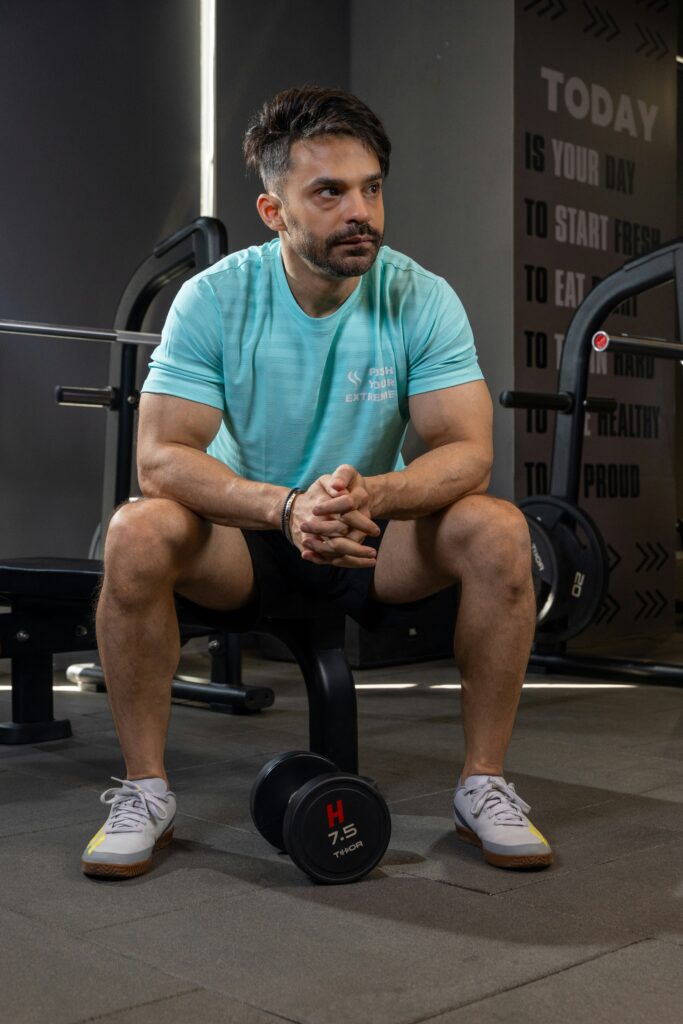
    Man sitting on a gym bench holding a dumbbell

    Strength training = building muscle (in the right way)

    • Muscle grows when you place it under stress (load or resistance) and then allow recovery.
     
    • You force adaptation: muscle fibers get micro damage, then rebuild stronger.
     
    • Proper volume, intensity, rest, nutrition matter.
     
    • Strength training also improves hormonal environment (testosterone, IGF-1 etc.), which supports growth.
     
    • Muscle is metabolically active. More muscle helps your metabolism, glucose handling, body composition.
     
    • As you gain muscle, you become more capable in daily life and sport.


    Without strength training, most adults over time lose lean mass and gain fat. The worst combo.

    Mental, confidence, productivity — the hidden gains

    Mental & mood

    • Resistance training produces endorphins and positive mood effects. 
    • Reviews show that strength training reduces anxiety and depression, boosts cognition and self-esteem.
    • Regular physical training improves sleep, lowers stress, and clears mental fog.
    • Also, the act of overcoming weights teaches grit, mental resilience.


    Confidence & self-belief

    • Each gain (lift more, progress) reinforces that “I can improve.” That mindset spills into other life areas.
    • You see changes in posture, physique, strength — that feeds confidence.
    • You carry yourself differently: you feel more capable, less fragile.


    Productivity & adulthood

    • Energy improves. You feel stronger, more energetic in daily tasks and work.
    • Better physical health means fewer sick days, fewer aches.
    • Mental clarity, discipline from training transfer into work, time management, and stress handling.
    • You become someone who executes goals, pushes limits. That attitude helps in business, relationships, and life.

    How strength training changes your life going into adulthood

    • You age more slowly. You fight disease.
    • You preserve mobility and independence in later years.
    • Your body composition stays healthier: less fat gain, more lean muscle.
    • If your mental health baseline is higher, you resist mood swings or burnout better.
    • You walk into your 30s, 40s, and 50s with strength, not decay.

    Summary & call to action

    Strength training is more than muscle. It is your insurance policy for a longer, healthier, sharper life.

    At 29, your body is primed — don’t leave gains to chance. Start a program that is smart, sustainable, and progressive.

    Physically: you build muscle, boost metabolism, and prevent decline.

    Mentally: you manage stress, mood, and resilience.

    Confidence & productivity: the mindset of strength spills into every part of your life.

    If you like, I can send you a sample beginner program (4–8 weeks) to start strength training safely. Do you want me to send it?

    Harvard Health Publishing (2022) – Strength training might lengthen life

    https://www.health.harvard.edu/staying-healthy/strength-training-might-lengthen-life

    National Library of Medicine (2023) – Resistance training and mortality risk: A systematic review and meta-analysis

    https://pmc.ncbi.nlm.nih.gov/articles/PMC10199130/

    Prevention (2024) – Strength training adds years to your life, study finds

    https://www.prevention.com/fitness/a63238499/strength-training-adds-years-to-your-life-study/

    University Hospitals (2024) – The unique benefits of strength training for women

    https://www.uhhospitals.org/blog/articles/2024/04/the-unique-benefits-of-strength-training-for-women

    Vail Health (2023) – Empowering the mind and body: The role of strength training in mental health and aging

    https://www.vailhealth.org/news/empowering-the-mind-and-body-the-role-of-strength-training-in-mental-health-aging

    National Library of Medicine (2014) – Resistance exercise training and mental health: A meta-analysis

    https://pmc.ncbi.nlm.nih.gov/articles/PMC4090891/

    Want a structured plan to follow between sessions? The 12REPS app has programmes I’ve written, with exercise demos and set-by-set tracking.