The Ultimate 30-Day Men’s Gym Challenge for Strength and Fat Loss

Man doing a dumbbell curl in a gym

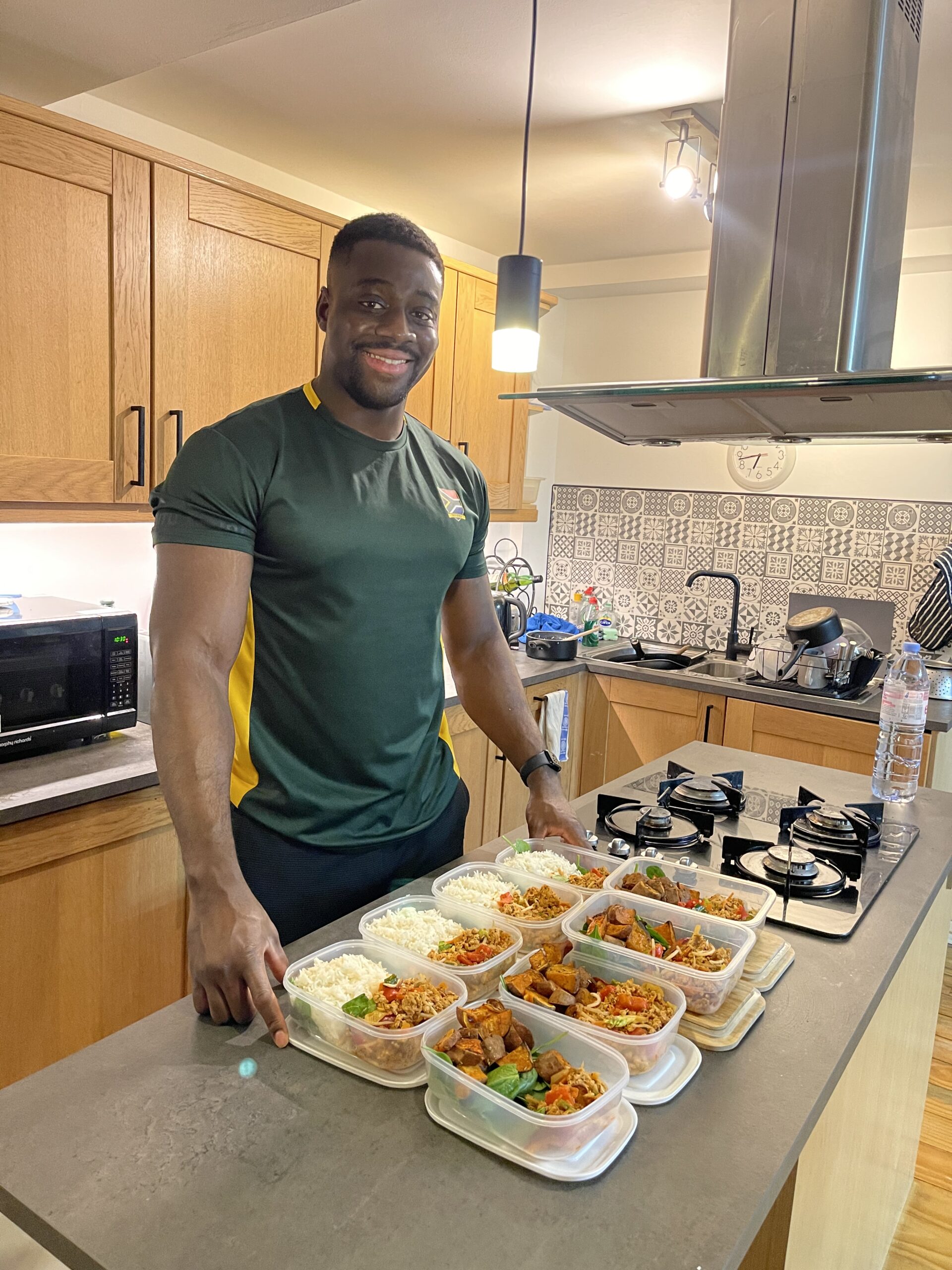
By Will Duru, BSc (Hons) Sport and Exercise Science, Award-winning Personal Trainer with over 12 years of experience in strength training and optimising recovery.

Are you ready to transform your body, build strength, and forge a lasting fitness habit? As a personal trainer with over a decade of experience in the City of London, I’ve seen firsthand the incredible impact a structured program can have. My passion is helping people build muscle and achieve their fitness goals, and I’ve designed this 30-day challenge to do just that. This isn’t just another workout plan; it’s a comprehensive blueprint for getting yourself in shape and building a foundation for a healthier, stronger you. Over the next 30 days, you will embark on a journey of strength training, disciplined nutrition, and consistent effort that will push your limits and deliver real results.

This challenge is built around a powerful 5-day strength training split that targets all your major muscle groups, ensuring balanced development and optimal recovery. We will also dive deep into the nutritional strategy required to shed fat and build lean muscle.
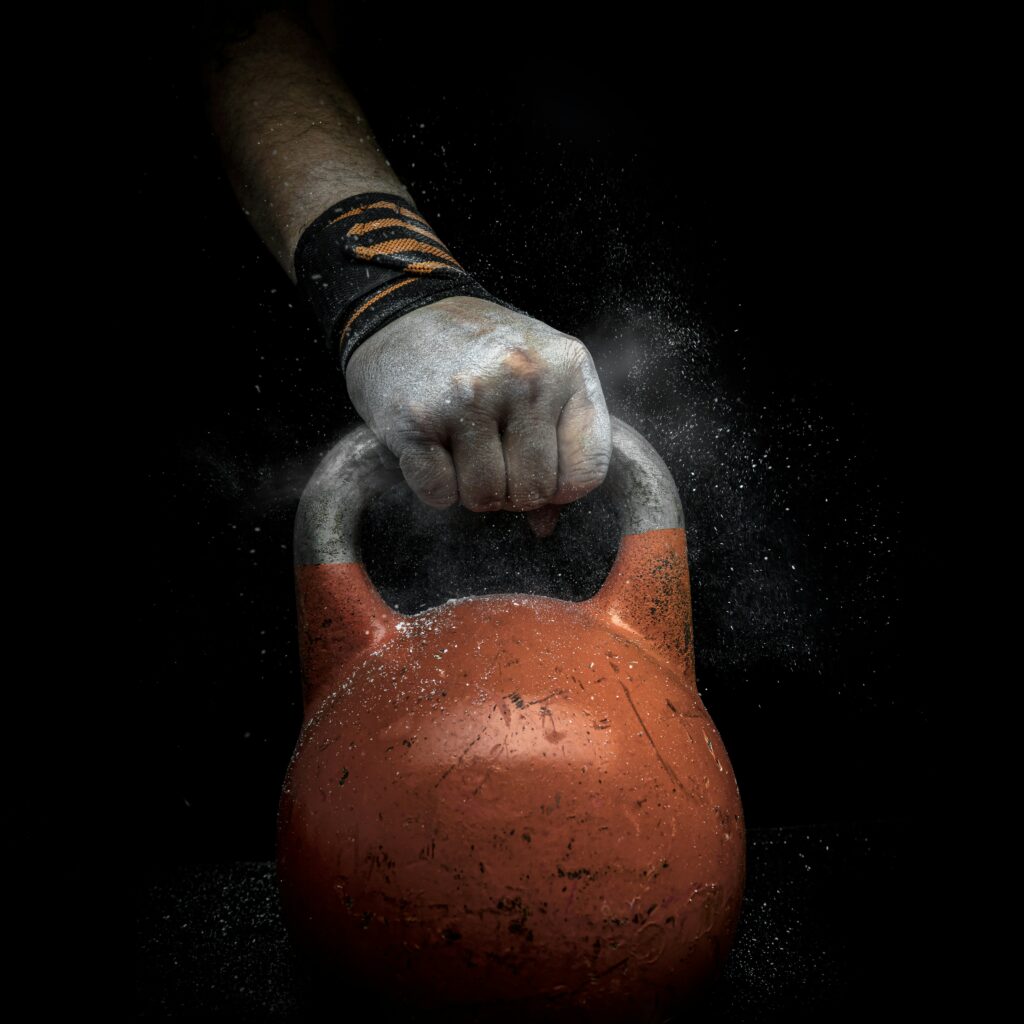
Close-up of chalked hands gripping a kettlebell

Why Strength Training is a Game-Changer for Men

Strength training is more than just lifting heavy weights and building bigger muscles; it is a cornerstone of long-term health and vitality for men. The benefits extend far beyond the mirror, impacting everything from your metabolism to your mental well-being. Committing to a consistent strength training program is one of the best investments you can make in your physical and mental health.

One of the most significant benefits is an enhanced metabolism. Building muscle increases your resting metabolic rate, meaning your body burns more calories even when you’re not exercising [1]. This makes it easier to manage your weight and reduce body fat, particularly the dangerous visceral fat around your abdomen that is linked to chronic diseases like heart disease and type 2 diabetes [2]. As you build more muscle and lose fat, you will not only look leaner and more defined, but you will also be fundamentally healthier.

Beyond the physical, strength training has profound effects on mental health. Regular resistance exercise has been shown to boost self-esteem, improve body image, and reduce symptoms of anxiety and depression [3]. The act of lifting weights and progressively getting stronger fosters a sense of accomplishment and mental fortitude that carries over into all aspects of life. Furthermore, it improves bone density, reduces the risk of injury by strengthening connective tissues, and enhances your overall quality of life, ensuring you stay active and capable as you age.

Man doing a dumbbell curl in a gym

Building a Habit That Lasts a Lifetime

The magic of a 30-day challenge lies in its power to build habits. Research shows that it takes time and consistency to form a new routine, and a 30-day period is an ideal timeframe to establish a solid foundation for a lifelong fitness journey [4]. The goal here is not just to get through the next month, but to integrate exercise into your life so that it becomes as natural as brushing your teeth.

Consistency is the single most important factor for success. To achieve this, you need to remove as many barriers as possible. Start by finding a time in your day that you can consistently dedicate to your workouts. For many, morning or afternoon sessions are the most reliable. Evening workouts can be risky, as daily fatigue or unexpected commitments after work can easily derail your plans. Block out this time in your calendar as a non-negotiable appointment with yourself.

Proximity is another key factor. Choose a gym that is conveniently located either near your home or your workplace. The less friction there is in getting to your workout, the more likely you are to stick with it. This 30-day challenge is your opportunity to prove to yourself that you can commit, stay consistent, and achieve your goals. It’s about building the discipline and momentum you need to start your fitness journey on the right foot.

Man doing a kneeling exercise with a kettlebell in a gym

The 30-Day Challenge Workout Plan

This program is designed to be intense and effective, requiring one hour per day, five days a week. We will use a 5-day split focusing on a push/pull/legs structure with additional core work. This ensures that each muscle group is worked thoroughly and has ample time to recover. Fridays and Sundays will be active recovery days, where you will perform 15 minutes of light stretching at home to aid recovery and improve flexibility.

For this program, you will use a variety of equipment including dumbbells, kettlebells, barbells, machines, sledges, medicine balls, and your own bodyweight. Starting from week two, you will increase the intensity by including a superset for each workout, increasing the total number of exercises to eight.

Here is the workout split:

  • Day 1: Chest & Back
  • Day 2: Shoulders & Biceps
  • Day 3: Legs & Triceps
  • Day 4: Back, Core & Abs
  • Day 5: Full Body Functional
  • Day 6: Active Recovery (Stretching)
  • Day 7: Rest
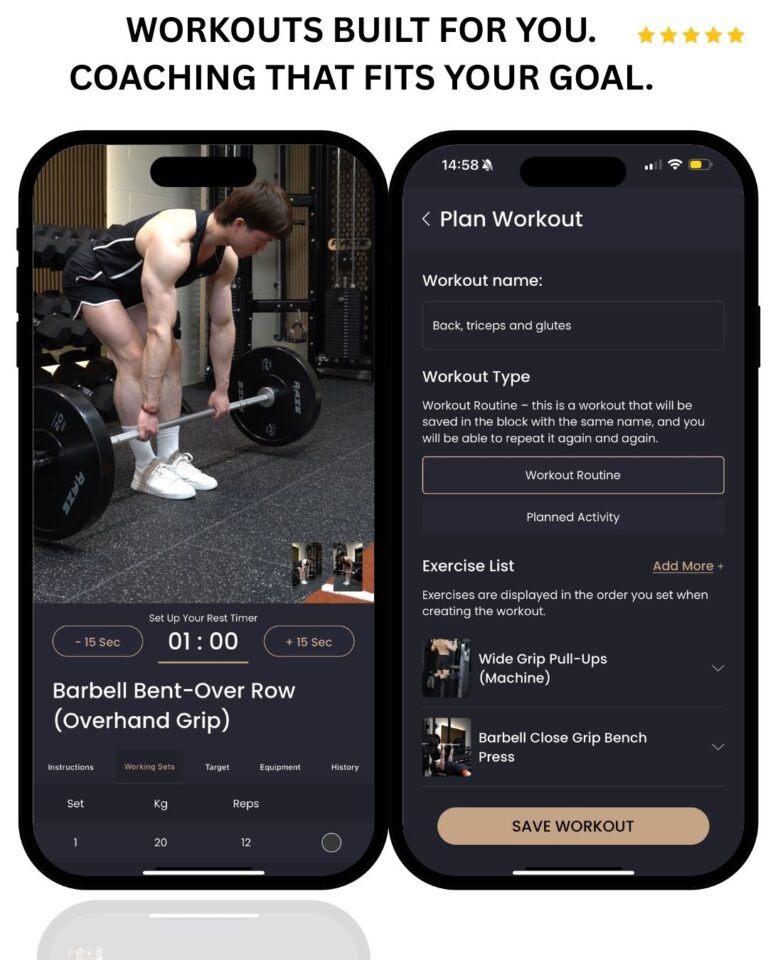
12REPS app workout screens with the text Workouts Built for You

Day 1: Chest & Back

Exercise

Sets

Reps

Rest Period

Barbell Bench Press

4

10-12

60-90s

Pull-Ups (or Lat Pulldown)

4

10-12

60-90s

Incline Dumbbell Press

4

10-12

60-90s

Bent-Over Barbell Rows

4

10-12

60-90s

Cable Crossovers

4

12-15

60s

Seated Cable Rows

4

12-15

60s

Day 2: Shoulders & Biceps

Exercise

Sets

Reps

Rest Period

Seated Dumbbell Shoulder Press

4

10-12

60-90s

Barbell Curls

4

10-12

60-90s

Lateral Raises

5

12-15

60s

Hammer Curls

4

10-12

60-90s

Front Raises

4

12-15

60s

Concentration Curls

4

12-15

60s

Day 3: Legs & Triceps

Exercise

Sets

Reps

Rest Period

Barbell Squats

4

10-12

90s

Close-Grip Bench Press

4

10-12

60-90s

Leg Press

4

12-15

60-90s

Tricep Pushdowns

4

12-15

60s

Romanian Deadlifts

4

10-12

90s

Overhead Tricep Extensions

4

12-15

60s

Day 4: Back, Core & Abs

Exercise

Sets

Reps

Rest Period

Deadlifts

4

6-8

120s

T-Bar Rows

4

10-12

90s

Hanging Leg Raises

4

15-20

60s

Face Pulls

4

15-20

60s

Cable Crunches

4

15-20

60s

Plank

4

60s hold

60s

Day 5: Full Body Functional

Exercise

Sets

Reps

Rest Period

Sled Push

4

20 meters

90s

Kettlebell Farmer’s Walk

4

40 meters

90s

Battle Ropes

5

30s on, 30s off

30s

Box Jumps

4

12

60s

Medicine Ball Slams

4

15

60s

TRX Rows

4

15

60s

Nutrition: Your Fuel for Transformation

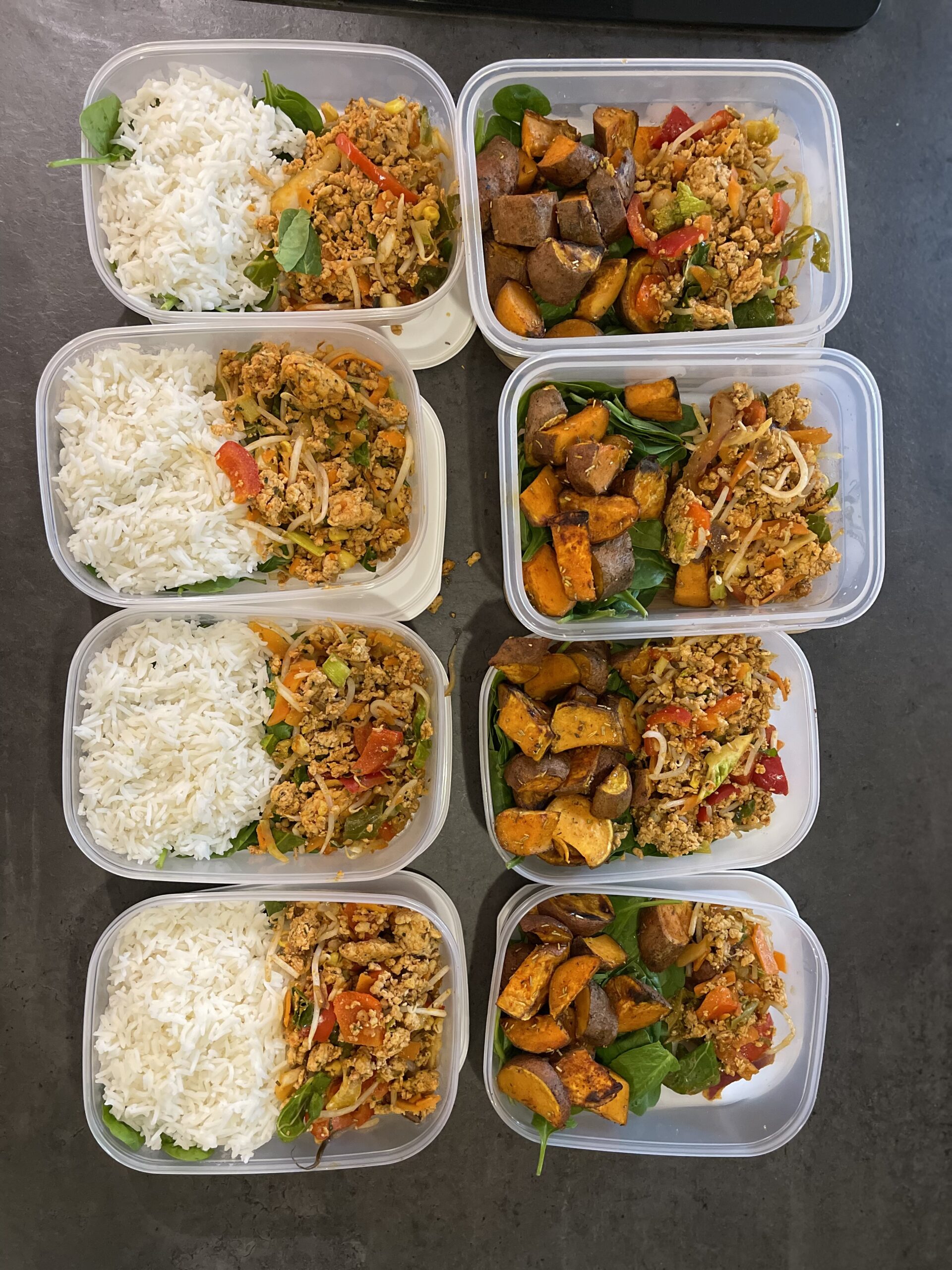
Nutrition is just as important as your training. To achieve the goal of losing 5kg in 30 days for an 85kg individual, you need to be in a consistent calorie deficit while consuming enough protein to preserve and build muscle. This process is often called muscle building while in a deficit.

Let’s break down the numbers. To lose approximately 0.5-1kg per week, a daily calorie deficit of 500-700 calories is required. For an 85kg man who is moderately active, a maintenance calorie intake is roughly 2,500 calories. Therefore, a target intake of around 1,900 calories per day is a good starting point.

Here’s a sample macronutrient breakdown:

  • Protein (1.6g per kg of bodyweight): 1.6g x 85kg = 136g of protein. (544 calories)
  • Fats (25% of total calories): (1900 x 0.25) / 9 = ~53g of fat. (477 calories)
  • Carbohydrates (Remaining calories): (1900 – 544 – 477) / 4 = ~220g of carbs. (880 calories)
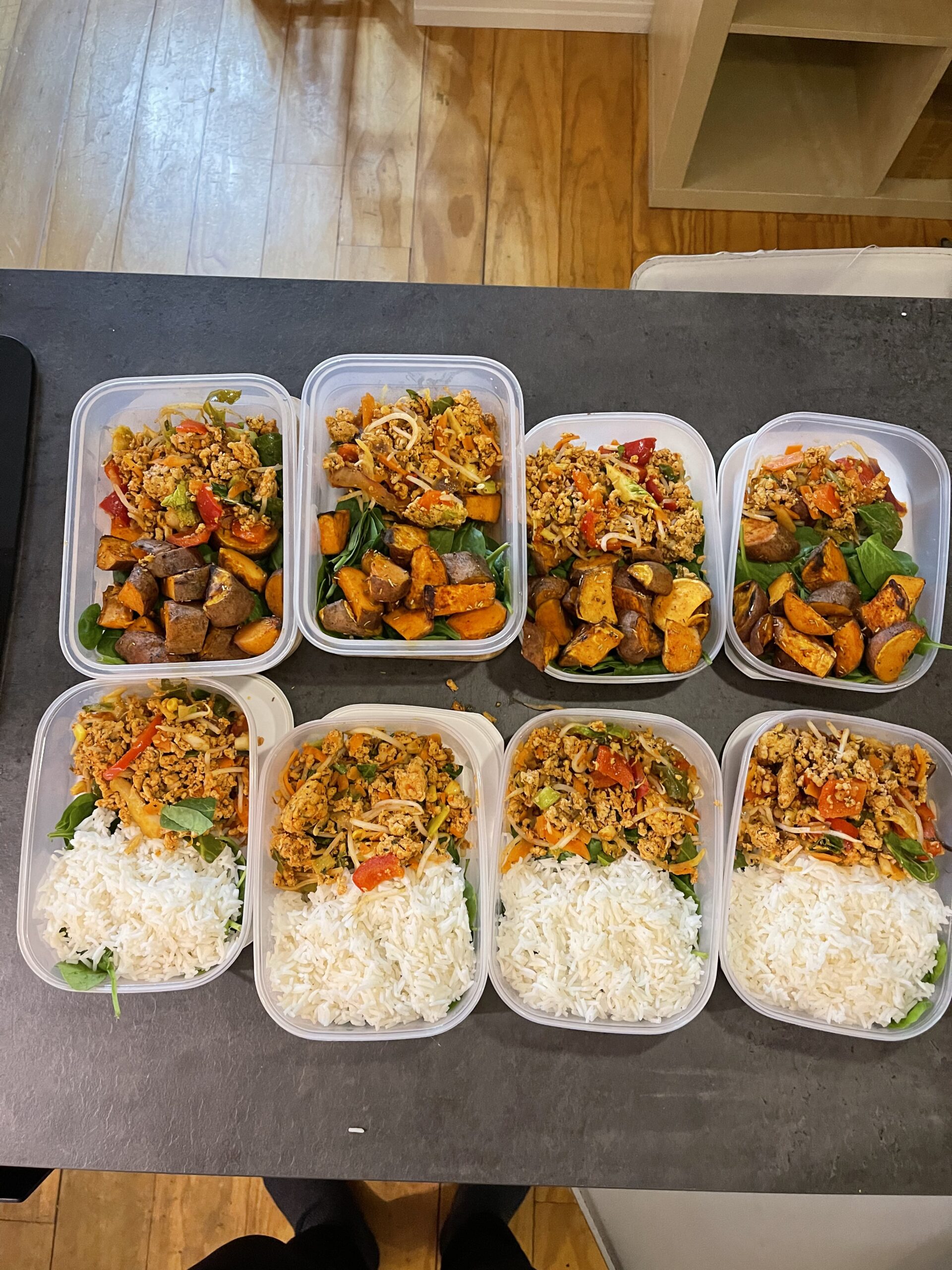
  • To make this manageable, use an app like MyFitnessPal to track your daily intake. Focus on lean protein sources like chicken breast, fish, lean beef, eggs, and Greek yogurt. For supplements, consider incorporating Clear Whey Protein to help you meet your protein goals and Creatine Monohydrate to improve strength and performance.

    12REPS personalised strength training app showing custom workout plans for gym and home training with exercise video demos

    Your 30-Day Transformation Awaits

    This 30-day challenge is more than just a workout plan; it’s a catalyst for change. By committing to this program, you are taking a definitive step towards a stronger, healthier, and more disciplined version of yourself.

    References

    [1] Healthline. (2021). 14 Benefits of Strength Training, Backed by Science. https://www.healthline.com/health/fitness/benefits-of-strength-training

    [2] American Heart Association. (2021). American Heart Association Recommendations for Physical Activity in Adults and Kids. https://www.heart.org/en/healthy-living/fitness/fitness-basics/aha-recs-for-physical-activity-in-adults

    [3] Meacham, J. (2024). Strength training can improve your mental health. Healthline. https://www.healthline.com/health/fitness/benefits-of-strength-training#mental-health-benefits

    [4] USA Triathlon. (2022). 30 Days to Forming New Habits. https://www.usatriathlon.org/articles/training-tips/form-new-habits-in-30-days

    Want a structured plan to follow between sessions? The 12REPS app has programmes I’ve written, with exercise demos and set-by-set tracking.

    30-Day Beginner Gym Challenge: 5-Day Strength Training Split for Results

    Get in Shape in 30 Days and Build a Lasting Habit with Strength Training

    By Will Duru, BSc (Hons) Sport and Exercise Science, Award-winning Personal Trainer

    Welcome to your 30-day beginner gym challenge! I’m Will Duru, and with over 12 years of experience in strength training, I’m here to guide you on this exciting journey. This program is designed to help you build a strong foundation, develop healthy habits, and see real results in just one month. We’ll focus on a 5-day workout split that’s perfect for beginners, along with essential nutrition and supplement advice to maximise your progress. The goal is not just to transform your body, but to create a sustainable fitness routine that you can stick with for the long haul.

    This challenge is built around a structured 5-day workout split, a highly effective method for beginners to build muscle and strength. Research shows that both full-body and split-body routines are effective for beginners, but a split routine allows you to focus on specific muscle groups each day, which can be less overwhelming and more motivating when you’re just starting out [4]. We’ll be using a push/pull/legs format, with dedicated days for core and high-intensity interval training (HIIT) to ensure a well-rounded program.

    Row of kettlebells on a wooden floor

    The 30-Day Beginner Challenge: A 5-Day Workout Split

    This program is designed for one-hour workouts each day. Remember to warm up before each session with 5-10 minutes of light cardio and dynamic stretching, and cool down afterward with static stretching.

    Day 1: Chest and Back (Push/Pull)

    Exercise

    Sets

    Reps

    Weight

    Rest Period

    Bench Press (Dumbbell or Barbell)

    3

    8-12

    Start with a light weight to master the form

    60-90 seconds

    Bent-Over Row (Dumbbell or Barbell)

    3

    8-12

    Start with a light weight to master the form

    60-90 seconds

    Incline Dumbbell Press

    3

    10-15

    Choose a weight that challenges you

    60 seconds

    Lat Pulldown

    3

    10-15

    Choose a weight that challenges you

    60 seconds

    Push-Ups (on knees if needed)

    3

    To failure

    Bodyweight

    60 seconds

    Seated Cable Row

    3

    12-15

    Choose a weight that challenges you

    60 seconds

    Day 2: Shoulders, Biceps, and Triceps (Push/Pull)

    Exercise

    Sets

    Reps

    Weight

    Rest Period

    Overhead Press (Dumbbell or Barbell)

    3

    8-12

    Start with a light weight to master the form

    60-90 seconds

    Bicep Curls (Dumbbell or Barbell)

    3

    10-15

    Choose a weight that challenges you

    60 seconds

    Tricep Dips (on bench)

    3

    10-15

    Bodyweight

    60 seconds

    Lateral Raises (Dumbbell)

    3

    12-15

    Choose a light weight to focus on form

    60 seconds

    Hammer Curls (Dumbbell)

    3

    12-15

    Choose a weight that challenges you

    60 seconds

    Tricep Pushdowns (Cable Machine)

    3

    12-15

    Choose a weight that challenges you

    60 seconds

    Day 3: Hamstrings, Quads, and Glutes (Legs)

    Exercise

    Sets

    Reps

    Weight

    Rest Period

    Squats (Bodyweight or Goblet Squat)

    3

    8-12

    Start with bodyweight or a light dumbbell

    60-90 seconds

    Romanian Deadlifts (Dumbbell)

    3

    10-15

    Start with a light weight to master the form

    60-90 seconds

    Lunges (Bodyweight or Dumbbell)

    3

    10-15 per leg

    Start with bodyweight

    60 seconds

    Leg Press

    3

    12-15

    Choose a weight that challenges you

    60 seconds

    Glute Bridges

    3

    15-20

    Bodyweight

    60 seconds

    Calf Raises

    3

    15-20

    Bodyweight or with dumbbells

    60 seconds

    Two kettlebells on a running track

    Day 4: Cardio (Zone 2 and Zone 3)

    This day is dedicated to cardiovascular health. Spend 60 minutes on a cardio machine of your choice (treadmill, elliptical, bike). Aim for 40 minutes in Zone 2 (a pace where you can hold a conversation) and 20 minutes in Zone 3 (a more challenging pace where conversation is difficult).

    Day 5: HIIT Workout

    High-Intensity Interval Training (HIIT) is a fantastic way to burn calories and improve your cardiovascular fitness in a short amount of time. Perform each exercise for 30 seconds, followed by 30 seconds of rest. Repeat the circuit 4-5 times.

  • Jumping Jacks
  • High Knees
  • Burpees
  • Mountain Climbers
  • Bodyweight Squats
  • Nutrition for Success

    Your efforts in the gym will only take you so far without proper nutrition. To build muscle and lose fat, you need to fuel your body with the right nutrients. Focus on a balanced diet of lean proteins, complex carbohydrates, and healthy fats. Aim for a slight calorie surplus if your goal is muscle building, or a slight calorie deficit if your goal is fat loss. Remember to drink plenty of water throughout the day to stay hydrated.

    Woman lifting a barbell in a gym

    Supplements to Boost Your Results

    While not a replacement for a healthy diet, certain supplements can help you achieve your goals faster. For this 30-day challenge, I recommend two key supplements:

  • Clear Whey Protein: Protein is essential for muscle repair and growth. Supplementing with whey protein, especially after a workout, can significantly enhance muscle hypertrophy and strength gains [1]. Clear whey is a lighter, more refreshing alternative to traditional milky protein shakes.
  • Creatine: Creatine is one of the most researched and effective supplements for increasing strength and power output. Taking 3-5 grams of creatine daily can help you lift heavier and perform more reps, leading to greater muscle growth over time [2].
  • The Importance of Consistency

    Remember, consistency is key. Sticking to this program for 30 days will not only produce visible results but also help you build a lasting habit. Resistance training is medicine; it can increase lean muscle mass, boost your metabolism, and improve your overall health in numerous ways [3]. So, commit to the challenge, stay consistent, and get ready to transform your body and your life.

    strength training app for women and man

    References

    [1] Park, Y., Park, H. Y., Kim, J., Hwang, H., Jung, Y., Kreider, R., & Lim, K. (2019). Effects of whey protein supplementation prior to, and following, resistance exercise on body composition and training responses: A randomized double-blind placebo-controlled study. Journal of Exercise Nutrition & Biochemistry, 23(2), 34–44. https://pmc.ncbi.nlm.nih.gov/articles/PMC6651693/

    [2] Mills, S., Candow, D. G., Forbes, S. C., Neary, J. P., Ormsbee, M. J., & Antonio, J. (2020). Effects of Creatine Supplementation during Resistance Training Sessions in Physically Active Young Adults. Nutrients, 12(6), 1880. https://pmc.ncbi.nlm.nih.gov/articles/PMC7353308/

    [3] Westcott, W. L. (2012). Resistance training is medicine: effects of strength training on health. Current sports medicine reports, 11(4), 209–216. https://pubmed.ncbi.nlm.nih.gov/22777332/

    [4] Pedersen, H., Fimland, M. S., Schoenfeld, B. J., Iversen, V. M., Cumming, K. T., Jensen, S., Saeterbakken, A. H., & Andersen, V. (2022). A randomized trial on the efficacy of split-body versus full-body resistance training in non-resistance trained women. BMC sports science, medicine & rehabilitation, 14(1), 87. https://pmc.ncbi.nlm.nih.gov/articles/PMC9107721/

    Want a structured plan to follow between sessions? The 12REPS app has programmes I’ve written, with exercise demos and set-by-set tracking.

    Can You Build Muscle After 30? Yes! Expert Guide to Muscle Growth

    Man holding a dumbbell in a gym

    By Will Duru, BSc (Hons) Sport and Exercise Science, Award-winning Personal Trainer with over 12 years of experience in strength training and optimising recovery

    You’ve hit your 30s, and you start to hear the whispers. Maybe you read an article online, or a friend at the pub mentions it. “Your testosterone is dropping.” “Your best muscle-building years are behind you.” “It’s all downhill from here.” It’s enough to make any man feel like his best days are in the rearview mirror.

    This is one of the most damaging myths in the fitness world. The belief that your 30s mark the end of your potential for serious muscle building is not just wrong; it’s a self-fulfilling prophecy. If you believe you can’t make significant progress, you won’t even try. You’ll settle for a body you’re not happy with, convinced that it’s just a part of getting older.

    I’m here to tell you, as a personal trainer who has helped hundreds of men in their 30s, 40s, and beyond get into the best shape of their lives, that it is absolutely not too late. You can still build a significant amount of muscle after 30. In fact, with a smarter approach, your 30s can be your strongest decade yet. This is your myth-busting guide to building muscle in this new chapter of your life.

    Man doing a dumbbell row from a plank on the gym floor

    The Truth About Aging and Muscle

    Let’s get one thing straight. Yes, your body does change as you get older. Your hormone levels, including testosterone, do start to decline slightly after 30. [1] But let’s put this in perspective. For most men in their 30s, this decline is so small that it’s barely noticeable. It is not the huge drop-off that people make it out to be. It is not the limiting factor that will stop you from building muscle.

    The primary drivers of muscle growth are mechanical tension (the stress you put on your muscles by lifting weights) and muscle protein synthesis (the process of repairing and rebuilding your muscles after a workout, which is fueled by eating protein). [2] These mechanisms work just as powerfully in your 30s as they do in your 20s. The single biggest factor that determines your success is not your age; it’s your consistency and your effort.

    There’s a famous principle in biology: “use it or lose it.” Age-related muscle loss, a condition called sarcopenia, is not primarily a result of getting older. It’s a result of becoming less active. [3] If you don’t use your muscles, your body has no reason to keep them around. Strength training is the most powerful weapon you have to fight back against this process. It is the signal that tells your body, “Hey, I need these muscles! Keep them strong!”

    Man sitting on a bench in a gym, smiling

    The Over-30 Muscle-Building Blueprint

    While the basic principles of muscle building are the same at any age, your strategy needs to be a little smarter in your 30s. You can’t get away with the same reckless abandon you had in your early 20s. It’s less about spending hours in the gym every day and more about a calculated, intelligent approach. Here are the three pillars of adult muscle gain:

  • Train with Intensity. To make your muscles grow, you have to give them a reason to. That means you need to push yourself close to muscular failure on your sets. That last one or two reps that you have to really grind out? That’s where the magic happens. That’s the signal that tells your body it needs to adapt and get stronger.
  • Prioritise Compound Lifts. Your workouts should be built around big, multi-joint exercises like squats, deadlifts, bench presses, and overhead presses. These exercises give you the most bang for your buck. They recruit the most muscle fibers and stimulate the biggest release of muscle-building hormones.
  • Master Your Recovery. This is the one that most guys in their 30s ignore. You can’t train hard if you don’t recover hard. Your body doesn’t build muscle in the gym; it builds it while you are resting. That means you need to prioritise getting 7-8 hours of quality sleep per night and managing your stress levels.
  • A structured plan is non-negotiable. You can’t just wander into the gym and do whatever you feel like.

    Man doing a dumbbell curl in a gym

    Fueling the Machine: What to Eat

    You can have the best training plan in the world, but if your nutrition isn’t on point, you will not get the results you want. You can’t out-train a bad diet. To build muscle, you need to give your body the fuel it needs to grow.

    Here’s what you need to focus on:

    A Slight Calorie Surplus. To build new muscle tissue, you need to be eating slightly more calories than your body is burning. I’m not talking about a huge, “dirty bulk.” Just a small, controlled surplus of 200-300 calories per day is all you need.

    A High Protein Intake. Protein is the raw material for muscle growth. If you’re not eating enough of it, your body can’t build new muscle. I recommend aiming for 1.6-2.2 grams of protein per kilogram of your bodyweight. For an 80kg man, that’s about 128-176 grams of protein per day. [4]

    Stop leaving gains on the table. If you’re serious about building muscle, you need to be serious about your nutrition.

    Your Strongest Decade Yet

    So, can you still build serious muscle after 30? The answer is a resounding YES. Age is not a barrier. It’s an excuse. With intelligent training, a focus on recovery, and the right nutrition plan, your 30s can be your strongest decade yet.

    Don’t let a number on your driver’s license define your potential. The only thing stopping you from building the body you want is a lack of a plan. It’s time to get one.

    Are you ready to prove to yourself that your best years of training are still ahead of you?

    Man holding a dumbbell in a gym

    References

  • [1] Harman, S. M., Metter, E. J., Tobin, J. D., Pearson, J., & Blackman, M. R. (2001). Longitudinal effects of aging on serum total and free testosterone levels in healthy men. The Journal of Clinical Endocrinology & Metabolism, 86(2), 724-731. https://academic.oup.com/jcem/article/86/2/724/2841070
  • [2] Morton, R. W., Murphy, K. T., McKellar, S. R., Schoenfeld, B. J., Henselmans, M., Helms, E., … & Phillips, S. M. (2018). A systematic review, meta-analysis and meta-regression of the effect of protein supplementation on resistance training-induced gains in muscle mass and strength in healthy adults. British journal of sports medicine, 52(6), 376-384.https://bjsm.bmj.com/content/52/6/376
  • [3] Volpi, E., Nazemi, R., & Fujita, S. (2004). Muscle tissue changes with aging. Current opinion in clinical nutrition and metabolic care, 7(4), 405-410. https://journals.lww.com/co-clinicalnutrition/abstract/2004/07000/muscle_tissue_changes_with_aging.8.aspx
  • [4] Nunes, E. A., Colenso-Semple, L., McKellar, S. R., Yau, T., Ali, M. U., Fitzpatrick-Lewis, D., … & Phillips, S. M. (2022). Systematic review and meta-analysis of protein intake to support muscle mass and function in healthy adults. Journal of Cachexia, Sarcopenia and Muscle, 13(2), 795-810. https://onlinelibrary.wiley.com/doi/full/10.1002/jcsm.12922
  • Want a structured plan to follow between sessions? The 12REPS app has programmes I’ve written, with exercise demos and set-by-set tracking.

    The Ultimate Guide to the Push/Pull/Legs (PPL) and Core Workout Program

    strength training app, 12reps app

    I want to tell you a story I’ve seen a thousand times. A woman in her 40s or 50s walks into my gym. She’s motivated, she’s ready to make a change, but she’s completely overwhelmed. She looks at all the equipment and has no idea where to start. So, she does what most people do: a little bit of this, a little bit of that. Some bicep curls, a bit of treadmill, maybe a few crunches. She leaves feeling like she’s done something, but after a few weeks, she’s frustrated because nothing is changing.

    This used to be one of the biggest challenges I faced as a personal trainer. How could I give my clients a plan that was simple enough to follow, but effective enough to get them real results? The answer, it turned out, was surprisingly simple. It’s a system that has been around for decades, but it’s often over-complicated and made to sound intimidating. It’s called the Push/Pull/Legs (PPL) split.

    Woman squatting down to lift a loaded barbell

    What is Push/Pull/Legs? (The Simple Explanation)

    I know that “Push/Pull/Legs” can sound like some kind of complicated bodybuilding jargon. But I promise you, it’s the simplest and most logical way to organise your workouts. Let’s break it down.

    Imagine your body has three basic movement patterns:

    Pushing: Think about any movement where you are pushing something away from your body. Pushing a door open, putting something on a high shelf, or getting up off the floor. The muscles you use for this are your chest, shoulders, and triceps.

    Pulling: Now, think about any movement where you are pulling something towards your body. Opening a car door, starting a lawnmower, or picking up a heavy shopping bag. The muscles you use for this are your back and biceps.

    Legs: This one is pretty obvious! It’s everything you do with your lower body. Standing up from a chair, walking up the stairs, or squatting down to pick something up. This uses your quads, hamstrings, glutes, and calves.

    That’s it. That’s the entire system. Instead of walking into the gym and just randomly picking exercises, you have a clear focus for each day. On “Push Day,” you only train your pushing muscles. On “Pull Day,” you only train your pulling muscles. And on “Leg Day,” you train your legs. It’s that simple.

    12reps- strength training

    Why This Works So Well (From My Experience)

    For years, I tried different workout splits with my clients. Full body workouts, upper/lower splits, you name it. But nothing has ever worked as consistently as PPL, and I think it comes down to a few simple reasons.

    First, it gives your muscles time to recover. This is the big one. When you have a dedicated Push Day, you are working your chest, shoulders, and triceps hard. Then, for the next 48 hours or more, those muscles get to rest and rebuild while you are training your back, biceps, and legs. This is how you get stronger. You don’t build muscle in the gym; you build it when you are resting. PPL has recovery built right into the system.

    Second, it allows you to focus. When you walk into the gym and you know it’s Pull Day, you have a clear mission. You’re not trying to do a million different things at once. You can put all of your energy and focus into training your back and biceps. This leads to better quality workouts, and better quality workouts lead to better results. It’s that simple.

    Third, it’s incredibly efficient. Because you are working related muscle groups together, you get a lot of bang for your buck. For example, when you are doing a bench press on Push Day, you are not just working your chest; you are also working your shoulders and triceps. This means you can get a great workout in a reasonable amount of time, which is a huge bonus when you are busy.

    Personal trainer coaching a woman through a barbell deadlift

    Don't Forget Your Core! (My Secret Weapon)

    If you look at a classic PPL program online, you might notice that something is missing: dedicated core work. This is a huge mistake, in my opinion. Your core—your abs, obliques, and lower back—is the foundation of everything you do. It’s what keeps you stable when you lift heavy things, it’s what protects your spine from injury, and it’s what gives you a strong, confident posture. [1]

    I tell all of my clients that a strong core is their secret weapon.

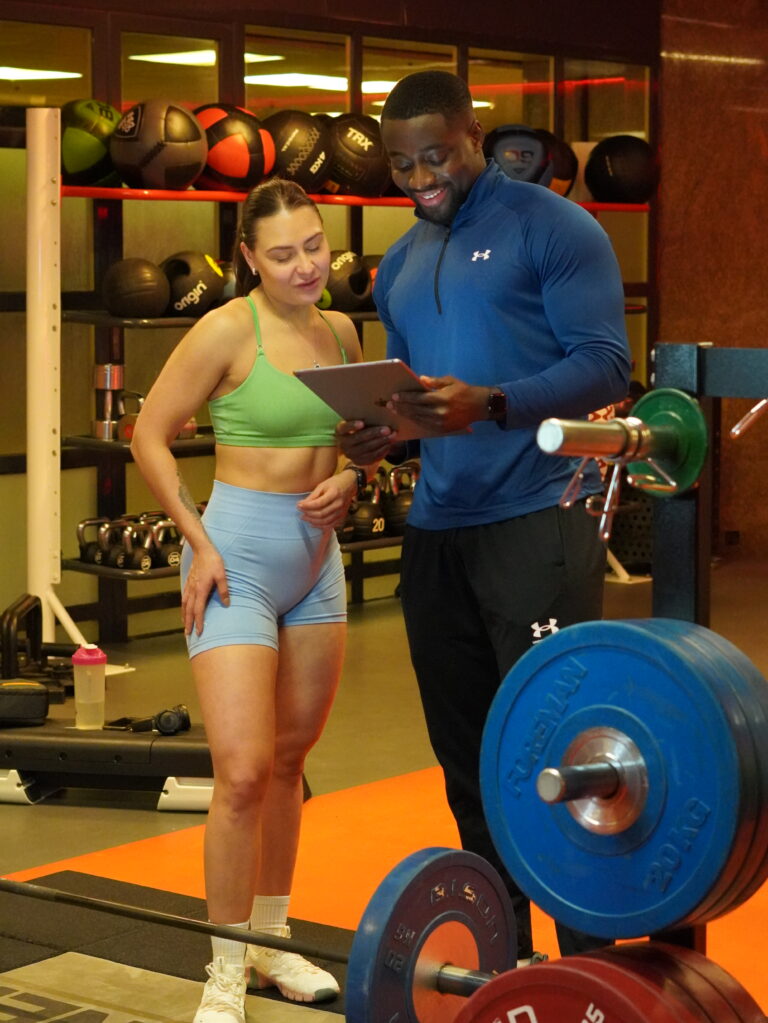
    Personal trainer talking with two women in a gym

    How I Structure the Week for My Clients

    One of the best things about the PPL split is how flexible it is. You can adapt it to fit your schedule, no matter how busy you are. Here are the two most common ways I set it up for my clients.

    The 3-Day-a-Week Plan (The “I’m Super Busy” Option)

    This is the perfect starting point. It’s simple, it’s manageable, and it gives you plenty of time to recover between workouts. With this plan, you are hitting every muscle group with high intensity once a week. It’s the perfect way to build a solid foundation of strength.

    Monday: Push Day + Core

    Tuesday: Rest

    Wednesday: Pull Day + Core

    Thursday: Rest

    Friday: Leg Day + Core

    Saturday & Sunday: Rest

    The 4-Day-a-Week Plan (The “I Want a Bit More” Option)

    Once my clients get comfortable with the 3-day split and they want to take things to the next level, we often move to a 4-day plan. This allows us to hit our muscles a little more frequently. That fourth “Full Body Day” is a great way to add a little extra volume and stimulate more muscle growth without spending hours in the gym. We usually pick one or two key exercises from each of the PPL days and do them together.

    Monday: Push Day + Core

    Tuesday: Pull Day

    Wednesday: Rest

    Thursday: Leg Day + Core

    Friday: Full Body Day

    Saturday & Sunday: Rest

    A Sample Plan to Get You Started

    To show you how simple and powerful this can be, here is a sample 3-day PPL and core workout that I would give to one of my clients.

    My Go-To Push Day

    Exercise

    Sets

    Reps

    Dumbbell Bench Press

    5

    8-12

    Dumbbell Shoulder Press

    5

    8-12

    Push-Ups

    5

    As many as you can!

    Lateral Raises

    5

    12-15

    Tricep Dips (on a bench)

    5

    10-15

    Core: Plank

    3

    Hold for 30-60 sec

    My Go-To Pull Day

    Exercise

    Sets

    Reps

    Dumbbell Rows

    5

    8-12 per arm

    Lat Pulldowns

    5

    10-15

    Seated Cable Rows

    5

    10-15

    Bicep Curls

    5

    12-15

    Face Pulls

    5

    15-20

    Core: Leg Raises

    3

    15-20

    My Go-To Leg Day

    Exercise

    Sets

    Reps

    Goblet Squats

    5

    10-15

    Romanian Deadlifts

    5

    10-15

    Lunges

    5

    10-12 per leg

    Glute Bridges

    5

    15-20

    Calf Raises

    5

    15-20

    Core: Russian Twists

    3

    15-20 per side

    12REPS app screens with the headline Build the Perfect Strength Workout

    References

  • [1] Mayo Clinic. (2022). Core exercises: Why you should strengthen your core muscles. https://www.mayoclinic.org/healthy-lifestyle/fitness/in-depth/core-exercises/art-20044751
  • Want a structured plan to follow between sessions? The 12REPS app has programmes I’ve written, with exercise demos and set-by-set tracking.

    Why I Built 12REPS: Strength Training for a Longer, Healthier Life

    12REPS app screens with the text Your Strength Training, Made Simple

    I built 12REPS because I can only coach so many people in person. I wanted more people to have what my one-to-one clients get: a sensible plan, clear technique guidance and a record of their progress.

    By Will Duru, personal trainer (BSc (Hons) Sport and Exercise Science, over 12 years in fitness) and founder of 12REPS.

    Why strength training matters for the long term

    Muscle and strength tend to decline with age if you don’t train them (Harvard Health). The UK Chief Medical Officers’ guidelines stress building strength and balance for adults. Strength helps you stay capable in everyday life, from climbing stairs to carrying shopping.

    What I kept seeing as a trainer

    • People trained hard but without a plan.
    • They weren’t sure their technique was right.
    • They didn’t track their lifts, so progress stalled without them noticing.

    How 12REPS answers that

    • Trainer-written programmes. Plans I’ve written as a certified personal trainer.
    • Quick Workout. Pick your time, level and equipment, and the app builds a session from the exercise library. Swap any exercise you don’t want.
    • Build your own. Tap the muscles you want on the body map, filter by equipment and choose from 1,500+ exercises. Save the routine to repeat it.
    • Two videos per exercise. A demo of the movement, and a coach tutorial on setup and technique.
    • Simple tracking. Log every set, rep and weight, see what you lifted last time, and keep your history, personal bests and weekly consistency in one place.

    12REPS doesn’t use AI. I write the programmes, and the app uses filters to match sessions to your time, level and equipment.

    What I want people to get from it

    Confidence. The confidence to walk into a gym, or clear space at home, and know exactly what to do. Strength training should be something you can keep doing for decades.

    12REPS is on iOS and Android, with a 7-day free trial. Check the app for current prices.

    Prefer a coach in person?

    The app is built from how I coach, but nothing replaces having someone watch your technique. If you live or work in Central London, I train clients one-to-one at my private studio in Fitzrovia (W1T 3DN) or at home. Read what happens at a first session, or book a free consultation.

    The Ultimate 6-Day Strength Training Split to Gain 10kg of Lean Muscle in 12 Months

    Personal trainer talking with two women in a gym

    Embarking on a journey to gain 10kg of lean muscle in a year is an ambitious yet achievable goal for a beginner. It requires dedication, consistency, and most importantly, a well-structured plan. This guide is designed to provide you with the knowledge and a comprehensive 12-month program to build a stronger, more muscular physique. We will delve into the science of muscle growth, the importance of a strategic training split, and the crucial roles of nutrition and recovery. The cornerstone of this program is a 6-day push/pull/legs-inspired split, meticulously crafted to maximise muscle stimulus and optimise recovery, ensuring you make steady progress towards your goal.

    Trainer watching a woman set up a barbell deadlift

    The Significance of a Structured Training Split

    A training split is the blueprint of your workout week, dictating which muscle groups you train on which days. For a beginner, a well-designed split is paramount for several reasons. Firstly, it ensures that each muscle group receives adequate attention and training volume to stimulate growth. Secondly, it provides a framework for progressive overload, the fundamental principle of strength training. Lastly —and perhaps most importantly —it allows sufficient recovery time for each muscle group, when the actual growth and repair occur. Without a structured split, you risk overtraining certain muscles and undertraining others, leading to imbalances, plateaus, and an increased risk of injury. This program utilises a 6-day split, which allows for a high training frequency, enabling you to hit each muscle group at least once a week with high intensity and volume.

    12reps- strength training

    Progressive Overload: The Engine of Muscle Growth

    Your muscles will not grow unless they are given a reason to. That reason is progressive overload. In simple terms, progressive overload means continually increasing the demands placed on your muscles over time. When your muscles are subjected to a stressor (like lifting a weight) that they are not accustomed to, they adapt by becoming bigger and stronger to be better prepared for the next time they face that same stressor. This adaptation is what we call muscle hypertrophy. The National Academy of Sports Medicine (NASM) defines hypertrophy as “the enlargement of skeletal muscle fibers in response to being recruited to develop increased levels of tension, as seen in resistance training” [1].

    There are several ways to implement progressive overload:

  • Increase the Weight: This is the most straightforward method. Once you can comfortably lift a certain weight for your target number of repetitions, it’s time to add more weight. A 5-10% increase is a good starting point.
  •  
  • Increase the Repetitions: If you’re not ready to increase the weight, you can aim to complete more repetitions with the same weight.
  •  
  • Increase the Sets: Adding an extra set to an exercise increases total training volume, a powerful stimulus for muscle growth.
  •  
  • Decrease Rest Periods: By reducing the amount of time you rest between sets, you increase the metabolic stress on your muscles, which can also promote hypertrophy.
  •  
  • Improve Your Form: Lifting the same weight with better technique can also be a form of progressive overload, as it ensures that the target muscle is doing the work.
  • Tracking your workouts is essential for implementing progressive overload effectively.

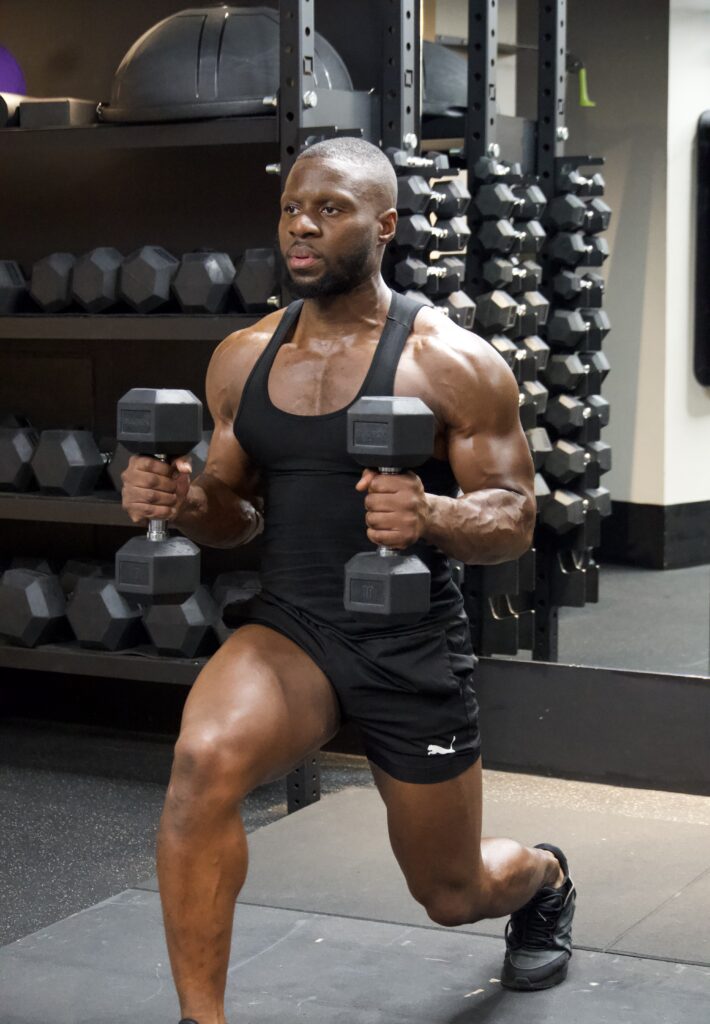
    Man doing a lunge holding dumbbells in a gym

    The 12-Month Strength Training Program: A New Structure

    This 12-month program features a new workout split to keep your body guessing and adapting. Each workout now consists of 6 exercises, with 5 sets per exercise. The first set is a warm-up set with a lighter weight to prepare the muscles for the work to come.

    Warm-up and Mobility

    Every workout should begin with a 10-minute warm-up, such as an incline walk on the treadmill or a rowing machine session. This is followed by mobility stretches to prepare your joints for the movements ahead.

    Stretch

    Sets

    Reps/Duration

    Cat-Cow

    2

    10 reps

    World’s Greatest Stretch

    2

    5 per side

    Hamstring Stretch

    2

    30 sec per side


    The Revised 6-Day Workout Split


    Workout 1: Chest, Back, and Hamstrings

    Exercise

    Sets

    Reps

    Rest

    Barbell Bench Press

    5

    8-12

    60-90 sec

    Lat Pulldown

    5

    8-12

    60-90 sec

    Romanian Deadlift

    5

    8-12

    90 sec

    Incline Dumbbell Press

    5

    10-15

    60-90 sec

    Seated Cable Row

    5

    10-15

    60-90 sec

    Hamstring Curl (Machine)

    5

    12-15

    60 sec


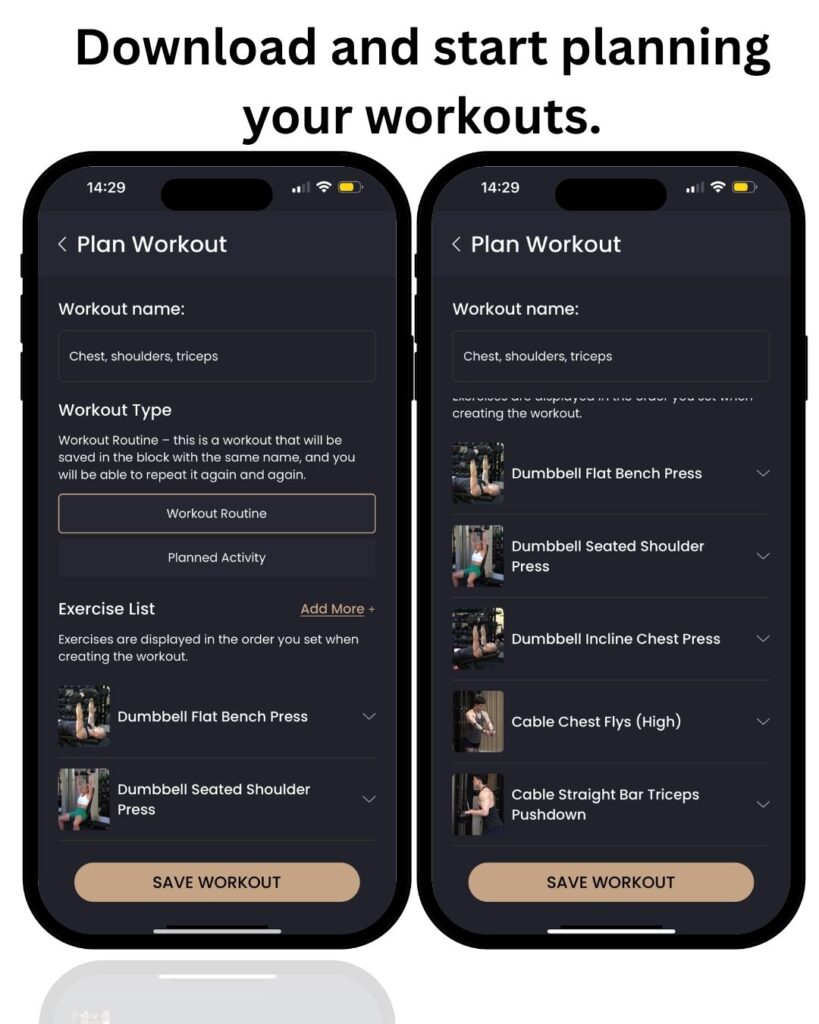
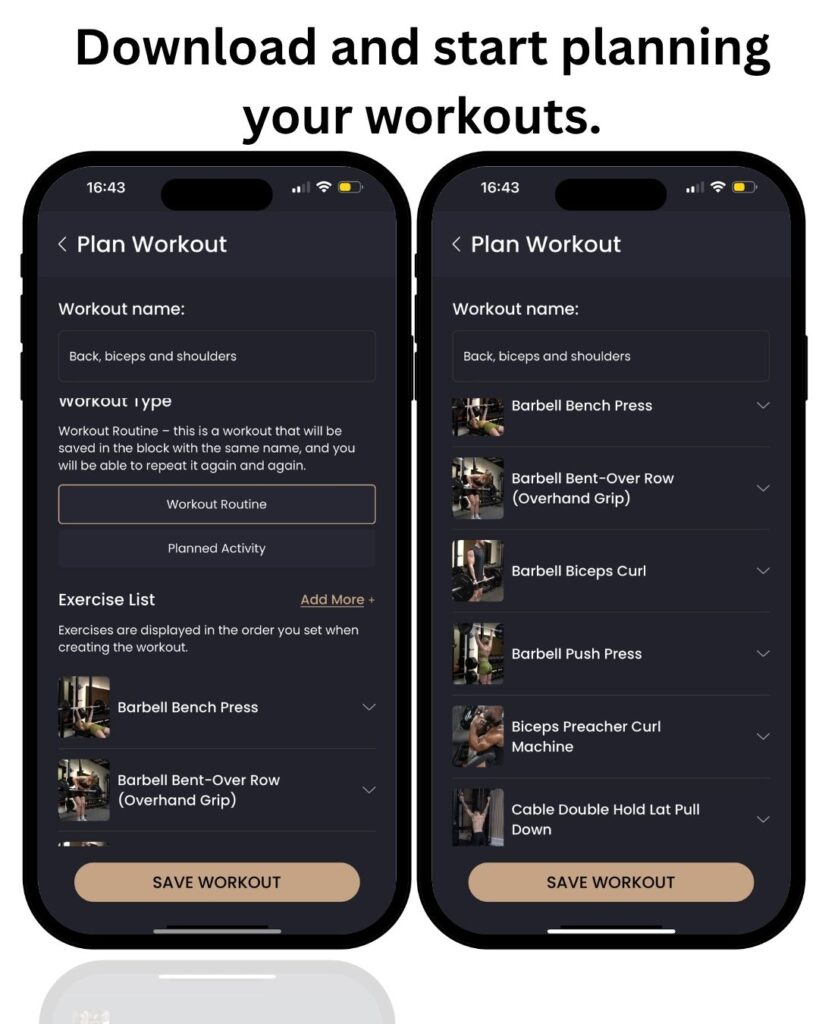
    12REPS app workout screens with the text Download and start planning your workouts


    Workout 2: Shoulders, Biceps, and Triceps

    Exercise

    Sets

    Reps

    Rest

    Overhead Press (Barbell)

    5

    8-12

    90 sec

    Dumbbell Bicep Curl

    5

    10-15

    60 sec

    Tricep Pushdown (Machine)

    5

    10-15

    60 sec

    Dumbbell Lateral Raise

    5

    12-15

    60 sec

    TRX Bicep Curl

    5

    12-15

    60 sec

    Overhead Tricep Extension

    5

    12-15

    60 sec


    Workout 3: Back, Hamstrings, and Core

    Exercise

    Sets

    Reps

    Rest

    Deadlift (Barbell)

    5

    5-8

    120-180 sec

    Pull-Ups (or Assisted)

    5

    AMRAP

    90 sec

    Good Mornings

    5

    10-15

    90 sec

    T-Bar Row

    5

    8-12

    60-90 sec

    Face Pulls

    5

    15-20

    60 sec

    Core Finisher

    –

    –

    –


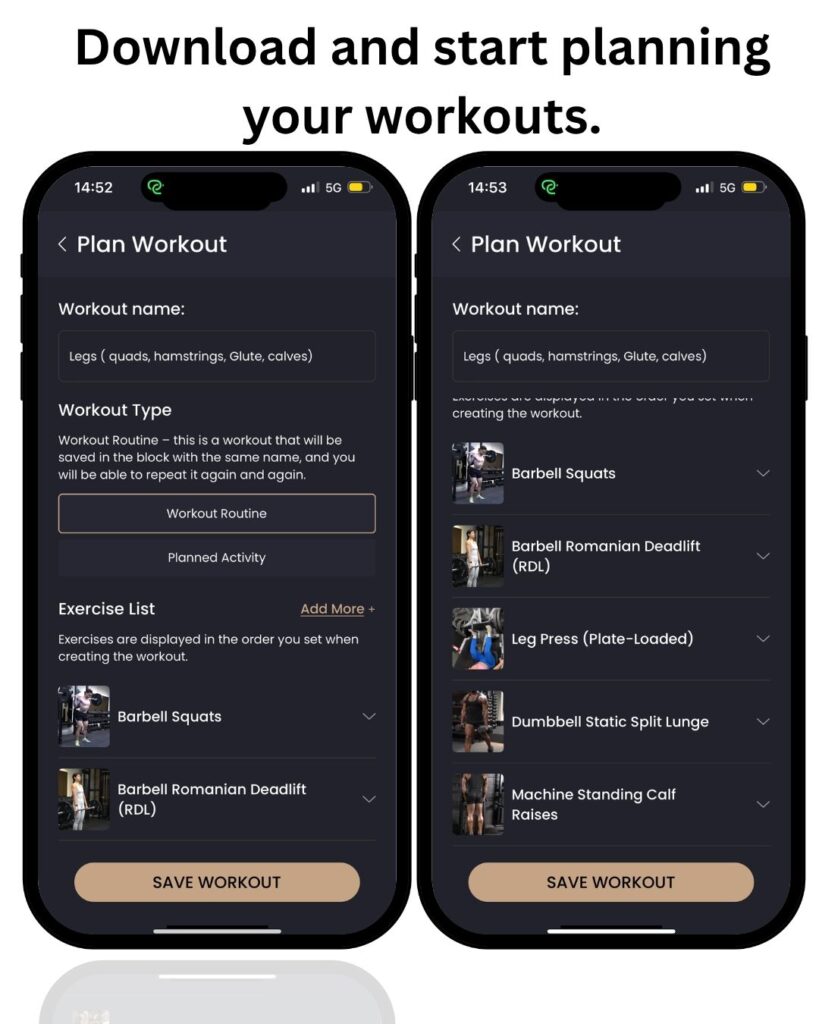
    12REPS app workout screens with the text Download and start planning your workouts

    Workout 4: Interval Cardio and Core

    • Cardio: Choose one of the following:
     
    • Treadmill: 5-minute warm-up, then 10 rounds of 30 seconds sprint / 60 seconds walk, followed by a 5-minute cool-down.
     
    • Running Outside: 5-minute warm-up jog, then 10 rounds of 1-minute hard run / 2-minute easy jog, followed by a 5-minute cool-down walk.
     
    • Wattbike: 5-minute warm-up, then 15 rounds of 20 seconds max effort / 40 seconds easy spin, followed by a 5-minute cool-down.
     
    • Core Finisher: (see below)


    Workout 5: Quads, Glutes, and Shoulders

    Exercise

    Sets

    Reps

    Rest

    Barbell Squat

    5

    8-12

    90-120 sec

    Hip Thrusts (Barbell)

    5

    10-15

    90 sec

    Arnold Press

    5

    8-12

    90 sec

    Leg Press (Machine)

    5

    10-15

    90 sec

    Glute Bridge (with weight)

    5

    12-15

    60 sec

    Upright Row

    5

    10-15

    60 sec


    Workout 6: Interval Cardio and Core

    • Cardio: Choose a different option from Workout 4.
    • Core Finisher: (see below)


    Core Finisher

    Perform these exercises at the end of your designated core workouts.

    Exercise

    Sets

    Reps/Duration

    Plank

    3

    45 seconds

    Flutter Kicks

    3

    45 seconds

    Decline Sit-ups

    3

    10 reps


    Cool-down

    Every workout should end with a 10-minute cool-down, such as a light walk on the treadmill or a session on the Stairmaster. This helps to gradually bring your heart rate down and can aid in recovery.

    Black and white photo of a woman training in a bright gym
    12REPS app exercise video screens with the text Download the 12REPS App Now

    References

  • National Academy of Sports Medicine. (2022). Progressive Overload Explained: Grow Muscle & Strength Today. https://blog.nasm.org/progressive-overload-explained
  •  
  • Medical News Today. (2022). How much protein do you need to build muscle?. https://www.medicalnewstoday.com/articles/how-much-protein-do-you-need-to-build-muscle
  • Fuel Meals. (2024). Best Macros to Gain Muscle. https://www.fuelmeals.com/blogs/table-talk/best-macros-to-gain-muscle
  • Want a structured plan to follow between sessions? The 12REPS app has programmes I’ve written, with exercise demos and set-by-set tracking.

    5-Day Strength Training Split: Gain 10kg of Lean Muscle in 12 Months

    Woman tying back her hair before a workout

    Introduction

    Are you a beginner looking to pack on serious muscle? Have you set yourself the ambitious goal of gaining 10kg of lean muscle in the next 12 months? If so, you’ve come to the right place. My name is Will Duru, and with over a decade of experience in strength training, I’m here to guide you on your journey. This article will provide you with a comprehensive 5-day strength training split designed to help you build muscle, get stronger, and achieve the physique you’ve always wanted. We’ll delve into the principles of progressive overload, the importance of nutrition and recovery, and provide you with a detailed 12-week program to get you started.

    The Importance of a Structured Training Split

    When it comes to strength training, having a structured plan is paramount. A well-designed training split ensures that you’re working all your major muscle groups effectively, while also allowing for adequate recovery time. This is crucial for muscle growth, as it’s during rest periods that your muscles repair and rebuild themselves stronger than before. Our 5-day split focuses on a push/pull/legs methodology, a proven system for building a balanced and athletic physique.

    12reps- strength training

    Nutrition for Muscle Growth

    Nutrition plays a massive role in building lean muscle mass while keeping body fat low. To build muscle, you need to consume a surplus of calories, meaning you need to eat more calories than your body burns. However, the quality of these calories is crucial. Your diet should be rich in protein, complex carbohydrates, and healthy fats.

    Here’s a sample macronutrient breakdown for a 70kg individual looking to put on muscle:

    • Protein: Aim for 1.6-2.2g of protein per kg of body weight. For a 70kg person, this would be 112-154g of protein per day. Protein is the building block of muscle tissue, so it’s essential for repair and growth. Good sources include chicken, fish, eggs, dairy, and legumes.
    • Carbohydrates: Carbs are your body’s primary source of energy. Aim for 4-7g of carbs per kg of body weight. For a 70kg person, this would be 280-490g of carbs per day. Focus on complex carbohydrates like oats, brown rice, and sweet potatoes for sustained energy.
    • Fats: Healthy fats are important for hormone production and overall health. Aim for 0.5-1g of fat per kg of body weight. For a 70kg person, this would be 35-70g of fat per day. Good sources include avocados, nuts, seeds, and olive oil.

    Sleep and Recovery

    Sleep is when the magic happens. During deep sleep, your body releases growth hormone, which is essential for muscle repair and growth. Aim for 7-9 hours of quality sleep per night to optimise your recovery and ensure you’re ready for your next training session.

    Trainer coaching a woman lifting a barbell from the floor

    The 12-Week Beginner Strength Training Program

    This 12-week program is designed to help you build a strong foundation and pack on muscle. It utilises a variety of equipment, including kettlebells, dumbbells, TRX, machines, and barbells. Each workout is divided into three phases to keep your training varied and challenging.

    Warm-up (10 minutes)

    • Incline walk on a treadmill or row for 10 minutes.
    • Mobility stretches:

    Stretch

    Sets

    Reps/Duration

    Cat-Cow

    2

    10 reps

    World’s Greatest Stretch

    2

    5 per side

    Hamstring Stretch

    2

    30s per side

    The 5-Day Split

    • Workout 1: Chest and Back
    • Workout 2: Leg Day (Hamstrings, Glutes, and Quads)
    • Workout 3: Shoulders and Biceps
    • Workout 4: Back, Triceps, and Glutes
    • Workout 5: Interval Cardio and Core
    Woman deadlifting a barbell in a home gym

    Workout 1: Chest and Back

    Phase 1

    Exercise

    Sets

    Reps

    Weight

    Rest Period

    Barbell Bench Press

    4

    8-12

    70% 1RM

    60-90s

    Pull-Ups/Lat Pulldown

    4

    8-12

    Bodyweight/70% 1RM

    60-90s

    Incline Dumbbell Press

    3

    10-15

    60% 1RM

    60s

    Bent-Over Barbell Row

    3

    10-15

    60% 1RM

    60s

    Cable Crossovers

    3

    12-15

    50% 1RM

    45s


    Phase 2 & 3 (1 warm-up set, then 2 working sets)

    Exercise

    Sets

    Reps

    Weight

    Rest Period

    Machine Chest Press

    3

    12-15

    60% 1RM

    60s

    Seated Cable Row

    3

    12-15

    60% 1RM

    60s

    Dumbbell Flyes

    3

    15-20

    50% 1RM

    45s

    Straight-Arm Pulldown

    3

    15-20

    50% 1RM

    45s

    Push-Ups

    3

    To Failure

    Bodyweight

    60s


    Workout 2: Leg Day (Hamstrings, Glutes, and Quads)

    Phase 1

    Exercise

    Sets

    Reps

    Weight

    Rest Period

    Barbell Squats

    4

    8-12

    70% 1RM

    90-120s

    Romanian Deadlifts

    4

    10-12

    65% 1RM

    90s

    Leg Press

    3

    10-15

    70% 1RM

    60-90s

    Glute Bridges

    3

    12-15

    Bodyweight/Added Weight

    60s

    Leg Curls

    3

    12-15

    60% 1RM

    60s


    Phase 2 & 3 (1 warm-up set, then 2 working sets)

    Exercise

    Sets

    Reps

    Weight

    Rest Period

    Goblet Squats

    3

    12-15

    Moderate

    60s

    Kettlebell Swings

    3

    15-20

    Moderate

    60s

    Walking Lunges

    3

    10-12 per leg

    Bodyweight/Dumbbells

    60s

    Calf Raises

    3

    15-20

    Bodyweight/Added Weight

    45s

    TRX Hamstring Curls

    3

    12-15

    Bodyweight

    60s


    Workout 3: Shoulders and Biceps

    Phase 1

    Exercise

    Sets

    Reps

    Weight

    Rest Period

    Overhead Press (Barbell)

    4

    8-12

    70% 1RM

    60-90s

    Barbell Curls

    4

    8-12

    70% 1RM

    60s

    Arnold Press

    3

    10-15

    60% 1RM

    60s

    Hammer Curls

    3

    10-15

    60% 1RM

    60s

    Lateral Raises

    3

    12-15

    50% 1RM

    45s

    Phase 2 & 3 (1 warm-up set, then 2 working sets)

    Exercise

    Sets

    Reps

    Weight

    Rest Period

    Seated Dumbbell Shoulder Press

    3

    12-15

    60% 1RM

    60s

    Preacher Curls

    3

    12-15

    60% 1RM

    60s

    Front Raises

    3

    15-20

    50% 1RM

    45s

    Concentration Curls

    3

    12-15

    50% 1RM

    45s

    Face Pulls

    3

    15-20

    Light

    45s


    Workout 4: Back, Triceps, and Glutes

    Phase 1

    Exercise

    Sets

    Reps

    Weight

    Rest Period

    Deadlifts

    4

    5-8

    75% 1RM

    120-180s

    Close-Grip Bench Press

    4

    8-12

    70% 1RM

    60-90s

    T-Bar Rows

    3

    10-12

    65% 1RM

    60-90s

    Skull Crushers

    3

    10-15

    60% 1RM

    60s

    Hip Thrusts

    3

    10-15

    Moderate

    60s

    Phase 2 & 3 (1 warm-up set, then 2 working sets)

    Exercise

    Sets

    Reps

    Weight

    Rest Period

    Single-Arm Dumbbell Row

    3

    10-12 per arm

    Moderate

    60s

    Tricep Pushdowns

    3

    12-15

    60% 1RM

    60s

    Cable Pull-Throughs

    3

    15-20

    Light

    45s

    Overhead Tricep Extensions

    3

    12-15

    50% 1RM

    45s

    Back Extensions

    3

    15-20

    Bodyweight

    45s

    Man doing a lunge holding dumbbells in a gym

    Workout 5: Interval Cardio and Core

    • Cardio: Choose one of the following:
      • Treadmill: 5-minute warm-up, then 10 rounds of 30 seconds sprint / 60 seconds walk, followed by a 5-minute cool-down.
      • Running Outside: 5-minute warm-up jog, then 8 rounds of 400m run at a hard pace / 200m jog, followed by a 5-minute cool-down.
      • Wattbike: 5-minute warm-up, then 15 rounds of 20 seconds max effort / 40 seconds easy pedaling, followed by a 5-minute cool-down.
    • Core Finisher:

    Exercise

    Sets

    Duration/Reps

    Plank

    3

    45 seconds

    Flutter Kicks

    3

    45 seconds

    Decline Sit-ups

    3

    10 reps

    Cool-down (10 minutes)

    • 10 minutes on the Stairmaster or an incline walk on the treadmill.
    12REPS app exercise video screens with the text Create your routine, track your progress, see real results

    Track Your Progress

    To make the most of this program, it’s crucial to track your workouts.

  • Build and save your own routines.
  • Track your sets, reps, and weights.
  • Use the built-in stopwatch to monitor your rest periods.
  • Access over 1,500 exercise demos.
  • Share your personal bests with friends.
  • Conclusion

    Embarking on a journey to gain 10kg of lean muscle is a challenging yet rewarding endeavour. This 5-day strength training split, combined with a solid nutrition plan and adequate rest, provides you with the blueprint for success. Remember to focus on progressive overload, listen to your body, and stay consistent.

    Want a structured plan to follow between sessions? The 12REPS app has programmes I’ve written, with exercise demos and set-by-set tracking.

    12REPS app exercise video screens with the text Download the 12REPS App Now