30-Day Beginner Gym Challenge: 5-Day Strength Training Split for Results

Get in Shape in 30 Days and Build a Lasting Habit with Strength Training

By Will Duru, BSc (Hons) Sport and Exercise Science, Award-winning Personal Trainer

Welcome to your 30-day beginner gym challenge! I’m Will Duru, and with over 10 years of experience in strength training, I’m here to guide you on this exciting journey. This program is designed to help you build a strong foundation, develop healthy habits, and see real results in just one month. We’ll focus on a 5-day workout split that’s perfect for beginners, along with essential nutrition and supplement advice to maximise your progress. The goal is not just to transform your body, but to create a sustainable fitness routine that you can stick with for the long haul.

This challenge is built around a structured 5-day workout split, a highly effective method for beginners to build muscle and strength. Research shows that both full-body and split-body routines are effective for beginners, but a split routine allows you to focus on specific muscle groups each day, which can be less overwhelming and more motivating when you’re just starting out [4]. We’ll be using a push/pull/legs format, with dedicated days for core and high-intensity interval training (HIIT) to ensure a well-rounded program.

30-Day Beginner Gym Challenge: 5-Day Strength Training Split for Results

The 30-Day Beginner Challenge: A 5-Day Workout Split

This program is designed for one-hour workouts each day. Remember to warm up before each session with 5-10 minutes of light cardio and dynamic stretching, and cool down afterward with static stretching.

Day 1: Chest and Back (Push/Pull)

Exercise

Sets

Reps

Weight

Rest Period

Bench Press (Dumbbell or Barbell)

3

8-12

Start with a light weight to master the form

60-90 seconds

Bent-Over Row (Dumbbell or Barbell)

3

8-12

Start with a light weight to master the form

60-90 seconds

Incline Dumbbell Press

3

10-15

Choose a weight that challenges you

60 seconds

Lat Pulldown

3

10-15

Choose a weight that challenges you

60 seconds

Push-Ups (on knees if needed)

3

To failure

Bodyweight

60 seconds

Seated Cable Row

3

12-15

Choose a weight that challenges you

60 seconds

Day 2: Shoulders, Biceps, and Triceps (Push/Pull)

Exercise

Sets

Reps

Weight

Rest Period

Overhead Press (Dumbbell or Barbell)

3

8-12

Start with a light weight to master the form

60-90 seconds

Bicep Curls (Dumbbell or Barbell)

3

10-15

Choose a weight that challenges you

60 seconds

Tricep Dips (on bench)

3

10-15

Bodyweight

60 seconds

Lateral Raises (Dumbbell)

3

12-15

Choose a light weight to focus on form

60 seconds

Hammer Curls (Dumbbell)

3

12-15

Choose a weight that challenges you

60 seconds

Tricep Pushdowns (Cable Machine)

3

12-15

Choose a weight that challenges you

60 seconds

Day 3: Hamstrings, Quads, and Glutes (Legs)

Exercise

Sets

Reps

Weight

Rest Period

Squats (Bodyweight or Goblet Squat)

3

8-12

Start with bodyweight or a light dumbbell

60-90 seconds

Romanian Deadlifts (Dumbbell)

3

10-15

Start with a light weight to master the form

60-90 seconds

Lunges (Bodyweight or Dumbbell)

3

10-15 per leg

Start with bodyweight

60 seconds

Leg Press

3

12-15

Choose a weight that challenges you

60 seconds

Glute Bridges

3

15-20

Bodyweight

60 seconds

Calf Raises

3

15-20

Bodyweight or with dumbbells

60 seconds

30-Day Beginner Gym Challenge: 5-Day Strength Training Split for Results

Day 4: Cardio (Zone 2 and Zone 3)

This day is dedicated to cardiovascular health. Spend 60 minutes on a cardio machine of your choice (treadmill, elliptical, bike). Aim for 40 minutes in Zone 2 (a pace where you can hold a conversation) and 20 minutes in Zone 3 (a more challenging pace where conversation is difficult).

Day 5: HIIT Workout

High-Intensity Interval Training (HIIT) is a fantastic way to burn calories and improve your cardiovascular fitness in a short amount of time. Perform each exercise for 30 seconds, followed by 30 seconds of rest. Repeat the circuit 4-5 times.

  • Jumping Jacks
  • High Knees
  • Burpees
  • Mountain Climbers
  • Bodyweight Squats

Nutrition for Success

Your efforts in the gym will only take you so far without proper nutrition. To build muscle and lose fat, you need to fuel your body with the right nutrients. Focus on a balanced diet of lean proteins, complex carbohydrates, and healthy fats. Aim for a slight calorie surplus if your goal is muscle building, or a slight calorie deficit if your goal is fat loss. Remember to drink plenty of water throughout the day to stay hydrated.

Can Exercise Really Help with Mood Swings or Anxiety

Supplements to Boost Your Results

While not a replacement for a healthy diet, certain supplements can help you achieve your goals faster. For this 30-day challenge, I recommend two key supplements:

  • Clear Whey Protein: Protein is essential for muscle repair and growth. Supplementing with whey protein, especially after a workout, can significantly enhance muscle hypertrophy and strength gains [1]. Clear whey is a lighter, more refreshing alternative to traditional milky protein shakes.
  • Creatine: Creatine is one of the most researched and effective supplements for increasing strength and power output. Taking 3-5 grams of creatine daily can help you lift heavier and perform more reps, leading to greater muscle growth over time [2].

Track Your Progress with the 12Reps App

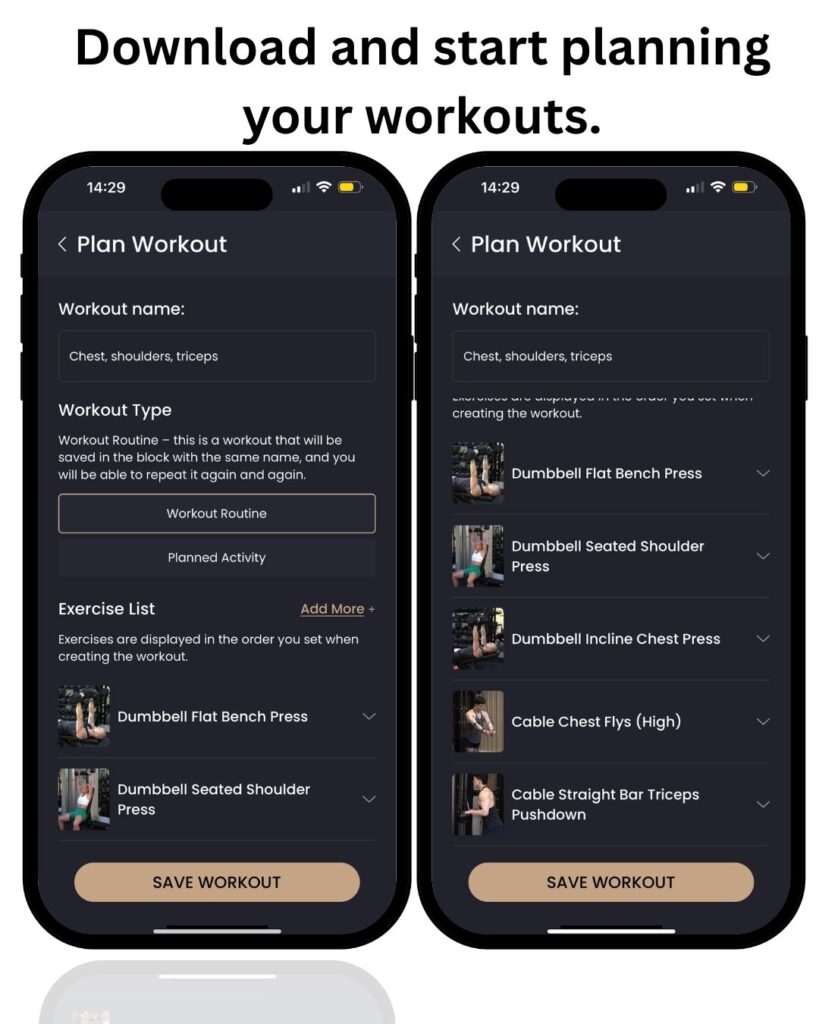
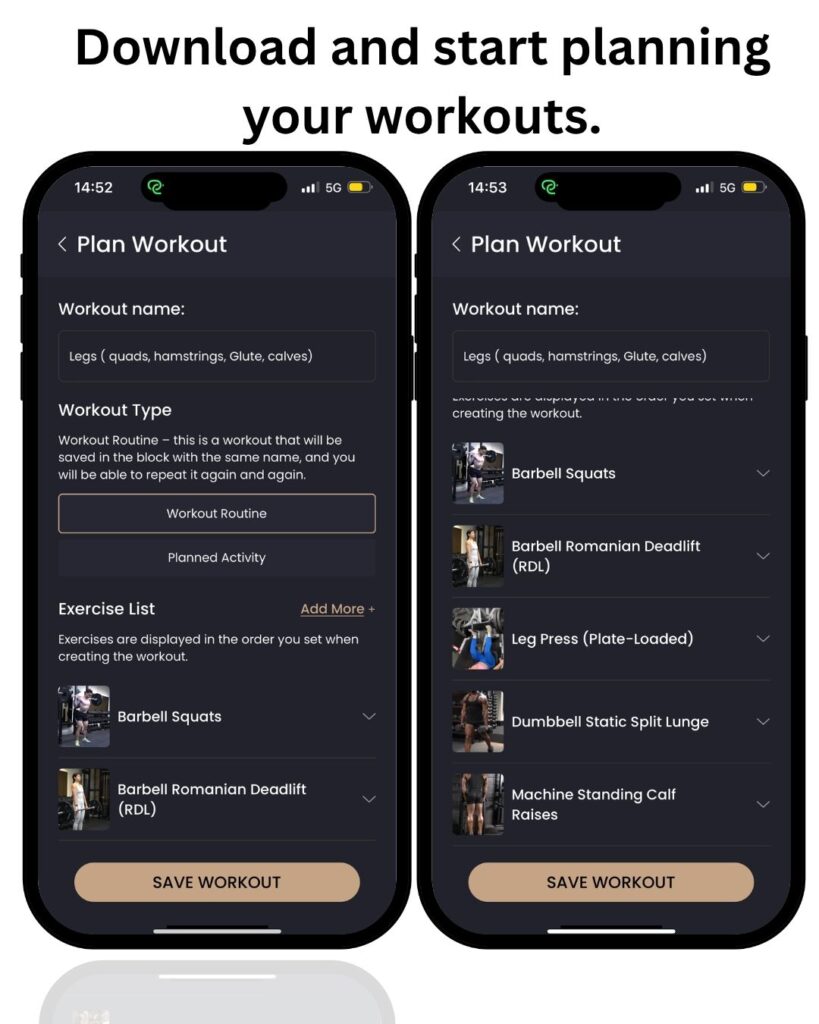
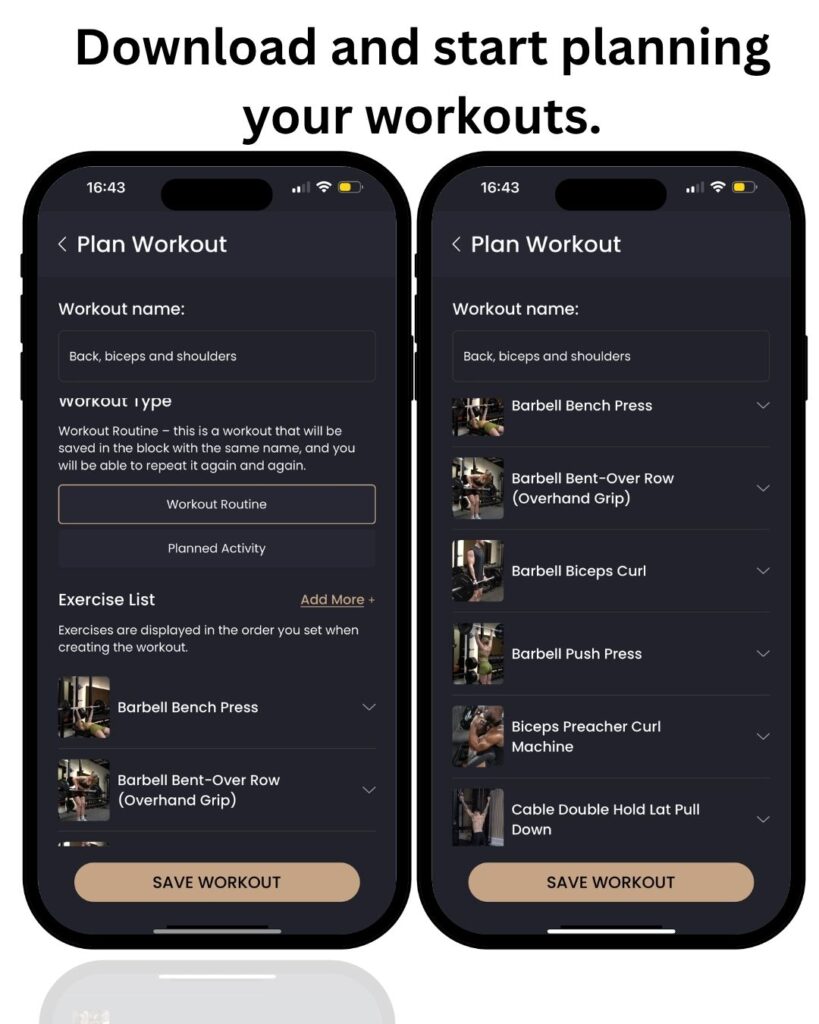
To get the most out of this 30-day challenge, I highly recommend using a workout tracker like the 12Reps app. You can build this entire routine in the app, track your sets, reps, and weights, and monitor your progress over time. The app also features over 1,500 exercise demos to ensure you’re performing each movement correctly and safely. You can even pre-plan your workouts and share your personal bests with friends on social media. Download the app for a free trial and take your strength training to the next level.

The Importance of Consistency

Remember, consistency is key. Sticking to this program for 30 days will not only produce visible results but also help you build a lasting habit. Resistance training is medicine; it can increase lean muscle mass, boost your metabolism, and improve your overall health in numerous ways [3]. So, commit to the challenge, stay consistent, and get ready to transform your body and your life.

strength training app for women and man

References

[1] Park, Y., Park, H. Y., Kim, J., Hwang, H., Jung, Y., Kreider, R., & Lim, K. (2019). Effects of whey protein supplementation prior to, and following, resistance exercise on body composition and training responses: A randomized double-blind placebo-controlled study. Journal of Exercise Nutrition & Biochemistry, 23(2), 34–44. https://pmc.ncbi.nlm.nih.gov/articles/PMC6651693/

[2] Mills, S., Candow, D. G., Forbes, S. C., Neary, J. P., Ormsbee, M. J., & Antonio, J. (2020). Effects of Creatine Supplementation during Resistance Training Sessions in Physically Active Young Adults. Nutrients, 12(6), 1880. https://pmc.ncbi.nlm.nih.gov/articles/PMC7353308/

[3] Westcott, W. L. (2012). Resistance training is medicine: effects of strength training on health. Current sports medicine reports, 11(4), 209–216. https://pubmed.ncbi.nlm.nih.gov/22777332/

[4] Pedersen, H., Fimland, M. S., Schoenfeld, B. J., Iversen, V. M., Cumming, K. T., Jensen, S., Saeterbakken, A. H., & Andersen, V. (2022). A randomized trial on the efficacy of split-body versus full-body resistance training in non-resistance trained women. BMC sports science, medicine & rehabilitation, 14(1), 87. https://pmc.ncbi.nlm.nih.gov/articles/PMC9107721/

3-Day Strength Training Split for Fat Loss | Bala’s 18kg Transformation

Strength Training in Your 30s and 40s: Why Personal Training (Tower Bridge/London Bridge)

By Will Duru, BSc (Hons) Sport and Exercise Science, Award-winning Personal Trainer

I’m Will Duru, and for more than a decade, I’ve had the privilege of guiding people on their journey to a stronger, healthier life. I’ve seen countless transformations, but some stories stick with you. The story of my client, Bala, is one of them. When Bala walked into my gym for the first time, he carried the weight of his goal on his shoulders: to shed 18kg of body fat. He was new to the world of fitness, intimidated by the complex machines and the sea of unfamiliar faces. He needed more than just a workout plan; he needed a clear, simple, and sustainable path to follow. He needed a program that would not only deliver results but also build his confidence and make him feel at home in the gym.

I designed a 3-day push/pull/legs strength training split for him, combined with interval cardio in zone 3 to maximise fat burning. The results were nothing short of amazing. Over the course of 12 months, Bala not only lost the 18kg of body fat he had set out to lose, but he also gained significant strength and built a solid foundation of lean muscle.

In this article, I’m going to share the exact 12-month program I created for Bala. This isn’t just a generic workout plan; it’s a comprehensive guide designed for beginners who are ready to commit to a real change. We’ll break down the workouts, explain the science behind the methods, and give you the tools you need to embark on your own transformation. My promise to you is to keep it simple, direct, and effective. Let’s get started.

The Power of the Push/Pull/Legs Split

The push/pull/legs split is a time-tested, scientifically backed training methodology that has proven effective for individuals of all fitness levels. It’s a simple yet powerful way to organise your training week, and it’s the foundation of the program that led to Bala’s incredible success. Let’s delve deeper into why this split is so effective:

  • Enhanced Focus and Intensity: By focusing on a specific group of muscles each session, you can channel all your energy and focus into them. This allows for a higher level of intensity during your workouts, which is a key driver of muscle growth and fat loss. When you’re not fatigued from working your entire body, you can push each muscle group to its absolute limit, maximising the stimulus for adaptation.
 
  • Greater Training Volume: The push/pull/legs split allows for higher training volume per muscle group than full-body workouts. Volume, calculated as sets x reps x weight, is a critical factor in muscle hypertrophy. By dedicating an entire session to a specific muscle group, you can perform more exercises and sets for that group, leading to greater overall growth.
 
  • Improved Mind-Muscle Connection: With a focused training split, you can develop a stronger mind-muscle connection. This is the ability to consciously feel and contract the target muscle during an exercise. A strong mind-muscle connection ensures the right muscles do the work, leading to better results and a lower risk of injury.
 
  • It’s Simple: You train all your pushing muscles (chest, shoulders, triceps) on one day, your pulling muscles (back, biceps) on another, and your lower body (quads, hamstrings, glutes, calves) on the third day. This makes it easy to remember and follow.
 
  • Optimal Recovery: By splitting your workouts this way, you give each muscle group ample time to recover before retraining it. This is crucial for muscle growth and preventing injuries.
 
  • High Intensity: Because you’re only training a few muscle groups each day, you can hit them with high intensity and volume, which is essential for stimulating muscle growth and burning calories.
12reps app - strength training app

Supercharging Fat Loss with Interval Cardio

To accelerate Bala’s fat loss journey, we strategically incorporated interval cardio into his program. We specifically targeted Zone 3 cardio, which corresponds to an intensity level of 70-80% of your maximum heart rate. This “sweet spot” is highly effective for maximising fat oxidation (i.e., burning fat for fuel). Here’s a closer look at how we implemented this powerful tool:

  • Increased Caloric Expenditure: Interval training is highly effective for burning a significant number of calories in a short time. The intense bursts of effort, followed by brief recovery periods, keep your heart rate elevated and your metabolism revved up, even after your workout is over. This “afterburn” effect, known as excess post-exercise oxygen consumption (EPOC), means you continue to burn calories at an elevated rate for hours after you leave the gym.
 
  • Hormonal Response: High-intensity interval training has been shown to stimulate the release of growth hormone and other hormones that promote fat loss and muscle growth. This hormonal response, combined with the caloric expenditure, creates an optimal environment for body recomposition.
 
  • Time Efficiency: Let’s be honest, we’re all busy. Interval training is a time-efficient way to get a great cardio workout. You can achieve the same, if not better, results in 20-30 minutes of interval training as you would in a longer, steady-state cardio session.
 
  • Treadmill Intervals: We would alternate between periods of high-intensity running and recovery walking. For example, 1 minute of running followed by 2 minutes of walking, repeated for 20-30 minutes.

This type of training is not only effective for fat loss, but it also improves your cardiovascular health and endurance.

Combining 12-Rep Training with Cardio for Optimal Results

Nutrition for Fat Loss: The Missing Piece of the Puzzle

Before we dive into the workout program, it’s crucial to understand that you can’t out-train a bad diet. Nutrition is the cornerstone of any successful fat loss journey. Bala’s transformation was as much about what he ate as it was about how he trained. Here are the key nutritional principles that he followed:

  • Caloric Deficit: To lose fat, you must be in a caloric deficit, meaning you consume fewer calories than you burn. We calculated Bala’s daily caloric needs and created a moderate deficit of about 500 calories per day. This allowed him to lose fat at a steady and sustainable pace without feeling deprived.
 
  • High Protein Intake: Protein is essential for preserving muscle mass while in a caloric deficit. We made sure that Bala was consuming 1.6-2.2 grams of protein per kilogram of his body weight each day. This helped him stay full and satisfied, and it ensured that he was losing fat, not muscle.
 
 
  • Whole, Unprocessed Foods: We focused on a diet rich in whole, unprocessed foods like lean meats, fish, fruits, vegetables, and whole grains. These foods are nutrient-dense and provide the vitamins and minerals your body needs to function optimally.
 
  • Hydration: Staying hydrated is crucial for overall health and performance. Bala aimed to drink at least 3-4 litres of water per day.

By combining a sound nutritional strategy with a consistent training program, Bala achieved his fat-loss goals without resorting to extreme diets or unsustainable practices.

Bala’s 12-Month Transformation Blueprint

This 12-month program is the exact blueprint that Bala followed to achieve his remarkable 18kg fat loss. It’s divided into four distinct 3-month phases, each designed to build upon the previous one. The key to success with this program is consistent progression. As you get stronger and fitter, you must continue to challenge your body by increasing the weight you lift, the number of repetitions you perform, or the number of sets you complete. The 12Reps app is an indispensable tool for tracking your progress and ensuring you’re always moving forward.


Warm-up (10 minutes)

Start every workout with a 10-minute warm-up:

  • Incline walk on a treadmill or rowing for 10 minutes.

Then, perform these mobility stretches:

Stretch

Sets

Reps/Duration

Cat-Cow

2

10 reps

World’s Greatest Stretch

2

5 reps/side

Hamstring Stretch

2

30 sec/side


The Workouts

Here are the three workouts you’ll perform each week. Aim to have a rest day between each workout (e.g., Monday, Wednesday, Friday).

Workout 1: Push Day (Chest, Shoulders, Triceps)

Exercise

Sets

Reps

Rest (seconds)

Barbell Bench Press

5

8-12

90

Seated Dumbbell Press

5

10-15

60

Incline Dumbbell Press

5

10-12

60

Dumbbell Lateral Raises

5

12-15

60

Tricep Dips (assisted)

5

12-15

60

TRX Tricep Extensions

5

15-20

60


Workout 2: Pull Day (Back, Biceps)

Exercise

Sets

Reps

Rest (seconds)

Pull-Ups (assisted)

5

6-10

90

Bent-Over Barbell Rows

5

8-12

90

Lat Pulldown

5

10-15

60

Seated Cable Row

5

12-15

60

Barbell Curls

5

10-12

60

TRX Bicep Curls

5

15-20

60


Workout 3: Leg Day (Quads, Hamstrings, Glutes, Calves)

Exercise

Sets

Reps

Rest (seconds)

Barbell Squats

5

8-12

90

Romanian Deadlifts

5

10-15

60

Leg Press

5

12-15

60

Hip Thrusts

5

12-15

60

Box Jumps

5

10

60

Sled Push

5

20m

90


Core Finisher

After each workout, perform this core finisher circuit. Complete 3 rounds with minimal rest between exercises and 60 seconds of rest between rounds.

Exercise

Duration/Reps

Plank

45 seconds

Flutter Kicks

45 seconds

Decline Sit-ups

10 reps


Cool-down (10 minutes)

End each session with a 10-minute cool-down:

  • Stairmaster at a low intensity or an incline walk on the treadmill.

Your Digital Coach: The 12Reps App

Bala’s incredible transformation was a result of his unwavering consistency and his meticulous approach to tracking his progress. The 12Reps app was his constant companion on this journey, his digital secret weapon. It’s more than just a workout tracker; it’s a comprehensive tool designed to keep you motivated, accountable, and on the path to success.

You can build this entire program in the app by going to ‘Build Your Routine’. The app has over 1,500 exercise demos, so you can make sure your form is perfect. You can also use the app’s stopwatch to time your rest periods, save your workouts, and even share your personal bests with your friends.

If you’re ready to start your own transformation, I highly recommend you download the 12Reps app for a free trial. It’s the ultimate tool for strength training and muscle building.

Conclusion

Bala’s journey is a powerful reminder that with the right plan, unwavering consistency, and a determined mindset, anything is possible. Losing 18kg of body fat is a life-changing achievement, and it’s a goal that is within your reach. This 3-day strength training split is not just a workout plan; it’s a roadmap to a new you. It’s a blueprint for building a stronger, healthier, and more confident version of yourself. Embrace the process, stay committed to your goals, and trust in your ability to transform. The results will speak for themselves, and you’ll be amazed at what you can achieve.

5-Day Strength Training Split: Gain 10kg of Lean Muscle in 12 Months

strength training app

Introduction

Are you a beginner looking to pack on serious muscle? Have you set yourself the ambitious goal of gaining 10kg of lean muscle in the next 12 months? If so, you’ve come to the right place. My name is Will Duru, and with over a decade of experience in strength training, I’m here to guide you on your journey. This article will provide you with a comprehensive 5-day strength training split designed to help you build muscle, get stronger, and achieve the physique you’ve always wanted. We’ll delve into the principles of progressive overload, the importance of nutrition and recovery, and provide you with a detailed 12-week program to get you started. Plus, we’ll introduce you to a powerful tool to track your progress: the 12Reps app.

The Importance of a Structured Training Split

When it comes to strength training, having a structured plan is paramount. A well-designed training split ensures that you’re working all your major muscle groups effectively, while also allowing for adequate recovery time. This is crucial for muscle growth, as it’s during rest periods that your muscles repair and rebuild themselves stronger than before. Our 5-day split focuses on a push/pull/legs methodology, a proven system for building a balanced and athletic physique.

12reps- strength training

Nutrition for Muscle Growth

Nutrition plays a massive role in building lean muscle mass while keeping body fat low. To build muscle, you need to consume a surplus of calories, meaning you need to eat more calories than your body burns. However, the quality of these calories is crucial. Your diet should be rich in protein, complex carbohydrates, and healthy fats.

Here’s a sample macronutrient breakdown for a 70kg individual looking to put on muscle:

  • Protein: Aim for 1.6-2.2g of protein per kg of body weight. For a 70kg person, this would be 112-154g of protein per day. Protein is the building block of muscle tissue, so it’s essential for repair and growth. Good sources include chicken, fish, eggs, dairy, and legumes.
  • Carbohydrates: Carbs are your body’s primary source of energy. Aim for 4-7g of carbs per kg of body weight. For a 70kg person, this would be 280-490g of carbs per day. Focus on complex carbohydrates like oats, brown rice, and sweet potatoes for sustained energy.
  • Fats: Healthy fats are important for hormone production and overall health. Aim for 0.5-1g of fat per kg of body weight. For a 70kg person, this would be 35-70g of fat per day. Good sources include avocados, nuts, seeds, and olive oil.

Sleep and Recovery

Sleep is when the magic happens. During deep sleep, your body releases growth hormone, which is essential for muscle repair and growth. Aim for 7-9 hours of quality sleep per night to optimise your recovery and ensure you’re ready for your next training session.

Strength Training in Your 30s and 40s: Why Personal Training (Tower Bridge/London Bridge)

The 12-Week Beginner Strength Training Program

This 12-week program is designed to help you build a strong foundation and pack on muscle. It utilises a variety of equipment, including kettlebells, dumbbells, TRX, machines, and barbells. Each workout is divided into three phases to keep your training varied and challenging.

Warm-up (10 minutes)

  • Incline walk on a treadmill or row for 10 minutes.
  • Mobility stretches:

Stretch

Sets

Reps/Duration

Cat-Cow

2

10 reps

World’s Greatest Stretch

2

5 per side

Hamstring Stretch

2

30s per side

The 5-Day Split

  • Workout 1: Chest and Back
  • Workout 2: Leg Day (Hamstrings, Glutes, and Quads)
  • Workout 3: Shoulders and Biceps
  • Workout 4: Back, Triceps, and Glutes
  • Workout 5: Interval Cardio and Core
The Power of Compound Lifts: Your Blueprint for Full-Body Strength and Muscle with 12Reps

Workout 1: Chest and Back

Phase 1

Exercise

Sets

Reps

Weight

Rest Period

Barbell Bench Press

4

8-12

70% 1RM

60-90s

Pull-Ups/Lat Pulldown

4

8-12

Bodyweight/70% 1RM

60-90s

Incline Dumbbell Press

3

10-15

60% 1RM

60s

Bent-Over Barbell Row

3

10-15

60% 1RM

60s

Cable Crossovers

3

12-15

50% 1RM

45s


Phase 2 & 3 (1 warm-up set, then 2 working sets)

Exercise

Sets

Reps

Weight

Rest Period

Machine Chest Press

3

12-15

60% 1RM

60s

Seated Cable Row

3

12-15

60% 1RM

60s

Dumbbell Flyes

3

15-20

50% 1RM

45s

Straight-Arm Pulldown

3

15-20

50% 1RM

45s

Push-Ups

3

To Failure

Bodyweight

60s


Workout 2: Leg Day (Hamstrings, Glutes, and Quads)

Phase 1

Exercise

Sets

Reps

Weight

Rest Period

Barbell Squats

4

8-12

70% 1RM

90-120s

Romanian Deadlifts

4

10-12

65% 1RM

90s

Leg Press

3

10-15

70% 1RM

60-90s

Glute Bridges

3

12-15

Bodyweight/Added Weight

60s

Leg Curls

3

12-15

60% 1RM

60s


Phase 2 & 3 (1 warm-up set, then 2 working sets)

Exercise

Sets

Reps

Weight

Rest Period

Goblet Squats

3

12-15

Moderate

60s

Kettlebell Swings

3

15-20

Moderate

60s

Walking Lunges

3

10-12 per leg

Bodyweight/Dumbbells

60s

Calf Raises

3

15-20

Bodyweight/Added Weight

45s

TRX Hamstring Curls

3

12-15

Bodyweight

60s


Workout 3: Shoulders and Biceps

Phase 1

Exercise

Sets

Reps

Weight

Rest Period

Overhead Press (Barbell)

4

8-12

70% 1RM

60-90s

Barbell Curls

4

8-12

70% 1RM

60s

Arnold Press

3

10-15

60% 1RM

60s

Hammer Curls

3

10-15

60% 1RM

60s

Lateral Raises

3

12-15

50% 1RM

45s

Phase 2 & 3 (1 warm-up set, then 2 working sets)

Exercise

Sets

Reps

Weight

Rest Period

Seated Dumbbell Shoulder Press

3

12-15

60% 1RM

60s

Preacher Curls

3

12-15

60% 1RM

60s

Front Raises

3

15-20

50% 1RM

45s

Concentration Curls

3

12-15

50% 1RM

45s

Face Pulls

3

15-20

Light

45s


Workout 4: Back, Triceps, and Glutes

Phase 1

Exercise

Sets

Reps

Weight

Rest Period

Deadlifts

4

5-8

75% 1RM

120-180s

Close-Grip Bench Press

4

8-12

70% 1RM

60-90s

T-Bar Rows

3

10-12

65% 1RM

60-90s

Skull Crushers

3

10-15

60% 1RM

60s

Hip Thrusts

3

10-15

Moderate

60s

Phase 2 & 3 (1 warm-up set, then 2 working sets)

Exercise

Sets

Reps

Weight

Rest Period

Single-Arm Dumbbell Row

3

10-12 per arm

Moderate

60s

Tricep Pushdowns

3

12-15

60% 1RM

60s

Cable Pull-Throughs

3

15-20

Light

45s

Overhead Tricep Extensions

3

12-15

50% 1RM

45s

Back Extensions

3

15-20

Bodyweight

45s

5-Day Strength Training Split: Gain 10kg of Lean Muscle in 12 Months

Workout 5: Interval Cardio and Core

  • Cardio: Choose one of the following:
    • Treadmill: 5-minute warm-up, then 10 rounds of 30 seconds sprint / 60 seconds walk, followed by a 5-minute cool-down.
    • Running Outside: 5-minute warm-up jog, then 8 rounds of 400m run at a hard pace / 200m jog, followed by a 5-minute cool-down.
    • Wattbike: 5-minute warm-up, then 15 rounds of 20 seconds max effort / 40 seconds easy pedaling, followed by a 5-minute cool-down.
  • Core Finisher:

Exercise

Sets

Duration/Reps

Plank

3

45 seconds

Flutter Kicks

3

45 seconds

Decline Sit-ups

3

10 reps

Cool-down (10 minutes)

  • 10 minutes on the Stairmaster or an incline walk on the treadmill.
Strength Training in Your 30s and 40s: Why Personal Training (Tower Bridge/London Bridge)

Track Your Progress with the 12Reps App

To make the most of this program, it’s crucial to track your workouts. The 12Reps app is the perfect tool for this. It’s a strength-training and workout-tracking app designed to help you build muscle and stay on track with your fitness goals. With the 12Reps app, you can:

  • Build and save your own routines.
  • Track your sets, reps, and weights.
  • Use the built-in stopwatch to monitor your rest periods.
  • Access over 1,500 exercise demos.
  • Share your personal bests with friends.

Download the 12Reps app for a free trial and take your training to the next level!

Conclusion

Embarking on a journey to gain 10kg of lean muscle is a challenging yet rewarding endeavour. This 5-day strength training split, combined with a solid nutrition plan and adequate rest, provides you with the blueprint for success. Remember to focus on progressive overload, listen to your body, and stay consistent. With dedication and the right tools, like the 12Reps app, you’ll be well on your way to achieving your muscle-building goals.

strength training app

4-Day Push Pull Legs Program for Muscle Gain and Fat Loss | 12Reps

12reps- strength training

By Will Duru, BSc (Hons) Sport and Exercise Science, Award-winning Personal Trainer with over 10 years of experience in strength training and optimising recovery.

The Ultimate 4-Day Push/Pull/Legs Program for Muscle Gain and Fat Loss

If you want to build muscle, lose body fat, and get in the best shape of your life, you need a smart training plan. As a personal trainer with over a decade of experience, I have found the most effective method for beginners and intermediates is the Push/Pull/Legs (PPL) split. This approach is the perfect way to build muscle because it groups muscles that work together, allowing you to train them with intensity while giving other parts of your body time to recover.

By splitting your workouts into push days (chest, shoulders, triceps), pull days (back, biceps), and leg days (quads, hamstrings, glutes, calves), you ensure every muscle group gets the attention it needs. We will structure this into a 4-day training week, which allows us to hit each muscle group with enough frequency to stimulate growth. Combining this with interval cardio is the secret to getting that “in-shape” look and a defined face, as it torches calories and boosts your metabolism. Of course, no training program is complete without a solid nutrition plan, which we will cover in detail.

4-Day Push Pull Legs Program for Muscle Gain and Fat Loss | 12Reps

Fueling Your Body: Nutrition for Muscle Gain and Fat Loss

Training is only half the battle; your nutrition will make or break your results. To build muscle and lose fat, you need to fuel your body with the right balance of macronutrients: protein, carbohydrates, and fats.

Protein is the most important macronutrient for building and repairing muscle tissue. When you lift weights, you create tiny tears in your muscles, and protein provides the building blocks (amino acids) to repair them, making them stronger and bigger. For those looking to build muscle, a good target is 1.6 to 2.2 grams of protein per kilogram of bodyweight (about 0.7 to 1.0 grams per pound).

Carbohydrates are your body’s primary energy source. They provide the fuel you need to power through intense workouts. Without enough carbs, you will feel sluggish and weak in the gym. Good sources include oats, brown rice, sweet potatoes, and fruits.

Fats are essential for hormone production, including hormones like testosterone that are critical for muscle growth. They also play a role in nutrient absorption and overall health. Focus on healthy fats from sources like avocados, nuts, seeds, and olive oil.

A good starting point for your daily macronutrient split for body recomposition (losing fat and gaining muscle simultaneously) is:

  • Protein: 30-35%
  • Carbohydrates: 35-40%
  • Fats: 25-30%

You can track your macros using an app like the 12Reps app to ensure you are hitting your targets consistently.

The Warm-Up: Preparing Your Body for Action

A proper warm-up is crucial for preparing your body for the workout ahead, preventing injuries, and maximising performance. Each workout should begin with a 10-minute warm-up. This can be a 10-minute incline walk on the treadmill or 10 minutes of rowing. Following the cardio warm-up, perform the following mobility stretches:

Stretch

Reps/Duration

Sets

Cat-Cow

10 reps

2

World’s Greatest Stretch

5 reps/side

2

Hamstring Stretch

30 sec/side

2

Thoracic Spine Rotations

10 reps/side

2

The 12-Week Strength Training Program

This 12-week program is divided into three 4-week phases. It is a 4-day split program. Here is a sample weekly schedule:

  • Day 1: Push Workout
  • Day 2: Pull Workout
  • Day 3: Rest
  • Day 4: Legs & Functional Workout
  • Day 5: Long-Distance Run (45 mins) + Core
  • Day 6: Rest
  • Day 7: Rest
12reps app - strength training app

Phase 1: Foundation (Weeks 1-4)

This phase focuses on building a solid foundation. We will use moderate weights and focus on perfecting form.

Day 1: Push Workout

Exercise

Sets

Reps

Weight

Rest Period

Dumbbell Bench Press

4

10-12

60-70%

60s

Kettlebell Shoulder Press

4

10-12

60-70%

60s

Incline Dumbbell Press

3

10-12

60-70%

60s

Machine Chest Fly

3

12-15

50-60%

45s

TRX Tricep Extension

3

12-15

Bodyweight

45s


Day 2: Pull Workout

Exercise

Sets

Reps

Weight

Rest Period

Bent-Over Dumbbell Row

4

10-12

60-70%

60s

Lat Pulldown Machine

4

10-12

60-70%

60s

Seated Cable Row

3

10-12

60-70%

60s

Face Pulls

3

15

50-60%

45s

Dumbbell Bicep Curls

3

12-15

60-70%

45s


Day 4: Legs & Functional Workout

Exercise

Sets

Reps

Weight

Rest Period

Barbell Squats

4

10-12

60-70%

90s

Romanian Deadlifts

4

10-12

60-70%

90s

Bulgarian Split Squats

3

10-12/leg

Bodyweight/Light DBs

60s

Leg Press

3

12-15

60-70%

60s

Glute Bridges

3

15-20

Bodyweight

45s

Phase 2: Strength Building (Weeks 5-8)

In this phase, we increase the intensity to build more strength. The weights will be heavier, and the reps will be lower. Each exercise includes one warm-up set before your main working sets.

Day 1: Push Workout

Exercise

Sets

Reps

Weight

Rest Period

Barbell Bench Press

4

6-8

75-85%

90s

Seated Dumbbell Shoulder Press

4

6-8

75-85%

90s

Incline Barbell Press

3

8-10

70-80%

75s

Dumbbell Side Lateral Raises

3

10-12

60-70%

60s

Close Grip Bench Press

3

8-10

70-80%

60s


Day 2: Pull Workout

Exercise

Sets

Reps

Weight

Rest Period

Pull-Ups (or Assisted)

4

6-8

Bodyweight

90s

Barbell Rows

4

6-8

75-85%

90s

T-Bar Rows

3

8-10

70-80%

75s

Face Pulls

3

12-15

60-70%

60s

Barbell Bicep Curls

3

8-10

70-80%

60s


Day 4: Legs & Functional Workout

Exercise

Sets

Reps

Weight

Rest Period

Barbell Deadlifts

4

5-6

80-90%

120s

Front Squats

4

6-8

75-85%

90s

Single-Leg RDL

3

8-10/leg

Light-Mod DBs

75s

Sled Push

3

20m

Heavy

90s

Box Jumps

3

8-10

Bodyweight

60s

Phase 3: Power and Performance (Weeks 9-12)

This final phase focuses on maximising power and performance. We will use explosive movements to convert your strength into functional power. The weights will be challenging, and the focus is on moving the weights with speed and control. Each exercise includes one warm-up set.

Day 1: Push Workout

Exercise

Sets

Reps

Weight

Rest Period

Incline Barbell Bench Press

4

5-6

80-90%

90s

Push Press

4

5-6

80-90%

90s

Dumbbell Flys

3

10-12

70-80%

60s

Arnold Press

3

8-10

70-80%

75s

Diamond Push-Ups

3

Max Reps

Bodyweight

60s


Day 2: Pull Workout

Exercise

Sets

Reps

Weight

Rest Period

Weighted Pull-Ups

4

5-6

Bodyweight +

90s

Pendlay Rows

4

5-6

80-90%

90s

Renegade Rows

3

8-10/arm

Mod-Heavy KBs

75s

TRX Face Pulls with External Rotation

3

12-15

Bodyweight

60s

Zottman Curls

3

8-10

70-80%

60s


Day 4: Legs & Functional Workout

Exercise

Sets

Reps

Weight

Rest Period

Power Cleans

4

3-5

85-95%

120s

Goblet Squats

4

8-10

Mod-Heavy KB/DB

90s

Walking Lunges

3

10-12/leg

Mod DBs

75s

Sled Pull (with TRX)

3

20m

Heavy

90s

Kettlebell Swings

3

15-20

Mod-Heavy KB

60s


Cool-Down and Core Finisher

After each strength training session, it is important to cool down and finish with some core work. A 10-minute cool-down on the StairMaster or an incline walk on the treadmill will help your body gradually return to a resting state. Following the cool-down, perform this core finisher to build a strong and stable core.

Core Finisher

Exercise

Sets

Duration/Reps

Rest Period

Plank

3

45 seconds

30s

Flutter Kicks

3

45 seconds

30s

Decline Sit-Ups

3

10 reps

45s

4-Day Push Pull Legs Program for Muscle Gain and Fat Loss | 12Reps app

Get Started on Your Strength Journey

This 12-week program is your roadmap to building a stronger, more powerful, and leaner body. By combining this structured training plan with the right nutrition, you will achieve incredible results. Remember to be consistent, listen to your body, and always prioritize proper form.

To make your journey even easier, you can find all the exercises from this program in the 12Reps app. You can use the app to build your routine, track your workouts with the stopwatch, and even plan sessions with friends. Download the 12Reps app today for a free trial and take the first step towards a stronger you. It is more than just a workout tracker; it is your partner in strength training and muscle building.

References

[1] Hartford Hospital. (2025). How Much Protein Do I Need to Build Muscle? https://hartfordhospital.org/services/bone-joint-institute/news/news-detail?articleid=65418

[2] Healthline. Body Recomposition: How to Lose Fat and Gain Muscle. https://www.healthline.com/nutrition/body-recomposition

[3] Garage Gym Reviews. (2024). Tips From an RD for Macros for Fat Loss and Muscle Gain. https://www.garagegymreviews.com/macros-for-fat-loss-and-muscle-gain

Strength Training for 50-Year-Old Women: A Simple Guide

Strength Training for 50-Year-Old Women: A Simple Guide By Will Duru, BSc (Hons) Sport and Exercise Science, Award-winning Personal Trainer Age is Just a Number: Ten Years of Helping Women Get Strong

By Will Duru, BSc (Hons) Sport and Exercise Science, Award-winning Personal Trainer


Age is Just a Number: Ten Years of Helping Women Get Strong

For over ten years, I’ve worked as a personal trainer in the City of London. In that time, I’ve seen something amazing happen. Women are changing how they think about fitness. They’re not just trying to get smaller anymore. They want to get stronger, more able, and more powerful. And the best way to do this? Strength training.

I’ve helped many women get in shape through strength training. We’ve set all kinds of goals together. Some wanted to squat their own body weight for the first time. Others wanted to do their first proper press-up. We’ve worked on deadlifting their body weight, pushing their weight on the sledge, and building the strength to run a 10k, half-marathon, and even a full marathon. I have seen women do it all. The secret behind every success? Building strength.

I always tell my clients that age is just a number in the gym. When you are strong and fit, you can challenge yourself and push your limits. You can do things you never thought possible. This isn’t just nice words – it’s something I see every day. Take my client, Markia. When she first came to me, her goals were small. But as she got stronger, her confidence grew. We worked towards a big goal: deadlifting 1.7 times her own body weight. The day she lifted 100kg from the floor for one rep, her face lit up with pure joy. She told me the feeling was amazing. In that moment, she wasn’t just a woman in her 50s. She was as strong as the young men and women in the gym.

This is what strength training can do. It’s not just about bigger muscles. It’s about a bigger life. It’s about feeling confident, taking on new challenges, and living your best life, no matter how old you are.

Why Women Should Do Strength Training- build muscle and lose fat

As we get older, our bodies change. One big change is that we lose muscle and strength. This is called sarcopenia. Research shows that muscle and strength peak around age 30 to 35. After that, they slowly get weaker. This gets faster after age 65 for women. This affects how we move, our balance, and how we feel [1]. But here’s the good news: this doesn’t have to happen. Strength training can stop and even reverse these changes.

A 2023 study looked at women in their 40s and 50s, both before and after menopause. The study found that 20 weeks of weight training were safe and effective for all women. It made them stronger. While women after menopause might need to train more to build muscle, the message is clear: strength training works at any age [2].

Why Lift at 50? The Big Benefits

Build and Keep Muscle to Stay Strong for Daily Life. Every day, you need to carry bags, climb stairs, play with kids, and stay independent. Strength training makes sure you keep the muscles you need for all these things.

Support Bone Health and Reduce Fall Risk. Weight training tells your bones to stay strong. This is particularly important for women after menopause, when bones can become weak rapidly. Strong muscles and bones mean fewer falls and breaks.

Better Joints and Posture Strong muscles support your joints and help you stand tall. This means less pain and better movement.

More Energy, Better Sleep, and Happier Mood I think this matters most day to day. Regular strength training helps you sleep better, gives you more energy, and makes you feel happier. When you feel strong, it shows in everything you do.

Strength Training for 50-Year-Old Women: A Simple Guide By Will Duru, BSc (Hons) Sport and Exercise Science, Award-winning Personal Trainer Age is Just a Number: Ten Years of Helping Women Get Strong

Is Strength Training Safe at 50?

Yes! When done correctly, strength training is a very safe activity. Here’s how to stay safe:

Use Good Form and Go Slow Good technique is more important than heavy weights. Perfect form with light weights is always better than bad form with heavy weights. Every rep is a chance to get better at the movement.

Start Light and Add Weight Slowly. Begin with weights that feel easy. Only add more weight when your current reps feel steady and don’t hurt. Your body will get stronger quickly when you give it the right challenge and enough rest.

Always Warm Up: Spend 5-8 minutes warming up before each workout. Move the joints you’ll be training. Get your heart rate up slowly. This simple step cuts injury risk and helps you perform better.

Smart Training for Women Over 50

Training through menopause needs a smart approach. Here’s what works best:

Eat Protein at Most Meals. Protein becomes more important as we age. Try to get 25-35 grams of good protein at each meal. Think eggs at breakfast, chicken or fish at lunch, and beans or lean meat at dinner. Steady protein throughout the day gives your muscles what they need to repair and grow.

Think About Creatine: Creatine can help with strength and recovery. Taking 3-5 grams daily has been shown to improve power and reduce tiredness. It’s one of the most studied supplements and is very safe.

Focus on Sleep and Stress Recovery happens when you’re not in the gym. Good sleep is when the real magic happens. Aim for 7-9 hours of good sleep each night. Find ways to manage stress like walking, reading, or doing things you enjoy. Too much stress can hurt both muscle building and fat loss.

How to Plan Your Strength Training

From my experience training beginners, I suggest starting with bodyweight exercises, resistance bands, and mobility work. Why? These help you build basic strength while learning how your body moves and what muscle work feels like. This knowledge is the base for all future training success.

Here’s your 6-week program to get started. You can find all these exercises on the 12reps app at just12reps.com. The app has over 1,500 exercises. You can make workouts based on your goals, time, body parts, and equipment. I suggest training twice a week for the first 6 weeks. Each session should be 45 minutes to an hour. This gives you enough rest between workouts – that’s when your muscles actually repair and get stronger.

Strength Training for 50-Year-Old Women: A Simple Guide By Will Duru, BSc (Hons) Sport and Exercise Science, Award-winning Personal Trainer Age is Just a Number: Ten Years of Helping Women Get Strong

How to Plan Your Strength Training

Based on my experience training beginners, I recommend starting with bodyweight exercises, resistance bands, and mobility exercises. Why? These help you build basic strength while learning how your body moves and what muscle work feels like. This knowledge is the basis for all future training success.

Here’s your 6-week program to get started. You can find all these exercises on the 12reps app at just12reps.com. The app has over 1,500 exercises. You can make workouts based on your goals, time, body parts, and equipment. I suggest training twice a week for the first 6 weeks. Each session should be 45 minutes to an hour. This gives you enough rest between workouts – that’s when your muscles actually repair and get stronger.

What to Train: The Basic Movements

The 12reps app focuses on basic movement patterns that help with real-life activities:

Squat Pattern: Learn to sit and stand from a chair, then move to squats. This helps with stairs, getting up from chairs, and maintaining leg strength.

Hip Hinge Pattern Start with basic hip hinges, then try deadlifts with light weights. This protects your back and makes your backside stronger.

Push Movements Begin with wall push-ups, then work up to knee push-ups and regular push-ups. These build upper body strength for pushing things.

Pull Movements Focus on rowing exercises to strengthen your back and improve posture. These help fight the forward head position from looking at screens.

Carry Exercises: Farmer carries improve grip strength and core stability. They’re like carrying shopping or luggage.

Balance Training: Standing on one leg and walking heel-to-toe improves balance and reduces fall risk.

Your 6-Week Starter Program: Building Your Base

Workout 1: Lower Body and Core Focus

Exercise

Sets

Reps

Rest

Bodyweight Squats

4

12-15

45 seconds

Mini Loop Band Crab Walk

4

30 seconds

45 seconds

Bodyweight Reverse Lunges

4

10 each leg

45 seconds

Bodyweight Glute Bridge

4

15

45 seconds

Plank/Knee Plank

3

30 seconds hold

45 seconds

Finisher (to get your heart rate up): – 10 Bodyweight Squats – 10 Reverse Lunges (each leg) – 30 seconds Jogging on the spot

Do 3 rounds with 30 seconds rest after each round

Workout 2: Upper Body and Core Focus

Exercise

Sets

Reps

Rest

Resistance Band Bicep Curl

4

12

45 seconds

Loop Band Bent Over Row

4

12

45 seconds

Knee Press-ups

3

12

45 seconds

Loop Band Chest Press

4

15

45 seconds

Bodyweight Walking Lunges

4

8 each leg

45 seconds

Plank/Knee Plank

3

30 seconds hold

45 seconds

How to Progress Through the Program

Week 1-2: Learning Phase Focus only on doing the exercises right. If something feels too hard, make it easier. Do squats to a chair or wall push-ups instead of knee push-ups. The goal is to learn the movements and feel confident.

Week 3-4: Getting Better Phase Start to challenge yourself a bit more. If you can do all the reps with perfect form, try adding 2-3 more reps to each set or hold positions for 5-10 seconds longer.

Week 5-6: Getting Stronger Phase This is where you’ll really feel strong. You might go from knee push-ups to full push-ups, or from bodyweight squats to holding a light weight. Listen to your body and progress at a pace that feels challenging but doable.

The Mental Change: From “I Can’t” to “I Can”

One of the biggest changes I see in my clients isn’t physical – it’s mental. When you start strength training in your 50s, you’re not just building muscle. You’re breaking down old beliefs about what you can do. Every weight lifted, every rep done, every personal best is proof that you are stronger than you thought.

The gym becomes a place to learn about yourself. The discipline you build in training helps in other parts of your life. The confidence you get from lifting weights shows up in work, social situations, and relationships. The toughness you develop pushing through hard workouts prepares you for life’s challenges.

This is why I love strength training for women over 50. It’s not just about the physical benefits – though they are huge and life-changing. It’s about taking back your power, changing what you think is possible, and refusing to believe that your best years are behind you. Your 50s can be the start of your strongest, most confident decade yet.

Remember, every expert was once a beginner. Every strong woman was once weak. Every confident person was once full of doubt. The only difference between where you are now and where you want to be is the choice to start and the commitment to keep going. Your journey to strength begins with one step, one rep, one decision to invest in yourself.

The weights are waiting. Your stronger self is waiting. The only question is: are you ready to meet her?

Getting Started: Your First Steps

Starting can feel scary, but it doesn’t have to be. Here are some simple steps to begin:

  1. Start at Home: You don’t need a gym to begin. Use the bodyweight exercises in this program. All you need is a small space and maybe a resistance band.
  2. Focus on Form: Watch videos of the exercises on the 12reps app. Practice the movements without weight first. Good form is everything.
  3. Listen to Your Body: Some muscle soreness is normal, but sharp pain is not. If something hurts, stop and check your form or try an easier version.
  4. Be Patient: Results take time. You might feel stronger in 2-3 weeks, but visible changes take 6-8 weeks. Trust the process.
  5. Track Your Progress: Write down what you do each workout. Seeing your progress on paper is very motivating.
  6. Get Help if Needed: If you’re unsure about anything, consider working with a qualified trainer for a few sessions to learn the basics.

The Science Made Simple

Research shows that strength training can: – Slow down muscle loss by up to 50% – Increase bone density by 1-3% per year – Improve balance and reduce fall risk by 25-30% – Boost metabolism for up to 24 hours after training – Improve sleep quality and mood

These aren’t just numbers – they represent real improvements in your daily life. Better balance means more confidence walking on uneven surfaces. Stronger muscles mean carrying groceries is easier. Better bone density means less worry about fractures.

Your New Chapter Starts Now

Your 50s don’t have to be about slowing down. They can be about speeding up, getting stronger, and becoming the best version of yourself. Strength training isn’t just exercise – it’s an investment in your future self. Every workout is a deposit in your health bank account.

The woman who starts this program today will be different from the woman who finishes it in 6 weeks. She’ll be stronger, more confident, and ready for whatever life brings. That woman is waiting for you to take the first step.

Don’t wait for the perfect time. Don’t wait until you feel ready. Don’t wait until you have all the equipment. Start where you are, with what you have, right now. Your future self will thank you for beginning today.

The journey of a thousand miles begins with a single step. Your journey to strength begins with a single rep. Are you ready to take it?

The Power of Compound Lifts: Your Blueprint for Full-Body Strength and Muscle with 12Reps