30-Day Beginner Gym Challenge: 5-Day Strength Training Split for Results

Get in Shape in 30 Days and Build a Lasting Habit with Strength Training

By Will Duru, BSc (Hons) Sport and Exercise Science, Award-winning Personal Trainer

Welcome to your 30-day beginner gym challenge! I’m Will Duru, and with over 10 years of experience in strength training, I’m here to guide you on this exciting journey. This program is designed to help you build a strong foundation, develop healthy habits, and see real results in just one month. We’ll focus on a 5-day workout split that’s perfect for beginners, along with essential nutrition and supplement advice to maximise your progress. The goal is not just to transform your body, but to create a sustainable fitness routine that you can stick with for the long haul.

This challenge is built around a structured 5-day workout split, a highly effective method for beginners to build muscle and strength. Research shows that both full-body and split-body routines are effective for beginners, but a split routine allows you to focus on specific muscle groups each day, which can be less overwhelming and more motivating when you’re just starting out [4]. We’ll be using a push/pull/legs format, with dedicated days for core and high-intensity interval training (HIIT) to ensure a well-rounded program.

30-Day Beginner Gym Challenge: 5-Day Strength Training Split for Results

The 30-Day Beginner Challenge: A 5-Day Workout Split

This program is designed for one-hour workouts each day. Remember to warm up before each session with 5-10 minutes of light cardio and dynamic stretching, and cool down afterward with static stretching.

Day 1: Chest and Back (Push/Pull)

Exercise

Sets

Reps

Weight

Rest Period

Bench Press (Dumbbell or Barbell)

3

8-12

Start with a light weight to master the form

60-90 seconds

Bent-Over Row (Dumbbell or Barbell)

3

8-12

Start with a light weight to master the form

60-90 seconds

Incline Dumbbell Press

3

10-15

Choose a weight that challenges you

60 seconds

Lat Pulldown

3

10-15

Choose a weight that challenges you

60 seconds

Push-Ups (on knees if needed)

3

To failure

Bodyweight

60 seconds

Seated Cable Row

3

12-15

Choose a weight that challenges you

60 seconds

Day 2: Shoulders, Biceps, and Triceps (Push/Pull)

Exercise

Sets

Reps

Weight

Rest Period

Overhead Press (Dumbbell or Barbell)

3

8-12

Start with a light weight to master the form

60-90 seconds

Bicep Curls (Dumbbell or Barbell)

3

10-15

Choose a weight that challenges you

60 seconds

Tricep Dips (on bench)

3

10-15

Bodyweight

60 seconds

Lateral Raises (Dumbbell)

3

12-15

Choose a light weight to focus on form

60 seconds

Hammer Curls (Dumbbell)

3

12-15

Choose a weight that challenges you

60 seconds

Tricep Pushdowns (Cable Machine)

3

12-15

Choose a weight that challenges you

60 seconds

Day 3: Hamstrings, Quads, and Glutes (Legs)

Exercise

Sets

Reps

Weight

Rest Period

Squats (Bodyweight or Goblet Squat)

3

8-12

Start with bodyweight or a light dumbbell

60-90 seconds

Romanian Deadlifts (Dumbbell)

3

10-15

Start with a light weight to master the form

60-90 seconds

Lunges (Bodyweight or Dumbbell)

3

10-15 per leg

Start with bodyweight

60 seconds

Leg Press

3

12-15

Choose a weight that challenges you

60 seconds

Glute Bridges

3

15-20

Bodyweight

60 seconds

Calf Raises

3

15-20

Bodyweight or with dumbbells

60 seconds

30-Day Beginner Gym Challenge: 5-Day Strength Training Split for Results

Day 4: Cardio (Zone 2 and Zone 3)

This day is dedicated to cardiovascular health. Spend 60 minutes on a cardio machine of your choice (treadmill, elliptical, bike). Aim for 40 minutes in Zone 2 (a pace where you can hold a conversation) and 20 minutes in Zone 3 (a more challenging pace where conversation is difficult).

Day 5: HIIT Workout

High-Intensity Interval Training (HIIT) is a fantastic way to burn calories and improve your cardiovascular fitness in a short amount of time. Perform each exercise for 30 seconds, followed by 30 seconds of rest. Repeat the circuit 4-5 times.

  • Jumping Jacks
  • High Knees
  • Burpees
  • Mountain Climbers
  • Bodyweight Squats

Nutrition for Success

Your efforts in the gym will only take you so far without proper nutrition. To build muscle and lose fat, you need to fuel your body with the right nutrients. Focus on a balanced diet of lean proteins, complex carbohydrates, and healthy fats. Aim for a slight calorie surplus if your goal is muscle building, or a slight calorie deficit if your goal is fat loss. Remember to drink plenty of water throughout the day to stay hydrated.

Can Exercise Really Help with Mood Swings or Anxiety

Supplements to Boost Your Results

While not a replacement for a healthy diet, certain supplements can help you achieve your goals faster. For this 30-day challenge, I recommend two key supplements:

  • Clear Whey Protein: Protein is essential for muscle repair and growth. Supplementing with whey protein, especially after a workout, can significantly enhance muscle hypertrophy and strength gains [1]. Clear whey is a lighter, more refreshing alternative to traditional milky protein shakes.
  • Creatine: Creatine is one of the most researched and effective supplements for increasing strength and power output. Taking 3-5 grams of creatine daily can help you lift heavier and perform more reps, leading to greater muscle growth over time [2].

Track Your Progress with the 12Reps App

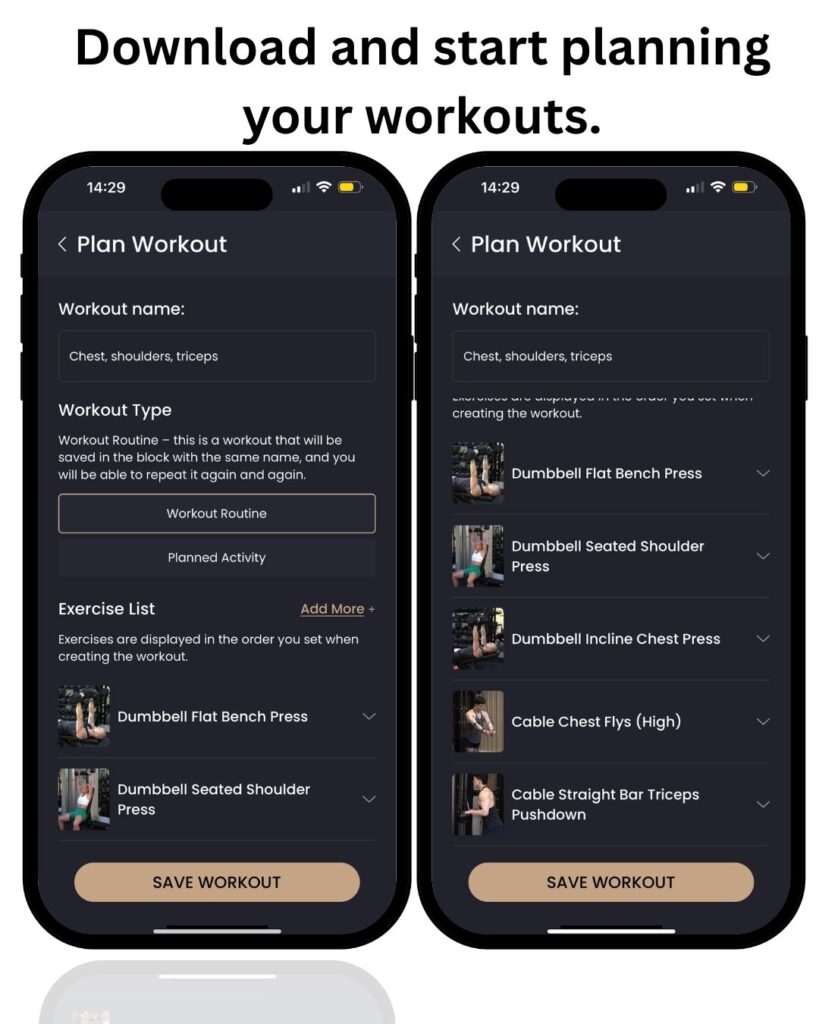
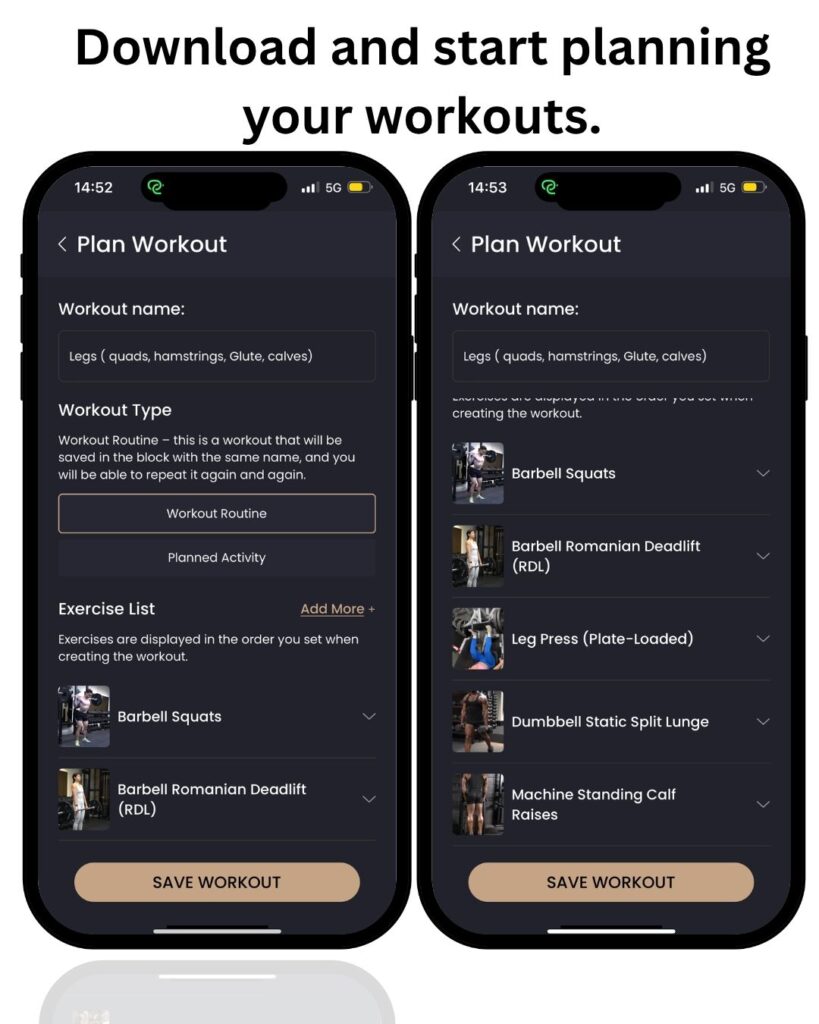
To get the most out of this 30-day challenge, I highly recommend using a workout tracker like the 12Reps app. You can build this entire routine in the app, track your sets, reps, and weights, and monitor your progress over time. The app also features over 1,500 exercise demos to ensure you’re performing each movement correctly and safely. You can even pre-plan your workouts and share your personal bests with friends on social media. Download the app for a free trial and take your strength training to the next level.

The Importance of Consistency

Remember, consistency is key. Sticking to this program for 30 days will not only produce visible results but also help you build a lasting habit. Resistance training is medicine; it can increase lean muscle mass, boost your metabolism, and improve your overall health in numerous ways [3]. So, commit to the challenge, stay consistent, and get ready to transform your body and your life.

strength training app for women and man

References

[1] Park, Y., Park, H. Y., Kim, J., Hwang, H., Jung, Y., Kreider, R., & Lim, K. (2019). Effects of whey protein supplementation prior to, and following, resistance exercise on body composition and training responses: A randomized double-blind placebo-controlled study. Journal of Exercise Nutrition & Biochemistry, 23(2), 34–44. https://pmc.ncbi.nlm.nih.gov/articles/PMC6651693/

[2] Mills, S., Candow, D. G., Forbes, S. C., Neary, J. P., Ormsbee, M. J., & Antonio, J. (2020). Effects of Creatine Supplementation during Resistance Training Sessions in Physically Active Young Adults. Nutrients, 12(6), 1880. https://pmc.ncbi.nlm.nih.gov/articles/PMC7353308/

[3] Westcott, W. L. (2012). Resistance training is medicine: effects of strength training on health. Current sports medicine reports, 11(4), 209–216. https://pubmed.ncbi.nlm.nih.gov/22777332/

[4] Pedersen, H., Fimland, M. S., Schoenfeld, B. J., Iversen, V. M., Cumming, K. T., Jensen, S., Saeterbakken, A. H., & Andersen, V. (2022). A randomized trial on the efficacy of split-body versus full-body resistance training in non-resistance trained women. BMC sports science, medicine & rehabilitation, 14(1), 87. https://pmc.ncbi.nlm.nih.gov/articles/PMC9107721/

Ultimate Lower-Body Workout: Kettlebells & Machines | 12Reps App

Ultimate Lower-Body Workout: Kettlebells & Machines | 12Reps App

As a personal trainer with over a decade of experience, I’m always looking for the most effective ways to help my clients build strength. Today, I want to share a powerful lower-body workout that combines the functional benefits of kettlebells with the targeted muscle-building of machines.

This hybrid approach is perfect for building well-rounded, powerful legs. In this article, I’ll explain the method behind the madness, lay out the full workout for you, and show you how the 12Reps app can be your secret weapon for tracking your progress and ensuring you stronger.

Ultimate Lower-Body Workout: Kettlebells & Machines | 12Reps App

Why Combine Kettlebells and Machines?

I’m a huge advocate for kettlebell training. The dynamic, full-body movements you perform with a kettlebell are incredible for building functional strength—the kind of strength that helps you in your everyday life. The offset weight of the kettlebell forces your core to work overtime to stabilize your body. In fact, research has shown that kettlebell training can increase core strength by up to 70%, which is a massive benefit for your overall stability and power [1].

Kettlebell exercises like swings, squats, and lunges are compound movements that engage multiple muscle groups at once. This makes them incredibly efficient for burning calories and improving your cardiovascular health, all while building muscle [1].

So, why add a machine into the mix? While kettlebells are fantastic for building a strong, functional base, machines like the leg extension allow us to isolate specific muscles. By finishing our workout with a machine-based exercise, we can target the quadriceps directly, ensuring we’ve pushed them to their limit to stimulate maximum growth. It’s the perfect way to get the best of both worlds: functional power and targeted hypertrophy.

Ultimate Lower-Body Workout: Kettlebells & Machines | 12Reps App

How I Structure a Hybrid Lower-Body Session

When I design a program like this for my clients, I always start with the most demanding, multi-joint kettlebell exercises. These movements require the most energy and coordination, so we want to do them when we’re fresh. We focus on big, powerful movements like squats and lunges to build our foundation.

After we’ve built up fatigue with these functional movements, we move to the machine for a ‘finisher’. This allows us to safely push a specific muscle group to failure without needing the same level of stability and control as free weights. This combination ensures you’re building a body that’s not only strong and athletic but also well-defined.

Ultimate Lower-Body Workout: Kettlebells & Machines | 12Reps App

The Time-Saver Lower-Body Hybrid Workout

This workout is designed to be tough but quick, hitting every part of your lower body. You can find all these exercises, track your progress, and time your rest periods using the 12Reps app. Just navigate to ‘Build Your Routine’ to create this session.

Exercise

Sets

Reps

Weight

Rest Period

Kettlebell Box Front Squats

4

12

Challenging

60 seconds

Kettlebell Reverse Lunges

4

6 per leg

Challenging

60 seconds

Kettlebell Split Squats

4

10 per leg

Moderate

60 seconds

Kettlebell Step-Ups

4

8 per leg

Moderate

60 seconds

Leg Extension

4

15

Moderate

60 seconds


A Personal Trainer’s View on Progressive Overload

To see continuous results, you must follow the principle of progressive overload. This is the foundation of all successful strength training, and it simply means you have to gradually increase the difficulty of your workouts.

For this program, you can progress by:

  • Increasing the Kettlebell Weight: Once you can hit all your reps with good form, it’s time for a heavier kettlebell.
  • Increasing the Machine Weight: The same goes for the leg extension. Aim to increase the weight whenever you can complete all 15 reps.
  • Adding Reps: Before you increase the weight, try adding a rep or two to your kettlebell exercises each week.
  • Reducing Rest: To make the workout more metabolically demanding, try cutting your rest periods to 45 seconds.

The 12Reps app is essential for this. It lets you log your weights, reps, and sets, giving you a clear record of your performance. This data takes the guesswork out of progressive overload, telling you exactly when you’re ready to push harder.

Ultimate Lower-Body Workout: Kettlebells & Machines | 12Reps App

Nutrition for Muscle Recovery and Growth

A tough workout is the signal for your muscles to grow, but they need the right building blocks to do it. That’s where nutrition comes in. Proper nutrition, especially protein intake, is critical for muscle recovery.

So, how much protein do you need? For active individuals, research from the Journal of the International Society of Sports Nutrition recommends 1.6 to 2.2 grams of protein per kilogram of body weight (about 0.7 to 1.0 grams per pound) daily [2]. To maximise your body’s ability to use this protein, you should spread it out over at least four meals.

Build your meals around lean protein sources like chicken, fish, lean beef, eggs, and Greek yoghurt. Don’t forget complex carbohydrates (oats, sweet potatoes, brown rice) to refuel your energy stores, and healthy fats (avocado, nuts, olive oil) to support your overall health and hormone function.

Your Ultimate Training Partner: The 12Reps App

I recommend the 12Reps app to all my clients because it has everything you need to succeed in one place.

  • Personalised, Smart-Driven Workouts: Get workouts designed for your goals.
  • Comprehensive Progress Tracking: Log your workouts easily to ensure you’re progressing.
  • Over 1,500 Exercise Demos: A certified personal trainer shows you the correct form for every exercise.
  • Plan and Share: Build and save your own routines, and share your achievements with friends.

Ready to transform your lower body? Download the app and start your free trial today.

strength training app for women and man

Conclusion

This hybrid kettlebell and machine workout offers the best of both worlds, building functional, real-world strength while also isolating muscles for maximum growth. It’s a tough, efficient, and incredibly effective way to build the powerful lower body you’ve always wanted.

Combine this workout with a solid nutrition plan and use the 12Reps app to track your journey. Stay consistent, and you will achieve amazing results.

References

[1] ACE Sponsored Research Study: Kettlebells Kick Butt

[2] How much protein can the body use in a single meal for muscle-building? Implications for daily protein distribution

Can Exercise Really Help with Mood Swings or Anxiety? Expert Insights by Will Duru

strength training app

By Will Duru, BSc (Hons) Sport and Exercise Science, Award-winning Personal Trainer with over 10 years of experience in strength training and optimising recovery.

One minute you’re feeling fine, the next you’re overwhelmed with anxiety or snapping at someone you love. Next, you feel a wave of sadness for no apparent reason. If this sounds familiar, you are not alone. For so many of the women I work with, especially those in their 40s and 50s, navigating the hormonal shifts of perimenopause, life can feel like being on an emotional rollercoaster that you can’t get off. It can feel like you are no longer in control of your own emotions, and that is a deeply unsettling and exhausting experience.

Many people think of exercise as something you do to change your body—to lose weight, to build muscle, to improve your heart health. And it does all of those things wonderfully. But what is so often overlooked is the profound and powerful impact that exercise has on your mental and emotional health. We often dismiss it as just a “distraction” or a way to “blow off steam.” But it is so much more than that. The right kind of exercise is a powerful biological intervention. It is a non-pharmaceutical tool that can directly and effectively help you manage mood swings, calm anxiety, and build a more resilient mind.

So, can exercise really help? The answer is an absolute, unequivocal yes. In this article, I’m going to explain the simple science behind why it works. We’re going to look at how exercise changes your brain chemistry for the better, why strength training in particular is a secret weapon for building mental fortitude, and how it can break the vicious cycle of poor sleep and bad mood. This isn’t about just feeling a little bit better; it’s about giving you a tool you can use for the rest of your life to feel more in control, more stable, and more like yourself.

Can Exercise Really Help with Mood Swings or Anxiety

Your Brain on Exercise: The Feel-Good Chemicals

The most immediate and well-known mental benefit of exercise is that it is a natural mood booster. This isn’t just a feeling; it’s a direct result of exercise changing the chemistry of your brain. When you move your body, you are essentially giving your brain a bath in a cocktail of powerful, feel-good chemicals. A huge amount of research, including a major 2024 meta-analysis, has confirmed that exercise is an effective treatment for depression and anxiety. [1]

Let’s break down the key players in this process in simple terms:

Endorphins: You have probably heard of the “runner’s high.” This feeling of euphoria is caused by the release of endorphins. These are your body’s own natural opioids. They act as a natural painkiller, but they also have a powerful mood-elevating effect. They are the reason why, even after a tough workout, you often feel a sense of calm and well-being.

Serotonin and Dopamine: These are two of the most important neurotransmitters when it comes to your mood. Serotonin is often called the “happy chemical.” It plays a huge role in feelings of well-being, happiness, and calm. Dopamine is the “motivation chemical.” It’s associated with pleasure, reward, and focus. Here’s the amazing part: exercise has been shown to increase the levels of both serotonin and dopamine in your brain. [2] In fact, many of the most common antidepressant medications work by trying to increase the amount of available serotonin in the brain. Exercise does this naturally.

What this means is that the mood boost you get from a workout is not just a happy accident. It is a predictable and reliable physiological response. You can literally use a workout as a tool to change how you feel. If you are feeling anxious, irritable, or low, a 30-minute workout can be one of the fastest and most effective ways to change your brain state. It’s a powerful tool that you have at your disposal every single day.

Women Over 40 to Mix Cardio and Strength Training

Strength Training as a Mental Fortitude Builder

While any form of exercise is good for your mental health, I am a huge advocate for strength training, and I believe it offers some unique and powerful mental benefits that go even beyond what you get from cardio. The mental effects of strength training are just as important as the physical ones.

First, there is what I call The Empowerment Effect. The very act of getting progressively stronger over time has a profound psychological impact. Think about it. When you lift a weight that you couldn’t lift a month ago, or you do a push-up for the first time, you are getting direct, undeniable proof of your own capability and resilience. You are proving to yourself that you can do hard things. This feeling of competence and self-efficacy doesn’t just stay in the gym. It spills over into every other area of your life. It builds a deep, unshakable confidence that you can handle challenges, both physical and emotional. A 2017 meta-analysis confirmed that resistance exercise training significantly improves anxiety symptoms in both healthy people and those with a diagnosed illness. [3]

Second, a focused strength training session can be a form of mindfulness in motion. When you are trying to lift a heavy weight with good form, you can’t be thinking about your to-do list or worrying about a conversation you had yesterday. You have to be completely present in the moment. You have to focus on your breathing, on the feeling of your muscles contracting, on the path of the barbell. This intense focus can act as a form of moving meditation. It gives your brain a much-needed break from the cycle of anxious, racing thoughts. For that 45 minutes, your only job is to move your body. This can be an incredibly powerful way to quiet the noise in your head.

This is why tracking your progress is so important. It’s not just about the numbers; it’s about tracking your mental wins. Every time you add a little more weight or do one more rep, you are making a deposit in your confidence bank. I always encourage my clients to use a workout tracker like the 12reps app. It allows you to see, in black and white, how far you have come. It turns your fitness journey into a visual representation of your growing strength and resilience. I invite you to download the 12reps app today and start tracking your own mental wins.

Can Exercise Really Help with Mood Swings or Anxiety? Expert Insights by Will Duru

The Sleep-Mood Connection

If there is one pillar of health that is absolutely critical for a stable mood, it is sleep. And this is another area where exercise can be a game-changer. Poor sleep and a bad mood are locked in a vicious cycle. When you don’t sleep well, you are more likely to be irritable, anxious, and emotionally volatile the next day. And when you are feeling anxious or stressed, it can be almost impossible to get a good night’s sleep. It’s a cycle that can feel impossible to break.

Exercise is one of the most effective ways to break this cycle, and it works from both ends. Regular physical activity helps to regulate your circadian rhythm, which is your body’s internal 24-hour clock. A well-regulated circadian rhythm helps you feel sleepy at the right time in the evening and more alert during the day. Exercise can also increase the amount of deep, restorative sleep you get each night. This is the stage of sleep where your body and brain do most of their repair work.

So, how can you use exercise to improve your sleep? The most common advice is to try and get your workout in earlier in the day if you can. An intense workout raises your core body temperature and your heart rate, which can be disruptive for some people if it’s done too close to bedtime. However, everyone is different, and some people find that a workout in the evening helps them de-stress from the day. A gentle, relaxing walk or some stretching in the evening can also be very beneficial for winding down.

The bottom line is that by improving your sleep, exercise has a powerful, indirect effect on your mood. By breaking the vicious cycle of poor sleep and anxiety, you are creating a positive upward spiral. Better sleep leads to a better mood, and a better mood leads to better sleep. Exercise is the key that unlocks this positive cycle.

strength training app

Conclusion

So, let’s come back to our original question. Can exercise really help with mood swings and anxiety? The answer is a clear and definitive yes. It is not a temporary distraction; it is a powerful tool that works on a deep, biological level. To recap, exercise improves your mental health in three key ways:

  1. It changes your brain chemistry, releasing a cocktail of feel-good chemicals like endorphins, serotonin, and dopamine.
  2. It builds mental fortitude, especially strength training, which provides a powerful sense of empowerment and acts as a form of moving meditation.
  3. It improves your sleep, breaking the vicious cycle of poor sleep and bad mood.

Your workout is not just something you do for your body. It is one of the most important appointments you can keep for your mind. It is a daily opportunity to meet a stronger, calmer, and more confident version of yourself. You have the power to change how you feel, and it is waiting for you in your next workout.

Are you ready to feel the incredible mental benefits of exercise for yourself? I encourage you to make an investment in your own well-being. Start your free trial of the 12reps app today and discover the power of a consistent, structured exercise routine.

Why Is It So Hard to Lose Weight After 40? (And How to Actually Do It)

References

  1. [1] Noetel, M., et al. (2024). Effect of exercise for depression: systematic review and network meta-analysis of randomised controlled trials. BMJ, 384. https://www.bmj.com/content/384/bmj-2023-075847
  2. [2] Lin, T. W., & Kuo, Y. M. (2013). Exercise benefits brain function: the monoamine connection. Brain sciences, 3(1), 39-53. https://pmc.ncbi.nlm.nih.gov/articles/PMC4061837/
  3. [3] Gordon, B. R., McDowell, C. P., Lyons, M., & Herring, M. P. (2017). The effects of resistance exercise training on anxiety: a meta-analysis and meta-regression analysis of randomized controlled trials. Sports Medicine, 47(12), 2521-2532. https://pubmed.ncbi.nlm.nih.gov/28819746/

The Perfect Balance: How I Teach Women Over 40 to Mix Cardio and Strength Training

Why Is It So Hard to Lose Weight After 40? (And How to Actually Do It)

By Will Duru, BSc (Hons) Sport and Exercise Science, Award-winning Personal Trainer with over 10 years of experience in strength training and optimising recovery.

As a personal trainer for over a decade, I’ve seen it countless times. A new client, a woman in her 40s or 50s, sits down with me, and we look at her weekly calendar. It’s filled with work meetings, family commitments, and social events. Then, there are the blank spots, the question marks where exercise is supposed to fit. It feels like a game of Tetris, doesn’t it? You try to fit all the pieces together, but it never seems to work out perfectly. The biggest question I get is not if they should exercise, but how. How do you combine cardio and strength training in a way that gets results without leaving you feeling completely exhausted?

This is a huge point of confusion for so many people. I see clients who spend hours on the treadmill because they think that’s the only way to lose weight. I also see clients who only lift weights and then wonder why they get out of breath walking up a flight of stairs. The problem is that doing too much of one thing can actually sabotage your efforts with the other. If you do a long, hard run before you try to lift weights, you will be too tired to lift effectively. If you only lift and never do cardio, you are missing out on key benefits for your heart health. It’s a delicate balance.

Over the years, I’ve developed a clear and flexible way to help my clients find this balance. I want to share that framework with you in this article. My goal is to help you create synergy in your workouts. This means your cardio work will actually help you feel stronger in your strength sessions, and your strength training will make you a better runner, swimmer, or cyclist. It’s about making both parts of your fitness work together, not against each other. And to make it even easier, I’ll show you how a simple tool like the 12reps app can help you plan and track your balanced schedule, taking all the guesswork out of the process. Let’s build a plan that works for you.

Women Over 40 to Mix Cardio and Strength Training

The Foundation: I Always Start With Your Primary Goal

When a new client starts working with me, the very first thing we do is define their primary goal. There is no single “perfect” balance of cardio and strength training that works for everyone. The right mix for you depends entirely on what you want to achieve right now. Are you focused on losing fat and building visible muscle tone? Or is your main goal to train for a 5k race or a charity bike ride? These are very different goals, and they require very different approaches. Trying to chase both at the same time with equal intensity is often a recipe for frustration and burnout.

So, I ask my clients to pick one primary goal to focus on for a set period, usually about 3 to 6 months. This allows us to create a clear and effective plan and see real, measurable progress. Once we achieve that goal, we can always shift our focus. Here is how I break it down for my clients:

If Your Main Goal is Fat Loss and Muscle Gain:

In this case, I tell my clients that strength training is the priority. It is the star of the show. We will schedule 3 to 4 strength training sessions per week. This is because building and maintaining muscle is the most powerful thing you can do to change your body composition and boost your metabolism. As I’ve explained before, more muscle means your body burns more calories all day long, even when you are resting. Cardio then becomes a supplementary tool. It’s an important supporting actor. We use cardio to help increase the overall calorie deficit (burning more calories than you eat) and, of course, to improve heart health. But it does not take center stage.

If Your Main Goal is Endurance and Cardio Fitness:

Now, if a client tells me she wants to run her first 10k or improve her cycling endurance, we flip the script. In this scenario, cardio is the priority. We will schedule 3 to 4 cardio sessions per week, including different types of runs or rides like interval training and longer, slower sessions. Strength training then becomes the supporting actor. We will still include 2 to 3 strength sessions per week, but the focus of these workouts will be to build a strong, resilient, and injury-proof body. The goal of the weight training is to support the cardio, not the other way around. Stronger legs can power you up hills, and a strong core can help you maintain your form when you get tired.

This first step is the most important one. By choosing one main goal, you bring clarity and purpose to your training. You stop trying to do everything at once and start making real progress in the direction that matters most to you right now. So, what is your primary goal for the next few months? Once you have that answer, we can start building your perfect week.

Why Is It So Hard to Lose Weight After 40? (And How to Actually Do It)

Structuring Your Week: I Give My Clients These Practical Examples

Once we have decided on the primary goal, the next step is to put it on the calendar. This is where the theory becomes reality. I have found that giving my clients concrete, easy-to-follow weekly schedules is the best way to help them stay consistent. It removes the daily decision of “what should I do today?” and replaces it with a clear plan. Here are the two main templates I use, depending on whether the focus is on strength or cardio.

Example 1: The “Strength Focus” Schedule

This is for the woman whose primary goal is fat loss and building muscle. Remember, here we prioritise strength training. I offer two main options for how to structure the week:

Option A (Separate Days): This is often the simplest to follow. The week looks like this:

  • Monday: Strength Training (e.g., Full Body)
  • Tuesday: Cardio (e.g., 30-45 minutes of brisk walking, cycling, or using the elliptical)
  • Wednesday: Strength Training (e.g., Full Body)
  • Thursday: Cardio or Active Recovery (e.g., a lighter cardio session or stretching)
  • Friday: Strength Training (e.g., Full Body)
  • Saturday/Sunday: Rest or light activity like a long walk

Option B (Same Day): This option works well for women who are short on time and prefer to get their workout done all at once. The key rule here is to always do your strength training first. You want to have the most energy for the work that is going to build the most muscle. After your lifting session, you can add a shorter cardio session of 20-30 minutes. Doing strength first ensures you are using your energy for the most metabolically demanding work, which is lifting heavy things.

Example 2: The “Cardio Focus” Schedule

This schedule is for the woman who is training for an endurance event, like a race. Here, cardio is the priority, and strength training is there to support it.

A typical week might look like this:

  • Monday: Main Cardio Session (e.g., a moderate-distance run)
  • Tuesday: Strength Training (Full Body, focusing on compound movements)
  • Wednesday: Cardio Session (e.g., interval training like hill repeats or sprints)
  • Thursday: Strength Training (Full Body, possibly with a focus on core and stability)
  • Friday: Rest or very light active recovery
  • Saturday: Long Cardio Session (e.g., your long, slow run for the week)
  • Sunday: Rest

This structure allows you to be fresh for your most important cardio workouts while still getting the injury-prevention benefits of strength training. This is where a good workout tracker becomes so important. I tell all my clients that planning is the key to success. A good workout tracker can make this easy. You can plan your whole week in the 12reps app, so you know exactly what you’re doing each day. It takes the guesswork out of it and lets you focus on just doing the work.

strength training app

The Golden Rules I Teach for Combining Cardio and Strength

Over my years of training, I have developed a few “golden rules” that I share with all my clients, especially those over 40. These rules help you get the most out of your workouts and, most importantly, stay healthy and injury-free. Combining cardio and strength is a powerful strategy, but it needs to be done thoughtfully.

Golden Rule #1: Don’t Do Intense Cardio Before Lifting.

This is the most common mistake I see people make at the gym. They will go for a hard 30-minute run and then head over to the weight rack. The problem with this is that you have already used up a significant amount of your energy and glycogen (your muscles’ primary fuel source). This means you will be weaker during your lifting session. Your form is more likely to suffer, which increases your risk of injury, and you simply will not be able to lift as heavy or with as much intensity. This reduces the effectiveness of your strength session. A large body of research on what is called the “interference effect” shows that performing endurance exercise before strength exercise can compromise your strength gains. [1] A light 5-10 minute warm-up on the treadmill is perfectly fine, but save your main cardio workout for after your lifting or for a separate day.

Golden Rule #2: You Have to Listen to Your Body.

This becomes more and more important as we get older. Recovery is not a luxury; it is a vital part of the training process. Your muscles do not get stronger during your workouts; they get stronger when they are resting and repairing after your workouts. If you feel constantly run down, sore, or unmotivated, your body is sending you a signal. It is telling you that you are not recovering enough. It is far smarter to take an extra rest day or swap a hard workout for a light activity like walking or stretching than it is to push through and risk injury or burnout. This is not being lazy; it is being smart. A sustainable plan is one that you can stick with for the long haul, and that means respecting your body’s need for rest.

Golden Rule #3: You Must Fuel Your Body Appropriately.

You cannot ask your body to perform these two very different types of exercise without giving it the right fuel. Think of your body as a car. You cannot expect it to win a race if you do not put enough gas in the tank. When you are combining cardio and strength, you need to make sure you are eating enough to support both activities. This is especially true for protein and carbohydrates. Protein is essential for repairing the muscle tissue you break down during your strength workouts. I advise my clients to include a source of protein with every meal. Carbohydrates are your body’s main source of energy. They are what fuel your runs and power your lifts. Trying to do both strength and cardio on a very low-carb diet is often a recipe for feeling tired and weak. [3] You do not need to be a nutritionist, but you do need to be mindful of giving your body the building blocks and the energy it needs to succeed. Ready to stop guessing and start building a balanced routine that gets results? Download the 12reps app and design your perfect week.

Science-Based Lifting for Women: Unlock Your Strength and Live Longer

Conclusion

So, what is the perfect balance between cardio and strength training for women over 40? As you have seen, the answer is that it depends on you. It depends on your primary goal. The most important takeaway I want you to have from this article is that you are in the driver’s seat of your own fitness journey. You have the power to create a plan that is both sustainable and incredibly effective.

Start by choosing your main objective for the next few months. Is it strength and fat loss, or is it endurance? Once you have that clarity, you can structure your week accordingly, making one the priority and the other the supporting act. And as you move forward, always remember to listen to your body’s feedback. It is the smartest coach you will ever have. The confusion around cardio and weights has gone on for too long. It is time to replace that confusion with a clear, balanced, and personalised plan.

Take the complexity out of planning. You have the knowledge and the framework now. Start your free trial of the 12reps app today, build your perfect week, and discover the amazing things your body is capable of when you train with purpose and intelligence.

strength training app

References

  1. [1] Wilson, J. M., et al. (2012). Concurrent training: a meta-analysis examining interference of aerobic and resistance exercises. The Journal of Strength & Conditioning Research, 26(8), 2293-2307. https://journals.lww.com/nsca-jscr/fulltext/2012/08000/concurrent_training__a_meta_analysis_examining.35.aspx
  2. [2] PureGym. (2023, November 8). The Best Workout Split for Women. https://www.puregym.com/blog/the-best-workout-split-for-women/
  3. [3] Fitness Simplified. (2025, September 15). Nutrition Considerations for Hybrid Athletes. https://www.fitnesssimplified.org/nutrition/nutrition-considerations-for-hybrid-athletes

Why Is It So Hard to Lose Weight After 40? (And How to Actually Do It)

Why Is It So Hard to Lose Weight After 40? (And How to Actually Do It)

By Will Duru, BSc (Hons) Sport and Exercise Science, Award-winning Personal Trainer with over 10 years of experience in strength training and optimising recovery.

Let’s be honest for a moment. You’re eating the same things you’ve always eaten. You’re exercising, maybe even more than you used to. But suddenly, the number on the scale just won’t budge. Or worse, it’s slowly, stubbornly, creeping up, year after year. You feel like you’re doing everything right, but your body just isn’t playing by the same rules it used to. If this sounds familiar, I want you to hear me loud and clear: You are not imagining it, and you are not alone. This is one of the most common frustrations I hear from my female clients when they first come to me. They feel like they’re fighting a losing battle, and they’re exhausted.

It’s a deeply frustrating experience. The rules of weight loss that seemed to work in your 20s and 30s suddenly seem to have been completely rewritten in your 40s and beyond. It can make you feel like you’ve failed, or that you just don’t have the willpower you used to. But I’m here to tell you that this is not a failure of willpower. It’s a change in your biology. Your body is going through a significant transition, and the old strategies simply aren’t effective anymore.

In this article, I’m going to pull back the curtain and explain exactly what’s going on. We’re going to talk about the three main biological reasons why it becomes so much harder to lose weight after 40. More importantly, I’m going to give you a clear, simple, and actionable strategy that works with your body, not against it. I’m going to show you how to shift your focus from just “losing weight” to changing your body composition—losing fat and building lean, strong muscle. And I’ll reveal why strength training is the undisputed hero of this new approach.

Strength Training at 49: It’s Not About Turning Back the Clock, It’s About Winding It Better

The Metabolic Slowdown: Muscle Matters More Than Ever

The first and most significant culprit behind this weight loss resistance is a natural, age-related decline in your metabolic rate. Your metabolism is the process by which your body converts what you eat and drink into energy. When people say they have a “slow” metabolism, they mean their body burns fewer calories at rest. And while it’s true that metabolism does slow down with age, it’s not for the reason most people think. It’s not some random, unavoidable fate. The slowdown is largely due to a process called sarcopenia, which is the gradual loss of muscle tissue as we get older. This process starts as early as our 30s but begins to accelerate significantly in our 40s and 50s.

I want you to think of your muscle as your body’s metabolic engine. It is the most metabolically active tissue you have. The more muscle you carry, the bigger and more powerful your engine is, and the more fuel (calories) it burns throughout the day, even when you’re just sitting at your desk or sleeping. As you lose muscle through sarcopenia, your engine literally gets smaller. A smaller engine burns less fuel. This is why your resting metabolic rate declines. One study on the topic found that the metabolic effects of sarcopenia include a decrease in resting metabolic rate secondary to this loss of fat-free mass. [1]

This has a profound impact on your daily calorie balance. It means that the same number of calories that allowed you to maintain your weight at age 30 can now cause you to gain weight at age 45. Your engine is simply more fuel-efficient, and the excess fuel gets stored as fat. This is why the old approach of just “eating a little less and moving a little more” often fails. While creating a calorie deficit is still the fundamental principle of fat loss, the solution isn’t just to starve your engine of fuel. The most effective, long-term strategy is to rebuild the engine. This is where building and maintaining muscle through strength training becomes the single most important thing you can do to fight back against the metabolic slowdown. It’s not just about burning calories during your workout; it’s about increasing the number of calories you burn 24 hours a day.

strength training app

The Hormone Factor: A Perfect Storm

The second major player in this story is, of course, hormones. For women, the 40s and 50s are defined by the hormonal shifts of perimenopause and menopause. The primary change is the fluctuation and eventual decline of estrogen. This hormonal shift creates what I call a “perfect storm” for weight gain, and it’s crucial to understand that this is a biological process, not a personal failing.

Lower estrogen levels affect your body and your relationship with food in three key ways:

  1. It Changes Where You Store Fat: Estrogen tends to direct fat storage to the hips, thighs, and buttocks. As estrogen levels decline, your body’s fat storage pattern begins to shift to a more typically male pattern, favoring the abdomen. This is why many women notice an increase in belly fat, or visceral fat, during this time, even if their overall weight hasn’t changed much. This type of fat is not only frustrating from an aesthetic standpoint, but it’s also more metabolically dangerous as it surrounds your internal organs. A comprehensive review on the topic confirmed that the change in the hormonal milieu at menopause is associated with an increase in total body fat and an increase in abdominal fat. [2]
  2. It Can Affect Insulin Sensitivity: Estrogen plays a role in how your cells respond to insulin, the hormone that manages your blood sugar. As estrogen declines, your body can become less sensitive to insulin. This means your body has to work harder to control blood sugar levels, which can lead to more frequent energy crashes, intense cravings for sugar and carbohydrates, and a greater likelihood that excess calories will be stored as fat.
  3. It Impacts Appetite, Mood, and Sleep: The hormonal rollercoaster of perimenopause can wreak havoc on your sleep patterns and your mood. Poor sleep is a major trigger for increased levels of cortisol, the body’s primary stress hormone. High cortisol, in turn, is known to increase appetite and drive cravings for high-calorie, high-sugar “comfort” foods. It’s a vicious cycle: hormonal shifts disrupt your sleep, which increases your stress, which makes you crave the very foods that contribute to weight gain.

When you put these three factors together, you can see why it feels like your body is working against you. It’s not in your head. Understanding this hormonal context is the first and most important step toward managing it effectively.

Why Is It So Hard to Lose Weight After 40? (And How to Actually Do It)

The Solution: Flip the Switch with Strength and Protein

The Solution: Flip the Switch with Strength and Protein

So, we’ve established that you’re dealing with a smaller metabolic engine and a perfect storm of hormonal changes. What on earth do you do about it? This is where we get to the good news. You have an incredible amount of power to change this situation. The solution is to flip the switch on your body’s metabolism and work with your new hormonal reality. The strategy is beautifully simple and has two main parts: lift heavy things and prioritise protein.

Action 1: Lift Heavy Things. If there is one thing I want you to take away from this article, it is this: strength training 3-4 times per week is non-negotiable for women over 40 who want to manage their weight and feel strong. It is the single most powerful tool in your arsenal. It directly counteracts sarcopenia by sending a powerful signal to your body to build and maintain that precious, metabolically active muscle tissue. It rebuilds your metabolic engine. Furthermore, strength training has been shown to dramatically improve insulin sensitivity, helping your body manage blood sugar more effectively and reducing those maddening cravings. [3] It also helps to lower cortisol levels and improve sleep quality. It is the antidote to almost every negative metabolic and hormonal change we’ve discussed.

Action 2: Prioritise Protein. If strength training is the work, protein is the raw material your body needs to get the job done. As I’ve discussed in my other articles, your protein needs increase as you get older. A higher protein intake is essential for providing the building blocks your body needs to repair and build new muscle tissue in response to your workouts. But the benefits don’t stop there. Protein is also the most satiating macronutrient, meaning it helps you feel fuller for longer after a meal. A high-protein diet has been shown to naturally reduce overall calorie intake by taming cravings and preventing mindless snacking. My recommendation is to aim for 1.2-1.6 grams of protein per kilogram of your body weight each day, spread evenly across your meals.

This is where tracking becomes absolutely crucial. You can’t manage what you don’t measure. To know if you are successfully rebuilding your metabolic engine, you need to track your workouts to ensure you are progressively getting stronger over time. To know if you are giving your body the raw materials it needs, you need to track your nutrition to ensure you are consistently hitting your protein goal. This might sound like a lot of work, but modern tools make it simple. This is exactly why I recommend the 12reps app to all my clients. It allows you to track both your workouts and your nutrition all in one place, taking the guesswork out of the process.

Why Is It So Hard to Lose Weight After 40? (And How to Actually Do It)

Conclusion

Let’s recap. The reason it’s so hard to lose weight after 40 isn’t because you’ve lost your willpower. It’s because your body is undergoing two fundamental shifts: a metabolic slowdown caused by muscle loss, and a hormonal storm triggered by perimenopause and menopause. The old rules no longer apply. But this is not a declaration of defeat; it’s a call for a new strategy.

That new strategy is to shift your focus from simply “losing weight” on the scale to improving your body composition. The solution is to fight back against muscle loss and hormonal changes with the powerful one-two punch of progressive strength training and a high-protein diet. Your body hasn’t betrayed you; its needs have just changed. By changing your approach, you can not only manage your weight effectively, but you can get stronger, leaner, and more resilient than you have ever been before. You can build a body that is ready to thrive in this next chapter of your life.

Ready to take control? It’s time to stop fighting your body and start working with it. I encourage you to download the 12reps app and start your free trial today. Get the right plan, the right tools, and the right support for your body, right now.

12reps- strength training

References

  1. [1] Karakelides, H., & Nair, K. S. (2005). Sarcopenia of aging and its metabolic impact. Current topics in developmental biology, 68, 123-148. https://pubmed.ncbi.nlm.nih.gov/16124998/
  2. [2] Davis, S. R., Castelo-Branco, C., Chedraui, P., Lumsden, M. A., Nappi, R. E., Shah, D., & Villaseca, P. (2012). Understanding weight gain at menopause. Climacteric, 15(5), 419-429. https://pubmed.ncbi.nlm.nih.gov/22978257/
  3. [3] Strasser, B., & Pesta, D. (2013). Resistance training for fat loss. GMS health technology assessment, 9. https://www.ncbi.nlm.nih.gov/pmc/articles/PMC3630467/

Can You Really Improve Bone Density After Menopause? Expert Guide by Will Duru

push pull legs, muscle building, fat loss, body recomposition, 12Reps app, strength training, workout program, nutrition guide, macronutrients, protein, carbs, fats, 4-day split, beginner workout, intermediate training, workout tracker, free trial, fitness app

By Will Duru, BSc (Hons) Sport and Exercise Science, Award-winning Personal Trainer with over 10 years of experience in strength training and optimising recovery.

After menopause, the word “osteoporosis” can start to feel very real. It’s a word that might have been in the back of your mind for years, but now it feels like it’s knocking on your front door. You might hear your doctor talk about bone scans and fracture risk, and it’s easy to start thinking that having strong, healthy bones is a thing of the past. It can feel like a one-way street of decline. But what if I told you that you could not just slow down that bone loss, but you could actually stop it in its tracks, and in many cases, even reverse it? What if you could build stronger, denser bones in your 50s, 60s, and beyond?

It’s not just wishful thinking; it’s a scientific reality. The problem is very real. When you go through menopause, the level of estrogen in your body drops significantly. Estrogen is a hormone that plays a huge role in protecting your bones. When it declines, the rate at which you lose bone tissue speeds up dramatically. This is why women are at a much higher risk of developing osteoporosis and suffering from fractures than men are. It can feel like a scary and uncontrollable process, something that is just “happening” to you. But I am here to tell you, with absolute confidence, that you are not helpless in this process.

So, can you really improve your bone density after menopause? The answer is a resounding yes. You have two incredibly powerful tools at your disposal to do this: targeted, smart exercise and proper, supportive nutrition. And of the two, there is one that stands head and shoulders above the rest as the single most effective, most important thing you can do for your bones. That tool is strength training. Let’s talk about how you can become the architect of a stronger, more resilient skeleton.

Strength Training at 49: It’s Not About Turning Back the Clock, It’s About Winding It Better

How Strength Training Builds Bone

To understand why strength training is so powerful, you need to know about a simple but profound principle called Wolff’s Law. This law was described by a German surgeon named Julius Wolff way back in the 19th century, and it basically says that your bones will adapt to the loads or stresses that are placed upon them. In very simple terms: when you put your bones under a healthy amount of stress, they respond by becoming stronger and denser. It’s your body’s amazing, built-in mechanism for creating a skeleton that is perfectly suited to the demands of your life.

I like to use the analogy of a construction crew. Think of your bones as a building that is constantly being maintained. You have a crew of workers called osteoblasts, and their job is to build new bone tissue. When you lift a weight, your muscles pull on your bones. This pulling action creates a tiny, safe amount of bending and stress on the bone. This stress is like the foreman of the construction crew shouting, “Hey! We need to reinforce this area! It’s under load!” In response to that signal, the osteoblasts get to work. They come to the site of the stress and start laying down new layers of bone matrix, like adding more scaffolding and concrete to make the structure stronger. This is not a theory; it’s a direct, mechanical signal that has been proven in countless studies. A large meta-analysis looking at the effects of resistance training on postmenopausal women confirmed that this type of exercise has a positive and significant effect on bone mineral density. [1]

So, what kind of training provides this bone-building signal? The key word is progressive. The load has to be challenging enough to get the attention of that construction crew. This is why lifting weights is so much more effective for building bone density than activities like walking or swimming. While those activities are great for your heart, they don’t provide the specific, targeted stress that your bones need to remodel. You need to be lifting weights that are heavy enough to challenge you. This doesn’t mean you need to become a powerlifter, but it does mean you need to be consistent and aim to get a little bit stronger over time. This is why following a structured program is so important. Using a tool like the 12reps app can help you track your workouts, ensuring that you are safely and effectively progressing the weights you lift, which is the secret to sending that continuous bone-building signal.

12reps- strength training

The Best Exercises for Bone Health

Now that you understand why strength training works, let’s talk about what kind of exercises are best. While any resistance training is good, some exercises are superstars when it comes to building bone. We want to focus on compound, multi-joint exercises. These are movements that use multiple muscle groups at once and, most importantly, they load your spine and your hips. These are two of the areas that are most vulnerable to osteoporotic fractures, so we want to target them directly.

I have what I call my “Big Five for Bone.” These are the five foundational movements that I believe give you the most bang for your buck when it comes to building a strong skeleton:

  1. Squats (and their variations): The squat is the king of lower body exercises for a reason. When you perform a squat with weight (whether it’s a barbell, dumbbells, or a kettlebell), you are directly loading your hips and your spine, sending that powerful bone-building signal right where you need it most.
 
  1. Deadlifts (and their variations): The deadlift is another incredibly powerful tool. It involves lifting a weight from the floor, which strengthens your entire back, your glutes, and your hamstrings. It is one of the best exercises for building bone density in your hips and spine.
 
  1. The Overhead Press: This exercise, where you press a weight from your shoulders to overhead, is fantastic for loading your spine in a safe, upright position. It also builds strength in your shoulders and upper back, which is crucial for good posture.
 
  1. Rows: Any kind of rowing movement, whether it’s with dumbbells, a barbell, or a cable machine, is excellent for strengthening the muscles of your upper back. A strong back helps you maintain an upright posture, which reduces stress on your spine.
 
  1. Loaded Carries: This is one of my favorite and most underrated exercises. It’s as simple as it sounds: you pick up a heavy weight in each hand (like in a Farmer’s Walk) and you walk. This simple act builds tremendous grip strength (which is a key indicator of overall health and longevity), and it loads your entire skeleton from your hands to your feet.

Learning how to perform these lifts with good, safe form is absolutely crucial. You don’t need to lift super heavy right away, but you do need to move well. This is where having a good plan and clear instructions is so important. I encourage all my clients to use the comprehensive exercise library in the 12reps app. It has videos and instructions for all of these key lifts, and it provides structured programs that are designed for safe and effective muscle building and bone strengthening.

The Ultimate 3-Day Strength Training Split to Embrace Your Curves By Will Duru, BSc (Hons) Sport and Exercise Science

Conclusion

Let’s bring this all home. After menopause, you are not a victim of inevitable bone loss. You are not destined to become frail. You have an incredible amount of control over the health of your skeleton. The strategy is a powerful one-two punch:

  1. Strength Training: You need to send the signal to your bones to grow stronger by lifting challenging weights, focusing on big, compound movements.
  2. Proper Nutrition: You need to provide your body with the essential building blocks of Calcium, Vitamin D, and Protein to do the construction work.

This isn’t a complicated or scary process. It’s a message of hope and empowerment. You have the power to become the architect of a stronger, more resilient skeleton, at any age. You can choose to build a body that is robust, capable, and ready for all the adventures that life has in store for you.

Are you ready to build a stronger you, from the inside out? It’s time to take the first step. I encourage you to start your free trial of the 12reps app today. Get access to the programs, the tools, and the guidance you need to build a stronger body and a stronger future.

The Ultimate 6-Day Strength Training Split to Gain 10kg of Lean Muscle in 12 Months

References

  1. [1] Zhao, F., et al. (2025). Optimal resistance training parameters for improving bone mineral density in postmenopausal women: a systematic review and meta-analysis. Journal of Orthopaedic Surgery and Research, 20(1), 1-13. https://josr-online.biomedcentral.com/articles/10.1186/s13018-025-05890-1
  2. [2] Physio-pedia. (n.d.). Wolff’s Law. https://www.physio-pedia.com/Wolff%27s_Law
  3. [3] Bone Health & Osteoporosis Foundation. (n.d.). Calcium/Vitamin D Requirements, Recommended Foods & Supplements. https://www.bonehealthandosteoporosis.org/patients/treatment/calciumvitamin-d/

3-Day Strength Training Split for Fat Loss | Bala’s 18kg Transformation

Strength Training in Your 30s and 40s: Why Personal Training (Tower Bridge/London Bridge)

By Will Duru, BSc (Hons) Sport and Exercise Science, Award-winning Personal Trainer

I’m Will Duru, and for more than a decade, I’ve had the privilege of guiding people on their journey to a stronger, healthier life. I’ve seen countless transformations, but some stories stick with you. The story of my client, Bala, is one of them. When Bala walked into my gym for the first time, he carried the weight of his goal on his shoulders: to shed 18kg of body fat. He was new to the world of fitness, intimidated by the complex machines and the sea of unfamiliar faces. He needed more than just a workout plan; he needed a clear, simple, and sustainable path to follow. He needed a program that would not only deliver results but also build his confidence and make him feel at home in the gym.

I designed a 3-day push/pull/legs strength training split for him, combined with interval cardio in zone 3 to maximise fat burning. The results were nothing short of amazing. Over the course of 12 months, Bala not only lost the 18kg of body fat he had set out to lose, but he also gained significant strength and built a solid foundation of lean muscle.

In this article, I’m going to share the exact 12-month program I created for Bala. This isn’t just a generic workout plan; it’s a comprehensive guide designed for beginners who are ready to commit to a real change. We’ll break down the workouts, explain the science behind the methods, and give you the tools you need to embark on your own transformation. My promise to you is to keep it simple, direct, and effective. Let’s get started.

The Power of the Push/Pull/Legs Split

The push/pull/legs split is a time-tested, scientifically backed training methodology that has proven effective for individuals of all fitness levels. It’s a simple yet powerful way to organise your training week, and it’s the foundation of the program that led to Bala’s incredible success. Let’s delve deeper into why this split is so effective:

  • Enhanced Focus and Intensity: By focusing on a specific group of muscles each session, you can channel all your energy and focus into them. This allows for a higher level of intensity during your workouts, which is a key driver of muscle growth and fat loss. When you’re not fatigued from working your entire body, you can push each muscle group to its absolute limit, maximising the stimulus for adaptation.
 
  • Greater Training Volume: The push/pull/legs split allows for higher training volume per muscle group than full-body workouts. Volume, calculated as sets x reps x weight, is a critical factor in muscle hypertrophy. By dedicating an entire session to a specific muscle group, you can perform more exercises and sets for that group, leading to greater overall growth.
 
  • Improved Mind-Muscle Connection: With a focused training split, you can develop a stronger mind-muscle connection. This is the ability to consciously feel and contract the target muscle during an exercise. A strong mind-muscle connection ensures the right muscles do the work, leading to better results and a lower risk of injury.
 
  • It’s Simple: You train all your pushing muscles (chest, shoulders, triceps) on one day, your pulling muscles (back, biceps) on another, and your lower body (quads, hamstrings, glutes, calves) on the third day. This makes it easy to remember and follow.
 
  • Optimal Recovery: By splitting your workouts this way, you give each muscle group ample time to recover before retraining it. This is crucial for muscle growth and preventing injuries.
 
  • High Intensity: Because you’re only training a few muscle groups each day, you can hit them with high intensity and volume, which is essential for stimulating muscle growth and burning calories.
12reps app - strength training app

Supercharging Fat Loss with Interval Cardio

To accelerate Bala’s fat loss journey, we strategically incorporated interval cardio into his program. We specifically targeted Zone 3 cardio, which corresponds to an intensity level of 70-80% of your maximum heart rate. This “sweet spot” is highly effective for maximising fat oxidation (i.e., burning fat for fuel). Here’s a closer look at how we implemented this powerful tool:

  • Increased Caloric Expenditure: Interval training is highly effective for burning a significant number of calories in a short time. The intense bursts of effort, followed by brief recovery periods, keep your heart rate elevated and your metabolism revved up, even after your workout is over. This “afterburn” effect, known as excess post-exercise oxygen consumption (EPOC), means you continue to burn calories at an elevated rate for hours after you leave the gym.
 
  • Hormonal Response: High-intensity interval training has been shown to stimulate the release of growth hormone and other hormones that promote fat loss and muscle growth. This hormonal response, combined with the caloric expenditure, creates an optimal environment for body recomposition.
 
  • Time Efficiency: Let’s be honest, we’re all busy. Interval training is a time-efficient way to get a great cardio workout. You can achieve the same, if not better, results in 20-30 minutes of interval training as you would in a longer, steady-state cardio session.
 
  • Treadmill Intervals: We would alternate between periods of high-intensity running and recovery walking. For example, 1 minute of running followed by 2 minutes of walking, repeated for 20-30 minutes.

This type of training is not only effective for fat loss, but it also improves your cardiovascular health and endurance.

Combining 12-Rep Training with Cardio for Optimal Results

Nutrition for Fat Loss: The Missing Piece of the Puzzle

Before we dive into the workout program, it’s crucial to understand that you can’t out-train a bad diet. Nutrition is the cornerstone of any successful fat loss journey. Bala’s transformation was as much about what he ate as it was about how he trained. Here are the key nutritional principles that he followed:

  • Caloric Deficit: To lose fat, you must be in a caloric deficit, meaning you consume fewer calories than you burn. We calculated Bala’s daily caloric needs and created a moderate deficit of about 500 calories per day. This allowed him to lose fat at a steady and sustainable pace without feeling deprived.
 
  • High Protein Intake: Protein is essential for preserving muscle mass while in a caloric deficit. We made sure that Bala was consuming 1.6-2.2 grams of protein per kilogram of his body weight each day. This helped him stay full and satisfied, and it ensured that he was losing fat, not muscle.
 
 
  • Whole, Unprocessed Foods: We focused on a diet rich in whole, unprocessed foods like lean meats, fish, fruits, vegetables, and whole grains. These foods are nutrient-dense and provide the vitamins and minerals your body needs to function optimally.
 
  • Hydration: Staying hydrated is crucial for overall health and performance. Bala aimed to drink at least 3-4 litres of water per day.

By combining a sound nutritional strategy with a consistent training program, Bala achieved his fat-loss goals without resorting to extreme diets or unsustainable practices.

Bala’s 12-Month Transformation Blueprint

This 12-month program is the exact blueprint that Bala followed to achieve his remarkable 18kg fat loss. It’s divided into four distinct 3-month phases, each designed to build upon the previous one. The key to success with this program is consistent progression. As you get stronger and fitter, you must continue to challenge your body by increasing the weight you lift, the number of repetitions you perform, or the number of sets you complete. The 12Reps app is an indispensable tool for tracking your progress and ensuring you’re always moving forward.


Warm-up (10 minutes)

Start every workout with a 10-minute warm-up:

  • Incline walk on a treadmill or rowing for 10 minutes.

Then, perform these mobility stretches:

Stretch

Sets

Reps/Duration

Cat-Cow

2

10 reps

World’s Greatest Stretch

2

5 reps/side

Hamstring Stretch

2

30 sec/side


The Workouts

Here are the three workouts you’ll perform each week. Aim to have a rest day between each workout (e.g., Monday, Wednesday, Friday).

Workout 1: Push Day (Chest, Shoulders, Triceps)

Exercise

Sets

Reps

Rest (seconds)

Barbell Bench Press

5

8-12

90

Seated Dumbbell Press

5

10-15

60

Incline Dumbbell Press

5

10-12

60

Dumbbell Lateral Raises

5

12-15

60

Tricep Dips (assisted)

5

12-15

60

TRX Tricep Extensions

5

15-20

60


Workout 2: Pull Day (Back, Biceps)

Exercise

Sets

Reps

Rest (seconds)

Pull-Ups (assisted)

5

6-10

90

Bent-Over Barbell Rows

5

8-12

90

Lat Pulldown

5

10-15

60

Seated Cable Row

5

12-15

60

Barbell Curls

5

10-12

60

TRX Bicep Curls

5

15-20

60


Workout 3: Leg Day (Quads, Hamstrings, Glutes, Calves)

Exercise

Sets

Reps

Rest (seconds)

Barbell Squats

5

8-12

90

Romanian Deadlifts

5

10-15

60

Leg Press

5

12-15

60

Hip Thrusts

5

12-15

60

Box Jumps

5

10

60

Sled Push

5

20m

90


Core Finisher

After each workout, perform this core finisher circuit. Complete 3 rounds with minimal rest between exercises and 60 seconds of rest between rounds.

Exercise

Duration/Reps

Plank

45 seconds

Flutter Kicks

45 seconds

Decline Sit-ups

10 reps


Cool-down (10 minutes)

End each session with a 10-minute cool-down:

  • Stairmaster at a low intensity or an incline walk on the treadmill.

Your Digital Coach: The 12Reps App

Bala’s incredible transformation was a result of his unwavering consistency and his meticulous approach to tracking his progress. The 12Reps app was his constant companion on this journey, his digital secret weapon. It’s more than just a workout tracker; it’s a comprehensive tool designed to keep you motivated, accountable, and on the path to success.

You can build this entire program in the app by going to ‘Build Your Routine’. The app has over 1,500 exercise demos, so you can make sure your form is perfect. You can also use the app’s stopwatch to time your rest periods, save your workouts, and even share your personal bests with your friends.

If you’re ready to start your own transformation, I highly recommend you download the 12Reps app for a free trial. It’s the ultimate tool for strength training and muscle building.

Conclusion

Bala’s journey is a powerful reminder that with the right plan, unwavering consistency, and a determined mindset, anything is possible. Losing 18kg of body fat is a life-changing achievement, and it’s a goal that is within your reach. This 3-day strength training split is not just a workout plan; it’s a roadmap to a new you. It’s a blueprint for building a stronger, healthier, and more confident version of yourself. Embrace the process, stay committed to your goals, and trust in your ability to transform. The results will speak for themselves, and you’ll be amazed at what you can achieve.

The Ultimate 6-Day Strength Training Split to Gain 10kg of Lean Muscle in 12 Months

Strength Training in Your 30s and 40s: Why Personal Training (Tower Bridge/London Bridge)

Embarking on a journey to gain 10kg of lean muscle in a year is an ambitious yet achievable goal for a beginner. It requires dedication, consistency, and most importantly, a well-structured plan. This guide is designed to provide you with the knowledge and a comprehensive 12-month program to build a stronger, more muscular physique. We will delve into the science of muscle growth, the importance of a strategic training split, and the crucial roles of nutrition and recovery. The cornerstone of this program is a 6-day push/pull/legs-inspired split, meticulously crafted to maximise muscle stimulus and optimise recovery, ensuring you make steady progress towards your goal.

12reps app - strength training app

The Significance of a Structured Training Split

A training split is the blueprint of your workout week, dictating which muscle groups you train on which days. For a beginner, a well-designed split is paramount for several reasons. Firstly, it ensures that each muscle group receives adequate attention and training volume to stimulate growth. Secondly, it provides a framework for progressive overload, the fundamental principle of strength training. Lastly —and perhaps most importantly —it allows sufficient recovery time for each muscle group, when the actual growth and repair occur. Without a structured split, you risk overtraining certain muscles and undertraining others, leading to imbalances, plateaus, and an increased risk of injury. This program utilises a 6-day split, which allows for a high training frequency, enabling you to hit each muscle group at least once a week with high intensity and volume.

12reps- strength training

Progressive Overload: The Engine of Muscle Growth

Your muscles will not grow unless they are given a reason to. That reason is progressive overload. In simple terms, progressive overload means continually increasing the demands placed on your muscles over time. When your muscles are subjected to a stressor (like lifting a weight) that they are not accustomed to, they adapt by becoming bigger and stronger to be better prepared for the next time they face that same stressor. This adaptation is what we call muscle hypertrophy. The National Academy of Sports Medicine (NASM) defines hypertrophy as “the enlargement of skeletal muscle fibers in response to being recruited to develop increased levels of tension, as seen in resistance training” [1].

There are several ways to implement progressive overload:

  • Increase the Weight: This is the most straightforward method. Once you can comfortably lift a certain weight for your target number of repetitions, it’s time to add more weight. A 5-10% increase is a good starting point.
 
  • Increase the Repetitions: If you’re not ready to increase the weight, you can aim to complete more repetitions with the same weight.
 
  • Increase the Sets: Adding an extra set to an exercise increases total training volume, a powerful stimulus for muscle growth.
 
  • Decrease Rest Periods: By reducing the amount of time you rest between sets, you increase the metabolic stress on your muscles, which can also promote hypertrophy.
 
  • Improve Your Form: Lifting the same weight with better technique can also be a form of progressive overload, as it ensures that the target muscle is doing the work.

Tracking your workouts is essential for implementing progressive overload effectively. The 12Reps app is an excellent tool for this, allowing you to log your exercises, sets, reps, and weights, so you can clearly see your progress and know when it’s time to increase the demand.

The Ultimate 6-Day Strength Training Split to Gain 10kg of Lean Muscle in 12 Months

The 12-Month Strength Training Program: A New Structure

This 12-month program features a new workout split to keep your body guessing and adapting. Each workout now consists of 6 exercises, with 5 sets per exercise. The first set is a warm-up set with a lighter weight to prepare the muscles for the work to come.

Warm-up and Mobility

Every workout should begin with a 10-minute warm-up, such as an incline walk on the treadmill or a rowing machine session. This is followed by mobility stretches to prepare your joints for the movements ahead.

Stretch

Sets

Reps/Duration

Cat-Cow

2

10 reps

World’s Greatest Stretch

2

5 per side

Hamstring Stretch

2

30 sec per side


The Revised 6-Day Workout Split


Workout 1: Chest, Back, and Hamstrings

Exercise

Sets

Reps

Rest

Barbell Bench Press

5

8-12

60-90 sec

Lat Pulldown

5

8-12

60-90 sec

Romanian Deadlift

5

8-12

90 sec

Incline Dumbbell Press

5

10-15

60-90 sec

Seated Cable Row

5

10-15

60-90 sec

Hamstring Curl (Machine)

5

12-15

60 sec


Workout 2: Shoulders, Biceps, and Triceps

Exercise

Sets

Reps

Rest

Overhead Press (Barbell)

5

8-12

90 sec

Dumbbell Bicep Curl

5

10-15

60 sec

Tricep Pushdown (Machine)

5

10-15

60 sec

Dumbbell Lateral Raise

5

12-15

60 sec

TRX Bicep Curl

5

12-15

60 sec

Overhead Tricep Extension

5

12-15

60 sec


Workout 3: Back, Hamstrings, and Core

Exercise

Sets

Reps

Rest

Deadlift (Barbell)

5

5-8

120-180 sec

Pull-Ups (or Assisted)

5

AMRAP

90 sec

Good Mornings

5

10-15

90 sec

T-Bar Row

5

8-12

60-90 sec

Face Pulls

5

15-20

60 sec

Core Finisher


Workout 4: Interval Cardio and Core

  • Cardio: Choose one of the following:
 
  • Treadmill: 5-minute warm-up, then 10 rounds of 30 seconds sprint / 60 seconds walk, followed by a 5-minute cool-down.
 
  • Running Outside: 5-minute warm-up jog, then 10 rounds of 1-minute hard run / 2-minute easy jog, followed by a 5-minute cool-down walk.
 
  • Wattbike: 5-minute warm-up, then 15 rounds of 20 seconds max effort / 40 seconds easy spin, followed by a 5-minute cool-down.
 
  • Core Finisher: (see below)


Workout 5: Quads, Glutes, and Shoulders

Exercise

Sets

Reps

Rest

Barbell Squat

5

8-12

90-120 sec

Hip Thrusts (Barbell)

5

10-15

90 sec

Arnold Press

5

8-12

90 sec

Leg Press (Machine)

5

10-15

90 sec

Glute Bridge (with weight)

5

12-15

60 sec

Upright Row

5

10-15

60 sec


Workout 6: Interval Cardio and Core

  • Cardio: Choose a different option from Workout 4.
  • Core Finisher: (see below)


Core Finisher

Perform these exercises at the end of your designated core workouts.

Exercise

Sets

Reps/Duration

Plank

3

45 seconds

Flutter Kicks

3

45 seconds

Decline Sit-ups

3

10 reps


Cool-down

Every workout should end with a 10-minute cool-down, such as a light walk on the treadmill or a session on the Stairmaster. This helps to gradually bring your heart rate down and can aid in recovery.

The Ultimate 6-Day Strength Training Split to Gain 10kg of Lean Muscle in 12 Months

The 12Reps App: Your Ultimate Training Partner

Consistency is key, and the 12Reps app is designed to help you stay on track. This powerful workout tracker allows you to build and log your workouts, monitor your rest periods with the built-in stopwatch, and track your progress over time. With a library of over 1,500 exercise demos from certified personal trainers, you can ensure your form is always correct, minimising the risk of injury and maximising your results. Take the guesswork out of your training and let the 12Reps app guide you on your journey to a stronger, more muscular you. Download the 12Reps app today for a free trial and unlock your full potential.

References

  1. National Academy of Sports Medicine. (2022). Progressive Overload Explained: Grow Muscle & Strength Today. https://blog.nasm.org/progressive-overload-explained
 
  1. Medical News Today. (2022). How much protein do you need to build muscle?. https://www.medicalnewstoday.com/articles/how-much-protein-do-you-need-to-build-muscle
  2. Fuel Meals. (2024). Best Macros to Gain Muscle. https://www.fuelmeals.com/blogs/table-talk/best-macros-to-gain-muscle

5-Day Strength Training Split: Gain 10kg of Lean Muscle in 12 Months

strength training app

Introduction

Are you a beginner looking to pack on serious muscle? Have you set yourself the ambitious goal of gaining 10kg of lean muscle in the next 12 months? If so, you’ve come to the right place. My name is Will Duru, and with over a decade of experience in strength training, I’m here to guide you on your journey. This article will provide you with a comprehensive 5-day strength training split designed to help you build muscle, get stronger, and achieve the physique you’ve always wanted. We’ll delve into the principles of progressive overload, the importance of nutrition and recovery, and provide you with a detailed 12-week program to get you started. Plus, we’ll introduce you to a powerful tool to track your progress: the 12Reps app.

The Importance of a Structured Training Split

When it comes to strength training, having a structured plan is paramount. A well-designed training split ensures that you’re working all your major muscle groups effectively, while also allowing for adequate recovery time. This is crucial for muscle growth, as it’s during rest periods that your muscles repair and rebuild themselves stronger than before. Our 5-day split focuses on a push/pull/legs methodology, a proven system for building a balanced and athletic physique.

12reps- strength training

Nutrition for Muscle Growth

Nutrition plays a massive role in building lean muscle mass while keeping body fat low. To build muscle, you need to consume a surplus of calories, meaning you need to eat more calories than your body burns. However, the quality of these calories is crucial. Your diet should be rich in protein, complex carbohydrates, and healthy fats.

Here’s a sample macronutrient breakdown for a 70kg individual looking to put on muscle:

  • Protein: Aim for 1.6-2.2g of protein per kg of body weight. For a 70kg person, this would be 112-154g of protein per day. Protein is the building block of muscle tissue, so it’s essential for repair and growth. Good sources include chicken, fish, eggs, dairy, and legumes.
  • Carbohydrates: Carbs are your body’s primary source of energy. Aim for 4-7g of carbs per kg of body weight. For a 70kg person, this would be 280-490g of carbs per day. Focus on complex carbohydrates like oats, brown rice, and sweet potatoes for sustained energy.
  • Fats: Healthy fats are important for hormone production and overall health. Aim for 0.5-1g of fat per kg of body weight. For a 70kg person, this would be 35-70g of fat per day. Good sources include avocados, nuts, seeds, and olive oil.

Sleep and Recovery

Sleep is when the magic happens. During deep sleep, your body releases growth hormone, which is essential for muscle repair and growth. Aim for 7-9 hours of quality sleep per night to optimise your recovery and ensure you’re ready for your next training session.

Strength Training in Your 30s and 40s: Why Personal Training (Tower Bridge/London Bridge)

The 12-Week Beginner Strength Training Program

This 12-week program is designed to help you build a strong foundation and pack on muscle. It utilises a variety of equipment, including kettlebells, dumbbells, TRX, machines, and barbells. Each workout is divided into three phases to keep your training varied and challenging.

Warm-up (10 minutes)

  • Incline walk on a treadmill or row for 10 minutes.
  • Mobility stretches:

Stretch

Sets

Reps/Duration

Cat-Cow

2

10 reps

World’s Greatest Stretch

2

5 per side

Hamstring Stretch

2

30s per side

The 5-Day Split

  • Workout 1: Chest and Back
  • Workout 2: Leg Day (Hamstrings, Glutes, and Quads)
  • Workout 3: Shoulders and Biceps
  • Workout 4: Back, Triceps, and Glutes
  • Workout 5: Interval Cardio and Core
The Power of Compound Lifts: Your Blueprint for Full-Body Strength and Muscle with 12Reps

Workout 1: Chest and Back

Phase 1

Exercise

Sets

Reps

Weight

Rest Period

Barbell Bench Press

4

8-12

70% 1RM

60-90s

Pull-Ups/Lat Pulldown

4

8-12

Bodyweight/70% 1RM

60-90s

Incline Dumbbell Press

3

10-15

60% 1RM

60s

Bent-Over Barbell Row

3

10-15

60% 1RM

60s

Cable Crossovers

3

12-15

50% 1RM

45s


Phase 2 & 3 (1 warm-up set, then 2 working sets)

Exercise

Sets

Reps

Weight

Rest Period

Machine Chest Press

3

12-15

60% 1RM

60s

Seated Cable Row

3

12-15

60% 1RM

60s

Dumbbell Flyes

3

15-20

50% 1RM

45s

Straight-Arm Pulldown

3

15-20

50% 1RM

45s

Push-Ups

3

To Failure

Bodyweight

60s


Workout 2: Leg Day (Hamstrings, Glutes, and Quads)

Phase 1

Exercise

Sets

Reps

Weight

Rest Period

Barbell Squats

4

8-12

70% 1RM

90-120s

Romanian Deadlifts

4

10-12

65% 1RM

90s

Leg Press

3

10-15

70% 1RM

60-90s

Glute Bridges

3

12-15

Bodyweight/Added Weight

60s

Leg Curls

3

12-15

60% 1RM

60s


Phase 2 & 3 (1 warm-up set, then 2 working sets)

Exercise

Sets

Reps

Weight

Rest Period

Goblet Squats

3

12-15

Moderate

60s

Kettlebell Swings

3

15-20

Moderate

60s

Walking Lunges

3

10-12 per leg

Bodyweight/Dumbbells

60s

Calf Raises

3

15-20

Bodyweight/Added Weight

45s

TRX Hamstring Curls

3

12-15

Bodyweight

60s


Workout 3: Shoulders and Biceps

Phase 1

Exercise

Sets

Reps

Weight

Rest Period

Overhead Press (Barbell)

4

8-12

70% 1RM

60-90s

Barbell Curls

4

8-12

70% 1RM

60s

Arnold Press

3

10-15

60% 1RM

60s

Hammer Curls

3

10-15

60% 1RM

60s

Lateral Raises

3

12-15

50% 1RM

45s

Phase 2 & 3 (1 warm-up set, then 2 working sets)

Exercise

Sets

Reps

Weight

Rest Period

Seated Dumbbell Shoulder Press

3

12-15

60% 1RM

60s

Preacher Curls

3

12-15

60% 1RM

60s

Front Raises

3

15-20

50% 1RM

45s

Concentration Curls

3

12-15

50% 1RM

45s

Face Pulls

3

15-20

Light

45s


Workout 4: Back, Triceps, and Glutes

Phase 1

Exercise

Sets

Reps

Weight

Rest Period

Deadlifts

4

5-8

75% 1RM

120-180s

Close-Grip Bench Press

4

8-12

70% 1RM

60-90s

T-Bar Rows

3

10-12

65% 1RM

60-90s

Skull Crushers

3

10-15

60% 1RM

60s

Hip Thrusts

3

10-15

Moderate

60s

Phase 2 & 3 (1 warm-up set, then 2 working sets)

Exercise

Sets

Reps

Weight

Rest Period

Single-Arm Dumbbell Row

3

10-12 per arm

Moderate

60s

Tricep Pushdowns

3

12-15

60% 1RM

60s

Cable Pull-Throughs

3

15-20

Light

45s

Overhead Tricep Extensions

3

12-15

50% 1RM

45s

Back Extensions

3

15-20

Bodyweight

45s

5-Day Strength Training Split: Gain 10kg of Lean Muscle in 12 Months

Workout 5: Interval Cardio and Core

  • Cardio: Choose one of the following:
    • Treadmill: 5-minute warm-up, then 10 rounds of 30 seconds sprint / 60 seconds walk, followed by a 5-minute cool-down.
    • Running Outside: 5-minute warm-up jog, then 8 rounds of 400m run at a hard pace / 200m jog, followed by a 5-minute cool-down.
    • Wattbike: 5-minute warm-up, then 15 rounds of 20 seconds max effort / 40 seconds easy pedaling, followed by a 5-minute cool-down.
  • Core Finisher:

Exercise

Sets

Duration/Reps

Plank

3

45 seconds

Flutter Kicks

3

45 seconds

Decline Sit-ups

3

10 reps

Cool-down (10 minutes)

  • 10 minutes on the Stairmaster or an incline walk on the treadmill.
Strength Training in Your 30s and 40s: Why Personal Training (Tower Bridge/London Bridge)

Track Your Progress with the 12Reps App

To make the most of this program, it’s crucial to track your workouts. The 12Reps app is the perfect tool for this. It’s a strength-training and workout-tracking app designed to help you build muscle and stay on track with your fitness goals. With the 12Reps app, you can:

  • Build and save your own routines.
  • Track your sets, reps, and weights.
  • Use the built-in stopwatch to monitor your rest periods.
  • Access over 1,500 exercise demos.
  • Share your personal bests with friends.

Download the 12Reps app for a free trial and take your training to the next level!

Conclusion

Embarking on a journey to gain 10kg of lean muscle is a challenging yet rewarding endeavour. This 5-day strength training split, combined with a solid nutrition plan and adequate rest, provides you with the blueprint for success. Remember to focus on progressive overload, listen to your body, and stay consistent. With dedication and the right tools, like the 12Reps app, you’ll be well on your way to achieving your muscle-building goals.

strength training app

Why Strength Training Is Key to Weight Loss & Muscle Building — And How 12Reps Makes It Work

strength training app

By Will Duru, BSc (Hons) Sport & Exercise Science, Award-winning Personal Trainer

If you’re 29 (man or woman), this is the moment to unlock change. Strength training isn’t just for bodybuilders. It’s your secret weapon: burn fat, build muscle, sharpen your mind, boost confidence, and get productivity on your side. Use the 12Reps app (try free trial) to guide you.

What weight loss really means — and why lifting matters

Most people think weight loss is about eating less and doing more cardio. That’s logic. But psycho-logic: your body fights back. You lose muscle, your metabolism slows, you feel drained.

Strength training flips the script.

  • It increases your basal metabolic rate (BMR). Muscle burns more energy than fat, even when you’re resting.
  • It preserves lean mass while you cut calories. Studies show resistance training reduces lean mass loss when dieting.
  • It triggers “afterburn” — extra calorie burn post-workout as your body recovers.
  • It shrinks visceral fat (dangerous belly fat) more than aerobic work alone.
  • It changes your body composition: you may not see huge weight drops, but fat falls off, and muscle fills in. You look sharper, leaner.

A major review found that exercise interventions resulted in an average weight loss of 4 kg and meaningful reductions in fat and visceral fat.  So strength training is not optional. It is central.

12reps app - strength training app

What is the 12Reps method & why it helps

The 12Reps method (via the 12Reps app) blends structure, progression, recovery — all the pieces that often get ignored. The app is often called “build muscle, lose fat” for a reason. 

Key features:

  • There is enough volume and intensity to stimulate both strength and hypertrophy.
  • Programmable rest and recovery to avoid overtraining.
  • Progressive overload (you increase load, reps over time).
  • Tracking allows you to see your progress, reps, weights, and consistency.
  • Balanced splits, so you don’t overwork some muscles and neglect others.

Because 12Reps organises your strength training into smart plans (workout planner, strength training split, 6 workout program), you get structure instead of chaos. You need that when you begin.

Use this link for the free trial/download:

12Reps app — free trial/download

12reps app - strength training app

Why, at age 29, you should care

  • Your muscle mass naturally begins to decline if unused.
  • Your recovery windows are still good. You can build faster now than later.
  • Hormones, metabolism, bone density are still flexible.
  • You can build a “reserve” so when life stress, ageing, or injury hits you, you have a buffer.
  • Starting now gives compounding effects. A 5-year head start on strength is huge.

Don’t wait until you feel “old.” Begin now.

Building muscle — the key to aesthetics + function

Muscle is not just cosmetic. It’s functional, hormonal, and metabolic.

  • Through resistance, you apply tension and micro-damage, allowing your body to repair itself more strongly.
  • The principle of progressive overload is your engine.
  • With the 12Reps app, you can plan your strength training split to ensure every muscle gets work and recovery.
  • You feed muscle with good protein and rest.
  • Muscle improves insulin sensitivity, glucose uptake, and reduces disease risk.
  • More muscle = more daily calorie burn = better ability to lose fat without decaying lean tissue.
12reps- strength training

The full transformation: mental, confidence, productivity, Mental & emotional shift

There is a hidden psychology in lifting. When you pick up a heavy bar, you win small battles. Day after day, you see incremental wins. That feels different from passively running on a treadmill.

Strength work releases endorphins and improves mood, reduces anxiety and depression. Multiple reviews support this. 

Your brain senses capability. You feel powerful.

Confidence & presence

Your body changes: posture straightens, shoulders back, core firm. People notice. You feel more grounded in your body.

You carry an internal certainty: “I can get stronger.” That mental posture spreads into your work, your speech, your goals.

Productivity & adult life

  • You have more energy.
  • Fewer aches, fewer days off.
  • When you face stress, your body is resilient.
  • You become disciplined, and you apply that to business and relationships.
  • Because training is measurable, you’re used to setting goals, tracking progress — this habit translates.

If your 20s are about building identity, strength training builds identity through your body.

strength training app

How to start (with 12Reps)

How to start (with 12Reps)

  1. Download the app (use the free trial link above).
  1. Choose a 6-workout program or a full-body split.
  1. Use a workout planner inside the app to schedule rest, progression.
  1. Follow a strength training split (e.g., push/pull/legs).
  1. Track every rep, every load change.
  1. Increase gradually (progressive overload).
  1. Rest, eat right, sleep.

Sample evidence you can trust

  • Resistance training over 10 weeks increased lean weight by ~1.4 kg, boosted resting metabolic rate by 7%, and reduced fat by ~1.8 kg.
  • Strength training may reduce mortality risk 10–20%.
  • Strength training helps with weight loss, lean mass retention, and metabolic health.
Strength Training in Your 30s and 40s: Why Personal Training (Tower Bridge/London Bridge)


  1. Mayo Clinic (2023)Strength training: Get stronger, leaner, healthier

    https://www.mayoclinic.org/healthy-lifestyle/fitness/in-depth/strength-training/art-20046670

  2. Harvard Health Publishing (2022)Push past your resistance to strength training

    https://www.health.harvard.edu/heart-health/push-past-your-resistance-to-strength-training

  3. National Library of Medicine (2021)Effect of resistance training on weight loss and body composition

    https://pubmed.ncbi.nlm.nih.gov/33955140/

  4. Harvard Health Publishing (2023)Add strength training to your fitness plan

    https://www.health.harvard.edu/staying-healthy/add-strength-training-to-your-fitness-plan

  5. Healthline (2024)The Benefits of Strength Training

    https://www.healthline.com/health/fitness/benefits-of-strength-training

  6. National Library of Medicine (2012)Resistance exercise and metabolic health

    https://pubmed.ncbi.nlm.nih.gov/22777332/

  7. Harvard T.H. Chan School of Public Health (2023)How much time you spend strength training may affect your lifespan

    https://www.hsph.harvard.edu/news/strength-training-time-benefits/

  8. EatingWell (2024)Trying to Lose Weight? Here’s Why Strength Training Is as Important as Cardio

    https://www.eatingwell.com/article/290619/trying-to-lose-weight-heres-why-strength-training-is-as-important-as-cardio/