“I’ve been going to the gym for six months. Why am I not seeing results?”
Nine times out of ten, when I ask what they’ve been doing, the answer reveals the same problem.
“I do three sets of ten on most exercises. Same weights I started with. They feel about right.”
There’s your issue.
If you’re using the same weights you used six months ago, you’re not training for progress. You’re rehearsing the same workout repeatedly, expecting your body to magically change.
It won’t.
After a decade programming training for hundreds of clients, I can tell you the single most important principle that separates people who build muscle from people who waste time in the gym: progressive overload.
Not fancy exercises. Not expensive supplements. Not optimal meal timing.
Progressive overload. Everything else is secondary.
Here’s what it actually means and how to apply it properly—based on what’s worked with real clients, not theoretical optimisation.

What Progressive Overload Actually Means
Strip away the jargon: progressive overload means making your training progressively harder over time.
Your muscles adapt to the stimulus you give them. If that stimulus never increases, adaptation stops. You maintain current level, but you don’t improve.
To force continued adaptation, you must progressively overload the system by:
- Lifting heavier weight
- Doing more reps with the same weight
- Doing more sets
- Improving movement quality at the same load
- Reducing rest periods between sets
The specific method matters less than the principle: something must progress regularly, or you’re just maintaining.

Why Most People Fail at Progressive Overload
I watch this pattern repeat weekly.
Someone starts training. They choose weights that feel challenging. They complete their sets. Next week, they use the same weights because “they’re still hard enough.”
Month three: same weights. Month six: same weights. Month twelve: wondering why they haven’t built muscle.
The weights that challenged you in week one won’t challenge you adequately in week twelve. Your body has adapted. You need to increase the stimulus to force further adaptation.
The Comfort Zone Trap
Here’s what happens: you find weights that feel difficult but manageable. Your ego is satisfied—you’re lifting “real weight” and it’s challenging.
But challenging doesn’t mean optimal for progress. Your body adapts to that specific load within a few weeks. After that, you’re just maintaining that adaptation level.
Client example: Tom benched 60kg for three sets of eight reps. It felt hard. He kept doing 60kg for 3×8 for four months straight.
No progress. No muscle growth. No strength increase.
We implemented structured progression: when he hit 3×10 at 60kg, increase to 62.5kg and work back up from 3×8. Progress resumed immediately.
The “I’ll Add Weight When It Feels Easy” Problem
Another common approach: “I’ll increase weight when this feels easy.”
It never feels easy. Training shouldn’t feel easy if you’re working hard enough.
You’ll wait forever for a weight to “feel easy” whilst making no progress because you’re not systematically increasing difficulty.

The Different Methods of Progressive Overload
You don’t need to increase weight every single session. Multiple progression methods exist, and smart programming uses various approaches.
Method 1: Add Weight (Most Common)
When you can complete your target reps with good form, add weight.
Example:
- Week 1-2: 60kg x 3 sets x 8 reps
- Week 3-4: 60kg x 3 sets x 10 reps
- Week 5+: 62.5kg x 3 sets x 8 reps
This is the most straightforward method and works brilliantly for most exercises.
Method 2: Add Reps (When Weight Jumps Are Too Large)
If you’re doing dumbbell work and the next weight up is a significant jump (say, 20kg to 24kg dumbbells), add reps first.
Example:
- Week 1: 20kg dumbbells x 3 sets x 8 reps
- Week 2: 20kg x 3 sets x 9 reps
- Week 3: 20kg x 3 sets x 10 reps
- Week 4: 20kg x 3 sets x 12 reps
- Week 5: 24kg x 3 sets x 8 reps
You’ve progressively overloaded by adding reps, then made the weight jump when the rep range got too high.
Method 3: Add Sets
Less common but useful in specific scenarios:
Example:
- Week 1-2: 70kg squats x 3 sets x 8 reps
- Week 3-4: 70kg squats x 4 sets x 8 reps
- Week 5-6: 70kg squats x 5 sets x 8 reps
Then potentially return to 3 sets with heavier weight.
This increases total volume without changing intensity per set.
Method 4: Improve Movement Quality
Sometimes progression isn’t about numbers—it’s about execution quality.
Example progression without changing weight:
- Week 1: 80kg squats to parallel depth
- Week 4: 80kg squats below parallel (deeper range of motion)
- Week 8: 80kg squats below parallel with 3-second tempo on descent
You’re making the same weight harder by improving technique, increasing range of motion, or controlling tempo.
This is genuine progression even though the weight hasn’t changed.
Method 5: Reduce Rest Periods
Less common as a primary method, but valid:
Example:
- Week 1-2: 100kg deadlifts x 3 sets x 6 reps, 3 minutes rest
- Week 3-4: 100kg deadlifts x 3 sets x 6 reps, 2.5 minutes rest
- Week 5-6: 100kg deadlifts x 3 sets x 6 reps, 2 minutes rest
You’re doing the same work in less time, which is genuinely more difficult.

How to Actually Implement Progressive Overload
Theory is useless without practical application. Here’s how to structure this in reality.
Track Everything
You cannot progress what you don’t measure.
Every session, record:
- Exercise name
- Weight used
- Sets completed
- Reps per set
- How it felt (optional but helpful)
Use a notebook, phone app, spreadsheet—doesn’t matter. Just track it.
If you don’t know what you lifted last session, you’re guessing about progression. Guessing doesn’t build muscle.
Set Clear Progression Rules
Don’t leave progression to feeling. Set explicit rules.
Example rule for main compound lifts: “When I complete all prescribed sets and reps with good form, add 2.5kg next session.”
Example rule for accessory work: “When I hit 3×12 reps, increase weight and drop to 3×8 reps.”
Having rules removes decision-making. You just follow the system.
Start Lighter Than You Think
This might feel counterintuitive, but starting with weights that are slightly too easy allows for consistent progression over weeks.
If you start with maximum weight you can possibly lift for the prescribed reps, you’ve got nowhere to progress to without form breakdown.
Client example: Sarah wanted to start squatting. Could probably manage 50kg for 8 reps on day one.
We started at 40kg. Felt easy for her. But it allowed us to add 2.5kg every week for eight weeks straight. By week eight, she was at 60kg—stronger than if she’d started at 50kg and stalled after three weeks.
Use Micro-Plates
The smallest weight jump in most gyms is 2.5kg per side (5kg total). For some exercises, that’s a massive jump.
Invest in 0.5kg and 1kg micro-plates. They cost £20-30. They allow you to progress in smaller increments on exercises where 5kg jumps are too large.
Particularly valuable for overhead press, bench press, and upper body work where strength increases happen more gradually.
Expect Non-Linear Progress
Some weeks you’ll progress as planned. Some weeks you won’t—you’re tired, stressed, slept poorly, or just having an off day.
That’s normal. Don’t panic and change the entire programme.
If you fail to progress one session, try the same weight again next session. If you fail twice in a row, reassess (might need a deload, might need to adjust volume or frequency).
One bad session isn’t a stalled programme. Two weeks of consistently failing to progress is worth investigating.

Common Progressive Overload Mistakes
After watching hundreds of clients implement this principle, these errors repeat constantly:
Mistake 1: Adding Weight Every Single Session
Beginners often think they should add weight every workout indefinitely.
That’s unrealistic. Linear progression works brilliantly for the first few months, then slows down.
Eventually you’ll need weekly progression, then monthly, then cyclical periodization. This is normal and expected.
Mistake 2: Only Focusing on Weight
“I increased weight so I’m progressing, even though my form got worse.”
No. If form deteriorated, you didn’t progress—you just ego-lifted with poor technique.
Progressive overload with good form matters. Progressive overload with form breakdown creates injury patterns.
Mistake 3: Changing Exercises Too Frequently
“I like variety, so I do different exercises every session.”
You can’t progressively overload exercises you’re constantly changing. You need consistent exercise selection over weeks and months to track and apply progression.
Variety has its place, but not at the expense of systematic progression on core movements.
Mistake 4: No Deload Weeks
You can’t progressively overload indefinitely without breaks.
Eventually fatigue accumulates, form suffers, or you hit genuine strength plateaus. That’s when deload weeks matter—training at 50-60% intensity and volume for one week to dissipate fatigue.
After a deload, you typically come back stronger and ready to progress again.
Client example: James tried adding weight every week for twelve weeks straight on squats. Week thirteen, his form was compromised, he felt constantly tired, progress stopped.
We did one deload week at 60% intensity. Week fifteen, he PR’d his squat and continued progressing for another six weeks.
Mistake 5: Comparing to Others
“My gym partner progresses faster than me.”
Irrelevant. You’re not competing with your gym partner. You’re competing with your previous session.
Some people progress faster genetically. Some have more training experience. Some are younger with better recovery. None of that matters for your training.
Compare yourself to yourself. Are you stronger than last month? That’s the only metric that matters.

Progressive Overload at Different Training Levels
How you apply this principle changes with experience.
Beginners (0-12 Months)
Can often add weight every week on main lifts. Linear progression works brilliantly.
Typical beginner progression on squats:
- Start: 40kg x 3×8
- Week 4: 50kg x 3×8
- Week 8: 60kg x 3×8
- Week 12: 70kg x 3×8
Almost weekly increases for the first several months. Then it slows.
Intermediates (1-3 Years)
Weekly progression becomes harder. Might need weekly periodisation (heavy/medium/light days) or monthly progression blocks.
Can’t just add weight every week anymore. Need more sophisticated programming.
Advanced (3+ Years)
Progression measured in months, not weeks. Might use complex periodisation with multiple training blocks focusing on different qualities (strength, hypertrophy, power).
But the principle remains: something must progress over time, even if the timeline extends.

How to Programme Progressive Overload Properly
Here’s a practical structure I use with clients that works consistently:
Weeks 1-3: Adaptation Phase
Start with manageable weights, focus on technique, establish baseline.
Example:
- Bench press: 60kg x 3 sets x 8 reps
- Squats: 70kg x 3 sets x 8 reps
- Deadlifts: 90kg x 3 sets x 6 reps
Weeks 4-6: Volume Phase
Add reps while maintaining weight, or add sets.
Example:
- Bench press: 60kg x 3 sets x 10 reps
- Squats: 70kg x 4 sets x 8 reps
- Deadlifts: 90kg x 3 sets x 8 reps
Weeks 7-9: Intensity Phase
Increase weight, reduce reps back to starting range.
Example:
- Bench press: 65kg x 3 sets x 8 reps
- Squats: 75kg x 3 sets x 8 reps
- Deadlifts: 97.5kg x 3 sets x 6 reps
Week 10: Deload
Reduce intensity and volume to recover.
Example:
- Bench press: 50kg x 2 sets x 8 reps
- Squats: 55kg x 2 sets x 8 reps
- Deadlifts: 70kg x 2 sets x 6 reps
Then repeat the cycle with heavier starting weights than the first cycle.

Tools That Make Progressive Overload Easier
You don’t need fancy tools, but a few things help:
Training log: Physical notebook or digital app. Non-negotiable. Must track workouts.
Micro-plates: For precise progression on upper body work.
Video recording: Film heavy sets to check form isn’t degrading as weight increases.
Programme structure: Following a structured programme with built-in progression removes guesswork.
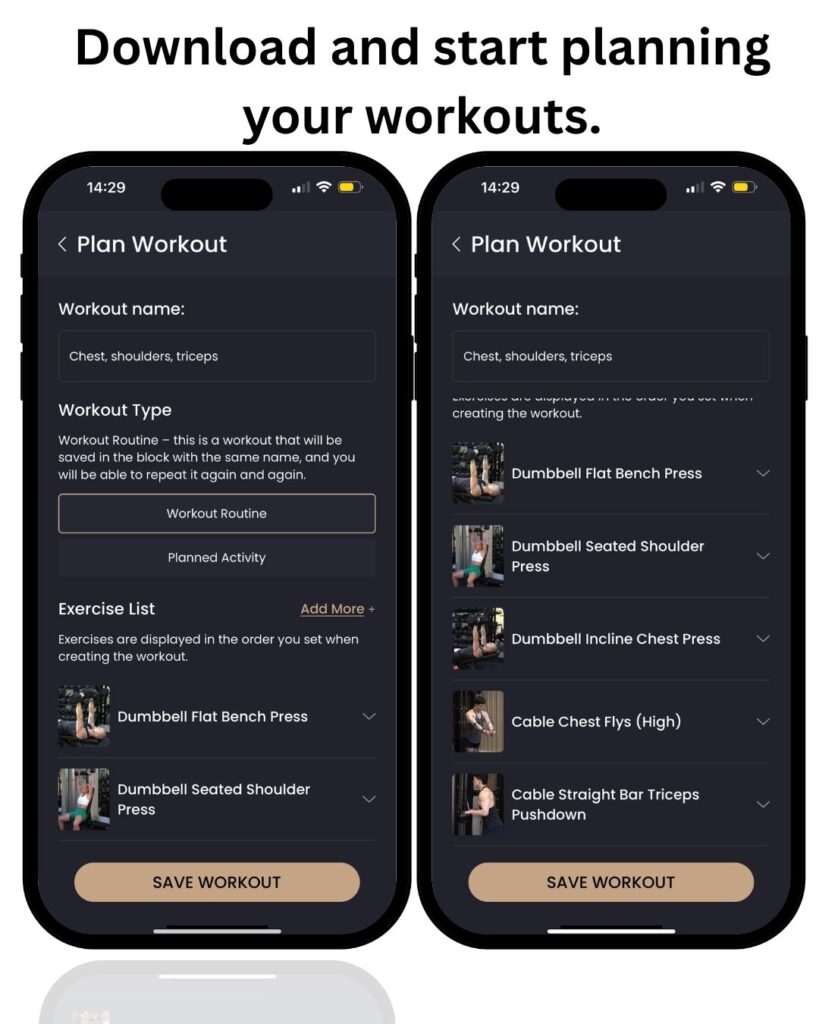
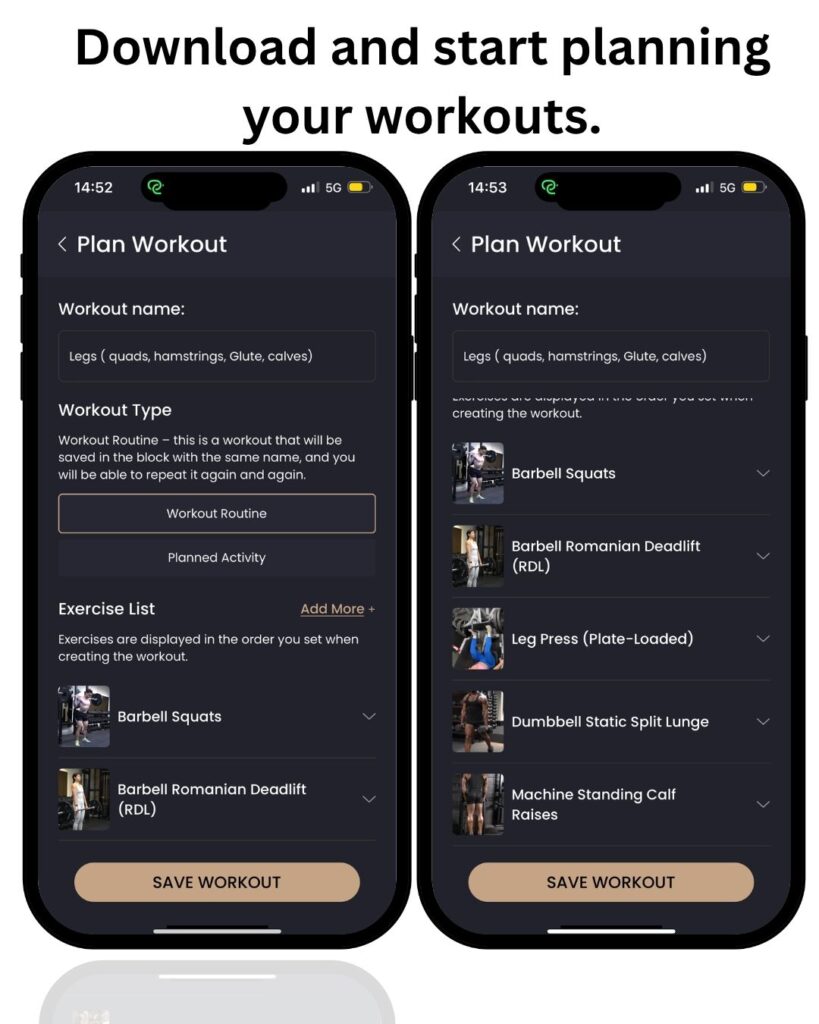
You can download the 12REPS app to plan your workouts with progressive overload automatically programmed—it tells you exactly when to add weight, reps, or sets based on your performance. Check out just12reps.com for more information on systematic progression that doesn’t require constant planning.
When Progressive Overload Isn’t Happening
If you’re not making progress despite trying to apply progressive overload, check these variables:
Sleep: Less than 7 hours nightly? Recovery is compromised. Strength gains will stall.
Nutrition: Inadequate protein or calories? Your body can’t adapt to training stimulus.
Stress: High life stress? Impacts recovery capacity and performance.
Programme design: Too much volume? Too little rest? Poor exercise selection? Structure matters.
Consistency: Missing sessions frequently? Progression requires consistent stimulus.
Fix these before assuming your programme is wrong.

The Bottom Line
Progressive overload is the single most important training principle for building muscle and strength.
Everything else—exercise selection, rep ranges, training splits, meal timing—matters far less than whether you’re consistently applying progressive overload.
You can follow the optimal programme designed by the world’s best coach, but if you use the same weights for months, you won’t build muscle.
Conversely, you can follow a mediocre programme, but if you consistently apply progressive overload, you’ll make progress.
Track your workouts. Set clear progression rules. Add weight, reps, or sets systematically. Don’t stay comfortable with the same loads indefinitely.
Do this consistently for six months. You’ll build more muscle than most people build in two years of random gym attendance.
The principle is simple. Application requires discipline. Results are guaranteed if you execute properly.
About Will Duru: BSc-qualified personal trainer with over 10 years experience training clients across London. Creator of the 12REPS app and specialist in evidence-based training methods. Available for in-person training and consultations.
Related Articles:
- 7 Workout Mistakes Beginners Make (That I See Every Week)
- Push Pull Legs: A Personal Trainer’s 6-Week Programme
- How Many Times a Week Should You Work Out?