And I get it. The world often tells us that fitness is about chasing numbers or sculpting a perfect physique. But here’s the real truth, the kind that resonates deep down: your workout isn’t just about muscles or numbers. It’s about how you feel – clearer, calmer, more in control. Every rep sharpens your focus. Every session releases stress. Every week builds confidence. It’s about reclaiming a sense of self that feels powerful and unshakeable, regardless of your age. This isn’t just logic; it’s psycho-logic, understanding the profound emotional impact of feeling strong. For the 49-year-old woman, strength training isn’t just an exercise; it’s a profound act of self-care and empowerment.

Why Strength Training is Your Secret Weapon at 49
Our bodies are incredible, constantly adapting and evolving. But as we journey through life, especially around our late 40s, some natural shifts occur. It’s not a decline; it’s a transformation that we can actively shape. You might notice your body feels a bit different, perhaps a little weaker than it used to be. This is often due to a natural process calledsarcopenia, the age-related loss of muscle mass and strength [1]. After the age of 35, women can lose anywhere from 3-8% of their muscle mass every decade [2]. This isn’t just about looking different; it impacts how our bodies function.
Another significant change is the shift in hormones, particularly estrogen. Lower estrogen levels can affect everything from muscle recovery to joint health and how efficiently our bodies build and maintain lean muscle [2]. Our bones also become a concern due to a natural decrease in bone density, which can lead to conditions like osteoporosis [3]. And yes, metabolism tends to slow down, making it feel harder to manage weight.
But here’s the empowering part: strength training is your most potent tool to not just counteract these changes, but to thrive through them. It’s like giving your body a powerful upgrade:
- Preserving Muscle Mass: Regular strength training helps you build and maintain lean muscle, which is crucial for keeping your metabolism humming and your body feeling strong [2]. More muscle means your body burns more calories even at rest.
- Bone Health: This is a big one. Strength training puts healthy stress on your bones, prompting them to become denser and stronger. This is incredibly effective in preventing and even reversing bone loss, protecting you from osteoporosis and osteopenia [3].
- Hormonal Balance: While strength training won’t stop menopause, it can significantly help manage its symptoms. It aids in regulating stress hormones, which can often spike during this period, bringing a sense of calm and balance [3].
- Metabolism Boost: By increasing your muscle mass, strength training elevates your basal metabolic rate (BMR). This means your body becomes a more efficient fat-burning machine, not just during your workout, but all day long [2].

How Strength Training Transforms Your Quality of Life
Beyond the physical changes, strength training profoundly impacts your daily life, making every movement feel easier and more joyful. It’s about enhancing your overall well-being, both inside and out.
Physical Empowerment:
- Prevent Pain and Injury: Imagine chasing your grandchildren, lifting groceries, or simply moving without nagging aches. Strength training builds resilience in your joints and strengthens the muscles that support your body, significantly reducing the risk of common pains like low back pain, knee pain, and pelvic pain [2]. It improves your body’s ability to manage and control movement, making you less prone to injuries.
- Improved Posture and Alignment: Spending hours at a desk or on our phones can lead to rounded shoulders and poor posture. Strength training, especially focusing on your back and core, helps pull your body into better alignment, reducing strain and making you stand taller and feel more confident [2].
- Enhanced Functional Fitness: This is about real-world strength. It’s the ability to perform everyday activities with ease and independence – from carrying heavy bags to climbing stairs or simply getting up from a chair. Strength training ensures you maintain your autonomy and zest for life well into your later years [3].
Mental and Emotional Well-being:
- Stress Reduction & Mood Enhancement: The gym isn’t just a place for physical exertion; it’s a sanctuary for your mind. The endorphins released during exercise are powerful mood boosters, helping to manage stress, anxiety, and even symptoms of depression [3]. It’s a natural way to clear your head and find your calm.
- Cognitive Function: Believe it or not, lifting weights can make you sharper! Strength training increases blood flow to the brain, supporting cognitive function and even aiding in dementia prevention [3]. It’s a workout for your brain as much as your body.
- Confidence & Control: There’s an undeniable sense of accomplishment that comes with getting stronger. Each personal best, each completed set, reinforces a feeling of capability and control. This confidence spills over into all areas of your life, empowering you to tackle challenges with a renewed spirit.
Longevity: Research consistently shows that strength training isn’t just about living better; it’s about living longer. Studies indicate that women who strength train regularly have a lower risk of death from heart disease and can even add years to their lives [1, 4]. It’s an investment in a longer,

Your 6-Week Journey to a Stronger You: Will Duru’s Program
As your personal trainer, I believe in making strength accessible and effective. This 6-week program is designed with you in mind, focusing on simple yet powerful movements that build strength without unnecessary complexity. We’ll utilise a variety of equipment – kettlebells, dumbbells, TRX, machines, and even your own bodyweight – to keep things engaging and challenging. Remember, consistency is key, and listening to your body is paramount.
Before You Begin: The Warm-Up and Cool-Down
Every great workout starts with preparing your body and ends with helping it recover. Don’t skip these crucial steps!
- Warm-Up (10 minutes): Begin with light cardio to get your blood flowing. An incline walk on a treadmill or rowing at a moderate pace for 10 minutes is a perfect workout. Follow this with some dynamic mobility stretches to prepare your joints and muscles. Think “world’s greatest stretches,” cat-cow, and hamstring stretches to open up your body.
- Cool-Down (10 minutes): After your workout, dedicate 10 minutes to cooling down. A gentle session on the stair master or another incline walk on the treadmill will help bring your heart rate down. Finish with static stretches, holding each for 20-30 seconds, focusing on the muscles you’ve worked.
The Program Structure
This program progresses over six weeks, gradually increasing in challenge. We’ll focus on a 2-day split, ensuring adequate recovery between sessions.
- Phase 1 (Weeks 1-2): Building Foundation
- Focus: Mastering form and building a solid base.
- Structure: 6 exercises per workout, 4-5 sets each.
- Phases 2 & 3 (Weeks 3-6): Increasing Intensity & Efficiency
- Focus: Introducing supersets to boost intensity and reduce workout time.
- Structure: 5 exercises per workout, performed as 4 supersets (totaling 9 exercises if you count each exercise in a superset separately). Each superset will consist of 4 working sets, preceded by 1 warm-up set (totaling 5 sets per superset).
- Phase 5 Integration: Throughout the program, we will incorporate the principles of Phase 5, which emphasises weight training with single sets. This means that even as we progress, we’ll ensure some exercises are performed for a single, focused set to maximise strength gains.
Key Elements for Every Workout:
- Lower Body Day Focus: On your lower body days, we’ll place a special emphasis on glute exercises to build power and stability.
- Finisher: To cap off your sessions, we’ll include a powerful finisher:
- 4 core exercises, 4 sets each.
- Followed by 30 squats/knee presses, 30 sit-ups, 30 calf raises, and 30 glute bridges. Perform these as a circuit, 4 rounds of 10 reps for each exercise.
- Daily Movement: Don’t forget the power of daily movement! Incorporate 4 sets of 10 reps each of squats/knee presses, sit-ups, calf raises, and glute bridges every morning before showering or every evening before going to bed. This consistent movement will significantly enhance your results.

The 12Reps App: Your Ultimate Training Partner
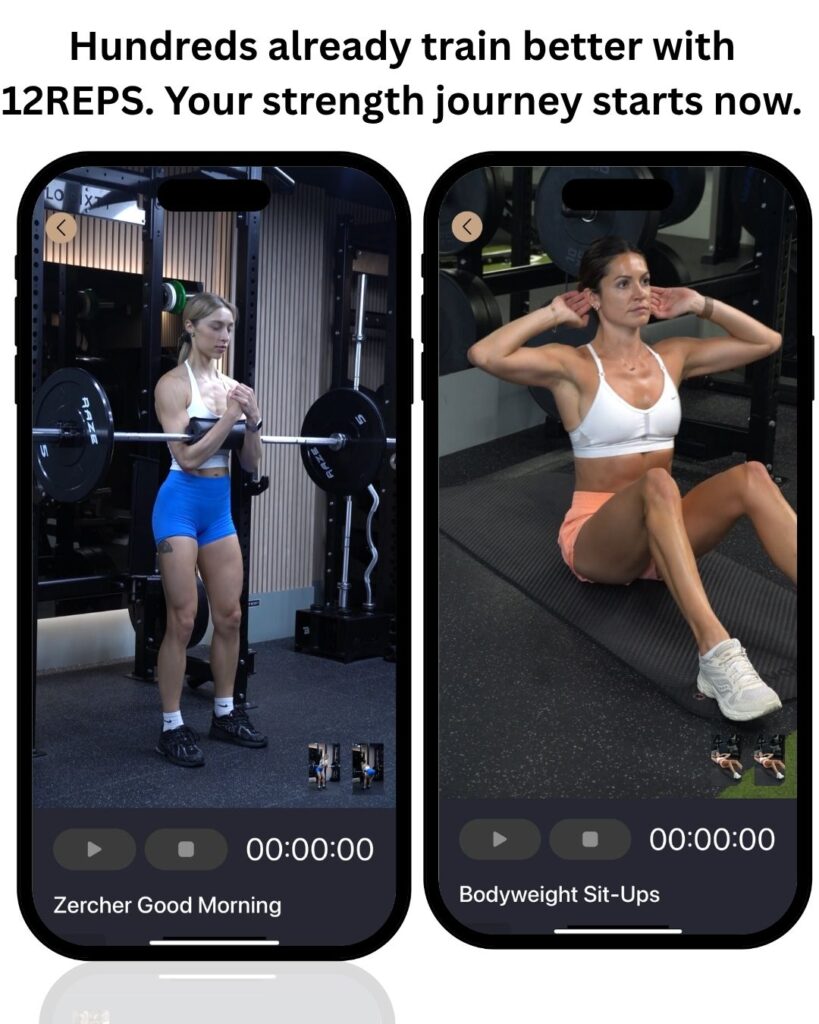
To make this program seamless and effective, I highly recommend using the 12Reps app. It’s designed to be your personal coach in your pocket, simplifying your strength training journey. With the 12Reps app, you can easily navigate to ‘Build Your Routine’ and select all the exercises from this program. The app also features a built-in stopwatch to precisely monitor your rest periods, ensuring you get the most out of every set. It has both a free version and a pro version, making it accessible to everyone.
Ready to transform how you feel, look, and live? Download the 12Reps app for a free trial today!

The 6-Week Strength Training Program: Detailed Workouts
Here is a detailed breakdown of your 6-week strength training program, designed to be performed as a 2-day split. Remember to use the 12Reps app to track your progress and monitor your rest periods. Focus on controlled movements and proper form over heavy weights, especially when starting.
Warm-up (10 minutes before each session)
- 5 minutes incline walk on treadmill or rowing (moderate pace)
- 5 minutes dynamic mobility: Cat-Cow (10 reps), World’s Greatest Stretch (5 per side), Hamstring Stretch (30 seconds per leg)
Cool-down (10 minutes after each session)
- 5 minutes stair master or incline walk (light pace)
- 5 minutes static stretching: Quad Stretch (30 seconds per leg), Glute Stretch (30 seconds per side), Chest Stretch (30 seconds)
Phase 1: Weeks 1-2 (Building Foundation)
Workout A (e.g., Full Body Focus)
Exercise (Equipment) | Sets | Reps | Weight (Suggestion) | Rest Period |
Goblet Squat (Kettlebell) | 4 | 10-12 | Moderate | 60-90s |
Push-ups (Bodyweight) | 4 | AMRAP* | Bodyweight | 60-90s |
Dumbbell Row (Dumbbell) | 4 | 10-12 | Moderate | 60-90s |
Plank (Bodyweight) | 4 | 30-45s | Bodyweight | 60s |
Glute Bridge (Bodyweight) | 4 | 12-15 | Bodyweight | 60s |
Overhead Press (Dumbbell) | 4 | 10-12 | Light-Moderate | 60-90s |
Workout B (e.g., Full Body Focus)
Exercise (Equipment) | Sets | Reps | Weight (Suggestion) | Rest Period |
Deadlift (Kettlebell/Dumbbell) | 4 | 8-10 | Moderate | 90-120s |
Incline Dumbbell Press (Dumbbell) | 4 | 10-12 | Moderate | 60-90s |
TRX Row (TRX) | 4 | 12-15 | Bodyweight | 60-90s |
Russian Twists (Bodyweight) | 4 | 15-20 | Bodyweight | 60s |
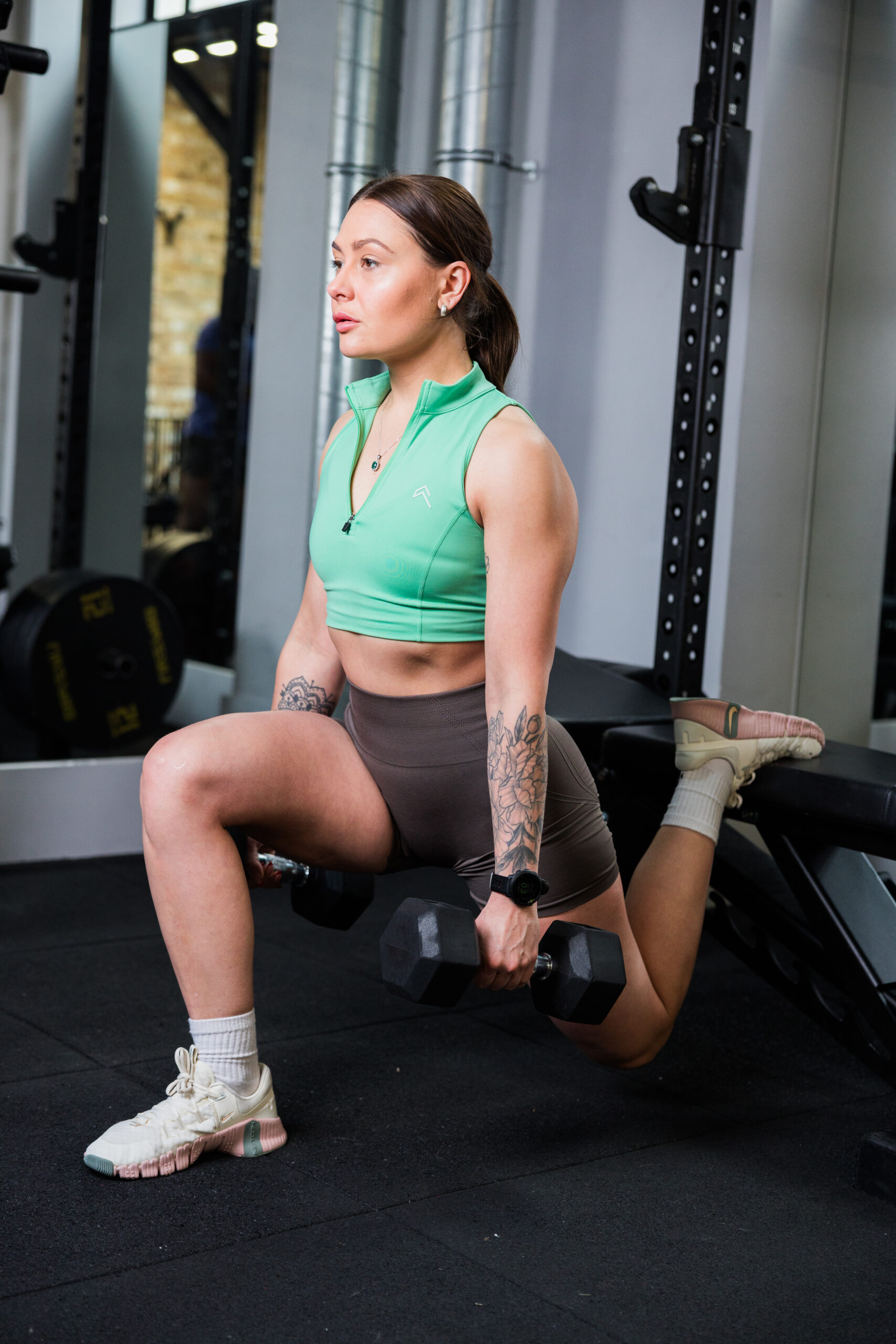
Lunges (Dumbbell) | 4 | 10-12 per leg | Light-Moderate | 60-90s |
Calf Raises (Bodyweight) | 4 | 15-20 | Bodyweight | 60s |
*AMRAP: As Many Reps As Possible with good form.
Phases 2 & 3: Weeks 3-6 (Increasing Intensity & Efficiency)
Workout A (e.g., Upper Body Focus with Supersets)
Superset | Exercise 1 (Equipment) | Exercise 2 (Equipment) | Sets | Reps | Weight (Suggestion) | Rest Period |
Warm-up Set | Dumbbell Bench Press | TRX Face Pull | 1 | 10-12 | Light | 60s |
Superset 1 | Dumbbell Bench Press (Dumbbell) | TRX Face Pull (TRX) | 4 | 10-12 | Moderate | 60-90s (after SS) |
Superset 2 | Seated Cable Row (Machine) | Dumbbell Lateral Raise (Dumbbell) | 4 | 10-12 | Moderate | 60-90s (after SS) |
Superset 3 | Bicep Curls (Dumbbell) | Tricep Pushdowns (Machine) | 4 | 10-12 | Moderate | 60-90s (after SS) |
Single Set | Overhead Press (Dumbbell) | – | 1 | 8-10 | Challenging | – |
Workout B (e.g., Lower Body & Core Focus with Supersets)
Superset | Exercise 1 (Equipment) | Exercise 2 (Equipment) | Sets | Reps | Weight (Suggestion) | Rest Period |
Warm-up Set | Kettlebell Deadlift | Glute Kickbacks (Machine/Bodyweight) | 1 | 8-10 | Light | 60s |
Superset 1 | Kettlebell Deadlift (Kettlebell) | Glute Kickbacks (Machine/Bodyweight) | 4 | 8-10 | Moderate | 60-90s (after SS) |
Superset 2 | Leg Press (Machine) | Hamstring Curls (Machine) | 4 | 10-12 | Moderate | 60-90s (after SS) |
Superset 3 | Calf Raises (Machine/Bodyweight) | Ab Crunches (Bodyweight) | 4 | 15-20 | Moderate | 60-90s (after SS) |
Single Set | Goblet Squat (Kettlebell) | – | 1 | 8-10 | Challenging | – |
Daily Finisher (Every Morning/Evening)
Perform this circuit 4 times, with 10 reps of each exercise, with minimal rest between exercises and circuits.
- Squats / Knee Presses (Bodyweight)
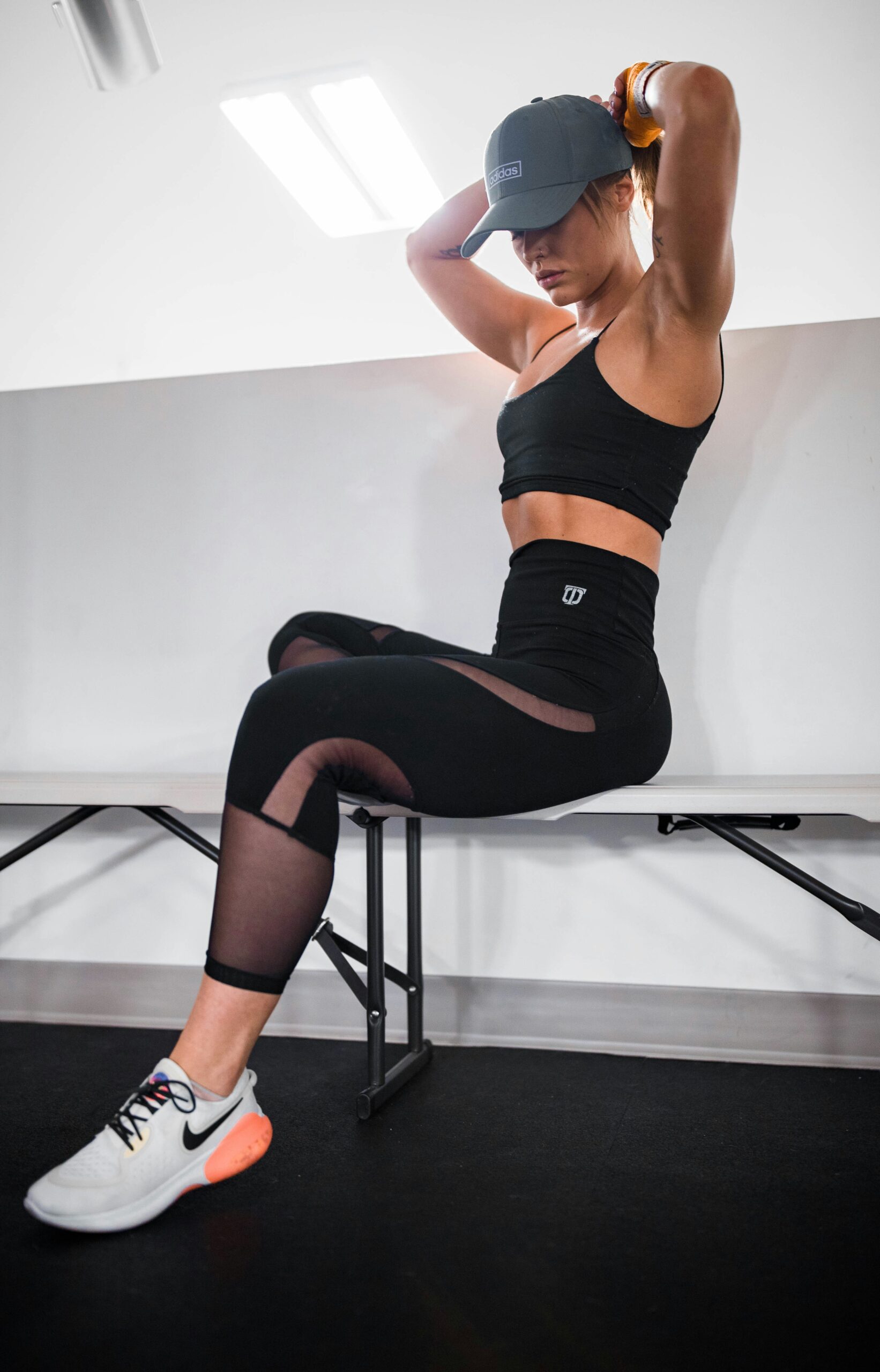
- Sit-ups (Bodyweight)
- Calf Raises (Bodyweight)
- Glute Bridges (Bodyweight)

Conclusion
Strength training is more than just a workout; it’s a journey of self-discovery and empowerment. For women navigating their late 40s, it offers a powerful pathway to not only physical vitality but also profound mental and emotional well-being. By embracing the principles of strength training, you’re not just building muscle; you’re building resilience, confidence, and a vibrant future. Let Will Duru be your guide on this transformative path.
Ready to embark on your strength journey? Download the 12Reps app for a free trial today! Start feeling clearer, calmer, and more in control, one rep at a time.
References
[1] NPR. (2024, March 11). Women who do strength training live longer. How much is…https://www.npr.org/sections/health-shots/2024/03/11/1236791784/strength-resistance-weight-training-longevity-aging-heart-disease
[2] Moms Into Fitness. Benefits of Strength Training for Women Over 40. https://www.momsintofitness.com/why-strength-training-is-important/
[3] OCR Endurance Factory. (2023, October 29). Benefits Of Strength Training For Women Over 40. https://ocrendurancefactory.com/benefits-of-strength-training-for-women-over-40/
[4] Prevention. (2024, December 30). Study: Strength Training May Add Up to 4 Years to Your Life. https://www.prevention.com/fitness/a63238499/strength-training-adds-years-to-your-life-study/