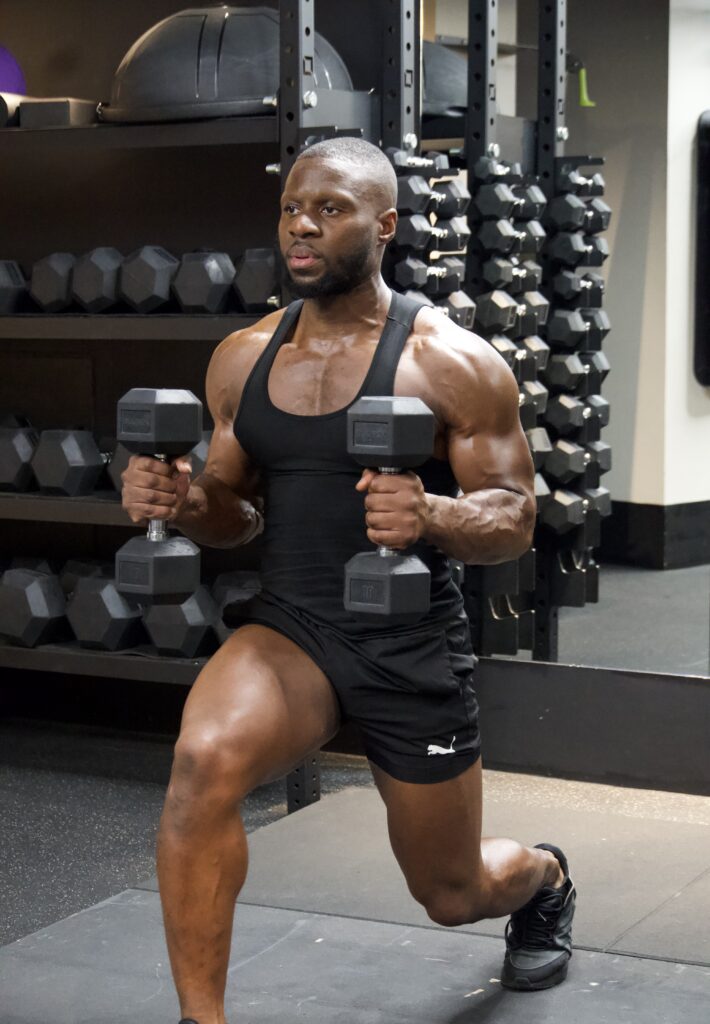
The Ultimate Guide to the Push/Pull/Legs (PPL) and Core Workout Program

strength training app, 12reps app

By Will Duru, BSc (Hons) Sport and Exercise Science, Founder of the 12reps App

I want to tell you a story I’ve seen a thousand times. A woman in her 40s or 50s walks into my gym. She’s motivated, she’s ready to make a change, but she’s completely overwhelmed. She looks at all the equipment and has no idea where to start. So, she does what most people do: a little bit of this, a little bit of that. Some bicep curls, a bit of treadmill, maybe a few crunches. She leaves feeling like she’s done something, but after a few weeks, she’s frustrated because nothing is changing.

This used to be one of the biggest challenges I faced as a personal trainer. How could I give my clients a plan that was simple enough to follow, but effective enough to get them real results? The answer, it turned out, was surprisingly simple. It’s a system that has been around for decades, but it’s often over-complicated and made to sound intimidating. It’s called the Push/Pull/Legs (PPL) split.

I started building all of my clients’ programs around this simple idea, and the results were incredible. They were getting stronger, they were building muscle, and most importantly, they were finally feeling confident and in control of their workouts. This is the exact system that I used as the foundation for my fitness app, 12reps. And the results have been mind-blowing. We’ve had over 2,000 downloads, and we’re approaching 1,000 paying subscribers. We’re generating real revenue, all because we’re giving people a simple, effective plan that works. In this article, I’m going to break down the PPL split for you, just like I do for my clients, and show you how you can use it to finally get the results you deserve.

strength training app

What is Push/Pull/Legs? (The Simple Explanation)

I know that “Push/Pull/Legs” can sound like some kind of complicated bodybuilding jargon. But I promise you, it’s the simplest and most logical way to organise your workouts. Let’s break it down.

Imagine your body has three basic movement patterns:

Pushing: Think about any movement where you are pushing something away from your body. Pushing a door open, putting something on a high shelf, or getting up off the floor. The muscles you use for this are your chest, shoulders, and triceps.

Pulling: Now, think about any movement where you are pulling something towards your body. Opening a car door, starting a lawnmower, or picking up a heavy shopping bag. The muscles you use for this are your back and biceps.

Legs: This one is pretty obvious! It’s everything you do with your lower body. Standing up from a chair, walking up the stairs, or squatting down to pick something up. This uses your quads, hamstrings, glutes, and calves.

That’s it. That’s the entire system. Instead of walking into the gym and just randomly picking exercises, you have a clear focus for each day. On “Push Day,” you only train your pushing muscles. On “Pull Day,” you only train your pulling muscles. And on “Leg Day,” you train your legs. It’s that simple.

12reps- strength training

Why This Works So Well (From My Experience)

For years, I tried different workout splits with my clients. Full body workouts, upper/lower splits, you name it. But nothing has ever worked as consistently as PPL, and I think it comes down to a few simple reasons.

First, it gives your muscles time to recover. This is the big one. When you have a dedicated Push Day, you are working your chest, shoulders, and triceps hard. Then, for the next 48 hours or more, those muscles get to rest and rebuild while you are training your back, biceps, and legs. This is how you get stronger. You don’t build muscle in the gym; you build it when you are resting. PPL has recovery built right into the system.

Second, it allows you to focus. When you walk into the gym and you know it’s Pull Day, you have a clear mission. You’re not trying to do a million different things at once. You can put all of your energy and focus into training your back and biceps. This leads to better quality workouts, and better quality workouts lead to better results. It’s that simple.

Third, it’s incredibly efficient. Because you are working related muscle groups together, you get a lot of bang for your buck. For example, when you are doing a bench press on Push Day, you are not just working your chest; you are also working your shoulders and triceps. This means you can get a great workout in a reasonable amount of time, which is a huge bonus when you are busy.

strangth training, 12reps app strength training

Don't Forget Your Core! (My Secret Weapon)

If you look at a classic PPL program online, you might notice that something is missing: dedicated core work. This is a huge mistake, in my opinion. Your core—your abs, obliques, and lower back—is the foundation of everything you do. It’s what keeps you stable when you lift heavy things, it’s what protects your spine from injury, and it’s what gives you a strong, confident posture. [1]

I tell all of my clients that a strong core is their secret weapon. That’s why in the 12reps app, we make sure to include core training in every single program. You don’t need to spend hours doing crunches. A few simple, effective exercises at the end of each workout is all it takes. I like to add one or two core exercises to the end of each Push, Pull, and Leg day. This way, you are training your core frequently throughout the week, without making your workouts too long.

Strength Training in Your 30s and 40s: Why Personal Training (Tower Bridge/London Bridge)

How I Structure the Week for My Clients

One of the best things about the PPL split is how flexible it is. You can adapt it to fit your schedule, no matter how busy you are. Here are the two most common ways I set it up for my clients.

The 3-Day-a-Week Plan (The “I’m Super Busy” Option)

This is the perfect starting point. It’s simple, it’s manageable, and it gives you plenty of time to recover between workouts. With this plan, you are hitting every muscle group with high intensity once a week. It’s the perfect way to build a solid foundation of strength.

Monday: Push Day + Core

Tuesday: Rest

Wednesday: Pull Day + Core

Thursday: Rest

Friday: Leg Day + Core

Saturday & Sunday: Rest

The 4-Day-a-Week Plan (The “I Want a Bit More” Option)

Once my clients get comfortable with the 3-day split and they want to take things to the next level, we often move to a 4-day plan. This allows us to hit our muscles a little more frequently. That fourth “Full Body Day” is a great way to add a little extra volume and stimulate more muscle growth without spending hours in the gym. We usually pick one or two key exercises from each of the PPL days and do them together.

Monday: Push Day + Core

Tuesday: Pull Day

Wednesday: Rest

Thursday: Leg Day + Core

Friday: Full Body Day

Saturday & Sunday: Rest

A Sample Plan to Get You Started

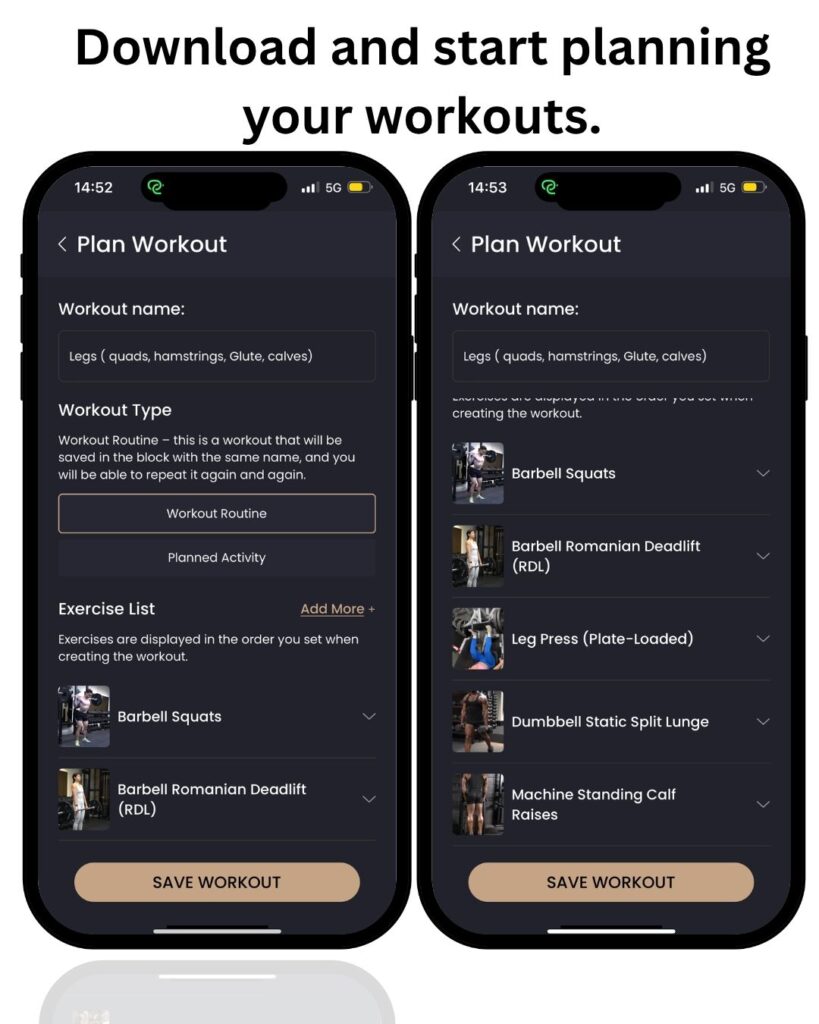
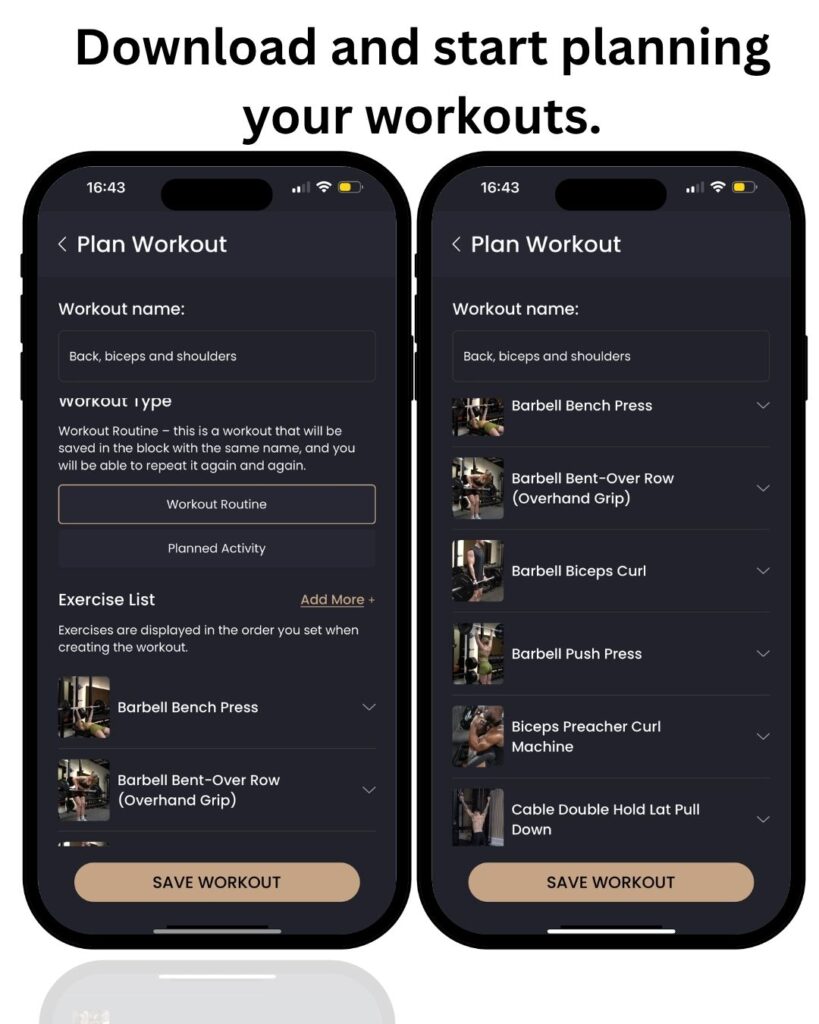
To show you how simple and powerful this can be, here is a sample 3-day PPL and core workout that I would give to one of my clients. This is the exact kind of plan you’ll find in the 12reps app. Remember, this is just a starting point. The key is to focus on good form and to try and get a little bit stronger each week.

My Go-To Push Day

Exercise

Sets

Reps

Dumbbell Bench Press

5

8-12

Dumbbell Shoulder Press

5

8-12

Push-Ups

5

As many as you can!

Lateral Raises

5

12-15

Tricep Dips (on a bench)

5

10-15

Core: Plank

3

Hold for 30-60 sec


My Go-To Pull Day

Exercise

Sets

Reps

Dumbbell Rows

5

8-12 per arm

Lat Pulldowns

5

10-15

Seated Cable Rows

5

10-15

Bicep Curls

5

12-15

Face Pulls

5

15-20

Core: Leg Raises

3

15-20


My Go-To Leg Day

Exercise

Sets

Reps

Goblet Squats

5

10-15

Romanian Deadlifts

5

10-15

Lunges

5

10-12 per leg

Glute Bridges

5

15-20

Calf Raises

5

15-20

Core: Russian Twists

3

15-20 per side


4-Day Push Pull Legs Program for Muscle Gain and Fat Loss | 12Reps app

References

  1. [1] Mayo Clinic. (2022). Core exercises: Why you should strengthen your core muscles. https://www.mayoclinic.org/healthy-lifestyle/fitness/in-depth/core-exercises/art-20044751

12reps: The Future of Strength Training and Longevity | Founded by Will Duru

strength training app

My name is Will Duru, and for the last ten years, I’ve been a personal trainer. Every single day, I’ve seen people walk into the gym with the best intentions in the world, only to leave feeling frustrated and defeated. They lack a plan, they don’t know how to use the equipment, and they’re not seeing results. That’s why I built 12reps.

12reps is a mobile app that puts a world-class personal trainer in your pocket, for a fraction of the cost. We use AI to create truly personalised strength training programs that are designed by certified trainers, like me, to help you build muscle, get stronger, and improve your long-term health. The fitness app market is crowded with generic, one-size-fits-all solutions. We are different. We make serious, effective strength training simple and accessible for everyone.

We are here today to ask for a seed round investment to help us scale our user acquisition, expand our development team, and solidify our position as the leading platform for strength training. We are not just building an app; we are building the future of fitness.

12reps: Investing in the Future of Strength Training for Longevity By Will Duru, Founder & CEO

The Problem: The Untapped Potential in Every Gym

I want you to picture someone I call the “Wandering Gym-Goer.” You’ve seen them. They walk into the gym, look around at all the complicated machines, maybe do a few bicep curls, walk on the treadmill for a bit, and then leave. They are trying. They are showing up. But they don’t have a plan. This is the reality for millions of people. They are investing their time and money into their health, but they are getting almost nothing in return. This leads to frustration, a feeling of failure, and eventually, they just give up.

This is a huge problem, but it’s also a huge opportunity. The global fitness app market is a multi-billion dollar industry, projected to be worth over $12 billion in 2025. [1] But it is filled with apps that are all the same. They offer generic workout videos or simple tracking tools that don’t actually help people get results. There is a massive gap in the market for a solution that is intelligent, personalised, and effective.

And the timing for this could not be better. We are at a unique moment where several powerful trends are coming together. First, the world has woken up to the importance of strength training. It is no longer just for bodybuilders. It is now widely recognised by doctors and scientists as one of the most important things you can do for your health and longevity, especially as you get older. [2] Second, AI has reached a point where it can deliver true personalisation at a massive scale. And third, people are looking for authenticity. They are tired of faceless corporations. They want to connect with real experts who they can trust. As a trainer with over a decade of experience and a genuine passion for helping people, I am that expert.

4-Day Push Pull Legs Program for Muscle Gain and Fat Loss | 12Reps app

Our Solution: 12reps - Intelligent Strength Training, Simplified

So, how do we solve this problem? We built 12reps from the ground up to be the solution I always wished I could give my clients. It is built on three core features that make it unlike any other app on the market.

First, we have AI-Powered Personalisation. When you first open the app, it asks you a few simple questions: What are your goals? What equipment do you have access to, whether at home or in a commercial gym? What is your current fitness level? Based on your answers, our AI instantly generates a complete, progressive workout plan that is tailored specifically to you. It’s not a random collection of exercises; it’s a structured program designed to get you results.

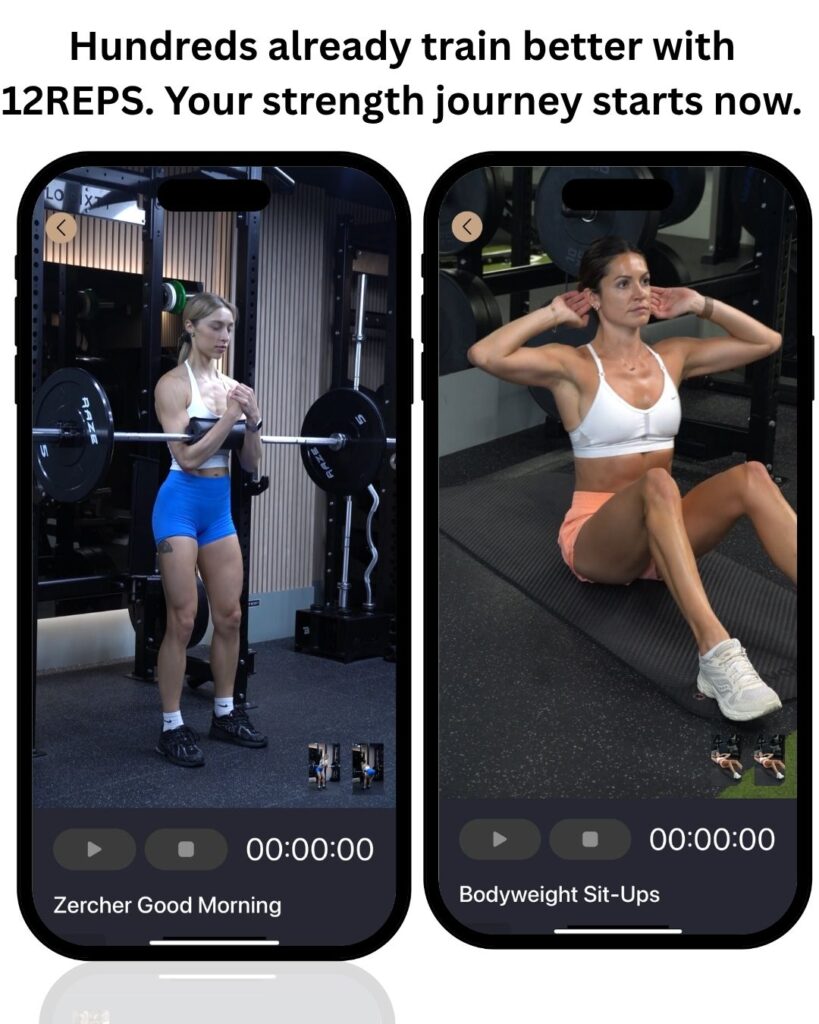
Second, we have an Expert-Backed Exercise Library. I personally filmed and wrote the instructions for over 1,500 exercises. Each one comes with a high-quality video demonstration and clear, simple cues to ensure you are performing the movement with perfect form. This is crucial for preventing injury and getting the most out of every single rep.

Third, we have Seamless Progress Tracking. The app makes it incredibly easy to log your sets, reps, and the weights you lift. It then turns that data into simple, beautiful graphs that show you exactly how much stronger you are getting over time. This is the secret to staying motivated. When you can see your progress, you want to keep going.

But our real “secret sauce” is our authenticity. I am not a Silicon Valley tech bro who just saw a market opportunity. I am a trainer who has been in the trenches with real people, helping them overcome these exact struggles for years. We are not targeting teenagers who want to look good on TikTok. We are targeting a motivated and underserved demographic—people in their 30s, 40s, and 50s who are serious about their long-term health. We are giving them the expertise of a personal trainer, which would normally cost hundreds of pounds a month, for just £9.99 a month.

strength training app

Traction: The Proof is in the Progress

This isn’t just an idea. We have built the product, we have launched it, and the response has been incredible. I didn’t just identify the problem; I lived it with my clients, and then I built the solution myself. And it is working.

In just a few short months, with a tiny marketing budget, we have already achieved over 2,500 downloads. More importantly, we are converting those downloads into loyal, paying customers. We have almost 1,000 active subscriptions, which has already started to generate real revenue. This proves that people are not just willing to try our app; they are willing to pay for it because they see its value and everything is organic 

Our users are not just downloading the app and forgetting about it. They are using it. Our engagement metrics show that a significant percentage of our users are completing at least three workouts per week. They are following the plans, they are tracking their progress, and they are getting stronger. Our user retention is strong, and our App Store ratings are consistently high, with glowing reviews from people who tell us that 12reps has finally given them the confidence and the plan they needed to succeed.

This early traction is the most important signal we have. It shows that we have found a real pain point and that our solution is resonating with our target audience. We have achieved product-market fit. Now, we are ready to scale.

The Ask & The Vision: Building the Global Standard

We are seeking a seed investment to pour fuel on this fire. We want to use this funding to achieve three key goals.

First, User Acquisition. We will scale our marketing efforts to reach a wider audience. We know who our customer is, and we know how to reach them. We will invest in paid social media, collaborations with other trusted fitness influencers, and content marketing to establish 12reps as the go-to resource for strength training.

Second, Product Development. We will expand our small engineering team to make our app even better. We want to enhance our AI capabilities, integrate with popular wearables like the Apple Watch, and build out more community features to connect our users with each other.

Third, Operations. We will hire a few key people to help us manage our growth and provide world-class support to our customers.

Our vision is not just to be another fitness app. Our vision is to become the global standard for strength training. In 24 months, we aim to be the leading app for strength training in the UK and the US, with over 10-20,000 paying subscribers. In 5 years, we plan to expand globally, integrate with connected fitness hardware, and build a comprehensive health platform that also includes nutrition and recovery coaching.

Investing in 12reps is an opportunity to get in on the ground floor of a company that is solving a real problem in a massive, growing market. You are investing in a proven founder with deep domain expertise and a passion for the mission. You are investing in a scalable technology platform that is already showing incredible traction. And you are investing in a company with a clear path to profitability, based on a simple and proven subscription model.

Thank you for your time. I am ready to answer any questions you may have.

Strength Training in Your 30s and 40s: Why Personal Training (Tower Bridge/London Bridge)

References

  1. [1] Grand View Research. (2024). Fitness App Market Size, Share & Trends Analysis Report. https://www.grandviewresearch.com/industry-analysis/fitness-app-market
  2. [2] Westcott, W. L. (2012). Resistance training is medicine: effects of strength training on health. Current sports medicine reports, 11(4), 209-216. https://journals.lww.com/acsm-csmr/fulltext/2012/07000/resistance_training_is_medicine__effects_of.11.aspx

Can Exercise Really Help with Mood Swings or Anxiety? Expert Insights by Will Duru

strength training app

By Will Duru, BSc (Hons) Sport and Exercise Science, Award-winning Personal Trainer with over 10 years of experience in strength training and optimising recovery.

One minute you’re feeling fine, the next you’re overwhelmed with anxiety or snapping at someone you love. Next, you feel a wave of sadness for no apparent reason. If this sounds familiar, you are not alone. For so many of the women I work with, especially those in their 40s and 50s, navigating the hormonal shifts of perimenopause, life can feel like being on an emotional rollercoaster that you can’t get off. It can feel like you are no longer in control of your own emotions, and that is a deeply unsettling and exhausting experience.

Many people think of exercise as something you do to change your body—to lose weight, to build muscle, to improve your heart health. And it does all of those things wonderfully. But what is so often overlooked is the profound and powerful impact that exercise has on your mental and emotional health. We often dismiss it as just a “distraction” or a way to “blow off steam.” But it is so much more than that. The right kind of exercise is a powerful biological intervention. It is a non-pharmaceutical tool that can directly and effectively help you manage mood swings, calm anxiety, and build a more resilient mind.

So, can exercise really help? The answer is an absolute, unequivocal yes. In this article, I’m going to explain the simple science behind why it works. We’re going to look at how exercise changes your brain chemistry for the better, why strength training in particular is a secret weapon for building mental fortitude, and how it can break the vicious cycle of poor sleep and bad mood. This isn’t about just feeling a little bit better; it’s about giving you a tool you can use for the rest of your life to feel more in control, more stable, and more like yourself.

Can Exercise Really Help with Mood Swings or Anxiety

Your Brain on Exercise: The Feel-Good Chemicals

The most immediate and well-known mental benefit of exercise is that it is a natural mood booster. This isn’t just a feeling; it’s a direct result of exercise changing the chemistry of your brain. When you move your body, you are essentially giving your brain a bath in a cocktail of powerful, feel-good chemicals. A huge amount of research, including a major 2024 meta-analysis, has confirmed that exercise is an effective treatment for depression and anxiety. [1]

Let’s break down the key players in this process in simple terms:

Endorphins: You have probably heard of the “runner’s high.” This feeling of euphoria is caused by the release of endorphins. These are your body’s own natural opioids. They act as a natural painkiller, but they also have a powerful mood-elevating effect. They are the reason why, even after a tough workout, you often feel a sense of calm and well-being.

Serotonin and Dopamine: These are two of the most important neurotransmitters when it comes to your mood. Serotonin is often called the “happy chemical.” It plays a huge role in feelings of well-being, happiness, and calm. Dopamine is the “motivation chemical.” It’s associated with pleasure, reward, and focus. Here’s the amazing part: exercise has been shown to increase the levels of both serotonin and dopamine in your brain. [2] In fact, many of the most common antidepressant medications work by trying to increase the amount of available serotonin in the brain. Exercise does this naturally.

What this means is that the mood boost you get from a workout is not just a happy accident. It is a predictable and reliable physiological response. You can literally use a workout as a tool to change how you feel. If you are feeling anxious, irritable, or low, a 30-minute workout can be one of the fastest and most effective ways to change your brain state. It’s a powerful tool that you have at your disposal every single day.

Women Over 40 to Mix Cardio and Strength Training

Strength Training as a Mental Fortitude Builder

While any form of exercise is good for your mental health, I am a huge advocate for strength training, and I believe it offers some unique and powerful mental benefits that go even beyond what you get from cardio. The mental effects of strength training are just as important as the physical ones.

First, there is what I call The Empowerment Effect. The very act of getting progressively stronger over time has a profound psychological impact. Think about it. When you lift a weight that you couldn’t lift a month ago, or you do a push-up for the first time, you are getting direct, undeniable proof of your own capability and resilience. You are proving to yourself that you can do hard things. This feeling of competence and self-efficacy doesn’t just stay in the gym. It spills over into every other area of your life. It builds a deep, unshakable confidence that you can handle challenges, both physical and emotional. A 2017 meta-analysis confirmed that resistance exercise training significantly improves anxiety symptoms in both healthy people and those with a diagnosed illness. [3]

Second, a focused strength training session can be a form of mindfulness in motion. When you are trying to lift a heavy weight with good form, you can’t be thinking about your to-do list or worrying about a conversation you had yesterday. You have to be completely present in the moment. You have to focus on your breathing, on the feeling of your muscles contracting, on the path of the barbell. This intense focus can act as a form of moving meditation. It gives your brain a much-needed break from the cycle of anxious, racing thoughts. For that 45 minutes, your only job is to move your body. This can be an incredibly powerful way to quiet the noise in your head.

This is why tracking your progress is so important. It’s not just about the numbers; it’s about tracking your mental wins. Every time you add a little more weight or do one more rep, you are making a deposit in your confidence bank. I always encourage my clients to use a workout tracker like the 12reps app. It allows you to see, in black and white, how far you have come. It turns your fitness journey into a visual representation of your growing strength and resilience. I invite you to download the 12reps app today and start tracking your own mental wins.

Can Exercise Really Help with Mood Swings or Anxiety? Expert Insights by Will Duru

The Sleep-Mood Connection

If there is one pillar of health that is absolutely critical for a stable mood, it is sleep. And this is another area where exercise can be a game-changer. Poor sleep and a bad mood are locked in a vicious cycle. When you don’t sleep well, you are more likely to be irritable, anxious, and emotionally volatile the next day. And when you are feeling anxious or stressed, it can be almost impossible to get a good night’s sleep. It’s a cycle that can feel impossible to break.

Exercise is one of the most effective ways to break this cycle, and it works from both ends. Regular physical activity helps to regulate your circadian rhythm, which is your body’s internal 24-hour clock. A well-regulated circadian rhythm helps you feel sleepy at the right time in the evening and more alert during the day. Exercise can also increase the amount of deep, restorative sleep you get each night. This is the stage of sleep where your body and brain do most of their repair work.

So, how can you use exercise to improve your sleep? The most common advice is to try and get your workout in earlier in the day if you can. An intense workout raises your core body temperature and your heart rate, which can be disruptive for some people if it’s done too close to bedtime. However, everyone is different, and some people find that a workout in the evening helps them de-stress from the day. A gentle, relaxing walk or some stretching in the evening can also be very beneficial for winding down.

The bottom line is that by improving your sleep, exercise has a powerful, indirect effect on your mood. By breaking the vicious cycle of poor sleep and anxiety, you are creating a positive upward spiral. Better sleep leads to a better mood, and a better mood leads to better sleep. Exercise is the key that unlocks this positive cycle.

strength training app

Conclusion

So, let’s come back to our original question. Can exercise really help with mood swings and anxiety? The answer is a clear and definitive yes. It is not a temporary distraction; it is a powerful tool that works on a deep, biological level. To recap, exercise improves your mental health in three key ways:

  1. It changes your brain chemistry, releasing a cocktail of feel-good chemicals like endorphins, serotonin, and dopamine.
  2. It builds mental fortitude, especially strength training, which provides a powerful sense of empowerment and acts as a form of moving meditation.
  3. It improves your sleep, breaking the vicious cycle of poor sleep and bad mood.

Your workout is not just something you do for your body. It is one of the most important appointments you can keep for your mind. It is a daily opportunity to meet a stronger, calmer, and more confident version of yourself. You have the power to change how you feel, and it is waiting for you in your next workout.

Are you ready to feel the incredible mental benefits of exercise for yourself? I encourage you to make an investment in your own well-being. Start your free trial of the 12reps app today and discover the power of a consistent, structured exercise routine.

Why Is It So Hard to Lose Weight After 40? (And How to Actually Do It)

References

  1. [1] Noetel, M., et al. (2024). Effect of exercise for depression: systematic review and network meta-analysis of randomised controlled trials. BMJ, 384. https://www.bmj.com/content/384/bmj-2023-075847
  2. [2] Lin, T. W., & Kuo, Y. M. (2013). Exercise benefits brain function: the monoamine connection. Brain sciences, 3(1), 39-53. https://pmc.ncbi.nlm.nih.gov/articles/PMC4061837/
  3. [3] Gordon, B. R., McDowell, C. P., Lyons, M., & Herring, M. P. (2017). The effects of resistance exercise training on anxiety: a meta-analysis and meta-regression analysis of randomized controlled trials. Sports Medicine, 47(12), 2521-2532. https://pubmed.ncbi.nlm.nih.gov/28819746/

The Perfect Balance: How I Teach Women Over 40 to Mix Cardio and Strength Training

Why Is It So Hard to Lose Weight After 40? (And How to Actually Do It)

By Will Duru, BSc (Hons) Sport and Exercise Science, Award-winning Personal Trainer with over 10 years of experience in strength training and optimising recovery.

As a personal trainer for over a decade, I’ve seen it countless times. A new client, a woman in her 40s or 50s, sits down with me, and we look at her weekly calendar. It’s filled with work meetings, family commitments, and social events. Then, there are the blank spots, the question marks where exercise is supposed to fit. It feels like a game of Tetris, doesn’t it? You try to fit all the pieces together, but it never seems to work out perfectly. The biggest question I get is not if they should exercise, but how. How do you combine cardio and strength training in a way that gets results without leaving you feeling completely exhausted?

This is a huge point of confusion for so many people. I see clients who spend hours on the treadmill because they think that’s the only way to lose weight. I also see clients who only lift weights and then wonder why they get out of breath walking up a flight of stairs. The problem is that doing too much of one thing can actually sabotage your efforts with the other. If you do a long, hard run before you try to lift weights, you will be too tired to lift effectively. If you only lift and never do cardio, you are missing out on key benefits for your heart health. It’s a delicate balance.

Over the years, I’ve developed a clear and flexible way to help my clients find this balance. I want to share that framework with you in this article. My goal is to help you create synergy in your workouts. This means your cardio work will actually help you feel stronger in your strength sessions, and your strength training will make you a better runner, swimmer, or cyclist. It’s about making both parts of your fitness work together, not against each other. And to make it even easier, I’ll show you how a simple tool like the 12reps app can help you plan and track your balanced schedule, taking all the guesswork out of the process. Let’s build a plan that works for you.

Women Over 40 to Mix Cardio and Strength Training

The Foundation: I Always Start With Your Primary Goal

When a new client starts working with me, the very first thing we do is define their primary goal. There is no single “perfect” balance of cardio and strength training that works for everyone. The right mix for you depends entirely on what you want to achieve right now. Are you focused on losing fat and building visible muscle tone? Or is your main goal to train for a 5k race or a charity bike ride? These are very different goals, and they require very different approaches. Trying to chase both at the same time with equal intensity is often a recipe for frustration and burnout.

So, I ask my clients to pick one primary goal to focus on for a set period, usually about 3 to 6 months. This allows us to create a clear and effective plan and see real, measurable progress. Once we achieve that goal, we can always shift our focus. Here is how I break it down for my clients:

If Your Main Goal is Fat Loss and Muscle Gain:

In this case, I tell my clients that strength training is the priority. It is the star of the show. We will schedule 3 to 4 strength training sessions per week. This is because building and maintaining muscle is the most powerful thing you can do to change your body composition and boost your metabolism. As I’ve explained before, more muscle means your body burns more calories all day long, even when you are resting. Cardio then becomes a supplementary tool. It’s an important supporting actor. We use cardio to help increase the overall calorie deficit (burning more calories than you eat) and, of course, to improve heart health. But it does not take center stage.

If Your Main Goal is Endurance and Cardio Fitness:

Now, if a client tells me she wants to run her first 10k or improve her cycling endurance, we flip the script. In this scenario, cardio is the priority. We will schedule 3 to 4 cardio sessions per week, including different types of runs or rides like interval training and longer, slower sessions. Strength training then becomes the supporting actor. We will still include 2 to 3 strength sessions per week, but the focus of these workouts will be to build a strong, resilient, and injury-proof body. The goal of the weight training is to support the cardio, not the other way around. Stronger legs can power you up hills, and a strong core can help you maintain your form when you get tired.

This first step is the most important one. By choosing one main goal, you bring clarity and purpose to your training. You stop trying to do everything at once and start making real progress in the direction that matters most to you right now. So, what is your primary goal for the next few months? Once you have that answer, we can start building your perfect week.

Why Is It So Hard to Lose Weight After 40? (And How to Actually Do It)

Structuring Your Week: I Give My Clients These Practical Examples

Once we have decided on the primary goal, the next step is to put it on the calendar. This is where the theory becomes reality. I have found that giving my clients concrete, easy-to-follow weekly schedules is the best way to help them stay consistent. It removes the daily decision of “what should I do today?” and replaces it with a clear plan. Here are the two main templates I use, depending on whether the focus is on strength or cardio.

Example 1: The “Strength Focus” Schedule

This is for the woman whose primary goal is fat loss and building muscle. Remember, here we prioritise strength training. I offer two main options for how to structure the week:

Option A (Separate Days): This is often the simplest to follow. The week looks like this:

  • Monday: Strength Training (e.g., Full Body)
  • Tuesday: Cardio (e.g., 30-45 minutes of brisk walking, cycling, or using the elliptical)
  • Wednesday: Strength Training (e.g., Full Body)
  • Thursday: Cardio or Active Recovery (e.g., a lighter cardio session or stretching)
  • Friday: Strength Training (e.g., Full Body)
  • Saturday/Sunday: Rest or light activity like a long walk

Option B (Same Day): This option works well for women who are short on time and prefer to get their workout done all at once. The key rule here is to always do your strength training first. You want to have the most energy for the work that is going to build the most muscle. After your lifting session, you can add a shorter cardio session of 20-30 minutes. Doing strength first ensures you are using your energy for the most metabolically demanding work, which is lifting heavy things.

Example 2: The “Cardio Focus” Schedule

This schedule is for the woman who is training for an endurance event, like a race. Here, cardio is the priority, and strength training is there to support it.

A typical week might look like this:

  • Monday: Main Cardio Session (e.g., a moderate-distance run)
  • Tuesday: Strength Training (Full Body, focusing on compound movements)
  • Wednesday: Cardio Session (e.g., interval training like hill repeats or sprints)
  • Thursday: Strength Training (Full Body, possibly with a focus on core and stability)
  • Friday: Rest or very light active recovery
  • Saturday: Long Cardio Session (e.g., your long, slow run for the week)
  • Sunday: Rest

This structure allows you to be fresh for your most important cardio workouts while still getting the injury-prevention benefits of strength training. This is where a good workout tracker becomes so important. I tell all my clients that planning is the key to success. A good workout tracker can make this easy. You can plan your whole week in the 12reps app, so you know exactly what you’re doing each day. It takes the guesswork out of it and lets you focus on just doing the work.

strength training app

The Golden Rules I Teach for Combining Cardio and Strength

Over my years of training, I have developed a few “golden rules” that I share with all my clients, especially those over 40. These rules help you get the most out of your workouts and, most importantly, stay healthy and injury-free. Combining cardio and strength is a powerful strategy, but it needs to be done thoughtfully.

Golden Rule #1: Don’t Do Intense Cardio Before Lifting.

This is the most common mistake I see people make at the gym. They will go for a hard 30-minute run and then head over to the weight rack. The problem with this is that you have already used up a significant amount of your energy and glycogen (your muscles’ primary fuel source). This means you will be weaker during your lifting session. Your form is more likely to suffer, which increases your risk of injury, and you simply will not be able to lift as heavy or with as much intensity. This reduces the effectiveness of your strength session. A large body of research on what is called the “interference effect” shows that performing endurance exercise before strength exercise can compromise your strength gains. [1] A light 5-10 minute warm-up on the treadmill is perfectly fine, but save your main cardio workout for after your lifting or for a separate day.

Golden Rule #2: You Have to Listen to Your Body.

This becomes more and more important as we get older. Recovery is not a luxury; it is a vital part of the training process. Your muscles do not get stronger during your workouts; they get stronger when they are resting and repairing after your workouts. If you feel constantly run down, sore, or unmotivated, your body is sending you a signal. It is telling you that you are not recovering enough. It is far smarter to take an extra rest day or swap a hard workout for a light activity like walking or stretching than it is to push through and risk injury or burnout. This is not being lazy; it is being smart. A sustainable plan is one that you can stick with for the long haul, and that means respecting your body’s need for rest.

Golden Rule #3: You Must Fuel Your Body Appropriately.

You cannot ask your body to perform these two very different types of exercise without giving it the right fuel. Think of your body as a car. You cannot expect it to win a race if you do not put enough gas in the tank. When you are combining cardio and strength, you need to make sure you are eating enough to support both activities. This is especially true for protein and carbohydrates. Protein is essential for repairing the muscle tissue you break down during your strength workouts. I advise my clients to include a source of protein with every meal. Carbohydrates are your body’s main source of energy. They are what fuel your runs and power your lifts. Trying to do both strength and cardio on a very low-carb diet is often a recipe for feeling tired and weak. [3] You do not need to be a nutritionist, but you do need to be mindful of giving your body the building blocks and the energy it needs to succeed. Ready to stop guessing and start building a balanced routine that gets results? Download the 12reps app and design your perfect week.

Science-Based Lifting for Women: Unlock Your Strength and Live Longer

Conclusion

So, what is the perfect balance between cardio and strength training for women over 40? As you have seen, the answer is that it depends on you. It depends on your primary goal. The most important takeaway I want you to have from this article is that you are in the driver’s seat of your own fitness journey. You have the power to create a plan that is both sustainable and incredibly effective.

Start by choosing your main objective for the next few months. Is it strength and fat loss, or is it endurance? Once you have that clarity, you can structure your week accordingly, making one the priority and the other the supporting act. And as you move forward, always remember to listen to your body’s feedback. It is the smartest coach you will ever have. The confusion around cardio and weights has gone on for too long. It is time to replace that confusion with a clear, balanced, and personalised plan.

Take the complexity out of planning. You have the knowledge and the framework now. Start your free trial of the 12reps app today, build your perfect week, and discover the amazing things your body is capable of when you train with purpose and intelligence.

strength training app

References

  1. [1] Wilson, J. M., et al. (2012). Concurrent training: a meta-analysis examining interference of aerobic and resistance exercises. The Journal of Strength & Conditioning Research, 26(8), 2293-2307. https://journals.lww.com/nsca-jscr/fulltext/2012/08000/concurrent_training__a_meta_analysis_examining.35.aspx
  2. [2] PureGym. (2023, November 8). The Best Workout Split for Women. https://www.puregym.com/blog/the-best-workout-split-for-women/
  3. [3] Fitness Simplified. (2025, September 15). Nutrition Considerations for Hybrid Athletes. https://www.fitnesssimplified.org/nutrition/nutrition-considerations-for-hybrid-athletes

Why Is It So Hard to Lose Weight After 40? (And How to Actually Do It)

Why Is It So Hard to Lose Weight After 40? (And How to Actually Do It)

By Will Duru, BSc (Hons) Sport and Exercise Science, Award-winning Personal Trainer with over 10 years of experience in strength training and optimising recovery.

Let’s be honest for a moment. You’re eating the same things you’ve always eaten. You’re exercising, maybe even more than you used to. But suddenly, the number on the scale just won’t budge. Or worse, it’s slowly, stubbornly, creeping up, year after year. You feel like you’re doing everything right, but your body just isn’t playing by the same rules it used to. If this sounds familiar, I want you to hear me loud and clear: You are not imagining it, and you are not alone. This is one of the most common frustrations I hear from my female clients when they first come to me. They feel like they’re fighting a losing battle, and they’re exhausted.

It’s a deeply frustrating experience. The rules of weight loss that seemed to work in your 20s and 30s suddenly seem to have been completely rewritten in your 40s and beyond. It can make you feel like you’ve failed, or that you just don’t have the willpower you used to. But I’m here to tell you that this is not a failure of willpower. It’s a change in your biology. Your body is going through a significant transition, and the old strategies simply aren’t effective anymore.

In this article, I’m going to pull back the curtain and explain exactly what’s going on. We’re going to talk about the three main biological reasons why it becomes so much harder to lose weight after 40. More importantly, I’m going to give you a clear, simple, and actionable strategy that works with your body, not against it. I’m going to show you how to shift your focus from just “losing weight” to changing your body composition—losing fat and building lean, strong muscle. And I’ll reveal why strength training is the undisputed hero of this new approach.

Strength Training at 49: It’s Not About Turning Back the Clock, It’s About Winding It Better

The Metabolic Slowdown: Muscle Matters More Than Ever

The first and most significant culprit behind this weight loss resistance is a natural, age-related decline in your metabolic rate. Your metabolism is the process by which your body converts what you eat and drink into energy. When people say they have a “slow” metabolism, they mean their body burns fewer calories at rest. And while it’s true that metabolism does slow down with age, it’s not for the reason most people think. It’s not some random, unavoidable fate. The slowdown is largely due to a process called sarcopenia, which is the gradual loss of muscle tissue as we get older. This process starts as early as our 30s but begins to accelerate significantly in our 40s and 50s.

I want you to think of your muscle as your body’s metabolic engine. It is the most metabolically active tissue you have. The more muscle you carry, the bigger and more powerful your engine is, and the more fuel (calories) it burns throughout the day, even when you’re just sitting at your desk or sleeping. As you lose muscle through sarcopenia, your engine literally gets smaller. A smaller engine burns less fuel. This is why your resting metabolic rate declines. One study on the topic found that the metabolic effects of sarcopenia include a decrease in resting metabolic rate secondary to this loss of fat-free mass. [1]

This has a profound impact on your daily calorie balance. It means that the same number of calories that allowed you to maintain your weight at age 30 can now cause you to gain weight at age 45. Your engine is simply more fuel-efficient, and the excess fuel gets stored as fat. This is why the old approach of just “eating a little less and moving a little more” often fails. While creating a calorie deficit is still the fundamental principle of fat loss, the solution isn’t just to starve your engine of fuel. The most effective, long-term strategy is to rebuild the engine. This is where building and maintaining muscle through strength training becomes the single most important thing you can do to fight back against the metabolic slowdown. It’s not just about burning calories during your workout; it’s about increasing the number of calories you burn 24 hours a day.

strength training app

The Hormone Factor: A Perfect Storm

The second major player in this story is, of course, hormones. For women, the 40s and 50s are defined by the hormonal shifts of perimenopause and menopause. The primary change is the fluctuation and eventual decline of estrogen. This hormonal shift creates what I call a “perfect storm” for weight gain, and it’s crucial to understand that this is a biological process, not a personal failing.

Lower estrogen levels affect your body and your relationship with food in three key ways:

  1. It Changes Where You Store Fat: Estrogen tends to direct fat storage to the hips, thighs, and buttocks. As estrogen levels decline, your body’s fat storage pattern begins to shift to a more typically male pattern, favoring the abdomen. This is why many women notice an increase in belly fat, or visceral fat, during this time, even if their overall weight hasn’t changed much. This type of fat is not only frustrating from an aesthetic standpoint, but it’s also more metabolically dangerous as it surrounds your internal organs. A comprehensive review on the topic confirmed that the change in the hormonal milieu at menopause is associated with an increase in total body fat and an increase in abdominal fat. [2]
  2. It Can Affect Insulin Sensitivity: Estrogen plays a role in how your cells respond to insulin, the hormone that manages your blood sugar. As estrogen declines, your body can become less sensitive to insulin. This means your body has to work harder to control blood sugar levels, which can lead to more frequent energy crashes, intense cravings for sugar and carbohydrates, and a greater likelihood that excess calories will be stored as fat.
  3. It Impacts Appetite, Mood, and Sleep: The hormonal rollercoaster of perimenopause can wreak havoc on your sleep patterns and your mood. Poor sleep is a major trigger for increased levels of cortisol, the body’s primary stress hormone. High cortisol, in turn, is known to increase appetite and drive cravings for high-calorie, high-sugar “comfort” foods. It’s a vicious cycle: hormonal shifts disrupt your sleep, which increases your stress, which makes you crave the very foods that contribute to weight gain.

When you put these three factors together, you can see why it feels like your body is working against you. It’s not in your head. Understanding this hormonal context is the first and most important step toward managing it effectively.

Why Is It So Hard to Lose Weight After 40? (And How to Actually Do It)

The Solution: Flip the Switch with Strength and Protein

The Solution: Flip the Switch with Strength and Protein

So, we’ve established that you’re dealing with a smaller metabolic engine and a perfect storm of hormonal changes. What on earth do you do about it? This is where we get to the good news. You have an incredible amount of power to change this situation. The solution is to flip the switch on your body’s metabolism and work with your new hormonal reality. The strategy is beautifully simple and has two main parts: lift heavy things and prioritise protein.

Action 1: Lift Heavy Things. If there is one thing I want you to take away from this article, it is this: strength training 3-4 times per week is non-negotiable for women over 40 who want to manage their weight and feel strong. It is the single most powerful tool in your arsenal. It directly counteracts sarcopenia by sending a powerful signal to your body to build and maintain that precious, metabolically active muscle tissue. It rebuilds your metabolic engine. Furthermore, strength training has been shown to dramatically improve insulin sensitivity, helping your body manage blood sugar more effectively and reducing those maddening cravings. [3] It also helps to lower cortisol levels and improve sleep quality. It is the antidote to almost every negative metabolic and hormonal change we’ve discussed.

Action 2: Prioritise Protein. If strength training is the work, protein is the raw material your body needs to get the job done. As I’ve discussed in my other articles, your protein needs increase as you get older. A higher protein intake is essential for providing the building blocks your body needs to repair and build new muscle tissue in response to your workouts. But the benefits don’t stop there. Protein is also the most satiating macronutrient, meaning it helps you feel fuller for longer after a meal. A high-protein diet has been shown to naturally reduce overall calorie intake by taming cravings and preventing mindless snacking. My recommendation is to aim for 1.2-1.6 grams of protein per kilogram of your body weight each day, spread evenly across your meals.

This is where tracking becomes absolutely crucial. You can’t manage what you don’t measure. To know if you are successfully rebuilding your metabolic engine, you need to track your workouts to ensure you are progressively getting stronger over time. To know if you are giving your body the raw materials it needs, you need to track your nutrition to ensure you are consistently hitting your protein goal. This might sound like a lot of work, but modern tools make it simple. This is exactly why I recommend the 12reps app to all my clients. It allows you to track both your workouts and your nutrition all in one place, taking the guesswork out of the process.

Why Is It So Hard to Lose Weight After 40? (And How to Actually Do It)

Conclusion

Let’s recap. The reason it’s so hard to lose weight after 40 isn’t because you’ve lost your willpower. It’s because your body is undergoing two fundamental shifts: a metabolic slowdown caused by muscle loss, and a hormonal storm triggered by perimenopause and menopause. The old rules no longer apply. But this is not a declaration of defeat; it’s a call for a new strategy.

That new strategy is to shift your focus from simply “losing weight” on the scale to improving your body composition. The solution is to fight back against muscle loss and hormonal changes with the powerful one-two punch of progressive strength training and a high-protein diet. Your body hasn’t betrayed you; its needs have just changed. By changing your approach, you can not only manage your weight effectively, but you can get stronger, leaner, and more resilient than you have ever been before. You can build a body that is ready to thrive in this next chapter of your life.

Ready to take control? It’s time to stop fighting your body and start working with it. I encourage you to download the 12reps app and start your free trial today. Get the right plan, the right tools, and the right support for your body, right now.

12reps- strength training

References

  1. [1] Karakelides, H., & Nair, K. S. (2005). Sarcopenia of aging and its metabolic impact. Current topics in developmental biology, 68, 123-148. https://pubmed.ncbi.nlm.nih.gov/16124998/
  2. [2] Davis, S. R., Castelo-Branco, C., Chedraui, P., Lumsden, M. A., Nappi, R. E., Shah, D., & Villaseca, P. (2012). Understanding weight gain at menopause. Climacteric, 15(5), 419-429. https://pubmed.ncbi.nlm.nih.gov/22978257/
  3. [3] Strasser, B., & Pesta, D. (2013). Resistance training for fat loss. GMS health technology assessment, 9. https://www.ncbi.nlm.nih.gov/pmc/articles/PMC3630467/

Can You Really Improve Bone Density After Menopause? Expert Guide by Will Duru

push pull legs, muscle building, fat loss, body recomposition, 12Reps app, strength training, workout program, nutrition guide, macronutrients, protein, carbs, fats, 4-day split, beginner workout, intermediate training, workout tracker, free trial, fitness app

By Will Duru, BSc (Hons) Sport and Exercise Science, Award-winning Personal Trainer with over 10 years of experience in strength training and optimising recovery.

After menopause, the word “osteoporosis” can start to feel very real. It’s a word that might have been in the back of your mind for years, but now it feels like it’s knocking on your front door. You might hear your doctor talk about bone scans and fracture risk, and it’s easy to start thinking that having strong, healthy bones is a thing of the past. It can feel like a one-way street of decline. But what if I told you that you could not just slow down that bone loss, but you could actually stop it in its tracks, and in many cases, even reverse it? What if you could build stronger, denser bones in your 50s, 60s, and beyond?

It’s not just wishful thinking; it’s a scientific reality. The problem is very real. When you go through menopause, the level of estrogen in your body drops significantly. Estrogen is a hormone that plays a huge role in protecting your bones. When it declines, the rate at which you lose bone tissue speeds up dramatically. This is why women are at a much higher risk of developing osteoporosis and suffering from fractures than men are. It can feel like a scary and uncontrollable process, something that is just “happening” to you. But I am here to tell you, with absolute confidence, that you are not helpless in this process.

So, can you really improve your bone density after menopause? The answer is a resounding yes. You have two incredibly powerful tools at your disposal to do this: targeted, smart exercise and proper, supportive nutrition. And of the two, there is one that stands head and shoulders above the rest as the single most effective, most important thing you can do for your bones. That tool is strength training. Let’s talk about how you can become the architect of a stronger, more resilient skeleton.

Strength Training at 49: It’s Not About Turning Back the Clock, It’s About Winding It Better

How Strength Training Builds Bone

To understand why strength training is so powerful, you need to know about a simple but profound principle called Wolff’s Law. This law was described by a German surgeon named Julius Wolff way back in the 19th century, and it basically says that your bones will adapt to the loads or stresses that are placed upon them. In very simple terms: when you put your bones under a healthy amount of stress, they respond by becoming stronger and denser. It’s your body’s amazing, built-in mechanism for creating a skeleton that is perfectly suited to the demands of your life.

I like to use the analogy of a construction crew. Think of your bones as a building that is constantly being maintained. You have a crew of workers called osteoblasts, and their job is to build new bone tissue. When you lift a weight, your muscles pull on your bones. This pulling action creates a tiny, safe amount of bending and stress on the bone. This stress is like the foreman of the construction crew shouting, “Hey! We need to reinforce this area! It’s under load!” In response to that signal, the osteoblasts get to work. They come to the site of the stress and start laying down new layers of bone matrix, like adding more scaffolding and concrete to make the structure stronger. This is not a theory; it’s a direct, mechanical signal that has been proven in countless studies. A large meta-analysis looking at the effects of resistance training on postmenopausal women confirmed that this type of exercise has a positive and significant effect on bone mineral density. [1]

So, what kind of training provides this bone-building signal? The key word is progressive. The load has to be challenging enough to get the attention of that construction crew. This is why lifting weights is so much more effective for building bone density than activities like walking or swimming. While those activities are great for your heart, they don’t provide the specific, targeted stress that your bones need to remodel. You need to be lifting weights that are heavy enough to challenge you. This doesn’t mean you need to become a powerlifter, but it does mean you need to be consistent and aim to get a little bit stronger over time. This is why following a structured program is so important. Using a tool like the 12reps app can help you track your workouts, ensuring that you are safely and effectively progressing the weights you lift, which is the secret to sending that continuous bone-building signal.

12reps- strength training

The Best Exercises for Bone Health

Now that you understand why strength training works, let’s talk about what kind of exercises are best. While any resistance training is good, some exercises are superstars when it comes to building bone. We want to focus on compound, multi-joint exercises. These are movements that use multiple muscle groups at once and, most importantly, they load your spine and your hips. These are two of the areas that are most vulnerable to osteoporotic fractures, so we want to target them directly.

I have what I call my “Big Five for Bone.” These are the five foundational movements that I believe give you the most bang for your buck when it comes to building a strong skeleton:

  1. Squats (and their variations): The squat is the king of lower body exercises for a reason. When you perform a squat with weight (whether it’s a barbell, dumbbells, or a kettlebell), you are directly loading your hips and your spine, sending that powerful bone-building signal right where you need it most.
 
  1. Deadlifts (and their variations): The deadlift is another incredibly powerful tool. It involves lifting a weight from the floor, which strengthens your entire back, your glutes, and your hamstrings. It is one of the best exercises for building bone density in your hips and spine.
 
  1. The Overhead Press: This exercise, where you press a weight from your shoulders to overhead, is fantastic for loading your spine in a safe, upright position. It also builds strength in your shoulders and upper back, which is crucial for good posture.
 
  1. Rows: Any kind of rowing movement, whether it’s with dumbbells, a barbell, or a cable machine, is excellent for strengthening the muscles of your upper back. A strong back helps you maintain an upright posture, which reduces stress on your spine.
 
  1. Loaded Carries: This is one of my favorite and most underrated exercises. It’s as simple as it sounds: you pick up a heavy weight in each hand (like in a Farmer’s Walk) and you walk. This simple act builds tremendous grip strength (which is a key indicator of overall health and longevity), and it loads your entire skeleton from your hands to your feet.

Learning how to perform these lifts with good, safe form is absolutely crucial. You don’t need to lift super heavy right away, but you do need to move well. This is where having a good plan and clear instructions is so important. I encourage all my clients to use the comprehensive exercise library in the 12reps app. It has videos and instructions for all of these key lifts, and it provides structured programs that are designed for safe and effective muscle building and bone strengthening.

The Ultimate 3-Day Strength Training Split to Embrace Your Curves By Will Duru, BSc (Hons) Sport and Exercise Science

Conclusion

Let’s bring this all home. After menopause, you are not a victim of inevitable bone loss. You are not destined to become frail. You have an incredible amount of control over the health of your skeleton. The strategy is a powerful one-two punch:

  1. Strength Training: You need to send the signal to your bones to grow stronger by lifting challenging weights, focusing on big, compound movements.
  2. Proper Nutrition: You need to provide your body with the essential building blocks of Calcium, Vitamin D, and Protein to do the construction work.

This isn’t a complicated or scary process. It’s a message of hope and empowerment. You have the power to become the architect of a stronger, more resilient skeleton, at any age. You can choose to build a body that is robust, capable, and ready for all the adventures that life has in store for you.

Are you ready to build a stronger you, from the inside out? It’s time to take the first step. I encourage you to start your free trial of the 12reps app today. Get access to the programs, the tools, and the guidance you need to build a stronger body and a stronger future.

The Ultimate 6-Day Strength Training Split to Gain 10kg of Lean Muscle in 12 Months

References

  1. [1] Zhao, F., et al. (2025). Optimal resistance training parameters for improving bone mineral density in postmenopausal women: a systematic review and meta-analysis. Journal of Orthopaedic Surgery and Research, 20(1), 1-13. https://josr-online.biomedcentral.com/articles/10.1186/s13018-025-05890-1
  2. [2] Physio-pedia. (n.d.). Wolff’s Law. https://www.physio-pedia.com/Wolff%27s_Law
  3. [3] Bone Health & Osteoporosis Foundation. (n.d.). Calcium/Vitamin D Requirements, Recommended Foods & Supplements. https://www.bonehealthandosteoporosis.org/patients/treatment/calciumvitamin-d/

Build Muscle with Push/Pull/Legs: Complete 5-Day Training System | 12Reps

Strength Training at 49: It’s Not About Turning Back the Clock, It’s About Winding It Better


By Will Duru, BSc (Hons) Sport and Exercise Science, Award-winning Personal Trainer with over 10 years of experience in strength training and optimising recovery.

Build Muscle with Push/Pull/Legs and Core: The Complete 5-Day Training System

If you want to build muscle and get in great shape, the push/pull/legs split combined with core work is the perfect way to do it. This method lets you train 5 days a week with a smart structure that builds muscle while keeping your body fresh. As a personal trainer with over 10 years of experience, I have seen this approach work time and time again for people who want real results.

The push/pull/legs system groups muscles that work together. Push days train your chest, shoulders, and triceps. Pull days work your back and biceps. Leg days build your lower body with functional movements. When you add interval cardio to this mix, you get that lean, defined look with a shaped face. The cardio burns fat while the weights build muscle. But training is only part of the equation. Your nutrition makes or breaks your results.

Nutrition: The Foundation of Muscle Growth

To build muscle, you need to eat right. Your body needs three main nutrients: protein, carbohydrates, and fats.

Protein builds and repairs your muscles. When you lift weights, you break down muscle fibers. Protein fixes them and makes them bigger and stronger. You need about 1.6 to 2.2 grams of protein per kilogram of bodyweight each day. If you weigh 70kg, that is 112 to 154 grams of protein daily. Good sources are chicken, fish, eggs, and lean beef.

Carbohydrates give you energy for your workouts. Without enough carbs, you will feel weak and tired in the gym. Eat oats, rice, sweet potatoes, and fruits. Carbs should make up 35-40% of your daily calories.

Fats help your hormones work properly. Hormones like testosterone are key for building muscle. Get your fats from avocados, nuts, olive oil, and fish. Fats should be 25-30% of your daily calories.

A simple split for building muscle and losing fat:

  • Protein: 30-35%
  • Carbohydrates: 35-40%
  • Fats: 25-30%

The 5-Day Training Week

Here is how your week looks:

  • Day 1: Push Workout
  • Day 2: Pull Workout
  • Day 3: Legs & Functional Workout
  • Day 4: Interval Cardio (30 mins) + Core
  • Day 5: Long-Distance Cardio (45 mins) + Core
  • Day 6: Rest
  • Day 7: Rest


Warm-Up: Get Your Body Ready

Start every workout with a 10-minute warm-up. Walk on an incline on the treadmill or row for 10 minutes. Then do these mobility stretches:

Stretch

Reps/Duration

Sets

Cat-Cow

10 reps

2

World’s Greatest Stretch

5 reps/side

2

Hamstring Stretch

30 sec/side

2

Thoracic Spine Rotations

10 reps/side

2

The 12-Week Program

This program runs for 12 weeks. Each workout has 2 phases. Phase 1 has 5 exercises with 3-4 sets each. Phase 2 has 5 exercises with 1 warm-up set before your working sets. You can build these workouts in the 12Reps app by going to “Build Your Routine” and selecting the exercises. Use the app’s stopwatch to track your rest periods.

Day 1: Push Workout

Phase 1

Exercise

Sets

Reps

Weight

Rest Period

Barbell Bench Press

4

8-10

70-80%

90s

Dumbbell Shoulder Press

4

8-10

70-80%

90s

Incline Dumbbell Press

3

10-12

65-75%

75s

Machine Chest Fly

3

12-15

60-70%

60s

Kettlebell Overhead Press

3

10-12

65-75%

60s

Phase 2 (1 warm-up set for each exercise)

Exercise

Sets

Reps

Weight

Rest Period

Cable Tricep Pushdown

3

12-15

60-70%

60s

Dumbbell Lateral Raises

3

12-15

60-70%

60s

TRX Tricep Extension

3

12-15

Bodyweight

45s

Dumbbell Front Raises

3

10-12

60-70%

60s

Close Grip Bench Press

3

8-10

70-80%

75s

Day 2: Pull Workout

Phase 1

Exercise

Sets

Reps

Weight

Rest Period

Barbell Rows

4

8-10

70-80%

90s

Lat Pulldown Machine

4

8-10

70-80%

90s

Seated Cable Row

3

10-12

65-75%

75s

Pull-Ups (or Assisted)

3

6-10

Bodyweight

90s

T-Bar Rows

3

8-10

70-80%

75s


Phase 2 (1 warm-up set for each exercise)

Exercise

Sets

Reps

Weight

Rest Period

Face Pulls

3

15-20

60-70%

60s

Dumbbell Bicep Curls

3

10-12

65-75%

60s

Hammer Curls

3

10-12

65-75%

60s

TRX Rows

3

12-15

Bodyweight

60s

Cable Bicep Curls

3

12-15

60-70%

60s

4-Day Push Pull Legs Program for Muscle Gain and Fat Loss | 12Reps app

Day 3: Legs & Functional Workout

Phase 1

Exercise

Sets

Reps

Weight

Rest Period

Barbell Squats

4

8-10

70-80%

120s

Romanian Deadlifts

4

8-10

70-80%

120s

Bulgarian Split Squats

3

10-12/leg

Mod DBs

90s

Leg Press

3

10-12

70-80%

90s

Box Jumps

3

8-10

Bodyweight

90s


Phase 2 (1 warm-up set for each exercise)

Exercise

Sets

Reps

Weight

Rest Period

Single-Leg RDL

3

10-12/leg

Light-Mod DBs

75s

Sled Push

3

20m

Heavy

90s

Sled Pull (with TRX)

3

20m

Heavy

90s

Glute Bridges

3

15-20

Bodyweight/Barbell

60s

Kettlebell Swings

3

15-20

Mod-Heavy KB

60s


Day 4: Interval Cardio + Core

Interval Cardio (30 minutes)

Choose one cardio machine:

  • Treadmill: 2 mins jog, 1 min sprint (repeat 10 times)
  • Watt Bike: 2 mins moderate, 1 min hard (repeat 10 times)
  • StairMaster: 2 mins steady, 1 min fast (repeat 10 times)
  • Elliptical: 2 mins easy, 1 min hard (repeat 10 times)

Core Finisher

Exercise

Sets

Duration/Reps

Rest Period

Plank

3

45 seconds

30s

Flutter Kicks

3

45 seconds

30s

Decline Sit-Ups

3

10 reps

45s


Day 5: Long-Distance Cardio + Core

Long-Distance Cardio (45 minutes)

Choose one cardio machine and maintain a steady Zone 3 pace:

  • Treadmill: Incline walk or jog
  • Watt Bike: Steady cycling
  • StairMaster: Consistent climbing
  • Elliptical: Moderate pace

Core Finisher

Exercise

Sets

Duration/Reps

Rest Period

Plank

3

45 seconds

30s

Flutter Kicks

3

45 seconds

30s

Decline Sit-Ups

3

10 reps

45s

Cool-Down

After each strength workout, cool down for 10 minutes on the StairMaster or with an incline walk on the treadmill. This helps your body recover and gets you ready for the next session.

Start Building Muscle Today

This 5-day push/pull/legs program is your complete system for building muscle and getting lean. The combination of strength training, interval cardio, and proper nutrition will transform your body. Stay consistent, work hard, and the results will come.

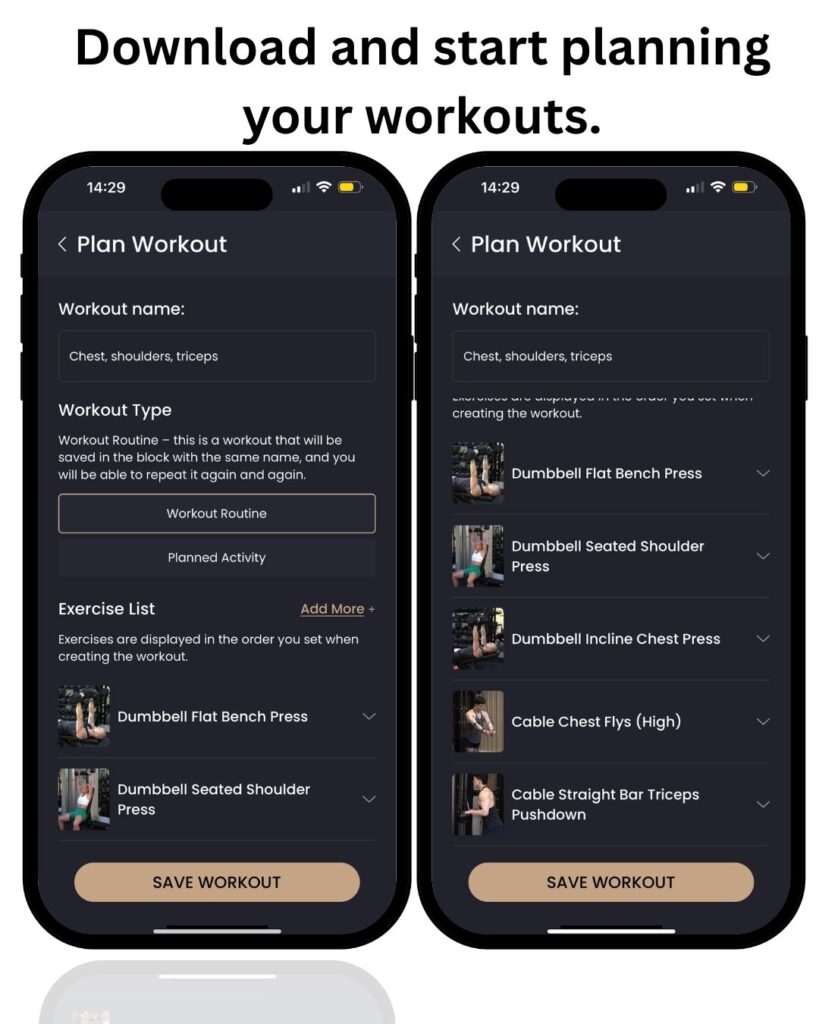
Build your workouts in the 12Reps app by navigating to “Build Your Routine.” Select all the exercises from this program and use the stopwatch to monitor your rest periods. You can save your workouts and plan ahead with friends. Download the 12Reps app for a free trial and start your strength training journey today. This workout tracker will help you with muscle building every step of the way.


References

[1] Hartford Hospital. (2025). How Much Protein Do I Need to Build Muscle? https://hartfordhospital.org/services/bone-joint-institute/news/news-detail?articleid=65418

[2] Healthline. Body Recomposition: How to Lose Fat and Gain Muscle. https://www.healthline.com/nutrition/body-recomposition

[3] Garage Gym Reviews. (2024). Tips From an RD for Macros for Fat Loss and Muscle Gain. https://www.garagegymreviews.com/macros-for-fat-loss-and-muscle-gain