Why Strength Training Helps with Weight Loss and Building Muscle

Woman tying back her hair before a workout

Strength training helps with weight loss because it helps you keep, or even build, muscle while you lose fat. Combined with eating a little less than you burn, it means you end up leaner, not just lighter.

By Will Duru, personal trainer (BSc (Hons) Sport and Exercise Science, over 12 years in fitness) and founder of 12REPS.

Weight loss vs fat loss

The scale can’t tell muscle from fat. When people diet without training, some of the weight they lose can be muscle. Strength training gives your body a reason to keep it.

What actually drives fat loss

  • A modest calorie deficit. Eating a little less than you burn, consistently.
  • Enough protein. It helps you keep muscle and feel full.
  • Strength training two to three times a week.
  • Daily movement. Walking adds up.
  • Sleep. Poor sleep makes appetite and training harder.

Why lifting helps you stick with it

  • Progress is visible: more weight, more reps, even when the scale is slow.
  • Sessions can be short and still effective.
  • Feeling stronger is motivating.

A simple weekly plan

  • 2 to 3 full-body strength sessions.
  • A daily walk.
  • One or two optional cardio sessions you enjoy.

For the full approach, read my body recomposition guide.

How 12REPS helps

  • Trainer-written programmes. Plans I’ve written as a certified personal trainer.
  • Quick Workout. Pick your time, level and equipment, and the app builds a session from the exercise library. Swap any exercise you don’t want.
  • Build your own. Tap the muscles you want on the body map, filter by equipment and choose from 1,500+ exercises. Save the routine to repeat it.
  • Two videos per exercise. A demo of the movement, and a coach tutorial on setup and technique.
  • Simple tracking. Log every set, rep and weight, see what you lifted last time, and keep your history, personal bests and weekly consistency in one place.

If you have a medical condition, speak to your GP before changing your diet or starting a new programme.

12REPS is on iOS and Android, with a 7-day free trial. Check the app for current prices.

Prefer a coach in person?

The app is built from how I coach, but nothing replaces having someone watch your technique. If you live or work in Central London, I train clients one-to-one at my private studio in Fitzrovia (W1T 3DN) or at home. Read what happens at a first session, or book a free consultation.

Why Strength Training Is the King of Longevity | The Benefits of Lifting Weights at 29

Woman tying back her hair before a workout

By Will Duru, BSc (Hons) Sport & Exercise Science Award-winning Personal Trainer with 12+ years in strength training & recovery

If you’re 29 (man or woman), now is one of the best times to start strength training seriously. Below I explain in simple terms why strength training is the “king” for longevity, how it builds muscle, and how it transforms your body, mind, confidence and productivity as you go through adulthood.

Strength training is the king of longevity

  • Observational research shows people who do strength (resistance) training have a lower risk of death, even after adjusting for cardio and other habits. 
  •  
  • One meta-analysis showed resistance exercise is tied to about a 21% reduction in all-cause mortality; when combined with aerobic activity, the benefit may go up. 
  •  
  • Another study found that just 90 minutes per week of strength training was linked to slower biological ageing by nearly 4 years. 
  •  
  • Harvard published findings that weightlifting alone was linked to a 9–22% lower risk of dying during follow-up periods. 
  • So strength work isn’t just about muscles or looks. It gives you years, better health, and resistance to disease.

    Personal trainer talking with two women in a gym
    personal trainer showing clients exercises

    Why at age 29 you should care (men or women)

    • Muscle mass and strength begin to slowly decline from around age 30 onward (if you don’t fight it).
     
    • Early intervention helps you build a higher “reserve.” When later life challenges (injury, illness, hormonal change) come, you have a buffer.
     
    • At 29, your joints, recovery ability, hormones, and metabolic systems are still in good condition. If you start now, gains come faster and adaptation is easier.
     
    • It prevents future loss of bone density, muscle, insulin sensitivity, and mobility problems.
     
    • For women, strength training helps offset hormonal changes and osteoporosis risks. 


    So the younger you begin (with good coaching/form), the more compounded benefits you’ll see over decades.

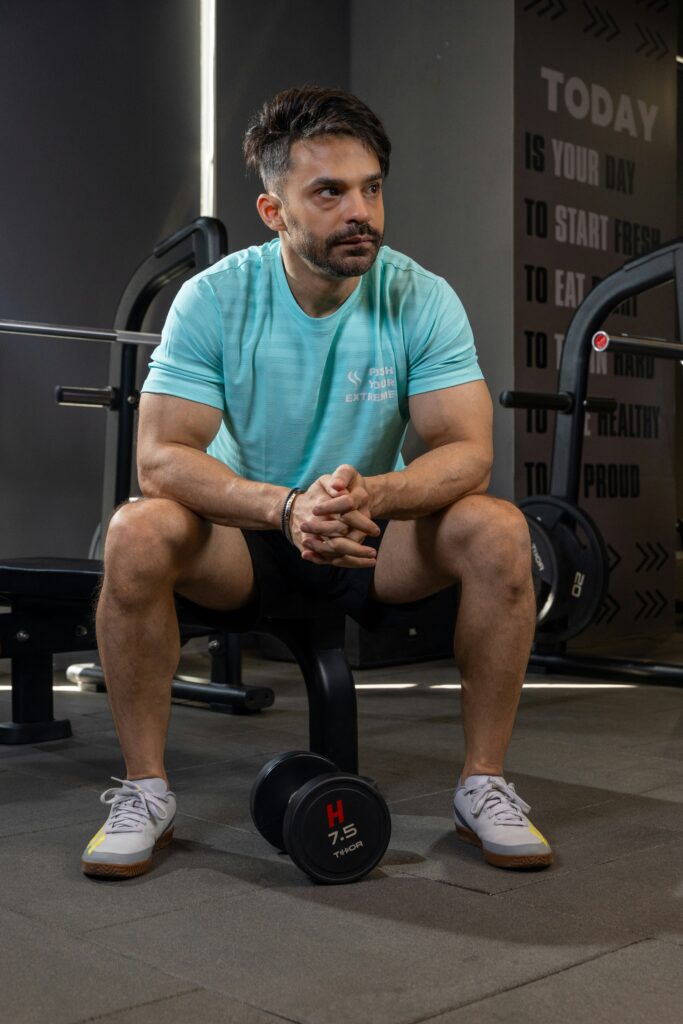
    Man sitting on a gym bench holding a dumbbell

    Strength training = building muscle (in the right way)

    • Muscle grows when you place it under stress (load or resistance) and then allow recovery.
     
    • You force adaptation: muscle fibers get micro damage, then rebuild stronger.
     
    • Proper volume, intensity, rest, nutrition matter.
     
    • Strength training also improves hormonal environment (testosterone, IGF-1 etc.), which supports growth.
     
    • Muscle is metabolically active. More muscle helps your metabolism, glucose handling, body composition.
     
    • As you gain muscle, you become more capable in daily life and sport.


    Without strength training, most adults over time lose lean mass and gain fat. The worst combo.

    Mental, confidence, productivity — the hidden gains

    Mental & mood

    • Resistance training produces endorphins and positive mood effects. 
    • Reviews show that strength training reduces anxiety and depression, boosts cognition and self-esteem.
    • Regular physical training improves sleep, lowers stress, and clears mental fog.
    • Also, the act of overcoming weights teaches grit, mental resilience.


    Confidence & self-belief

    • Each gain (lift more, progress) reinforces that “I can improve.” That mindset spills into other life areas.
    • You see changes in posture, physique, strength — that feeds confidence.
    • You carry yourself differently: you feel more capable, less fragile.


    Productivity & adulthood

    • Energy improves. You feel stronger, more energetic in daily tasks and work.
    • Better physical health means fewer sick days, fewer aches.
    • Mental clarity, discipline from training transfer into work, time management, and stress handling.
    • You become someone who executes goals, pushes limits. That attitude helps in business, relationships, and life.

    How strength training changes your life going into adulthood

    • You age more slowly. You fight disease.
    • You preserve mobility and independence in later years.
    • Your body composition stays healthier: less fat gain, more lean muscle.
    • If your mental health baseline is higher, you resist mood swings or burnout better.
    • You walk into your 30s, 40s, and 50s with strength, not decay.

    Summary & call to action

    Strength training is more than muscle. It is your insurance policy for a longer, healthier, sharper life.

    At 29, your body is primed — don’t leave gains to chance. Start a program that is smart, sustainable, and progressive.

    Physically: you build muscle, boost metabolism, and prevent decline.

    Mentally: you manage stress, mood, and resilience.

    Confidence & productivity: the mindset of strength spills into every part of your life.

    If you like, I can send you a sample beginner program (4–8 weeks) to start strength training safely. Do you want me to send it?

    Harvard Health Publishing (2022) – Strength training might lengthen life

    https://www.health.harvard.edu/staying-healthy/strength-training-might-lengthen-life

    National Library of Medicine (2023) – Resistance training and mortality risk: A systematic review and meta-analysis

    https://pmc.ncbi.nlm.nih.gov/articles/PMC10199130/

    Prevention (2024) – Strength training adds years to your life, study finds

    https://www.prevention.com/fitness/a63238499/strength-training-adds-years-to-your-life-study/

    University Hospitals (2024) – The unique benefits of strength training for women

    https://www.uhhospitals.org/blog/articles/2024/04/the-unique-benefits-of-strength-training-for-women

    Vail Health (2023) – Empowering the mind and body: The role of strength training in mental health and aging

    https://www.vailhealth.org/news/empowering-the-mind-and-body-the-role-of-strength-training-in-mental-health-aging

    National Library of Medicine (2014) – Resistance exercise training and mental health: A meta-analysis

    https://pmc.ncbi.nlm.nih.gov/articles/PMC4090891/

    Want a structured plan to follow between sessions? The 12REPS app has programmes I’ve written, with exercise demos and set-by-set tracking.

    Strength Training for Women Tunring 49 : Build Muscle and Lose fat

    12reps- strength training

    And I get it. The world often tells us that fitness is about chasing numbers or sculpting a perfect physique. But here’s the real truth, the kind that resonates deep down: your workout isn’t just about muscles or numbers. It’s about how you feel – clearer, calmer, more in control. Every rep sharpens your focus. Every session releases stress. Every week builds confidence. It’s about reclaiming a sense of self that feels powerful and unshakeable, regardless of your age. This isn’t just logic; it’s psycho-logic, understanding the profound emotional impact of feeling strong. For the 49-year-old woman, strength training isn’t just an exercise; it’s a profound act of self-care and empowerment.

    Woman doing a Pilates ring exercise in a studio

    Why Strength Training is Your Secret Weapon at 49

    Our bodies are incredible, constantly adapting and evolving. But as we journey through life, especially around our late 40s, some natural shifts occur. It’s not a decline; it’s a transformation that we can actively shape. You might notice your body feels a bit different, perhaps a little weaker than it used to be. This is often due to a natural process calledsarcopenia, the age-related loss of muscle mass and strength [1]. After the age of 35, women can lose anywhere from 3-8% of their muscle mass every decade [2]. This isn’t just about looking different; it impacts how our bodies function.

    Another significant change is the shift in hormones, particularly estrogen. Lower estrogen levels can affect everything from muscle recovery to joint health and how efficiently our bodies build and maintain lean muscle [2]. Our bones also become a concern due to a natural decrease in bone density, which can lead to conditions like osteoporosis [3]. And yes, metabolism tends to slow down, making it feel harder to manage weight.

    But here’s the empowering part: strength training is your most potent tool to not just counteract these changes, but to thrive through them. It’s like giving your body a powerful upgrade:

  • Preserving Muscle Mass: Regular strength training helps you build and maintain lean muscle, which is crucial for keeping your metabolism humming and your body feeling strong [2]. More muscle means your body burns more calories even at rest.
  •  
  • Bone Health: This is a big one. Strength training puts healthy stress on your bones, prompting them to become denser and stronger. This is incredibly effective in preventing and even reversing bone loss, protecting you from osteoporosis and osteopenia [3].
  •  
  • Hormonal Balance: While strength training won’t stop menopause, it can significantly help manage its symptoms. It aids in regulating stress hormones, which can often spike during this period, bringing a sense of calm and balance [3].
  •  
  • Metabolism Boost: By increasing your muscle mass, strength training elevates your basal metabolic rate (BMR). This means your body becomes a more efficient fat-burning machine, not just during your workout, but all day long [2].
  • 12reps- strength training

    How Strength Training Transforms Your Quality of Life

    Beyond the physical changes, strength training profoundly impacts your daily life, making every movement feel easier and more joyful. It’s about enhancing your overall well-being, both inside and out.

    Physical Empowerment:

    • Prevent Pain and Injury: Imagine chasing your grandchildren, lifting groceries, or simply moving without nagging aches. Strength training builds resilience in your joints and strengthens the muscles that support your body, significantly reducing the risk of common pains like low back pain, knee pain, and pelvic pain [2]. It improves your body’s ability to manage and control movement, making you less prone to injuries.
     
    • Improved Posture and Alignment: Spending hours at a desk or on our phones can lead to rounded shoulders and poor posture. Strength training, especially focusing on your back and core, helps pull your body into better alignment, reducing strain and making you stand taller and feel more confident [2].
     
    • Enhanced Functional Fitness: This is about real-world strength. It’s the ability to perform everyday activities with ease and independence – from carrying heavy bags to climbing stairs or simply getting up from a chair. Strength training ensures you maintain your autonomy and zest for life well into your later years [3].

    Mental and Emotional Well-being:

    • Stress Reduction & Mood Enhancement: The gym isn’t just a place for physical exertion; it’s a sanctuary for your mind. The endorphins released during exercise are powerful mood boosters, helping to manage stress, anxiety, and even symptoms of depression [3]. It’s a natural way to clear your head and find your calm.
     
    • Cognitive Function: Believe it or not, lifting weights can make you sharper! Strength training increases blood flow to the brain, supporting cognitive function and even aiding in dementia prevention [3]. It’s a workout for your brain as much as your body.
     
    • Confidence & Control: There’s an undeniable sense of accomplishment that comes with getting stronger. Each personal best, each completed set, reinforces a feeling of capability and control. This confidence spills over into all areas of your life, empowering you to tackle challenges with a renewed spirit.

    Longevity: Research consistently shows that strength training isn’t just about living better; it’s about living longer. Studies indicate that women who strength train regularly have a lower risk of death from heart disease and can even add years to their lives [1, 4]. It’s an investment in a longer,

    Woman doing a jumping exercise outdoors beside a concrete wall

    Your 6-Week Journey to a Stronger You: Will Duru’s Program

    As your personal trainer, I believe in making strength accessible and effective. This 6-week program is designed with you in mind, focusing on simple yet powerful movements that build strength without unnecessary complexity. We’ll utilise a variety of equipment – kettlebells, dumbbells, TRX, machines, and even your own bodyweight – to keep things engaging and challenging. Remember, consistency is key, and listening to your body is paramount.

    Before You Begin: The Warm-Up and Cool-Down

    Every great workout starts with preparing your body and ends with helping it recover. Don’t skip these crucial steps!

    • Warm-Up (10 minutes): Begin with light cardio to get your blood flowing. An incline walk on a treadmill or rowing at a moderate pace for 10 minutes is a perfect workout. Follow this with some dynamic mobility stretches to prepare your joints and muscles. Think “world’s greatest stretches,” cat-cow, and hamstring stretches to open up your body.
     
    • Cool-Down (10 minutes): After your workout, dedicate 10 minutes to cooling down. A gentle session on the stair master or another incline walk on the treadmill will help bring your heart rate down. Finish with static stretches, holding each for 20-30 seconds, focusing on the muscles you’ve worked.

    The Program Structure

    This program progresses over six weeks, gradually increasing in challenge. We’ll focus on a 2-day split, ensuring adequate recovery between sessions.

    • Phase 1 (Weeks 1-2): Building Foundation
      • Focus: Mastering form and building a solid base.
      • Structure: 6 exercises per workout, 4-5 sets each.
     
    • Phases 2 & 3 (Weeks 3-6): Increasing Intensity & Efficiency
      • Focus: Introducing supersets to boost intensity and reduce workout time.
      • Structure: 5 exercises per workout, performed as 4 supersets (totaling 9 exercises if you count each exercise in a superset separately). Each superset will consist of 4 working sets, preceded by 1 warm-up set (totaling 5 sets per superset).
     
    • Phase 5 Integration: Throughout the program, we will incorporate the principles of Phase 5, which emphasises weight training with single sets. This means that even as we progress, we’ll ensure some exercises are performed for a single, focused set to maximise strength gains.

    Key Elements for Every Workout:

    • Lower Body Day Focus: On your lower body days, we’ll place a special emphasis on glute exercises to build power and stability.
     
    • Finisher: To cap off your sessions, we’ll include a powerful finisher:
      • 4 core exercises, 4 sets each.
      • Followed by 30 squats/knee presses, 30 sit-ups, 30 calf raises, and 30 glute bridges. Perform these as a circuit, 4 rounds of 10 reps for each exercise.
     
    • Daily Movement: Don’t forget the power of daily movement! Incorporate 4 sets of 10 reps each of squats/knee presses, sit-ups, calf raises, and glute bridges every morning before showering or every evening before going to bed. This consistent movement will significantly enhance your results.
    12REPS app screens on two phones with the text Train with confidence

    Ready to transform how you feel, look, and live?

    Woman doing a step-up holding a dumbbell

    The 6-Week Strength Training Program: Detailed Workouts

    Here is a detailed breakdown of your 6-week strength training program, designed to be performed as a 2-day split.

    Warm-up (10 minutes before each session)

  • 5 minutes incline walk on treadmill or rowing (moderate pace)
  • 5 minutes dynamic mobility: Cat-Cow (10 reps), World’s Greatest Stretch (5 per side), Hamstring Stretch (30 seconds per leg)
  • Cool-down (10 minutes after each session)

  • 5 minutes stair master or incline walk (light pace)
  • 5 minutes static stretching: Quad Stretch (30 seconds per leg), Glute Stretch (30 seconds per side), Chest Stretch (30 seconds)
  • Workout A (e.g., Full Body Focus)

    Exercise (Equipment)

    Sets

    Reps

    Weight (Suggestion)

    Rest Period

    Goblet Squat (Kettlebell)

    4

    10-12

    Moderate

    60-90s

    Push-ups (Bodyweight)

    4

    AMRAP*

    Bodyweight

    60-90s

    Dumbbell Row (Dumbbell)

    4

    10-12

    Moderate

    60-90s

    Plank (Bodyweight)

    4

    30-45s

    Bodyweight

    60s

    Glute Bridge (Bodyweight)

    4

    12-15

    Bodyweight

    60s

    Overhead Press (Dumbbell)

    4

    10-12

    Light-Moderate

    60-90s

    Workout B (e.g., Full Body Focus)

    Exercise (Equipment)

    Sets

    Reps

    Weight (Suggestion)

    Rest Period

    Deadlift (Kettlebell/Dumbbell)

    4

    8-10

    Moderate

    90-120s

    Incline Dumbbell Press (Dumbbell)

    4

    10-12

    Moderate

    60-90s

    TRX Row (TRX)

    4

    12-15

    Bodyweight

    60-90s

    Russian Twists (Bodyweight)

    4

    15-20

    Bodyweight

    60s

    Lunges (Dumbbell)

    4

    10-12 per leg

    Light-Moderate

    60-90s

    Calf Raises (Bodyweight)

    4

    15-20

    Bodyweight

    60s

    *AMRAP: As Many Reps As Possible with good form.

    Workout A (e.g., Upper Body Focus with Supersets)

    Superset

    Exercise 1 (Equipment)

    Exercise 2 (Equipment)

    Sets

    Reps

    Weight (Suggestion)

    Rest Period

    Warm-up Set

    Dumbbell Bench Press

    TRX Face Pull

    1

    10-12

    Light

    60s

    Superset 1

    Dumbbell Bench Press (Dumbbell)

    TRX Face Pull (TRX)

    4

    10-12

    Moderate

    60-90s (after SS)

    Superset 2

    Seated Cable Row (Machine)

    Dumbbell Lateral Raise (Dumbbell)

    4

    10-12

    Moderate

    60-90s (after SS)

    Superset 3

    Bicep Curls (Dumbbell)

    Tricep Pushdowns (Machine)

    4

    10-12

    Moderate

    60-90s (after SS)

    Single Set

    Overhead Press (Dumbbell)

    –

    1

    8-10

    Challenging

    –

    Workout B (e.g., Lower Body & Core Focus with Supersets)

    Superset

    Exercise 1 (Equipment)

    Exercise 2 (Equipment)

    Sets

    Reps

    Weight (Suggestion)

    Rest Period

    Warm-up Set

    Kettlebell Deadlift

    Glute Kickbacks (Machine/Bodyweight)

    1

    8-10

    Light

    60s

    Superset 1

    Kettlebell Deadlift (Kettlebell)

    Glute Kickbacks (Machine/Bodyweight)

    4

    8-10

    Moderate

    60-90s (after SS)

    Superset 2

    Leg Press (Machine)

    Hamstring Curls (Machine)

    4

    10-12

    Moderate

    60-90s (after SS)

    Superset 3

    Calf Raises (Machine/Bodyweight)

    Ab Crunches (Bodyweight)

    4

    15-20

    Moderate

    60-90s (after SS)

    Single Set

    Goblet Squat (Kettlebell)

    –

    1

    8-10

    Challenging

    –

    Daily Finisher (Every Morning/Evening)

    Perform this circuit 4 times, with 10 reps of each exercise, with minimal rest between exercises and circuits.

  • Squats / Knee Presses (Bodyweight)
  • Sit-ups (Bodyweight)
  • Calf Raises (Bodyweight)
  • Glute Bridges (Bodyweight)
  • 12REPS app workout list and exercise video on two phones

    Conclusion

    Strength training is more than just a workout; it’s a journey of self-discovery and empowerment. For women navigating their late 40s, it offers a powerful pathway to not only physical vitality but also profound mental and emotional well-being. By embracing the principles of strength training, you’re not just building muscle; you’re building resilience, confidence, and a vibrant future. Let Will Duru be your guide on this transformative path.

    Ready to embark on your strength journey?

    References

    [1] NPR. (2024, March 11). Women who do strength training live longer. How much is…https://www.npr.org/sections/health-shots/2024/03/11/1236791784/strength-resistance-weight-training-longevity-aging-heart-disease

    [2] Moms Into Fitness. Benefits of Strength Training for Women Over 40. https://www.momsintofitness.com/why-strength-training-is-important/

    [3] OCR Endurance Factory. (2023, October 29). Benefits Of Strength Training For Women Over 40. https://ocrendurancefactory.com/benefits-of-strength-training-for-women-over-40/

    [4] Prevention. (2024, December 30). Study: Strength Training May Add Up to 4 Years to Your Life. https://www.prevention.com/fitness/a63238499/strength-training-adds-years-to-your-life-study/

    Want a structured plan to follow between sessions? The 12REPS app has programmes I’ve written, with exercise demos and set-by-set tracking.

    Science-Based Lifting for Women: A 12-Week Program for Strength & Longevity

    Woman holding a barbell in a gym
    Trainer coaching a woman lifting a barbell from the floor

    Why Science-Based Lifting for Women? It's More Than Just Muscle!

    Let’s tackle the elephant in the room first: the fear of getting “bulky.” I hear it all the time in my London gym. Many women worry that lifting weights will lead to an overly muscular physique, one they might not desire. But let me assure you, building muscle for women doesn’t happen overnight, and it certainly doesn’t happen by accident. Women naturally have much lower levels of testosterone than men, which is the primary hormone responsible for significant muscle mass growth.
     
     This means that achieving a “bulky” look requires a very specific, intense training regimen and often a highly specialised diet, far beyond what most women will experience with a balanced strength training program. What you will experience is a lean, toned, and powerful body.So, if not to get bulky, why should women embrace strength training? The reasons are profound and extend far beyond aesthetics. This is about longevity strength training – investing in your health for a long, vibrant future. It’s about building a body that supports you, not just today, but for decades to come.
     

    The Unbeatable Health Benefits of Strength Training for Women

    1.Stronger Bones, Healthier Future: As women, we are particularly susceptible to bone density loss, especially as we age and approach menopause. This can lead to conditions such as osteoporosis, which makes bones brittle and prone to fractures. The good news? Strength training is one of the most effective ways to combat this. When you lift weights, you put stress on your bones, which signals them to become denser and stronger [1]. This isn’t just about preventing falls; it’s about maintaining your independence and quality of life as you get older. Studies have shown that resistance training significantly improves bone mineral density in postmenopausal women [2].
     
     
    2.Metabolic Powerhouse: Want to boost your metabolism and manage your weight more effectively? Strength training is your secret weapon. Muscle tissue is metabolically active, meaning it burns more calories at rest than fat tissue. The more muscle you have, the more calories you burn throughout the day, even when you’re not exercising. This helps with fat loss and makes it easier to maintain a healthy body composition. Beyond weight management, strength training has a powerful impact on metabolic health, improving insulin sensitivity and helping to prevent conditions like type 2 diabetes [3]. It’s a key component of a healthy lifestyle.
     
     
    3.A Healthier Heart: When we think of heart health, cardio often comes to mind first. But did you know that strength training is equally, if not more, beneficial for your cardiovascular system? Recent research indicates that women who incorporate strength training into their routines see a significantly reduced risk of cardiovascular-related deaths – a whopping 30% reduction, compared to 11% for men [4]. This makes strength training a critical tool for a strong, healthy heart, contributing to overall longevity strength training.I am running a few minutes late; my previous meeting is running over.
     
    4.Boost Your Mood and Confidence: The physical benefits are undeniable, but the mental and emotional gains from strength training are just as impactful. There’s something incredibly empowering about lifting heavier weights, mastering a new exercise, and seeing your body become stronger. This translates into increased self-esteem, reduced stress, and a more positive body image. Many of my clients report feeling more confident, resilient, and capable in all areas of their lives, not just in the gym. It’s a powerful antidote to anxiety and a fantastic way to boost your mental well-being.
     
    5.Functional Strength for Everyday Life: Beyond the gym, the strength you build translates directly into making everyday tasks easier. Carrying groceries, playing with your kids or grandkids, lifting heavy objects, or simply moving through life with ease – these all become less taxing when you’re strong. This functional strength is a cornerstone of a high-quality, independent life.
    Woman doing a single-arm dumbbell row on a bench

    Strength Training for Runners and Other Athletes

    If you’re a runner, cyclist, or participate in any sport, strength training is not just beneficial; it’s crucial. It helps improve your performance by building stronger muscles, tendons, and ligaments, leading to greater power and endurance. More importantly, it significantly reduces your risk of injury. Stronger glutes, core, and legs mean better running form and less strain on your joints. Think of it as building a robust engine and chassis for your athletic pursuits.
     
    Woman holding a barbell in a gym

    The 12-Week Power & Longevity Program: Your Blueprint for a Stronger You

    Now for the exciting part! Here is a comprehensive 12-week program designed to build a strong, resilient, and powerful you. This program is built around the principles of progressive overload and is designed to be challenging yet accessible. Remember, consistency is your superpower. Stick with it, and you will see incredible results.

    Your Daily and Weekly Structure

    Morning Ritual (Every Day):

    Before your shower or before bed, perform this quick circuit to activate your muscles and boost your metabolism. It’s a fantastic way to start or end your day on a positive note.

    • 30 Squats/Knee Press
    • 30 Sit-ups
    • 30 Calf Raises
    • 30 Glute Bridges

    Perform this as a circuit, moving from one exercise to the next with minimal rest. Aim for 4 rounds of 10 reps for each exercise.

    Workout Structure (3-4 Days a Week):

    • Warm-up (10 minutes): Start each session with a 10-minute incline walk on the treadmill or 10 minutes of rowing. The goal is to get your heart rate up and your muscles warm.
    • Mobility Stretches: Perform these stretches after your warm-up to prepare your joints for the workout ahead.

    Stretch

    Instructions

    Duration

    World’s Greatest Stretch

    Step into a lunge, place both hands on the floor inside your front foot. Rotate your torso and reach the arm closest to your front leg to the ceiling.

    5 reps per side

    Cat-Cow

    On all fours, arch your back like a cat, then drop your belly and look up like a cow.

    10 reps

    Hamstring Stretch

    Sit on the floor with one leg extended and the other bent. Gently lean forward over your extended leg until you feel a stretch in your hamstring.

    30 seconds per side

    • Workout: Follow the specific phase you are in.
    • Core Finisher: After each workout, perform this core circuit to build a strong, stable midsection.
      • Plank: 4 sets of 30-60 seconds
      • Leg Raises: 4 sets of 15-20 reps
      • Russian Twists: 4 sets of 20 reps (10 per side)
      • Bicycle Crunches: 4 sets of 20 reps (10 per side)
    • Cool-down (10 minutes): Finish your session with 10 minutes on the Stairmaster or a gentle incline walk on the treadmill. This helps your body gradually return to a state of rest.
    Woman doing a step-up holding a dumbbell

    Phase 1: Foundation & Adaptation (Weeks 1-4)

    Focus on full-body workouts 2-3 times a week on non-consecutive days. The goal here is to build a solid foundation and allow your body to adapt to the new demands.

    Full Body Workout

    Exercise

    Sets

    Reps

    Weight

    Rest Period

    Goblet Squats (DB)

    4

    10-12

    Challenging

    60 seconds

    Dumbbell Bench Press

    4

    10-12

    Challenging

    60 seconds

    Bent-Over Rows (DB)

    4

    10-12

    Challenging

    60 seconds

    Leg Press (Machine)

    4

    10-12

    Challenging

    60 seconds

    TRX Rows

    4

    10-12

    Bodyweight

    60 seconds

    Kettlebell Swings

    4

    15-20

    Moderate

    60 seconds

    Phase 2: Building Strength (Weeks 5-8)

    In this phase, we’ll move to an upper/lower body split. You’ll perform each workout twice a week (e.g., Upper, Lower, Rest, Upper, Lower, Rest, Rest). We’ll also introduce supersets to increase the intensity.

    Upper Body Workout

    Exercise

    Sets

    Reps

    Weight

    Rest Period

    Warm-up Set: Incline DB Press

    1

    15

    Light

    30 seconds

    Superset 1:

    A1: Incline Dumbbell Press

    4

    8-10

    Challenging

    60 seconds

    A2: Seated Cable Row

    4

    10-12

    Challenging

    60 seconds

    Superset 2:

    B1: Lat Pulldown (Machine)

    4

    10-12

    Challenging

    60 seconds

    B2: Dumbbell Shoulder Press

    4

    10-12

    Challenging

    60 seconds

    Single Set:

    C1: Barbell Bicep Curls

    1

    6-8

    Heavy

    90 seconds

    Lower Body Workout

    Exercise

    Sets

    Reps

    Weight

    Rest Period

    Warm-up Set: Goblet Squats (DB)

    1

    15

    Light

    30 seconds

    Superset 1:

    A1: Barbell Hip Thrusts

    4

    8-10

    Challenging

    60 seconds

    A2: Romanian Deadlifts (DB)

    4

    10-12

    Challenging

    60 seconds

    Superset 2:

    B1: Leg Press (Machine)

    4

    10-12

    Challenging

    60 seconds

    B2: Hamstring Curls (Machine)

    4

    10-12

    Challenging

    60 seconds

    Single Set:

    C1: Bulgarian Split Squats (DB)

    1

    6-8

    Heavy

    90 seconds

    Woman doing a dumbbell exercise on a bench in a gym

    Phase 3: Advanced Strength & Power (Weeks 9-12)

    We’ll continue with the upper/lower split, but with more challenging exercises and rep ranges to maximise your strength and power gains.

    Upper Body Workout

    Exercise

    Sets

    Reps

    Weight

    Rest Period

    Warm-up Set: Push-ups

    1

    15

    Bodyweight

    30 seconds

    Superset 1:


    A1: Dumbbell Bench Press

    4

    6-8

    Heavy

    90 seconds

    A2: Pull-ups (assisted if needed)

    4

    As many as possible

    Bodyweight

    90 seconds

    Superset 2:


    B1: T-Bar Row

    4

    8-10

    Challenging

    60 seconds

    B2: Arnold Press (DB)

    4

    10-12

    Challenging

    60 seconds

    Single Set:


    C1: Overhead Tricep Extensions (DB)

    1

    8-10

    Challenging

    60 seconds

    Lower Body Workout

    Exercise

    Sets

    Reps

    Weight

    Rest Period

    Warm-up Set: Bodyweight Squats

    1

    20

    Bodyweight

    30 seconds

    Superset 1:


    A1: Barbell Squats

    4

    6-8

    Heavy

    90 seconds

    A2: Kettlebell Swings

    4

    15-20

    Moderate

    60 seconds

    Superset 2:


    B1: Walking Lunges (DB)

    4

    10-12 per leg

    Challenging

    60 seconds

    B2: Glute-Ham Raises

    4

    10-12

    Bodyweight

    60 seconds

    Single Set:


    C1: Calf Raises (Machine)

    1

    15-20

    Heavy

    60 seconds

    Studio portrait of a woman holding a dumbbell

    Phase 3: Advanced Strength & Power (Weeks 9-12)

    We’ll continue with the upper/lower split, but with more challenging exercises and rep ranges to maximise your strength and power gains.

    Upper Body Workout

    Exercise

    Sets

    Reps

    Weight

    Rest Period

    Warm-up Set: Push-ups

    1

    15

    Bodyweight

    30 seconds

    Superset 1:

    A1: Dumbbell Bench Press

    4

    6-8

    Heavy

    90 seconds

    A2: Pull-ups (assisted if needed)

    4

    As many as possible

    Bodyweight

    90 seconds

    Superset 2:

    B1: T-Bar Row

    4

    8-10

    Challenging

    60 seconds

    B2: Arnold Press (DB)

    4

    10-12

    Challenging

    60 seconds

    Single Set:

    C1: Overhead Tricep Extensions (DB)

    1

    8-10

    Challenging

    60 seconds

    Lower Body Workout

    Exercise

    Sets

    Reps

    Weight

    Rest Period

    Warm-up Set: Bodyweight Squats

    1

    20

    Bodyweight

    30 seconds

    Superset 1:

    A1: Barbell Squats

    4

    6-8

    Heavy

    90 seconds

    A2: Kettlebell Swings

    4

    15-20

    Moderate

    60 seconds

    Superset 2:

    B1: Walking Lunges (DB)

    4

    10-12 per leg

    Challenging

    60 seconds

    B2: Glute-Ham Raises

    4

    10-12

    Bodyweight

    60 seconds

    Single Set:

    C1: Calf Raises (Machine)

    1

    15-20

    Heavy

    60 seconds

    Your Digital Coach

    Ready to take your training to the next level?

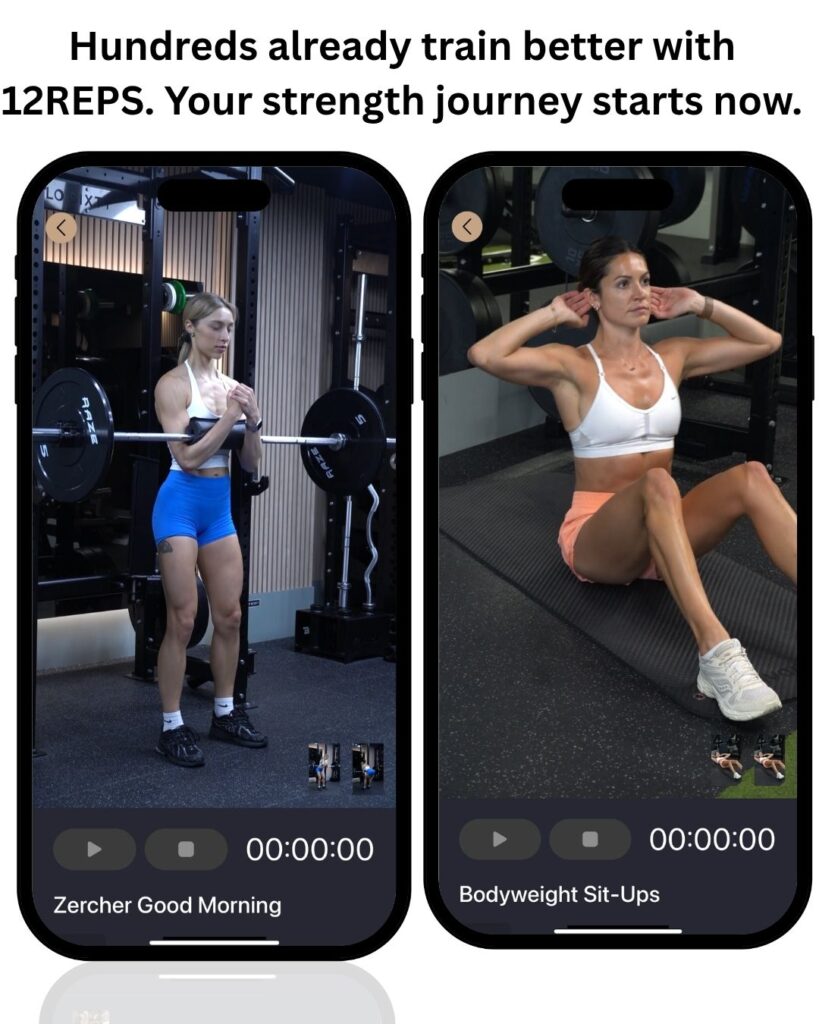
    12REPS app exercise video screens with the text Hundreds already train better with 12REPS

    Conclusion: Your Journey to a Stronger You Starts Now

    There you have it – a science-backed, actionable plan to unlock your strength, transform your body, and invest in your long-term health. Remember, building muscle for women is not about vanity; it’s about empowerment, resilience, and living a fuller, more vibrant life. The journey of a thousand miles begins with a single step, and your first step is simply taking the first step.

    I’m Will Duru, and I’m incredibly excited for you to embark on this journey. Be consistent, be patient, and celebrate every small victory along the way. You are capable of so much more than you think.

    Don’t wait another day to start building the strong, powerful body you deserve.

    References

  • Hong, A. R., & Kim, S. W. (2018). Effects of Resistance Exercise on Bone Health. Endocrinology and Metabolism, 33(4), 435–444. https://www.ncbi.nlm.nih.gov/pmc/articles/PMC6279907/
  • Zhao, F., Li, P., Zhang, D., & Wang, L. (2025). Optimal resistance training parameters for improving bone mineral density in postmenopausal women: A systematic review and network meta-analysis. Bone, 180, 117094. https://www.ncbi.nlm.nih.gov/pmc/articles/PMC12107943/
  • Sundell, J. (2011). Resistance Training is an Effective Tool against Metabolic and Inflammatory Abnormalities in Obese Children. Journal of Obesity, 2011, 1–7. https://www.ncbi.nlm.nih.gov/pmc/articles/PMC3168930/
  • Ji, H., & Nocon, M. (2024). Women may realize health benefits of regular exercise more than men. National Heart, Lung, and Blood Institute. https://www.nhlbi.nih.gov/news/2024/women-may-realize-health-benefits-regular-exercise-more-men
  • Want a structured plan to follow between sessions? The 12REPS app has programmes I’ve written, with exercise demos and set-by-set tracking.

    12REPS app exercise video screens with the text Train with confidence

    Strength Training in Your 30s and 40s: Why It Matters and How to Start

    Man sitting on a bench in a gym, smiling

    By Will Duru, BSc (Hons) Sport and Exercise Science

    In your 30s and 40s, life gets busy. Work, family and long days make it easy to let training slip. But this is when strength training starts to matter most.

    Adults tend to lose muscle gradually from their 30s onwards, often estimated at 3 to 5% per decade if they don’t train (Harvard Health). Less muscle means less strength and makes it harder to stay lean.

    The good news is that you can build muscle and strength at any age. With a sensible plan, many people feel stronger in their 30s and 40s than they did in their 20s.

    In over 12 years as a personal trainer, I’ve seen plenty of people start lifting in this decade and make steady progress with guided strength training.

    Man sitting on a bench in a gym, smiling

    Why Strength Training Matters

    Strength training means lifting weights or using resistance to challenge your muscles. It’s one of the most useful things you can do for your health.

    • Keeps your muscle. It helps offset the muscle you’d otherwise lose with age (Mayo Clinic).
    • Supports your bones. Loading your bones helps maintain bone density.
    • Better balance. Stronger legs and core help you stay steady.
    • Helps manage weight. Muscle supports a healthy body composition alongside sensible eating.
    • Mood and energy. Regular training is linked with better energy and sleep.

    That’s why strength training is the base of every programme I write.

    Personal trainer talking with two women in a gym

    Why Work with a Personal Trainer

    You could train on your own, but most people don’t stick with it or do the exercises properly. A trainer changes that.

    • Keeps you accountable. If someone is waiting for you at the gym, you show up. It’s that simple (Healthline).
    • Teaches you good form. Bad form leads to injuries. Trainers make sure you move safely. Harvard Health suggests that a trainer will design a safe program to keep you injury-free (Harvard Health).
    • Personal plan. Every body is different. A trainer develops a personalised plan that aligns with your goals, injuries, and lifestyle.
    • Pushes you further. Left alone, you stop early. A trainer knows when you can do more.
    • Keeps workouts fresh. You won’t get bored doing the same thing.


    For many, this is the game-changer. You don’t just train harder; you train smarter.

    Trainer coaching a woman lifting a barbell from the floor

    Common Questions About Training in Your 30s and 40s

    • Is it too late to start?

    No. People gain strength from lifting well into their 70s (Harvard Health). Starting in your 30s or 40s gives you a head start.

    • Why strength train if I just want to lose weight?

    Cardio burns calories while you do it. Strength training helps you keep muscle while you lose fat, so you end up leaner rather than just lighter.

    • Won’t lifting make me bulky?

    Very unlikely. Building a lot of muscle takes years of hard training and eating a lot. Most people get a leaner, stronger shape.

    • Can I train without a gym?

    Yes. Bodyweight exercises, bands and dumbbells at home still count.

    • What if I get injured?

    Good technique and sensible progression lower the risk. If you have an existing injury or health condition, check with your GP or physio before you start.

    Man standing on a waterfront with city skyscrapers behind him

    Where we train

    I coach one-to-one at my private studio in Fitzrovia (W1T 3DN). I can also come to your home if you have the equipment or a private gym, and we can run sessions online when you travel, as long as your hotel has a gym.

    Sessions come in two packs: 10 sessions for £1,900 (£190 each) or 50 sessions for £8,500 (£170 each). Sign up for a package and you also get a year’s free access to the 12REPS app, so you can log your workouts between sessions.

    If you’d rather train on your own, the 12REPS app has programmes I’ve written, with exercise demos and workout tracking.

    12REPS app exercise video screens with the text Create your routine, track your progress, see real results

    My final word

    If you’re in your 30s or 40s, this is a good time to start. Strength training helps you build muscle, support your bones and keep your energy up for the years ahead.

    Book a free consultation to talk through your goals and your week.

    Home Workout Plan for Plus-Size Beginners: Build Confidence and Strength

    Cyclist riding on a country road

    By Will Duru, BSc (Hons) Sport and Exercise Science, Award-winning Personal Trainer

    Your Fitness Journey Starts at Home: A Personal Trainer’s Promise

    In my decade of working as a personal trainer in the City of London, I’ve had the privilege of helping hundreds of people transform their lives through fitness. Some of my most rewarding experiences have been working with plus-size beginners who thought fitness wasn’t for them. Let me tell you something I tell every client: fitness is for everybody, and your journey starts exactly where you are right now.

    I’ve seen the fear in clients’ eyes when they first walk into a gym. The self-doubt, the worry about judgment, the feeling that they don’t belong. That’s why I’ve developed this comprehensive home workout plan specifically for plus-size beginners. You don’t need a gym membership, fancy equipment, or perfect form to start building strength and confidence.

    This guide contains everything I’ve learned from training people of all sizes and fitness levels.

    Cyclist riding on a country road

    Why I Always Start Plus-Size Clients with Strength Training

    After ten years in this industry, I can tell you with absolute certainty that strength training is the best place for plus-size beginners to start their fitness journey. Here’s why I recommend it to every client, regardless of their size.

    The Science Behind My Approach

    As someone with a BSc in Sport and Exercise Science, I understand what happens in your body when you strength train. Your muscles don’t just get stronger during the workout – they continue burning calories for up to 24 hours afterwards. This is called excess post-exercise oxygen consumption (EPOC), and it’s why I prioritise strength training over endless cardio.

    I’ve watched clients transform their metabolism through consistent strength training. Every pound of muscle you build burns an additional 6-10 calories per day just to maintain itself. Over time, this adds up to significant changes in your body composition and energy levels.

    But the benefits go beyond the physical. In my experience, strength training builds mental resilience like nothing else. When a client deadlifts their bodyweight for the first time, or completes their first proper push-up, the confidence boost is immediate and lasting.

    Breaking Through the Mental Barriers I See Every Day

    I’ve worked with clients who believed they needed to lose weight before they could start exercising. This backwards thinking keeps people stuck, and I make it my mission to change this mindset from the very beginning.

    One of my clients, Nani, came to me convinced she was “too heavy” to exercise. She’d tried gym memberships before but felt intimidated and out of place. We started with home workouts using the exact plan I’m sharing with you. Six months later, she was deadlifting 80kg and had the confidence to join group fitness classes.

    The truth I share with every client is this: exercise isn’t punishment for your body – it’s a celebration of what your body can do. Every workout is an investment in your future self, regardless of the number on the scale.

    Why Home Workouts Work So Well for My Plus-Size Clients

    Over the years, I’ve noticed that my plus-size clients often make faster progress when they start at home. There’s something powerful about building strength in a safe, judgment-free environment. You can focus entirely on the movement, listen to your body, and build confidence without external pressure.

    I’ve designed this program using the same principles I use with my in-person clients. The exercises are scalable, safe, and effective. Most importantly, they work with your body, not against it.

    Black and white photo of a woman standing outdoors

    My Proven Home Workout System for Plus-Size Beginners

    These are the exact exercises I use with my plus-size clients when we start their fitness journey. I’ve chosen each movement for its effectiveness, safety, and ability to be modified as you get stronger.

    Foundation Movements I Teach Every Client

    Chair-Assisted Squats: This is where I start every client. Sit in a sturdy chair, then stand up without using your hands. If that’s too challenging initially, use your hands for assistance. I tell my clients this movement mimics getting out of bed, off the toilet, or out of a car – it’s functional strength that improves daily life immediately.

    Wall Push-Ups: Stand arm’s length from a wall and push against it. I love this exercise because it progressively builds upper-body strength. As you get stronger, you can step further from the wall to increase difficulty. Eventually, you’ll progress to incline push-ups, then knee push-ups, then full push-ups.

    Supported Planks: Start on your knees and forearms. I have clients hold this for just 10 seconds initially. The key is perfect form, not duration. As your core gets stronger, we gradually increase the hold time.

    Standing Marching: Hold onto a chair for balance and lift your knees alternately. This gentle cardio exercise safely raises your heart rate while improving balance and coordination.

    The Progression System I Use with All My Clients

    What makes my approach different is the systematic progression. I never throw clients into the deep end. We start with movements you can definitely complete, then gradually increase difficulty.

    Week 1-2: Master the basic movements with perfect form Week 3-4: Increase repetitions or hold times Week 5-6: Add slight variations or combine movements Week 7-8: Introduce more challenging versions

    This progression system works because it builds confidence alongside strength. Every week, you’ll feel more capable than the week before.

    Low-Impact Cardio Options That Actually Work

    I’m not a fan of punishing cardio sessions, especially for beginners. Instead, I focus on sustainable activities that you can do consistently.

    Walking Programs: I start clients with 5-10 minutes of walking, either outdoors or around the house. We gradually build to 20-30 minutes. Walking is underrated – it’s one of the best fat-burning exercises available.

    Chair-Based Cardio: For clients with mobility concerns, I design seated cardio routines. Arm movements like boxing motions or overhead reaches, combined with gentle leg movements, create an effective full-body workout.

    Dancing: I always tell clients to put on their favorite music and move however feels good. Dancing is cardio that doesn’t feel like exercise, and consistency is more important than intensity.

    Studio photo of a woman holding a kettlebell

    How I Structure Home Workout Plans for Maximum Success

    After training hundreds of people, I’ve learned that structure is everything. Having a clear plan removes guesswork and helps build the exercise habit gradually.

    My First Month Protocol

    This is the exact schedule I give to plus-size beginners:

    Week 1-2: Foundation Building – 3 days per week, 15-20 minutes per session – Focus on learning proper form – Rest days for recovery and gentle stretching – Goal: Build the habit and confidence

    Week 3-4: Gentle Progression – 3-4 days per week, 20-25 minutes per session – Add more repetitions or hold positions longer – Include one day of gentle cardio – Goal: Increase exercise tolerance

    I always tell clients that consistency beats intensity. It’s better to do 15 minutes every other day than to attempt hour-long sessions and burn out.

    The Warm-Up and Cool-Down Protocol I Never Skip

    In my experience, injuries happen when people skip warm-ups. I make this non-negotiable for all my clients.

    My 5-Minute Warm-Up: – Gentle arm circles and leg swings – Marching in place for 1-2 minutes – Light stretching of major muscle groups – Deep breathing to prepare mentally

    My 5-Minute Cool-Down: – Gentle stretching while muscles are warm – Deep breathing to lower heart rate – Positive self-talk about what you accomplished – Hydration and rest

    How I Track Progress with Plus-Size Clients

    The scale can be discouraging, especially in the beginning. That’s why I teach my clients to track progress in multiple ways:

    Functional Improvements I Look For: – Climbing stairs without getting winded – Carrying groceries with ease – Playing with children or pets longer – Better sleep quality and energy levels

    Exercise Progression Markers: – Number of repetitions completed – Duration of cardio exercises – How exercises feel (easier over time) – Recovery time between exercises

    Mental Health Benefits I Always See: – Improved mood and confidence – Better stress management – Sense of accomplishment – Increased motivation in other life areas

    My Approach to Nutrition for Plus-Size Beginners

    As a personal trainer, I’m not a nutritionist, but I’ve learned what works for my clients over the years. My approach is simple: focus on nourishment, not restriction.

    The Eating Guidelines I Share with Every Client

    Fuel Your Workouts: I tell clients to eat regular meals to support their training. Skipping meals slows your metabolism and makes workouts harder.

    Protein at Every Meal: This helps with muscle recovery and keeps you feeling full. I recommend 20-30 grams per meal – think eggs, chicken, fish, or beans.

    Stay Hydrated: Dehydration makes everything harder. I have clients drink water before, during, and after workouts.

    Listen to Your Body: Eat when you’re hungry, stop when you’re satisfied. This sounds simple, but it’s revolutionary for many clients.

    Pre and Post-Workout Nutrition Tips

    Before Exercise: If you’re hungry, have a light snack 30-60 minutes before working out. A piece of fruit or a small handful of nuts works well.

    After Exercise: Within 2 hours of strength training, have some protein and carbs. This helps your muscles recover and grow stronger.

    The key is not to overcomplicate it. Focus on whole foods when possible, but don’t stress about perfection.

    Exercise Modifications : This is crucial for plus-size beginners. Every exercise includes easier and harder versions, allowing for proper progression. Can’t do a regular push-up?

    Video Demonstrations : Clear instruction is everything.

    How I Recommend Getting Started

    Start with the beginner routines and trust the process.

    Safety Guidelines I Never Compromise On

    In ten years of training, I’ve learned that safety must always come first. Here are the non-negotiable safety guidelines I share with every plus-size client.

    Understanding Your Body’s Signals

    I teach all my clients to distinguish between normal exercise sensations and warning signs:

    Normal Exercise Sensations: – Mild muscle fatigue during exercise – Light breathlessness that recovers within minutes – Mild muscle soreness 24-48 hours later – Feeling energised after workouts

    Warning Signs to Stop Immediately: – Sharp, sudden pain – Dizziness or lightheadedness – Chest pain or pressure – Extreme breathlessness that doesn’t improve with rest

    When in doubt, stop and rest. It’s better to be cautious than injured.

    Exercise Modifications I Use for Different Needs

    For Joint Concerns: I always provide chair-supported versions of standing exercises. Use chairs for support, choose low-impact over high-impact movements, and modify range of motion as needed.

    For Balance Issues: Keep one hand on a wall or chair for support during standing exercises. There’s no shame in using assistance – it’s smart training.

    For Limited Mobility: Focus on upper body movements while seated, or lower body movements while holding onto something stable. Every movement counts.

    Building Exercise Tolerance Safely

    I start every client with shorter workouts and gradually increase duration. It’s better to exercise for 10 minutes consistently than to attempt 45 minutes and burn out.

    Your body will adapt quickly to regular movement. What feels challenging in week one will feel much easier by week four. Trust the process and be patient with yourself.

    Features That Match My Training Style

    Exercise Modifications : This is crucial for plus-size beginners. Every exercise includes easier and harder versions, allowing for proper progression. Can’t do a regular push-up?

    Video Demonstrations : Clear instruction is everything.

    How I Recommend Getting Started

    Start with the beginner routines and trust the process.

    Safety Guidelines I Never Compromise On

    In ten years of training, I’ve learned that safety must always come first. Here are the non-negotiable safety guidelines I share with every plus-size client.

    Understanding Your Body’s Signals

    I teach all my clients to distinguish between normal exercise sensations and warning signs:

    Normal Exercise Sensations: – Mild muscle fatigue during exercise – Light breathlessness that recovers within minutes – Mild muscle soreness 24-48 hours later – Feeling energised after workouts

    Warning Signs to Stop Immediately: – Sharp, sudden pain – Dizziness or lightheadedness – Chest pain or pressure – Extreme breathlessness that doesn’t improve with rest

    When in doubt, stop and rest. It’s better to be cautious than injured.

    Exercise Modifications I Use for Different Needs

    For Joint Concerns: I always provide chair-supported versions of standing exercises. Use chairs for support, choose low-impact over high-impact movements, and modify range of motion as needed.

    For Balance Issues: Keep one hand on a wall or chair for support during standing exercises. There’s no shame in using assistance – it’s smart training.

    For Limited Mobility: Focus on upper body movements while seated, or lower body movements while holding onto something stable. Every movement counts.

    Building Exercise Tolerance Safely

    I start every client with shorter workouts and gradually increase duration. It’s better to exercise for 10 minutes consistently than to attempt 45 minutes and burn out.

    Your body will adapt quickly to regular movement. What feels challenging in week one will feel much easier by week four. Trust the process and be patient with yourself.

    Real Client Success Stories That Inspire Me Every Day

    Let me share some stories from my years of training plus-size beginners. These aren’t exceptional people – they’re regular individuals who decided to start where they were.

    Maria’s Transformation: Maria came to me at 38, convinced she was too heavy to exercise safely. We began with 10-minute home workouts that included chair-assisted squats and wall push-ups. She was terrified of gyms and had convinced herself that fitness wasn’t for people like her.

    Six months later, Maria was doing 30-minute workouts and had built incredible strength. But more importantly, she’d gained unshakeable confidence. She told me, “The physical changes are great, but the mental transformation is life-changing. I feel capable of anything now.”

    David’s Journey: David, 45, had severe gym anxiety after a bad experience years earlier. We worked exclusively with home workouts for eight months. He learned proper form, built strength, and most importantly, rediscovered his love of movement.

    Eventually, David felt confident enough to join group fitness classes. He recently sent me a photo from his first 5K race. It all started with those first home workouts and the belief that he was worth investing in.

    Janet’s Breakthrough: Janet was 52 when she started training with me. She’d been told by a previous trainer that she needed to lose weight before she could do “real” exercise. This backwards thinking had kept her stuck for years.

    We started with gentle movements and focused on how exercise made her feel rather than how it made her look. Within three months, Janet was deadlifting with proper form and had more energy than she’d had in decades. She’s now one of my most consistent clients and an inspiration to everyone around her.

    Five 12REPS app screens side by side

    Your Transformation Journey Begins Today

    After ten years of helping people transform their lives through fitness, I can tell you with absolute certainty that you have everything you need to succeed. Your size doesn’t determine your potential – your commitment does.

    I’ve seen incredible transformations from people who started exactly where you are right now. They weren’t special or gifted – they were regular people who decided to invest in themselves and trust the process.

    The program I’ve shared with you contains the same principles I use with my most successful clients. The exercises are proven, the progression is systematic, and the approach is sustainable. Most importantly, it’s designed to build confidence alongside strength.

    Remember what I tell every client on their first day: you don’t need to be perfect, and you don’t need to transform overnight. You just need to start where you are and commit to showing up for yourself consistently.

    Your body is capable of amazing things, regardless of its current size. Every workout is an investment in your health, strength, and confidence. Every day you choose to move is a day you choose to honor your body and your future.

    Want a structured plan to follow between sessions? The 12REPS app has programmes I’ve written, with exercise demos and set-by-set tracking.

    Strength Training for 50-Year-Old Women: A Simple Guide

    Woman doing a press-up holding dumbbells on a gym floor

    By Will Duru, BSc (Hons) Sport and Exercise Science, Award-winning Personal Trainer

    Age is Just a Number: Ten Years of Helping Women Get Strong

    For over ten years, I’ve worked as a personal trainer in the City of London. In that time, I’ve seen something amazing happen. Women are changing how they think about fitness. They’re not just trying to get smaller anymore. They want to get stronger, more able, and more powerful. And the best way to do this? Strength training.

    I’ve helped many women get in shape through strength training. We’ve set all kinds of goals together. Some wanted to squat their own body weight for the first time. Others wanted to do their first proper press-up. We’ve worked on deadlifting their body weight, pushing their weight on the sledge, and building the strength to run a 10k, half-marathon, and even a full marathon. I have seen women do it all. The secret behind every success? Building strength.

    I always tell my clients that age is just a number in the gym. When you are strong and fit, you can challenge yourself and push your limits. You can do things you never thought possible. This isn’t just nice words – it’s something I see every day. Take my client, Markia. When she first came to me, her goals were small. But as she got stronger, her confidence grew. We worked towards a big goal: deadlifting 1.7 times her own body weight. The day she lifted 100kg from the floor for one rep, her face lit up with pure joy. She told me the feeling was amazing. In that moment, she wasn’t just a woman in her 50s. She was as strong as the young men and women in the gym.

    This is what strength training can do. It’s not just about bigger muscles. It’s about a bigger life. It’s about feeling confident, taking on new challenges, and living your best life, no matter how old you are.

    Studio photo of a woman holding a kettlebell

    Why Strength Training Matters in Your 50s

    As we get older, our bodies change. One big change is that we lose muscle and strength. This is called sarcopenia. Research shows that muscle and strength peak around age 30 to 35. After that, they slowly get weaker. This gets faster after age 65 for women. This affects how we move, our balance, and how we feel [1]. But here’s the good news: this doesn’t have to happen. Strength training can stop and even reverse these changes.

    A 2023 study looked at women in their 40s and 50s, both before and after menopause. The study found that 20 weeks of weight training were safe and effective for all women. It made them stronger. While women after menopause might need to train more to build muscle, the message is clear: strength training works at any age [2].

    Why Lift at 50? The Big Benefits

    Build and Keep Muscle to Stay Strong for Daily Life. Every day, you need to carry bags, climb stairs, play with kids, and stay independent. Strength training makes sure you keep the muscles you need for all these things.

    Support Bone Health and Reduce Fall Risk. Weight training tells your bones to stay strong. This is particularly important for women after menopause, when bones can become weak rapidly. Strong muscles and bones mean fewer falls and breaks.

    Better Joints and Posture Strong muscles support your joints and help you stand tall. This means less pain and better movement.

    More Energy, Better Sleep, and Happier Mood I think this matters most day to day. Regular strength training helps you sleep better, gives you more energy, and makes you feel happier. When you feel strong, it shows in everything you do.

    Smiling woman in sunglasses wearing pink workout clothes

    Is Strength Training Safe at 50?

    Yes! When done correctly, strength training is a very safe activity. Here’s how to stay safe:

    Use Good Form and Go Slow Good technique is more important than heavy weights. Perfect form with light weights is always better than bad form with heavy weights. Every rep is a chance to get better at the movement.

    Start Light and Add Weight Slowly. Begin with weights that feel easy. Only add more weight when your current reps feel steady and don’t hurt. Your body will get stronger quickly when you give it the right challenge and enough rest.

    Always Warm Up: Spend 5-8 minutes warming up before each workout. Move the joints you’ll be training. Get your heart rate up slowly. This simple step cuts injury risk and helps you perform better.

    Smart Training for Women Over 50

    Training through menopause needs a smart approach. Here’s what works best:

    Eat Protein at Most Meals. Protein becomes more important as we age. Try to get 25-35 grams of good protein at each meal. Think eggs at breakfast, chicken or fish at lunch, and beans or lean meat at dinner. Steady protein throughout the day gives your muscles what they need to repair and grow.

    Think About Creatine: Creatine can help with strength and recovery. Taking 3-5 grams daily has been shown to improve power and reduce tiredness. It’s one of the most studied supplements and is very safe.

    Focus on Sleep and Stress Recovery happens when you’re not in the gym. Good sleep is when the real magic happens. Aim for 7-9 hours of good sleep each night. Find ways to manage stress like walking, reading, or doing things you enjoy. Too much stress can hurt both muscle building and fat loss.

    How to Plan Your Strength Training

    From my experience training beginners, I suggest starting with bodyweight exercises, resistance bands, and mobility work. Why? These help you build basic strength while learning how your body moves and what muscle work feels like. This knowledge is the base for all future training success.

    Here’s your 6-week program to get started.

    Woman doing a press-up holding dumbbells on a gym floor

    How to Plan Your Strength Training

    Based on my experience training beginners, I recommend starting with bodyweight exercises, resistance bands, and mobility exercises. Why? These help you build basic strength while learning how your body moves and what muscle work feels like. This knowledge is the basis for all future training success.

    Here’s your 6-week program to get started.

    What to Train: The Basic Movements

    Squat Pattern: Learn to sit and stand from a chair, then move to squats. This helps with stairs, getting up from chairs, and maintaining leg strength.

    Hip Hinge Pattern Start with basic hip hinges, then try deadlifts with light weights. This protects your back and makes your backside stronger.

    Push Movements Begin with wall push-ups, then work up to knee push-ups and regular push-ups. These build upper body strength for pushing things.

    Pull Movements Focus on rowing exercises to strengthen your back and improve posture. These help fight the forward head position from looking at screens.

    Carry Exercises: Farmer carries improve grip strength and core stability. They’re like carrying shopping or luggage.

    Balance Training: Standing on one leg and walking heel-to-toe improves balance and reduces fall risk.

    Workout 1: Lower Body and Core Focus

    Exercise

    Sets

    Reps

    Rest

    Bodyweight Squats

    4

    12-15

    45 seconds

    Mini Loop Band Crab Walk

    4

    30 seconds

    45 seconds

    Bodyweight Reverse Lunges

    4

    10 each leg

    45 seconds

    Bodyweight Glute Bridge

    4

    15

    45 seconds

    Plank/Knee Plank

    3

    30 seconds hold

    45 seconds

    Finisher (to get your heart rate up): – 10 Bodyweight Squats – 10 Reverse Lunges (each leg) – 30 seconds Jogging on the spot

    Do 3 rounds with 30 seconds rest after each round

    Workout 2: Upper Body and Core Focus

    Exercise

    Sets

    Reps

    Rest

    Resistance Band Bicep Curl

    4

    12

    45 seconds

    Loop Band Bent Over Row

    4

    12

    45 seconds

    Knee Press-ups

    3

    12

    45 seconds

    Loop Band Chest Press

    4

    15

    45 seconds

    Bodyweight Walking Lunges

    4

    8 each leg

    45 seconds

    Plank/Knee Plank

    3

    30 seconds hold

    45 seconds

    How to Progress Through the Program

    Week 1-2: Learning Phase Focus only on doing the exercises right. If something feels too hard, make it easier. Do squats to a chair or wall push-ups instead of knee push-ups. The goal is to learn the movements and feel confident.

    Week 3-4: Getting Better Phase Start to challenge yourself a bit more. If you can do all the reps with perfect form, try adding 2-3 more reps to each set or hold positions for 5-10 seconds longer.

    Week 5-6: Getting Stronger Phase This is where you’ll really feel strong. You might go from knee push-ups to full push-ups, or from bodyweight squats to holding a light weight. Listen to your body and progress at a pace that feels challenging but doable.

    The Mental Change: From “I Can’t” to “I Can”

    One of the biggest changes I see in my clients isn’t physical – it’s mental. When you start strength training in your 50s, you’re not just building muscle. You’re breaking down old beliefs about what you can do. Every weight lifted, every rep done, every personal best is proof that you are stronger than you thought.

    The gym becomes a place to learn about yourself. The discipline you build in training helps in other parts of your life. The confidence you get from lifting weights shows up in work, social situations, and relationships. The toughness you develop pushing through hard workouts prepares you for life’s challenges.

    This is why I love strength training for women over 50. It’s not just about the physical benefits – though they are huge and life-changing. It’s about taking back your power, changing what you think is possible, and refusing to believe that your best years are behind you. Your 50s can be the start of your strongest, most confident decade yet.

    Remember, every expert was once a beginner. Every strong woman was once weak. Every confident person was once full of doubt. The only difference between where you are now and where you want to be is the choice to start and the commitment to keep going. Your journey to strength begins with one step, one rep, one decision to invest in yourself.

    The weights are waiting. Your stronger self is waiting. The only question is: are you ready to meet her?

    Getting Started: Your First Steps

    Starting can feel scary, but it doesn’t have to be. Here are some simple steps to begin:

  • Start at Home: You don’t need a gym to begin. Use the bodyweight exercises in this program. All you need is a small space and maybe a resistance band.
  • Listen to Your Body: Some muscle soreness is normal, but sharp pain is not. If something hurts, stop and check your form or try an easier version.
  • Be Patient: Results take time. You might feel stronger in 2-3 weeks, but visible changes take 6-8 weeks. Trust the process.
  • Track Your Progress: Write down what you do each workout. Seeing your progress on paper is very motivating.
  • Get Help if Needed: If you’re unsure about anything, consider working with a qualified trainer for a few sessions to learn the basics.
  • The Science Made Simple

    Research shows that strength training can: – Slow down muscle loss by up to 50% – Increase bone density by 1-3% per year – Improve balance and reduce fall risk by 25-30% – Boost metabolism for up to 24 hours after training – Improve sleep quality and mood

    These aren’t just numbers – they represent real improvements in your daily life. Better balance means more confidence walking on uneven surfaces. Stronger muscles mean carrying groceries is easier. Better bone density means less worry about fractures.

    Your New Chapter Starts Now

    Your 50s don’t have to be about slowing down. They can be about speeding up, getting stronger, and becoming the best version of yourself. Strength training isn’t just exercise – it’s an investment in your future self. Every workout is a deposit in your health bank account.

    The woman who starts this program today will be different from the woman who finishes it in 6 weeks. She’ll be stronger, more confident, and ready for whatever life brings. That woman is waiting for you to take the first step.

    Don’t wait for the perfect time. Don’t wait until you feel ready. Don’t wait until you have all the equipment. Start where you are, with what you have, right now. Your future self will thank you for beginning today.

    The journey of a thousand miles begins with a single step. Your journey to strength begins with a single rep. Are you ready to take it?

    Want a structured plan to follow between sessions? The 12REPS app has programmes I’ve written, with exercise demos and set-by-set tracking.

    Five 12REPS app screens side by side

    The Ultimate 5-Day Muscle-Building Split: My Proven Path to 8kg of Muscle

    Man sitting on a gym bench holding a dumbbell

    Hi, I’m Will Duru, a personal trainer with over a decade of experience in helping people like you achieve their fitness goals. I hold a degree in Sport and Exercise Science, and I’m passionate about using my knowledge to create effective and sustainable training programs. Today, I’m excited to share with you the exact 5-day training split that helped me gain 8kg of lean muscle. This isn’t just about lifting weights; it’s about a holistic approach that combines smart training, proper nutrition, and consistent effort.

    The Foundation: Progressive Overload Explained

    If there’s one principle that has been the cornerstone of my success and the success of my clients, it’s progressive overload. In simple terms, progressive overload means continually increasing the demands on your muscles to stimulate growth. You can’t expect to get stronger or build muscle if you’re always lifting the same weight for the same number of reps. Your body is smart; it adapts. To keep making progress, you have to give it a reason to adapt.

    This doesn’t mean you have to go to failure on every set, but it does mean you need to challenge yourself. Whether it’s adding a little more weight, doing one more rep, or reducing your rest time, the key is to consistently push your limits. This is a principle I’ve applied with great success, not just for myself but also for my female clients. I’ve seen firsthand how lifting heavy weights can transform a woman’s body, helping them build lean muscle, burn fat, and sculpt a strong, confident physique. It’s a myth that lifting heavy weights will make women bulky. The truth is, it’s the most effective way to achieve that toned, athletic look that so many desire. You can read more about how I apply this in my article on The Science of Progressive Overload.

    Man sitting on a gym bench holding a dumbbell

    Fueling Your Gains: The Nutrition Blueprint

    Training is only half the battle. To truly maximise your muscle-building potential, you need to fuel your body with the right nutrients. Think of your body as a high-performance car; you can have the best engine in the world, but if you put in low-quality fuel, it’s not going to perform at its best. The same goes for your body. Here’s a breakdown of the macronutrients you need to focus on:

    Protein: The Building Block

    Protein is the most important macronutrient for muscle growth and repair. When you lift weights, you create microscopic tears in your muscle fibres. Protein provides the amino acids your body needs to repair these tears and build your muscles back stronger. I recommend consuming around 1.6-2.2 grams of protein per kilogram of body weight. For an 80kg individual, that’s about 128-176 grams of protein per day.

    Good sources of protein include:

  • Lean meats (chicken, turkey, beef)
  • Fish (salmon, tuna, cod)
  • Eggs
  • Dairy products (Greek yogurt, cottage cheese)
  • Protein supplements (whey, casein)
  • Carbohydrates: Energy for Performance

    Carbohydrates are your body’s primary source of energy. They fuel your workouts and replenish your glycogen stores after training. Don’t be afraid of carbs; they are essential for performance and recovery. I recommend consuming around 4-6 grams of carbohydrates per kilogram of body weight. For an 80kg individual, that’s about 320-480 grams of carbohydrates per day.

    Good sources of carbohydrates include:

  • Oats
  • Rice
  • Potatoes
  • Fruits
  • Vegetables
  • Fats: Essential for Health and Hormones

    Fats often get a bad rap, but they are essential for overall health and hormone production. Healthy fats help regulate your hormones, including testosterone, which plays a crucial role in muscle growth. I recommend consuming around 0.8-1.2 grams of fat per kilogram of body weight. For an 80kg individual, that’s about 64-96 grams of fat per day.

    Good sources of healthy fats include:

  • Avocados
  • Nuts and seeds
  • Olive oil
  • Fatty fish (salmon)
  • Man resting his arms on a bench in a dark gym

    My 5-Day Muscle-Building Split: The Workout

    This 5-day split is designed to effectively target each major muscle group, allowing for adequate recovery while maximising growth. Remember, the key is progressive overload – aim to improve each session by adding weight, increasing reps, or refining form. Each exercise includes a warm-up set, followed by 4 working sets with reps between 8-12. The intensity should be challenging, meaning the last few reps of each set should feel difficult to complete.

    Monday: Chest & Back

    Warm-up: 5-10 minutes of light cardio (e.g., cycling, elliptical) followed by dynamic stretches for the chest and back.

    Exercise

    Sets

    Reps

    Rest Period (seconds)

    Intensity (RPE)

    Barbell Bench Press

    4

    8-12

    60-90

    7-9

    Dumbbell Incline Press

    4

    8-12

    60-90

    7-9

    Lat Pulldown (Machine)

    4

    8-12

    60-90

    7-9

    Seated Cable Row (Machine)

    4

    8-12

    60-90

    7-9

    Dumbbell Pullover

    4

    8-12

    60-90

    7-9

    TRX Rows

    4

    8-12

    60-90

    7-9

    Alternative Exercises:

  • Machine Chest Press
  • Dumbbell Row
  • TRX Chest Press
  • Tuesday: Shoulders, Biceps & Triceps

    Warm-up: 5-10 minutes of light cardio followed by dynamic stretches for the shoulders, biceps, and triceps.

    Exercise

    Sets

    Reps

    Rest Period (seconds)

    Intensity (RPE)

    Barbell Overhead Press

    4

    8-12

    60-90

    7-9

    Dumbbell Lateral Raises

    4

    8-12

    60-90

    7-9

    Machine Shoulder Press

    4

    8-12

    60-90

    7-9

    Barbell Bicep Curls

    4

    8-12

    60-90

    7-9

    Dumbbell Hammer Curls

    4

    8-12

    60-90

    7-9

    Triceps Pushdown (Machine)

    4

    8-12

    60-90

    7-9

    Alternative Exercises:

  • Dumbbell Front Raises
  • Machine Bicep Curl
  • Overhead Dumbbell Extension
  • Wednesday: Legs, Abs & Calves

    Warm-up: 5-10 minutes of light cardio followed by dynamic stretches for the legs, hips, and core.

    Exercise

    Sets

    Reps

    Rest Period (seconds)

    Intensity (RPE)

    Barbell Squats

    4

    8-12

    60-90

    7-9

    Dumbbell Lunges

    4

    8-12

    60-90

    7-9

    Leg Press (Machine)

    4

    8-12

    60-90

    7-9

    Plank (Bodyweight)

    4

    30-60 sec

    30-60

    7-9

    Machine Crunches

    4

    8-12

    60-90

    7-9

    Standing Calf Raises (Machine)

    4

    8-12

    60-90

    7-9

    Alternative Exercises:

  • Kettlebell Goblet Squat
  • TRX Squats
  • Dumbbell Calf Raises
  • Thursday: Rest & Recovery

    This day is crucial for muscle repair and growth. Focus on active recovery like light walking or stretching, and ensure you get adequate sleep.

    Friday: Chest, Biceps & Triceps

    Warm-up: 5-10 minutes of light cardio followed by dynamic stretches for the chest, biceps, and triceps.

    Exercise

    Sets

    Reps

    Rest Period (seconds)

    Intensity (RPE)

    Dumbbell Flat Press

    4

    8-12

    60-90

    7-9

    Machine Pec Fly

    4

    8-12

    60-90

    7-9

    Barbell Close-Grip Bench Press

    4

    8-12

    60-90

    7-9

    Dumbbell Concentration Curls

    4

    8-12

    60-90

    7-9

    Cable Triceps Extension

    4

    8-12

    60-90

    7-9

    TRX Bicep Curls

    4

    8-12

    60-90

    7-9

    Alternative Exercises:

  • Kettlebell Floor Press
  • Machine Triceps Extension
  • Dumbbell Bicep Curls
  • Saturday: Back & Hamstrings

    Warm-up: 5-10 minutes of light cardio followed by dynamic stretches for the back and hamstrings.

    Exercise

    Sets

    Reps

    Rest Period (seconds)

    Intensity (RPE)

    Barbell Deadlifts

    4

    6-10

    90-120

    8-10

    Kettlebell Swings

    4

    10-15

    60-90

    7-9

    Machine Leg Curls

    4

    8-12

    60-90

    7-9

    Barbell Rows

    4

    8-12

    60-90

    7-9

    Machine Back Extension

    4

    8-12

    60-90

    7-9

    TRX Face Pulls

    4

    8-12

    60-90

    7-9

    Alternative Exercises:

  • Dumbbell Romanian Deadlifts
  • Good Mornings (Barbell)
  • Machine Seated Row
  • Sunday: Active Recovery (Steam & Cold Shower)

    This day is dedicated to enhancing recovery and overall well-being. A 20-minute session of steam and cold showers can significantly aid in muscle recovery, reduce soreness, and improve circulation. It’s a great way to prepare your body for the next week of training

    Consistency and tracking are paramount to long-term success in your fitness journey.

    Man doing a pull-up, seen from behind

    Conclusion: Your Path to a Stronger You

    Gaining 8kg of muscle was a journey, not a destination, and this 5-day training split, combined with a focus on nutrition and recovery, was my roadmap. Remember, building muscle is a marathon, not a sprint. Be patient, be consistent, and trust the process.

    References

  • [2] Woman’s Weight Training Routine Guide for Beginners: A 12-Week Beginner’s Program.
  • Want a structured plan to follow between sessions? The 12REPS app has programmes I’ve written, with exercise demos and set-by-set tracking.

    Five 12REPS app screens side by side